
Description
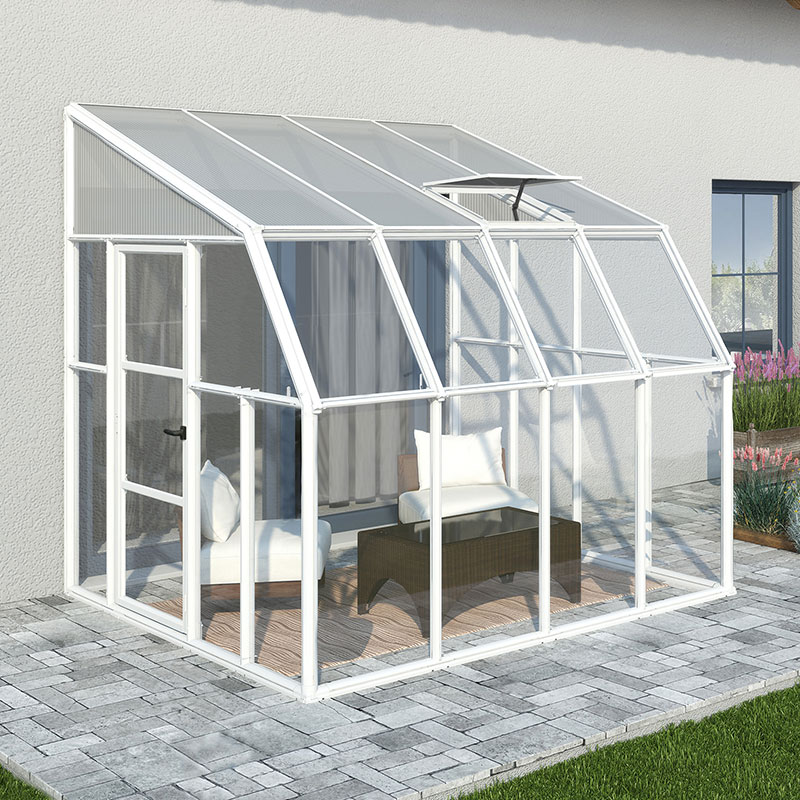
8% OFF: 8′ x 8′ Palram Canopia Rion White Sun Room Walk-In Wall Greenhouse (2.4m x 2.4m) with resin frame, polycarbonate panels, roof vent and lockable door. Buy here with discount!
A greenhouse that feels like more than just a greenhouse
The 8′ x 8′ Palram Canopia Rion White Sun Room Walk-In Wall Greenhouse is one of those garden buildings that does a bit more than the name suggests. Yes, it is a greenhouse, and yes, it is built for growing plants through the year. But the overall look is more like a tidy sun room or conservatory, which means it can sit nicely in a garden without looking too heavy or old fashioned.
For buyers who want something practical but also want the garden to keep a neat, modern feel, this model makes sense. It uses a white resin frame, clear wall panels and a roof that helps manage light and heat in a calmer way than plain glass often does. That can be useful if you’re growing tender plants, starting seedlings, or just trying to keep a steady environment without too much fuss.
There is also an 8% saving on offer here, which is the sort of thing people do notice when they are comparing garden buildings that are already in a more premium range. It is not a small shed with a bit of glazing added on. It is a proper walk-in structure, designed to be used and enjoyed, not just looked at from the patio.
The frame: resin with a job to do
One of the main features is the resin frame. Resin is a plastic-based material, and in a garden building that can be a useful choice because it resists rust, corrosion and rot. That matters more than many people think. A frame that won’t rust or rot needs less looking after over time, and for a greenhouse that sits outside in all kinds of weather, that is a real practical point.
The frame is thick and white, which gives the building a clean look. Inside the main structure, the central profiles are reinforced with galvanised steel rods. So although the frame is resin, it is not flimsy. The steel reinforcement adds confidence, especially when you’re thinking about wind, snow, and the general movement that can happen in outdoor buildings over time.
For people who do not want to paint, treat or regularly repair a timber structure, this is a strong plus. It is also maintenance free, which is the kind of phrase that sounds simple but really does save effort in the long run.
Panels that work with the seasons
This greenhouse uses two different types of polycarbonate panel, and that is part of what gives it its character and performance. The roof is fitted with 4mm twin-wall polycarbonate panels, while the side walls use 3mm crystal-clear polycarbonate panels. Together, they provide 82% light transmission.
That balance is worth noting. The roof panels are designed to diffuse light and help create a more even temperature. They also reduce the amount of intense sunlight exposure, which can be helpful when the summer sun is strong and young plants can get stressed. The side panels are crystal clear, so you still get a bright internal space and a clear view into the building.
Both panel types are UV-protected. That means the panels are protected from harmful UV rays, and it also helps prevent discolouring and fading in the sun. For the gardener, it helps create a safer growing space. For the structure, it helps the panels keep their appearance for longer. It is one of those details that often gets overlooked until a cheaper panel starts to go cloudy or tired-looking.
Light, but not too much of it
Good greenhouse growing is often about balance, not just brightness. The 82% light transmission here gives plants plenty of light, while the roof panels help spread it more evenly. That can be useful if you are growing vegetables, flowers, herbs or young bedding plants that need a fair amount of light but not harsh, direct exposure all day.
The roof design helps with temperature too. In a greenhouse, things can warm up quickly, and sometimes too quickly. The twin-wall roof panels offer insulation and can reduce the extremes a little, which is handy when the weather changes through the day. Spring mornings, bright afternoons and cooler evenings can all feel quite different inside a greenhouse, so any help with temperature stability is welcome.
This does not mean the greenhouse controls the climate on its own, of course. But it does give you a better starting point than a bare, uninsulated structure. If you add a fan heater as an optional accessory, that can give even more flexibility through colder periods.
Built for outdoor weather, not just sunny days
One of the things buyers often want to know is whether a greenhouse can cope with ordinary British weather. This model is wind resistant to 90km/hr and snow-load tested to 75kg/m². Those figures offer a useful level of reassurance for anyone looking to keep plants and tools protected during changeable weather.
It is also shatterproof, fracture-proof and completely resistant to rust. That does not mean you can ignore it, of course, but it does suggest a structure that is made for regular outdoor use rather than fair-weather conditions only. If a garden building is going to be out there year after year, that sort of construction matters.
The roof uses a lean-to style, which suits the contemporary look and also supports effective rainwater runoff. That is a practical detail buyers may appreciate more once the weather turns. Water needs to move away cleanly, and roof form is part of that.
A door where you need it
Access is through a single door, and one useful feature is that it can be positioned at either end of the structure. That gives you some flexibility when planning where the greenhouse should sit in relation to paths, borders or other garden features.
The door is fitted with a key-operated lock, which is handy if you plan to keep tools, pots or other gardening equipment inside. It is not unusual for people to store a few useful bits in a greenhouse, and being able to lock the door adds a bit of peace of mind. Not every garden building has that built in, so it is nice to see it included here.
This type of detail can affect daily use more than expected. If you are always walking around to reach one side of the garden, or if you want the entrance to face away from a busy area, being able to choose the door position is a proper advantage.
The roof vent helps keep the air moving
A greenhouse should not only trap warmth; it should also allow air to move. This model includes a manually opened roof vent, which helps with temperature control and ventilation. That matters on warm days, because too much heat can be just as much of a problem as too little.
Ventilation also helps reduce the build-up of stale air and can support healthier conditions for plants. For gardeners, that means a more manageable environment and less of the sudden heat spike that can happen inside closed structures. If you are in and out of the greenhouse during the day, a roof vent can also make it feel less stuffy.
It is a simple feature, but often the simple bits are the ones people use the most.
Assembly that does not feel overcomplicated
Some garden buildings arrive with assembly instructions that feel like a test rather than a guide. Here, the greenhouse is designed with a sliding panel easy assembly system. The additional aluminium profiles allow the panels to be slid into place, which should make the build more straightforward than some older styles of construction.
That does not mean it will assemble itself, obviously. You will still want to take your time, check the parts, and make sure the base is level. But for a greenhouse of this type, an easier build is definitely part of the appeal. If you have ever dealt with a project where every panel seems to fight back, you may see the value straight away.
The greenhouse is supplied with a 7-year limited warranty, which is another point worth noting. It gives buyers a bit of extra reassurance when choosing a building that is expected to stay outside and stay useful for a long time.
Things to know before you buy
This garden building does not include a floor, so it needs to be fixed to a solid, level base. That is important and easy to miss if you are rushing through the details. A good base helps with stability and also supports proper installation, so it is worth planning that before the greenhouse arrives.
Because it is a walk-in structure, you should also think about the space around it. You will want room for access, opening the door, and working inside comfortably. An 8′ x 8′ footprint gives a useful amount of space, but it still pays to measure carefully and imagine how you will actually use it. Will it be for plants only? Or a mix of plants, trays, tools and maybe a chair for a quiet moment with a cup of tea? The answer helps shape how you set it up.
The product is also available in a range of sizes, so if the 8′ x 8′ format is close but not exact for your garden, it is worth looking at the wider Sun Room range.
Why buyers choose this style
There are a few clear reasons this greenhouse stands out for the right buyer. First, it has a clean look that works well in gardens where appearance matters as much as function. The white resin frame and clear panels make it feel more like a garden room than a basic utility shed. Second, the materials are chosen for durability and low maintenance, which is useful if you want to spend more time gardening and less time fixing things.
Third, the climate-related features are sensible. The roof panels manage light, the vent supports airflow, and the structure offers weather protection that suits the UK climate better than many lightweight alternatives. It is not trying to be fancy for the sake of it. It is built around the needs of real use.
And then there is the simple matter of having a proper enclosed space for plants. Seedlings, tomatoes, herbs, tender plants, overwintering pots and general garden kit all benefit from shelter. Some people buy a greenhouse because they need one thing, then end up using it in several different ways throughout the year. That is fairly common, and this kind of design supports that.
Useful extras and optional addition
If you want to extend the use of the greenhouse into colder periods, a portable fan greenhouse heater with digital thermostat is available as an optional extra. That can be useful for keeping conditions more stable when temperatures dip. It is not essential for everyone, but if you want more control over the growing environment, it is worth considering.
For gardeners who start early in the season or keep plants going later into the year, a heater can make a real difference. It should be matched to your needs and used carefully, but it adds flexibility to the setup.
A practical purchase with a neat finish
The Palram Canopia Rion White Sun Room Walk-In Wall Greenhouse offers a lot of the things buyers usually ask for in one place: a durable frame, UV-protected polycarbonate panels, a lockable door, a roof vent, weather resistance and a look that sits well in a modern garden. It is designed to be useful, not awkward. It also gives you the option to use the space as a greenhouse, a sun room, or something a little in between.
If you want a structure that supports growing through the year and does not need constant attention, this one is worth a proper look. The discount helps too, of course. But beyond that, the main draw is the way it combines function, appearance and long-term practicality in a way that feels considered rather than overdone.
For gardeners who like things tidy, bright and ready for work, this greenhouse makes a strong case. It gives you a protected place to grow, store and potter, and sometimes that is exactly what the garden has been missing.


