
wooden gazebos 90 sq ft / 8 m² - Best Deals in UK!
Showing all 2 results
-
22% OFF: 10’x9′ (3×2.7m) Luxury Wooden Furnished Garden Gazebo with New England Cedar Roof – Seats up to 10 people £7,379.9922%

-
19% OFF: 10’x9′ (3×2.7m) Luxury Wooden Furnished Garden Gazebo with Traditional Timber Roof – Seats up to 10 people £6,349.9919%

Wooden gazebos 90 sq ft / 8 m² give a compact outdoor room for dining, shade and quiet seating, with square, hexagonal and octagonal forms to suit different gardens, layouts and uses.
Small Footprint, Real Presence
A 90 sq ft / 8 m² wooden gazebo is one of those garden structures that manages to feel useful without taking over the space around it. It is sized for a clear purpose: creating a defined outdoor zone for a table and chairs, a pair of loungers, or a sheltered corner for reading and tea. That makes it a strong choice for gardens where every metre matters, but you still want a proper feature rather than a loose set of furniture. The timber finish also brings a warmer, softer look than metal or plastic alternatives, which helps the structure sit naturally among planting, lawn and paving.
Because this category centres on a compact floor area, the shape of the gazebo becomes especially important. A square design can make the most of the usable interior, while a hexagonal or octagonal layout can feel more open and decorative, with a slightly lighter visual footprint. In practical terms, that means the same overall area can create a different experience depending on the form. One buyer may want crisp corners and straight lines for easy furnishing; another may prefer a more pavilion-like feel, especially if the gazebo is intended as a focal point at the end of a path or within a seating area.
Which Shape Fits the Garden?
The main forms in wooden gazebos around 8 m² are usually square, rectangular, hexagonal and octagonal. Each has a different effect on how the space feels and how it can be used. The shape also changes the way the structure reads from outside, which matters if the gazebo is meant to balance with a patio, terrace or lawn edge.
Bestseller der Kategorie wooden gazebos 90 sq ft / 8 m²
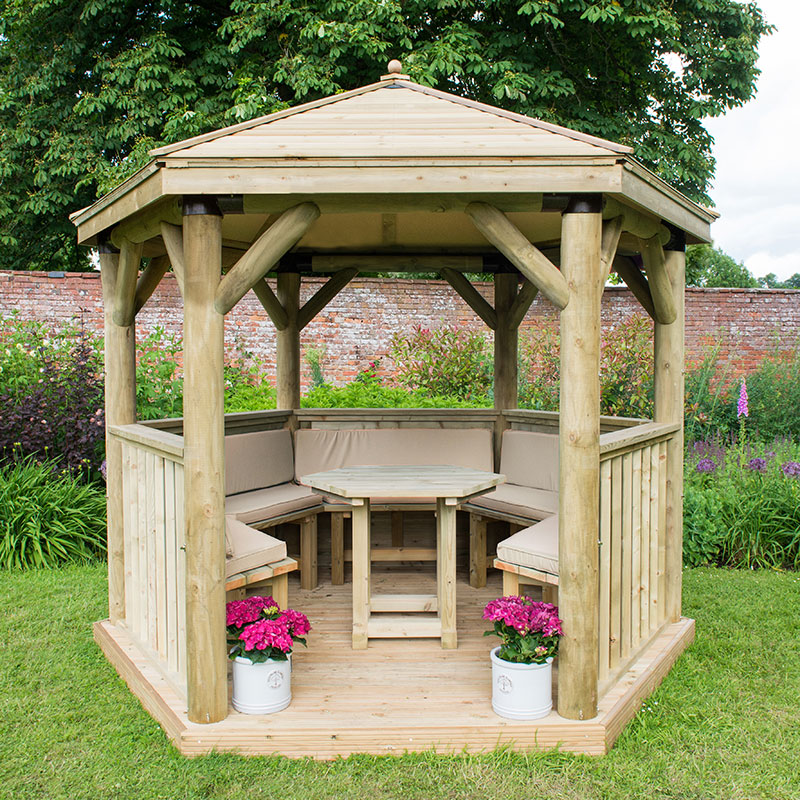
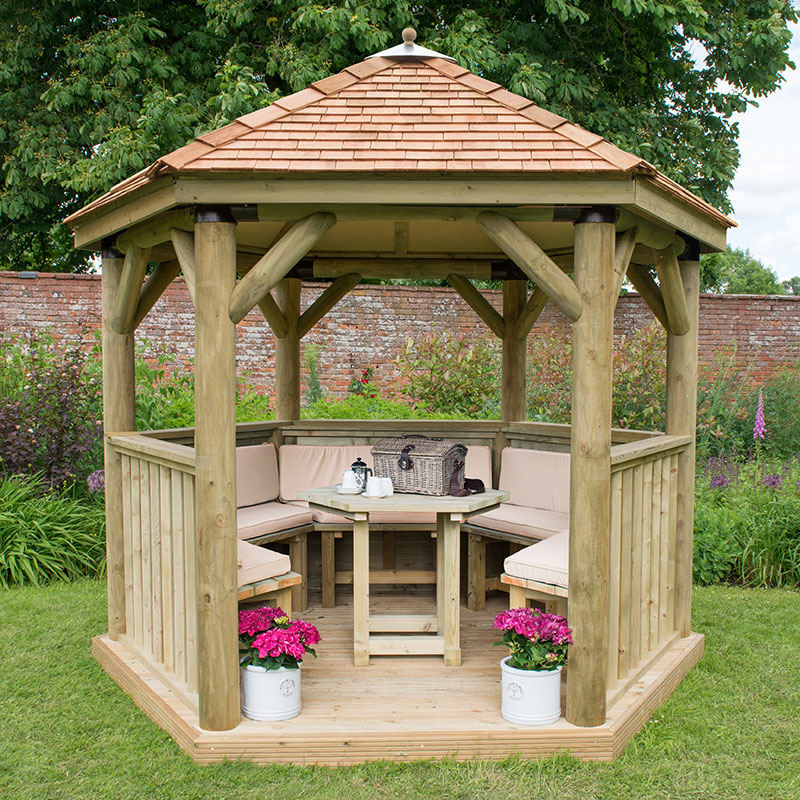
- Square gazebos suit straightforward layouts and make furniture placement easier.
- Rectangular gazebos work well when the space is slightly narrow or when a table-and-bench arrangement is planned.
- Hexagonal gazebos soften the outline and can feel more decorative from the garden.
- Octagonal gazebos offer a balanced, pavilion-style look and often give a more open sense inside.
The difference is not just visual. A square gazebo often gives more wall-adjacent usable area, which can be handy if you want a small dining set or built-in bench style seating. An octagonal version may have more angled edges and a central feel, which can suit a single table or a relaxed lounge layout. Rectangular designs are less common in this category, but they can be very practical where the available ground is awkward, or where the gazebo needs to sit neatly alongside an existing wall, deck or boundary.
What 8 m² Can Actually Do
At 90 sq ft / 8 m², the gazebo is compact but not cramped when chosen well. It is usually suitable for a bistro set, a four-seater dining arrangement, or a pair of chairs with a small table and some open floor space. In other words, it can be used as a retreat, a dining nook, or a modest entertaining spot, depending on how it is furnished. The key advantage is that it creates a room-like feeling without requiring a big garden footprint.
This size also makes it easier to keep the rest of the plot free for planting, play or open grass. For many buyers, that balance is the real appeal. A large structure can dominate a small garden, but an 8 m² gazebo can define an area without swallowing the view. It gives you a destination in the garden, rather than simply an object in it.
There is also a subtle difference in how people use a gazebo of this size versus a larger one. Bigger garden buildings often invite storage, heavier furniture, or more permanent set-ups. An 8 m² gazebo tends to stay more flexible. It can be a morning coffee spot one day and a sheltered evening seating area the next. That versatility is part of what makes it such a practical category for buyers who want something usable but not overdone.
The Timber Look That Sits Well Outdoors
Wooden construction is central to the character of these gazebos. Timber brings grain, tone and texture, which helps the structure feel less harsh against planting and natural ground surfaces. It also offers a more traditional garden-building look, although the style can range from rustic to neatly finished, depending on the design. Some gazebos favour a heavier frame with visible posts and rafters, while others appear lighter and more architectural.
Different wood types and finishes can change the impression quite a bit. A pale natural timber gives a fresh, informal feel, while darker stained finishes can look more grounded and defined. The exact wood species and finish will vary by product, but the category as a whole is about that warm, organic appearance people often want when they are trying to soften a patio or create a more settled corner in the garden. It does not feel like an add-on in the same way some materials can; it feels part of the space.
Open, Partly Open, or More Enclosed
Another useful difference within wooden gazebos is the level of openness. Some have fully open sides with roof cover only, which is ideal if the aim is shade and a clear all-round view of the garden. Others include partial side panels, railings or balustrades, which can help the gazebo feel more structured and give a little more privacy. A more enclosed style may suit a corner where you want some separation from the rest of the garden, though it still remains an outdoor feature rather than a closed garden room.
This choice affects both atmosphere and function. An open-sided gazebo keeps sightlines clear and works well when the garden is small or when the structure is meant to frame a view. A partly enclosed design can feel more intimate and can also help break breezes a little, depending on layout. Neither is “better” in general; they simply serve different uses. The right one comes down to whether you want a light, airy shelter or a more defined outdoor nook.
Roof Styles That Change the Feel
The roof shape is another part buyers often notice only after they start comparing options. In this category, roofs may be pitched, hipped or gently curved in outline, depending on the structure. A pitched roof usually gives a classic garden gazebo profile and can add a sense of height, even on a compact base. A hipped roof feels balanced and neat from all angles, which is especially pleasing on octagonal forms. Some designs lean towards a more traditional pavilion silhouette, while others stay simple and crisp.
The roof does more than complete the look. It changes how substantial the gazebo feels from the outside and how generous the inside appears. A taller roofline can make an 8 m² structure feel more open, while a lower roof can seem snug and sheltered. For buyers, that means the roof style should be seen as part of the overall experience, not just a finish detail. It’s a big part of the shape’s personality, really.
Where This Category Works Best
Wooden gazebos 90 sq ft / 8 m² suit a wide range of garden settings because the size is manageable. They often work well on patios, at the end of a lawn, beside a summer border, or within a paved seating area. In a compact garden, they can act as the main feature without overpowering everything else. In a larger garden, they can serve as a destination point or a quieter secondary seating zone.
They are also useful where the ground layout is slightly awkward. A square gazebo can sit neatly in a corner or against a boundary line, while a hexagonal or octagonal design can soften the transition between lawn and planting. If the garden has a strong central axis, the gazebo can anchor the view. If the garden is more informal, it can sit more naturally among shrubs, beds and stepping-stone paths. The structure gives shape to outdoor living, which is often what people are after even if they do not say it that way.
Practical Advantages Buyers Notice
There are several reasons people choose this size and material combination. First, the gazebo gives a defined shelter zone without asking for a large site. Second, wood has a more familiar, garden-friendly presence than many other materials. Third, the 8 m² footprint suits a variety of uses rather than locking you into one arrangement. And fourth, the shape options mean you can match the gazebo to the garden’s proportions instead of forcing the space to adapt around it.
Another advantage is how the category supports both everyday use and occasional hosting. A small wooden gazebo can be quietly useful during the week, then become the place where friends sit together at the weekend. It feels deliberate, but not too formal. That middle ground is often where good garden pieces live. Not too grand, not too casual.
- Compact but usable for seating, dining or a sheltered pause.
- Timber appearance blends more naturally with plants and lawn.
- Shape choices help match the gazebo to the garden layout.
- Defined outdoor room without a large footprint.
- Flexible styling for traditional or more modern garden schemes.
How Different Buyers Tend to Choose
Some buyers are drawn to a gazebo because they want a visual centrepiece, and for them an octagonal or hexagonal form often makes sense. Others are focused on use first, and a square or rectangular shape usually gives them the easiest arrangement for furniture. There are also buyers who want the gazebo to feel tucked away and private; in that case, a design with partial side panels may be the better fit. So the decision is not only about style, but about how the space will actually be lived in.
If you are comparing options, it helps to picture the gazebo furnished rather than empty. A round-looking octagonal plan may suit one table perfectly but feel less efficient for a longer bench. A square layout can feel more straightforward, though perhaps a bit firmer in appearance. A rectangular shape can be very usable, but only if the garden layout supports it. This is the kind of purchase where a quick sketch on paper can save a lot of doubt later on.
Tips for Choosing the Right One
Start with the intended use. If you want meals outdoors, think about table size and chair clearance. If you want a quiet retreat, allow for armchairs, side tables or a small sofa-style set. Then consider the shape of the plot and how the gazebo will sit in relation to paths, lawn edges and existing structures. The best choice is often the one that looks planned rather than squeezed in.
It is also worth checking how open you want the sides to be. An open structure gives more airflow and better visibility through the garden. A partly enclosed version can feel more settled and can create a stronger sense of “place”. If your aim is a feature that reads clearly from indoors, a more defined roof profile and timber frame can help it stand out without becoming heavy-looking.
- Measure the usable area, not just the total garden size.
- Think about furniture placement before choosing a shape.
- Match the roof profile to the overall garden style.
- Decide how open or structured you want the sides to feel.
- Choose timber tones that sit well with paving, decking or planting.
A Category for Calm, Dining and Everyday Use
The appeal of wooden gazebos in the 90 sq ft / 8 m² range is that they do not ask the garden to become something else. They simply give it an extra room. One that can hold a table, a conversation, a quiet hour with a book, or a sheltered cup of tea when the weather is a bit uncertain. The timber, the shape and the modest footprint all work together to make the structure feel intentional and usable.
For buyers browsing this category, the key is to focus on form, openness and proportion. Those three things shape how the gazebo will feel once it is in place. With the right combination, an 8 m² wooden gazebo can be one of those purchases that keeps making sense every time you step outside. Not dramatic, not flashy, just properly useful and pleasant to look at.
[Sassy_Social_Share]