
wooden gazebos 200 sq ft / 18 m² - Best Deals in UK!
Showing all 2 results
-
19% OFF: 15’x13′ (4.7x4m) Luxury Wooden Furnished Garden Gazebo with New England Cedar Roof – Seats up to 19 people £12,849.9919%

-
18% OFF: 15’x13′ (4.7x4m) Luxury Wooden Furnished Garden Gazebo with Timber Roof – Seats up to 19 people £9,789.9918%

Wooden gazebos 200 sq ft / 18 m² offer a balanced outdoor room for dining, lounging and shelter, with a natural timber look, practical proportions and shape choices that suit many gardens.
A garden room with proper breathing space
A 200 sq ft / 18 m² wooden gazebo sits in that useful middle ground where it feels generous without taking over the whole plot. It is large enough for a table and chairs, a daybed, a small outdoor kitchen setup, or a mixed layout with seating at one side and open floor space at the other. That makes it a good fit for buyers who want a distinct outdoor zone rather than a tiny shelter that only works for a couple of chairs.
Because the footprint is measured at around 200 sq ft, you can think in terms of a proper garden structure rather than a decorative pavilion. The space can support social use, but it still keeps a human scale. In a medium or larger garden, that matters. The gazebo becomes a destination, not just an extra object sitting on the lawn.
Why timber changes the feel
Wooden gazebos bring a different mood from metal or aluminium frames. Timber has grain, warmth and a softer edge, so even a fairly solid structure feels more settled in a garden. It can sit alongside planting, gravel, decking or lawn without looking too sharp or industrial. For buyers who want the structure to feel part of the landscape, wood often makes that easier.
Bestseller der Kategorie wooden gazebos 200 sq ft / 18 m²
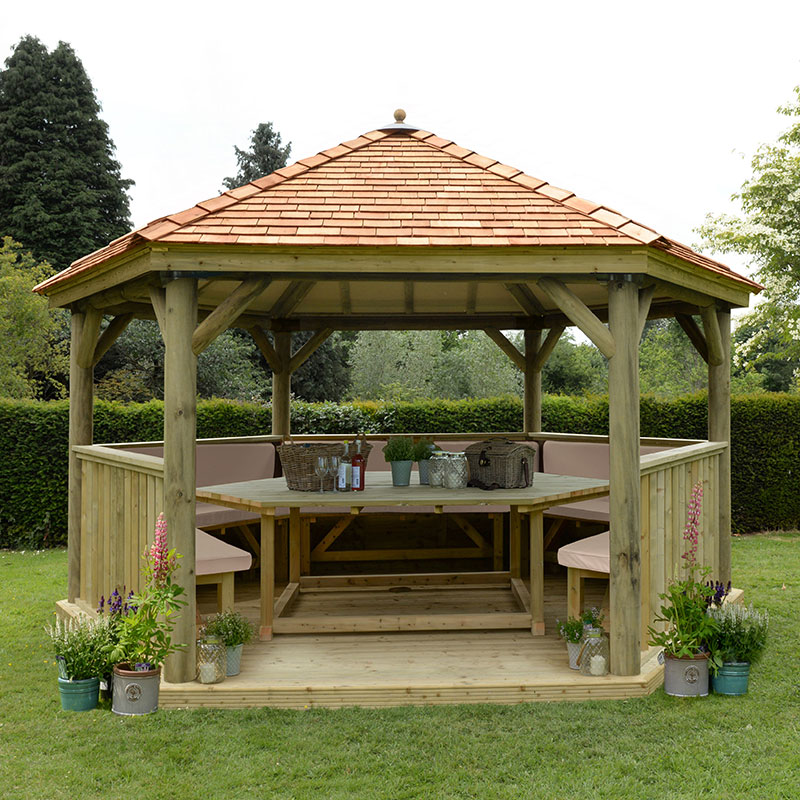
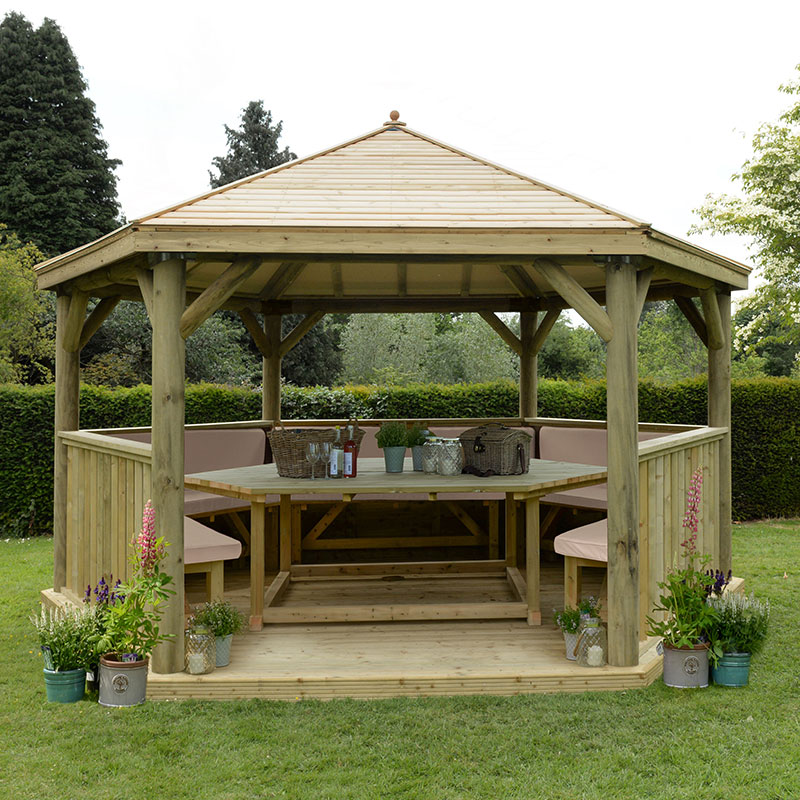
There is also a visual difference between painted timber, stained timber and untreated-looking natural finishes. A painted gazebo reads more defined and architectural, while a stained one keeps more of the timber character. This is not just about looks. The finish also changes how formal the gazebo feels. A deep colour can make the frame feel more enclosed and classic, while lighter wood tones keep the space feeling open and relaxed.
The shapes that define the space
One of the biggest differences between gazebo styles is the shape. In the 18 m² size range, the footprint often determines how the whole garden area functions.
- Square gazebos are straightforward and efficient. They suit dining sets, corner benches and layouts with even side access. If you want a regular plan that makes furniture placement easy, square is often the cleanest choice.
- Rectangular gazebos are useful when the space needs to guide movement in one direction. They can work well for long tables, barbecue zones or a split layout with one end used for seating and the other for circulation.
- Octagonal gazebos feel more centred and ornamental. The angled sides create a softer outline in the garden and can make the interior feel more enclosed without needing solid walls. They are a good match if the gazebo is meant to be a focal point.
- Hexagonal gazebos sit between square and octagonal forms. They keep a rounded feel without becoming too decorative, and they can be easier to position than a fully round garden structure.
The shape also affects how the roof reads from a distance. A square or rectangular gazebo feels calmer and more architectural. An octagonal roof draws the eye upwards and gives a more pavilion-like feel. That makes the gazebo not just a shelter, but a visible part of the garden design.
Open sides, partial walls or full cover
Within wooden gazebos of this size, the side design makes a big difference. Some buyers want an airy structure with open sides, while others prefer a more sheltered feel. Neither is better in general; it depends on how the space will actually be used.
Open-sided gazebos suit sociable use, garden dining and views across the plot. They keep the connection to the outdoors and make the structure feel less heavy. They can also be easier to furnish because chairs and benches can be approached from several sides.
Partially enclosed gazebos add more definition. A half-height wall, balustrade or framed side panel can help anchor the space and make it feel less exposed, without closing it off completely. This style is useful if the gazebo needs to sit in a more visible part of the garden and still provide a bit of shelter from breezes.
Fully roofed gazebos put the emphasis on overhead cover and a clearer sense of room. They are good where the aim is shade, weather protection and a stronger outdoor living zone. The result feels less temporary and more like a defined garden retreat.
Roof forms that change the character
The roof is not only a practical feature; it shapes the whole personality of the gazebo. In wooden gazebos around 18 m², roof form can make the difference between a lightweight shelter and a grounded, permanent-feeling structure.
- Pitched roofs give a classic look and help the gazebo read as a small building rather than a canopy. They suit traditional gardens, cottage-style planting and plots where the gazebo should feel steady and familiar.
- Hip roofs create a balanced profile with slopes on all sides. They tend to look neat from every angle and work well where the gazebo will be seen from several viewpoints in the garden.
- Pagoda-style roofs add a more decorative outline. The layered profile can make the gazebo feel distinct without needing extra ornament.
- Flat or low-pitch roofs are more restrained and modern in appearance. They can suit contemporary garden layouts, especially where the focus is on clean lines and less visual bulk.
The roof form also changes the interior feel. A taller roof can make an 18 m² gazebo feel more open, while a lower roof can create a snugger atmosphere. That is worth thinking about if the space will be used for long meals or simply for sitting under cover for a few hours.
Timber styles: rustic, refined or somewhere in between
Not all wooden gazebos look the same, even when their measurements match. The timber section size, joinery detail and finish all influence the final look. A chunky post-and-beam gazebo gives a robust, countryside feel, while slimmer framing can make the structure appear lighter and less imposing.
Rustic styles often use more visible timber texture and heavier lines. They work well in gardens with natural planting, informal lawns and stone paths. The appeal is in the solid, honest feel of the material.
Refined styles lean towards cleaner joints, straighter edges and a tidier overall profile. They can sit neatly in more ordered gardens, especially where decking, paving or structured beds already define the space.
Mixed styles are useful when the buyer wants a gazebo that feels timber-rich but not overly traditional. This can be a good compromise if the garden has both soft planting and hard landscaping, because the gazebo can bridge the two.
What 200 sq ft actually gives you
At 200 sq ft / 18 m², layout becomes a practical question rather than a guess. This area can usually handle a range of arrangements, and that flexibility is one of the main reasons buyers move up to this size.
A common use is a dining zone with a table and several chairs, leaving enough room for movement around it. Another option is a lounge layout with two benches or a sofa-style arrangement and a central table. Some people prefer a hybrid plan, where one side is kept open for circulation and the other side holds seating.
The point is not to fill every inch. A gazebo feels better when there is some space to move, stand and shift chairs without the room feeling crowded. With 18 m², you can usually avoid that cramped effect that smaller garden structures sometimes have. It gives buyers room to think about use, not just fit.
Choosing between a gazebo, pavilion and pergola
Buyers often compare wooden gazebos with other outdoor structures, and the differences are worth noticing. A gazebo usually implies a roofed, freestanding structure with open or partly open sides. A pavilion can overlap in meaning, but often suggests a more formal or architectural shelter. A pergola is different again, because it usually has a more open roof and less complete overhead cover.
If the aim is shade with a sense of enclosure, a gazebo tends to be the better fit. If the aim is to define an outdoor room and create a stronger focal point, a gazebo again has the edge. If the aim is to support climbing plants and keep the structure lighter, a pergola may suit better. So the decision is not only about size; it is about the way the space should feel and the level of shelter expected.
Useful details buyers actually notice
When looking at wooden gazebos in this size band, small details often matter more than people expect. The thickness of the posts changes how substantial the structure feels. The way the roof overhangs the sides affects shade and rain deflection. The spacing between uprights affects sightlines and how enclosed the space seems.
- Post thickness influences the visual weight of the gazebo. Thicker posts feel more grounded, while slimmer posts keep the structure lighter.
- Eaves and overhang matter because they shape the protected area beneath the roof and can affect how well the gazebo frames seating.
- Side openings affect both access and atmosphere. Wider openings feel more social, tighter framing gives more shelter.
- Timber finish changes how the gazebo sits among other garden features. Natural tones blend in, darker finishes stand out more.
These may sound like small points, but in a gazebo of 18 m² they are the things that decide whether the structure feels just usable or genuinely well resolved.
Where this size works best in a garden
A 200 sq ft wooden gazebo works especially well where there is enough outdoor space to give it context. In a compact garden, it can dominate the plot, so buyers usually need to think carefully about surrounding planting and access routes. In a medium-sized garden, it can become the main outdoor room. In a larger garden, it can act as a destination tucked into one corner or set at the end of a path.
The setting matters because timber gazebos are often chosen not just for utility, but for the way they change how the garden is used. A gazebo placed near a lawn edge can feel like a viewing point. One positioned beside paving can work as an extension of the house. One surrounded by planting can feel more private, even if it is fully open-sided. So the same structure can serve different roles depending on where it sits.
Why buyers keep coming back to wood
There is a practical reason, and a visual one. Practically, wooden gazebos can feel more integrated with fencing, decking, sleepers and garden buildings made from similar material. Visually, they age into the landscape in a way that many people appreciate. The timber does not shout for attention in the same way as some harder materials can.
For many buyers, this is the point. They want a structure that gives shape to the garden without making it feel over-designed. A wooden gazebo in the 18 m² range offers that middle space between structure and softness. It is large enough to feel useful, yet still natural enough to sit comfortably with planting and open sky.
Buying with the layout in mind
Before choosing a gazebo, it helps to picture how the interior will be used on an ordinary day, not just on a special occasion. If the main purpose is dining, the centre of the floor needs to remain easy to access. If the aim is lounging, side clearance and a calmer roof profile may matter more. If the gazebo will host mixed use, the shape should support that split without awkward corners.
Square and rectangular gazebos tend to make planning easier because furniture aligns naturally with the edges. Octagonal and hexagonal gazebos feel more composed from the outside, though they sometimes need a little more thought when placing tables or benches. That difference is worth noticing early, because the right shape can save a lot of hesitation later.
A size that feels like a proper choice
There is a reason wooden gazebos 200 sq ft / 18 m² appeal to buyers who want more than a basic shelter. The size offers enough room to define an outdoor lifestyle without moving into something oversized or difficult to place. It gives the garden a clear centre, and the timber finish gives that centre a warmer, more natural character.
For anyone comparing shapes, roof styles and degrees of enclosure, this category gives plenty of room to refine the decision. Whether the aim is a dining pavilion, a relaxed seating area, a shaded retreat or a more decorative focal point, the 18 m² footprint gives the structure enough presence to do the job properly. And because the look can shift so much with shape and side design, it is easy to find a version that feels less like a compromise and more like the right fit.
[Sassy_Social_Share]