
wooden gazebos 120 sq ft / 11 m² - Best Deals in UK!
Showing all 6 results
-
22% OFF: 11’x11′ (3.5×3.5m) Square Wooden Garden Gazebo with Timber Roof £6,159.9922%

-
22% OFF: 12’x10′ (3.6×3.1m) Luxury Wooden Furnished Garden Gazebo with New England Cedar Roof – Seats up to 10 people £8,399.9922%

-
21% OFF: 11’x11′ (3.5×3.5m) Square Wooden Garden Gazebo with Traditional Timber Roof £7,449.9921%

-
19% OFF: 11’x11′ (3.5×3.5m) Square Wooden Garden Gazebo with New England Cedar Roof £9,859.9919%

-
19% OFF: 12’x10′ (3.6×3.1m) Luxury Wooden Furnished Garden Gazebo with Traditional Timber Roof – Seats up to 10 people £7,289.9919%

-
12% OFF: 3.3×3.3m (11’x11′) Palmako Betty Garden Pavilion – Luxury Gazebo £2,589.0012%

Wooden gazebos 120 sq ft / 11 m² bring together sheltered outdoor seating, a clear footprint, and a warm natural look; choose from square, hexagonal, octagonal and open-sided styles for gardens, patios and social spaces.
A Proper Garden Room Feel, Without Building a Room
A 120 sq ft / 11 m² wooden gazebo sits in that sweet spot where it feels substantial, yet still works in a typical garden layout. It is large enough for a proper dining set, a relaxed lounge arrangement, or a mix of seating and side tables, but not so sprawling that it swallows the whole plot. That makes it a practical choice for people who want an outdoor structure with presence, not just a decorative corner feature.
The appeal is partly visual. Wood softens the shape of the structure and helps it sit naturally among planting, lawns and paving. Unlike metal or plastic alternatives, a wooden gazebo has a more tactile, homely character. It feels less like an add-on and more like part of the garden itself.
Why 11 m² Works So Well
11 m² is big enough to be useful in a few different ways, which is one reason these gazebos are popular with buyers who want flexibility. You can keep the centre open for a table and chairs, or place seating around the edges and leave the middle freer for movement. It is also a size that suits both everyday use and occasional hosting, without making the space feel hard to furnish.
Bestseller der Kategorie wooden gazebos 120 sq ft / 11 m²
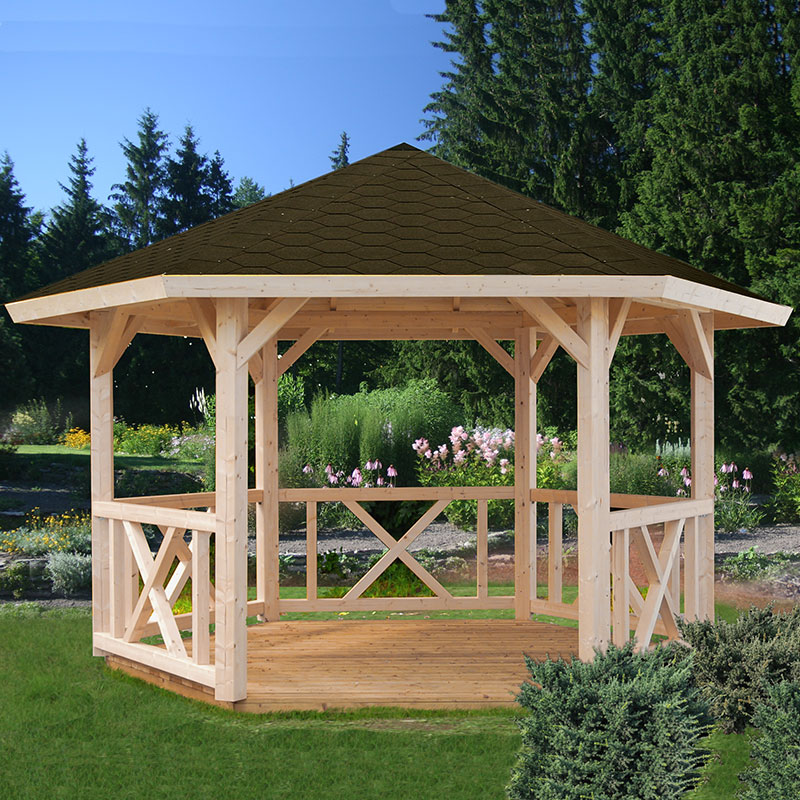
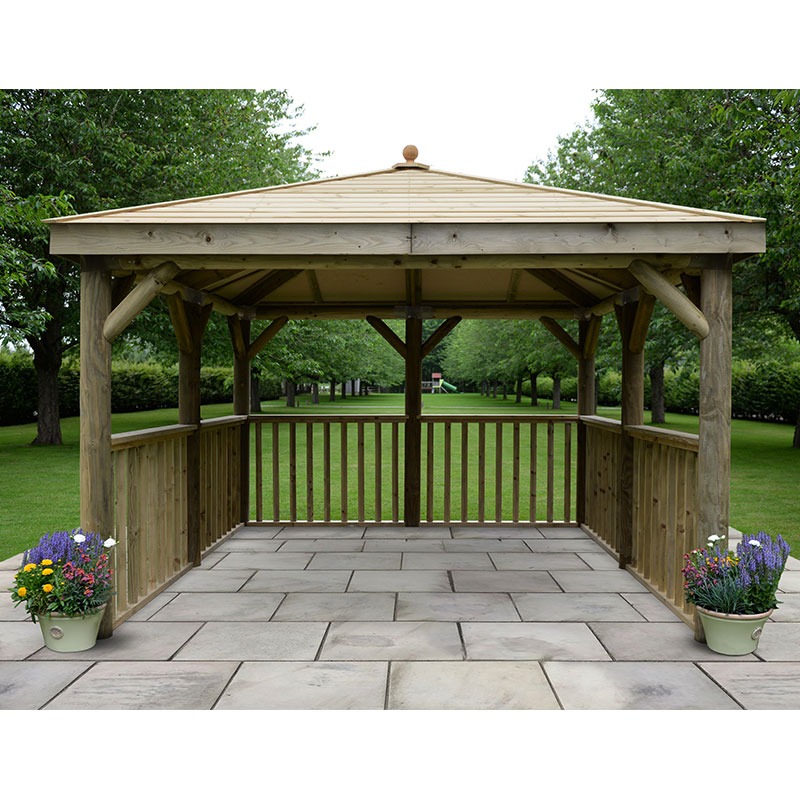
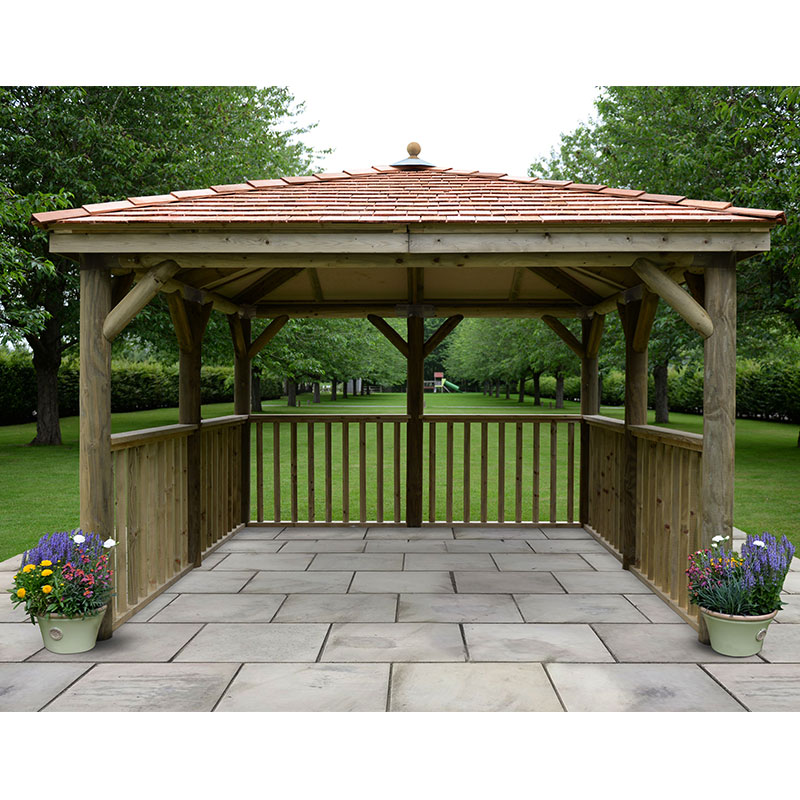
Compared with smaller shelters, a 120 sq ft gazebo gives you more breathing room between chairs, the edge posts and any interior features. Compared with larger garden buildings, it stays lighter in visual impact and often feels easier to position in a medium-sized garden. That middle ground is useful if you want shelter, shape and usability in one piece.
Shapes That Change the Whole Mood
One of the main differences between wooden gazebos in this size is the shape. The footprint may be around 120 sq ft, but the geometry changes how the structure looks and how it is used.
- Square gazebos feel direct and orderly. They suit rectangular patios, straight-edged decking and modern layouts where furniture needs to line up neatly.
- Rectangular gazebos make sense when the space is meant for dining. They can work nicely over a long table or a paired seating arrangement.
- Hexagonal gazebos have a gentler, more traditional character. They create a central focal point and often feel a bit more decorative.
- Octagonal gazebos give a fuller, pavilion-like impression. The extra sides soften the outline and can make the structure feel more architectural.
- Open-sided gazebos are better when you want easy movement and a social feel, rather than a closed, defined room.
- Semi-enclosed designs offer more visual shelter and can make the interior feel more separate from the rest of the garden.
The shape matters not just for looks, but also for how people gather inside. Rounder forms encourage a central seating arrangement, while square and rectangular versions are easier to zone for dining, chatting or placing storage pieces along the sides.
Open, Half-Open or More Protected?
When choosing a wooden gazebo, the level of enclosure is a key difference. Some versions are almost like a framed outdoor room, while others remain breezier and more open.
Open-sided gazebos suit gardens where you want a light, airy structure that doesn’t block the view. They are good for social use and feel less formal. Half-open gazebos provide a bit more definition and can help the interior feel calmer and more private. If the design includes rear or side panels, the gazebo can also create a stronger backdrop for seating.
The choice often comes down to how you plan to use it. If the goal is a dining spot that stays connected to the garden, an open style may fit best. If you want a more distinct destination within the space, a more enclosed version can feel better grounded.
Timber Character: The Difference You Can See and Feel
Wood is not just about appearance, though the look does matter. A wooden gazebo usually brings a warmer tone and a more natural texture than many man-made alternatives. It can suit traditional gardens, cottage-style planting, and relaxed family spaces, but it can also sit well in cleaner, more modern schemes if the shape is simple enough.
There is also a difference in visual weight. Timber structures often feel less hard-edged than metal ones, which can be useful if you want the gazebo to blend with trees, shrubs or fencing. In an 11 m² footprint, that balance between structure and softness can make the space feel inviting without looking bulky.
Best Uses for a 120 sq ft Gazebo
This size opens up a number of practical setups, and that flexibility is one of the main reasons buyers look at wooden gazebos 120 sq ft / 11 m². The same footprint can support different uses depending on the shape and the internal layout.
- Dining area for a family table and chairs, with enough room to move around the edges.
- Outdoor lounge with compact sofas, armchairs or bench seating.
- Garden gathering space for conversation, drinks and relaxed hosting.
- Covered reading nook with one or two chairs and a small table.
- Poolside or lawn shelter where a defined shaded point is wanted.
- Event feature for birthdays, small celebrations or seasonal garden use.
Because the space is neither tiny nor oversized, you can make it feel tailored rather than forced. That is especially useful if you want a structure that can shift between everyday use and occasional entertaining.
Wooden Gazebo Styles Buyers Usually Compare
When people browse this category, they often compare a few style directions rather than just choosing by size alone. A traditional wooden gazebo usually has a more classic roof profile and a familiar garden-pavilion look. A contemporary style might use straighter lines, cleaner joinery and a simpler silhouette. Some designs lean into a more rustic, lodge-like mood, while others keep the detailing restrained.
The differences are more than cosmetic. A traditional form may feel better in a planted garden with curved borders and softer landscaping. A cleaner, geometric gazebo can suit paving, decking and more formal outdoor areas. If the rest of your garden already has a strong style, matching the gazebo to that mood helps it feel intentional rather than just placed there.
Roof Forms That Change the Shelter
The roof is another part where wooden gazebos differ in a way buyers notice quickly. In this footprint, roof style affects both the look and the sense of shelter underneath.
- Pitched roofs create a familiar garden-building profile and help the structure feel more substantial.
- Hip roofs give a balanced appearance and work well on square or nearly square layouts.
- Multi-sided roofs are often used on hexagonal or octagonal gazebos and reinforce the pavilion feel.
- Shallower roofs can look lighter and suit more contemporary designs.
The roof shape also influences how the gazebo sits in the garden. A taller, more pronounced roof can turn the structure into a focal point, while a lower profile keeps it visually calmer. If you want the gazebo to feel prominent, the roof helps. If you want it to settle into the background a bit more, that is possible too.
What Makes This Size Different from Smaller Gazebos
Smaller gazebos can be charming, but they often work best for one main use at a time. At 11 m², you get more options. There is room for proper seating rather than a token chair or two, and the interior does not need to be packed tightly to be functional. That extra room also makes it easier to place furniture in a way that looks deliberate.
Another difference is atmosphere. Smaller structures can feel like a perch or viewing point. A 120 sq ft gazebo feels more like a destination. It invites people to stay a while, which is exactly what many buyers want from a garden shelter.
Details That Help When Choosing
Even without getting into installation or maintenance, there are a few practical points worth checking before choosing a wooden gazebo in this category. They make a real difference to how the structure works in day-to-day use.
- Measure the actual garden area where the gazebo will sit, including space around it for access and furniture.
- Think about the furniture layout first, then choose the shape that supports it best.
- Consider the sightlines from the house, path or patio; some shapes look stronger from certain angles.
- Check whether you want an open feel or a more defined interior, as this changes the whole experience.
- Match the timber tone and form to other wood features in the garden if you want a joined-up look.
These choices might sound small, but they affect whether the gazebo becomes a useful everyday part of the garden or just a nice-looking structure that is awkward to use. Size alone does not decide that.
Why Wooden Gazebos Feel More Settled in a Garden
There is a reason wood keeps showing up in garden design. It has a way of sitting naturally among plants, stone and water, and that matters in a structure of this size. A gazebo around 120 sq ft / 11 m² is large enough to shape the space around it, so the material needs to feel balanced rather than harsh.
Wood also gives the gazebo a more domestic character. It can feel calm, familiar and a bit less formal than some alternatives. For buyers who want an outdoor area that feels like a genuine extension of the home, that quality is often part of the decision.
Choosing Between a Focal Point and a Background Feature
Some buyers want the gazebo to stand out the moment you step into the garden. Others want it to blend in and support the rest of the layout. Wooden gazebos can do either, depending on the shape, roof height and level of enclosure.
A more detailed, multi-sided design tends to draw the eye and works well as a centrepiece. A simpler square or rectangular gazebo can sit more quietly in the background while still providing a usable sheltered area. Neither approach is better in general; it depends on whether the garden needs a feature or a frame.
A Good Fit for Social Space, Not Just Shelter
What makes this category attractive is that it is not just about keeping dry or adding shade. A wooden gazebo 120 sq ft / 11 m² creates a place where people naturally gather. The shape gives the garden a sense of purpose, and the timber finish gives that purpose some warmth.
For buyers comparing options, the key differences usually come down to shape, roof form, open or enclosed sides, and how the structure will sit alongside furniture and planting. Those are the details that decide whether the gazebo feels right once it is in place. If you want a garden feature that is usable, visually grounded and easy to live with, this size is a very sensible place to start.
[Sassy_Social_Share]