
Gazebos 120 sq ft / 11 m² - Best Deals in UK!
Showing all 9 results
-
26% OFF: 12’x10′ (3.6×3.1m) Luxury Wooden Garden Gazebo with New England Cedar Roof – Seats up to 10 people £7,049.9926%

-
22% OFF: 12’x10′ (3.6×3.1m) Luxury Wooden Furnished Garden Gazebo with New England Cedar Roof – Seats up to 10 people £8,399.9922%

-
22% OFF: 11’x11′ (3.5×3.5m) Square Wooden Garden Gazebo with Timber Roof £6,159.9922%

-
21% OFF: 11’x11′ (3.5×3.5m) Square Wooden Garden Gazebo with Traditional Timber Roof £7,449.9921%

-
20% OFF: 12’x10′ (3.6×3.1m) Luxury Wooden Garden Gazebo with Traditional Timber Roof – Seats up to 10 people £5,949.9920%

-
19% OFF: 11’x11′ (3.5×3.5m) Square Wooden Garden Gazebo with New England Cedar Roof £9,859.9919%

-
19% OFF: 12’x10′ (3.6×3.1m) Luxury Wooden Furnished Garden Gazebo with Traditional Timber Roof – Seats up to 10 people £7,289.9919%

-
12% OFF: 12′ x 10′ Garden Must Haves Pandora Leaf Adjustable Garden Gazebo (3.6m x 3m) £544.9912%

-
12% OFF: 12′ x 10′ Garden Must Haves Runcton Grey Polycarbonate Garden Gazebo (3.6m x 3m) £729.9912%

Gazebos 120 sq ft / 11 m² offer a practical covered space for dining, seating, and shade, with enough room for a compact outdoor set-up without taking over the garden.
A sized-up shelter that still feels part of the garden
120 sq ft / 11 m² gazebos sit in a useful middle ground: big enough to shape a proper outdoor room, but not so large that they swallow a patio or lawn. That footprint usually gives you space for a small table and chairs, a lounge corner, or a mix of both, depending on the layout. For many gardens, this is the point where a gazebo starts to feel less like an accessory and more like a defined place to sit, eat, and gather.
Because the size is measured as floor area, the actual feel can vary quite a bit with the shape. A square gazebo can feel balanced and tidy, a rectangular gazebo can suit long furniture runs, and a hexagonal gazebo can create a softer, more decorative look. The same 11 m² may therefore seem different in use, even before you think about the roof style or frame thickness.
Shapes that change how the space works
One of the main differences in this category is the shape of the footprint. Buyers often focus on size first, but the shape has a big effect on how the gazebo is used day to day. A square gazebo tends to be easiest for straight furniture placement and feels straightforward in a modern garden. A rectangular gazebo gives more room for a dining line-up or a longer seating arrangement, and it can work well beside a wall, deck, or boundary.
Bestseller der Kategorie Gazebos 120 sq ft / 11 m²
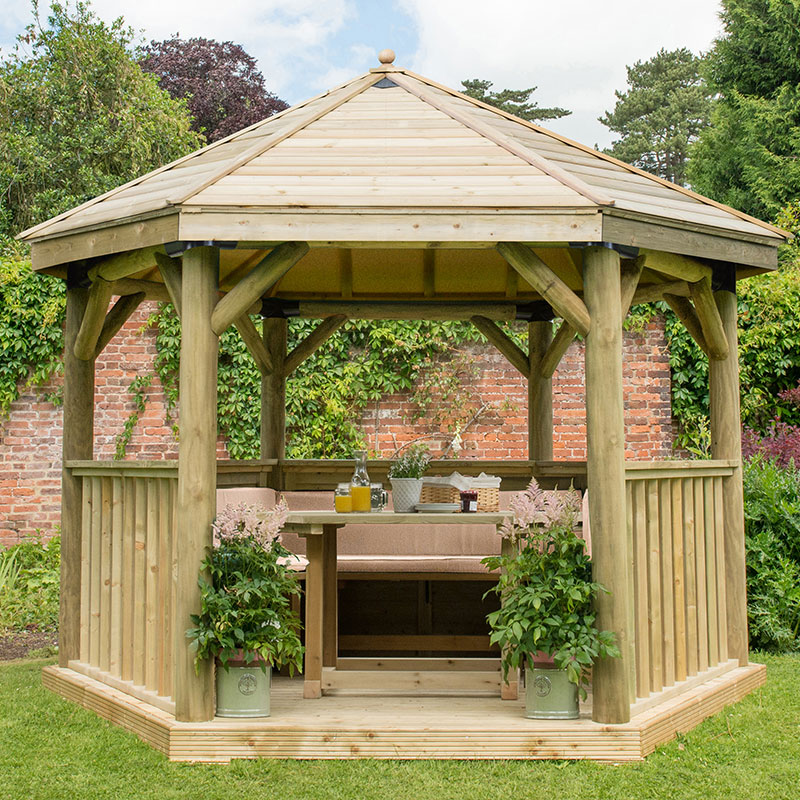
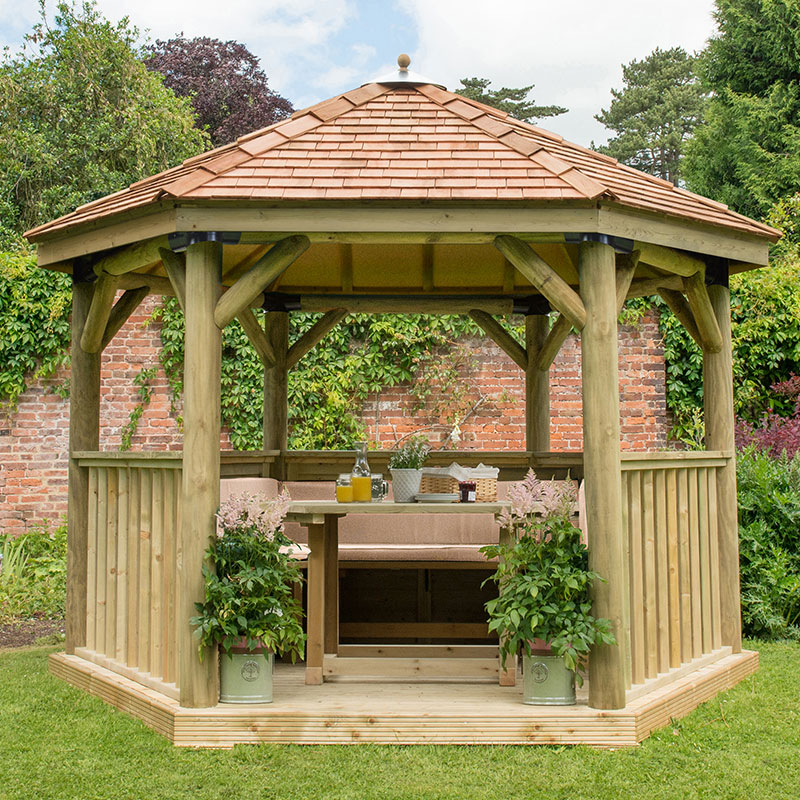
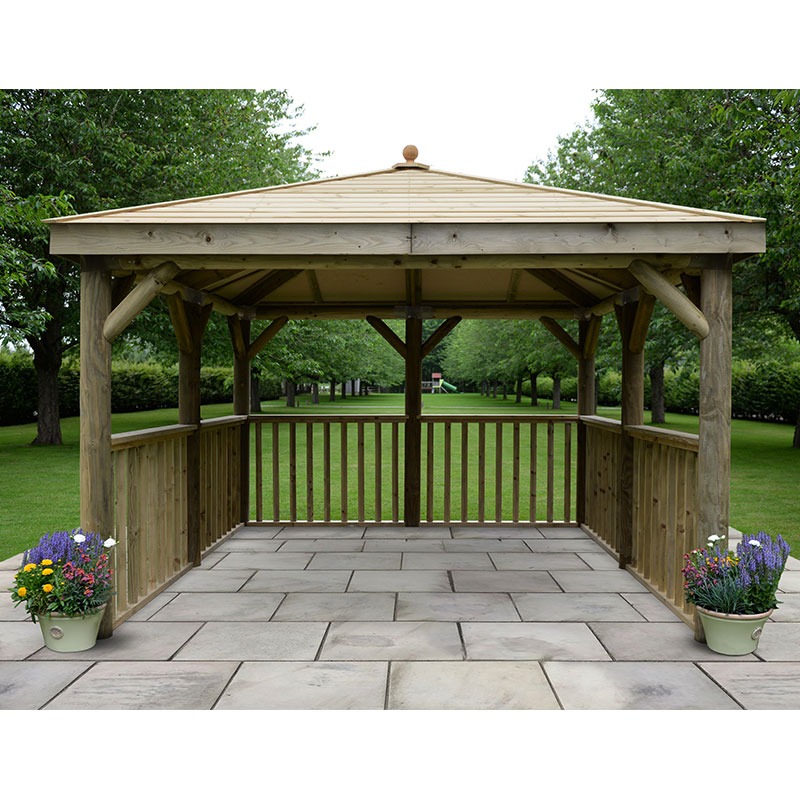
Hexagonal and octagonal gazebos usually have a more classic pavilion feel, with angled sides that soften the look and create a central focal point. They can be very good if you want the gazebo to stand as a feature rather than blend into the background. There are also more open-sided canopy styles that keep the same kind of footprint but feel lighter and less enclosed. In practice, the best shape is often the one that suits the furniture you already have, not just the space you wish you had.
Frame types: what changes the feel, not just the finish
Within gazebos 120 sq ft / 11 m², the frame material makes a big difference to the overall character. Steel-framed gazebos tend to feel solid and structured, which suits buyers looking for a more permanent outdoor feature. They often pair well with hardstanding patios and modern garden design. Aluminium frames usually look slimmer and lighter, and that can be useful if you want a clean profile without too much visual weight.
Wooden gazebos, where available in this size, bring a warmer, more natural look and can sit well in planted gardens or traditional settings. The appeal is in the texture and presence of the material, not just the practical side. Then there are hybrid styles, where the structure and the cover are chosen to balance visual effect with shelter. Each frame type changes how the gazebo reads in the garden: steel can feel more defined, aluminium more neat, timber more homely, and open-frame styles more relaxed. None of those is automatically better; they just do different jobs.
Roof styles that shape the experience underneath
The roof is where a lot of the personality sits. In this category, you may see hardtop gazebos, soft-top gazebos, and more decorative pitched or pagoda-inspired forms. A hardtop roof gives the area a more substantial sheltered feel and often suits people who want the gazebo to act as an outdoor room. It can make the space feel anchored, especially when placed on a patio with matching furniture.
Soft-top gazebos have a different mood. They usually feel lighter and more flexible, which can be appealing if you want something that does not dominate the plot. Their appeal is often in the relaxed look and the way they sit in the garden without seeming too formal. A double-roof or vented roof style can also change the atmosphere under the gazebo, helping the structure feel less closed-in and giving the roofline a more finished look. The roof shape is not only about style either; it changes how much visual presence the gazebo has, and that matters when the footprint is already quite deliberate.
Open sides, partial screens, or fully framed corners
Another useful distinction is how open the gazebo is around the edges. Some open-sided gazebos keep the view and breeze flowing, which makes them feel less like a fixed room and more like a covered gathering spot. These work especially well if the garden is a feature in itself and you do not want to block it off.
Gazebos with side panels or partial screens give more definition and a bit more separation from the rest of the garden. They can create a stronger sense of being inside a dedicated zone, which is useful for dining or lounging when you want the area to feel a little more contained. Fully enclosed or more enclosed-style gazebos are a different category again, but in the 120 sq ft / 11 m² range, many buyers prefer a middle option: enough shelter to feel intentional, but not so much that the space seems closed off. It’s a balance, and the right choice depends on whether you want openness or a more sheltered nook.
What fits inside 120 sq ft without feeling crammed
The appeal of this size is not just the footprint itself, but what that footprint allows. In a 11 m² gazebo, you can often fit a compact outdoor dining set for four, or a small sofa-style arrangement, or a mix of chair seating and a side table. If the shape is rectangular, you may have more success dividing the space into zones, such as one end for eating and the other for lounging. In a square design, the furniture may sit more centrally and feel more symmetrical.
That said, furniture choice matters a lot. A gazebo of this size does not suit bulky pieces that eat into walking space. Slimmer chairs, foldable tables, and lower-profile seating can make the area feel more usable. The best layouts leave a clear path in and out, because once the gazebo is full of furniture, tight access can make it feel smaller than it is. A common mistake is to buy for the floor area only and forget the space needed around each piece. The same 120 sq ft can feel comfortable or crowded, depending on the arrangement.
Why this category works for more than one kind of garden
Gazebos 120 sq ft / 11 m² are versatile in a way that suits different garden sizes and layouts. In a larger plot, they can act as a defined destination, pulling people away from the house and into another part of the garden. In a smaller outdoor area, they can provide structure without appearing oversized, especially if the frame is visually light and the roofline is not too heavy.
For buyers with patios, these gazebos can create a better sense of room definition than a parasol or a simple canopy. For lawns, they can become a focus point, almost like a garden pavilion, and that can help the whole space feel more considered. The shape, roof, and frame all influence that result. A broad rectangular model can feel practical and modern, while a hexagonal one may look more decorative and centred. If your garden already has strong straight lines, a square or rectangular gazebo often sits in more naturally. If the garden has curves, planting, or a softer layout, an angled shape may feel more at home.
The difference between a gazebo and a simple canopy
People sometimes look at this category and compare it with a basic shelter or canopy. The difference is not just in looks, but in presence. A gazebo in the 120 sq ft / 11 m² range tends to feel like a distinct structure, with more visual weight and a more deliberate footprint. A canopy can be handy, but it often reads as temporary. A gazebo usually suggests a more organised outdoor set-up, even if the design itself is simple.
That distinction matters if you are trying to make the garden feel more usable through the season. A gazebo gives a proper place for guests, family meals, or a quiet cup of tea outdoors. It also tends to help define how the garden is read from the house: one area becomes the gathering point, rather than everything feeling spread out and unplanned. In a way, the structure gives the garden a job to do.
Practical details buyers tend to notice first
When shoppers compare gazebos in this category, a few details usually stand out quickly. Headroom can affect comfort, especially if the roof slopes steeply or the side height varies. Footprint shape affects furniture placement. Frame thickness changes the visual feel and can make a structure seem either airy or substantial. Side openings influence movement and access, while roof style affects how finished the whole gazebo appears.
Another point is the relationship between the gazebo and the ground beneath it. A 120 sq ft gazebo can look quite different on decking, paving, or a gravel base. On a neat patio, the structure feels crisp and fixed; on a garden surface with softer edges, it can feel more relaxed. Neither is wrong. It just changes the mood. Buyers often overlook this and focus only on dimensions, but the base can alter the final impression a lot, sometimes more than they expect.
Choosing the right style for the way you actually use it
If the gazebo will mainly be for eating, a rectangular shape can be easier to plan around, because dining furniture tends to suit straight runs. If the aim is conversation or lounging, a square or hexagonal gazebo may feel more centred and sociable, especially with seating arranged around a focal table. If you want the gazebo to act as a visual feature from the house, a more decorative roofline or angled side shape may add that sense of structure without needing lots of extra detailing.
There is also a difference between a gazebo that is meant to blend in and one that is meant to stand out. A slim frame and simple roof keep the look subdued. A deeper roof, stronger posts, or a more architectural silhouette can make the gazebo feel like a statement. Buyers often know which camp they are in once they picture the furniture inside, because the shape of the gathering usually decides the shape of the shelter. It sounds obvious, but people do forget it.
Small choices that make a big difference when browsing
When comparing gazebos 120 sq ft / 11 m², it helps to read the details carefully rather than just glancing at the photo. The same footprint can be used in very different ways depending on whether the design is open-sided, partially enclosed, square, rectangular, or hexagonal. A gazebo with a neat profile may suit a modern terrace, while a more decorative form may better suit a planted or traditional garden. Some designs feel airy, some feel anchored, and some sit somewhere in between.
If you already have outdoor furniture, measure the set together rather than one item at a time. Leave room for movement, not just for seating. Think about whether you want a central table, a side zone for drinks, or space to keep the layout flexible. A 120 sq ft gazebo can do quite a lot, but only if the proportions are chosen with a bit of care. That is usually what turns a good-looking shelter into a useful one.
A category made for useful garden moments
The appeal of this category is in the balance. 120 sq ft / 11 m² gazebos give enough room to feel purposeful, while still staying manageable in most gardens. They can support dining, conversation, or a quiet seating area, and the variety of shapes and roof styles means there is room to match the structure to the space you already have. Whether you lean towards a square frame, a longer rectangle, or a more traditional angled form, the size gives you enough freedom to choose a layout that feels lived-in rather than forced.
For buyers comparing options, the most useful questions are often simple ones: how will it sit in the garden, what will fit underneath, and do you want it to blend in or become a feature? Once those are clear, the right gazebo usually becomes easier to spot. And that, in the end, is what this category is about: making outdoor space feel more useable, with a structure that does not get in the way of the garden, but gives it a point.
- Square gazebos for balanced layouts and compact furniture plans
- Rectangular gazebos for dining sets, long seating runs, and zoned use
- Hexagonal gazebos for a softer, more traditional garden feature
- Octagonal gazebos for a pavilion-style look with strong visual presence
- Steel frames for a more structured feel
- Aluminium frames for a lighter, cleaner profile
- Wooden gazebos for a warmer, natural character
- Hardtop roofs for a more substantial outdoor room feel
- Soft-top roofs for a lighter, more relaxed appearance
- Open-sided designs for airflow and a less enclosed atmosphere
- Panelled designs for a more defined, sheltered zone