
Description
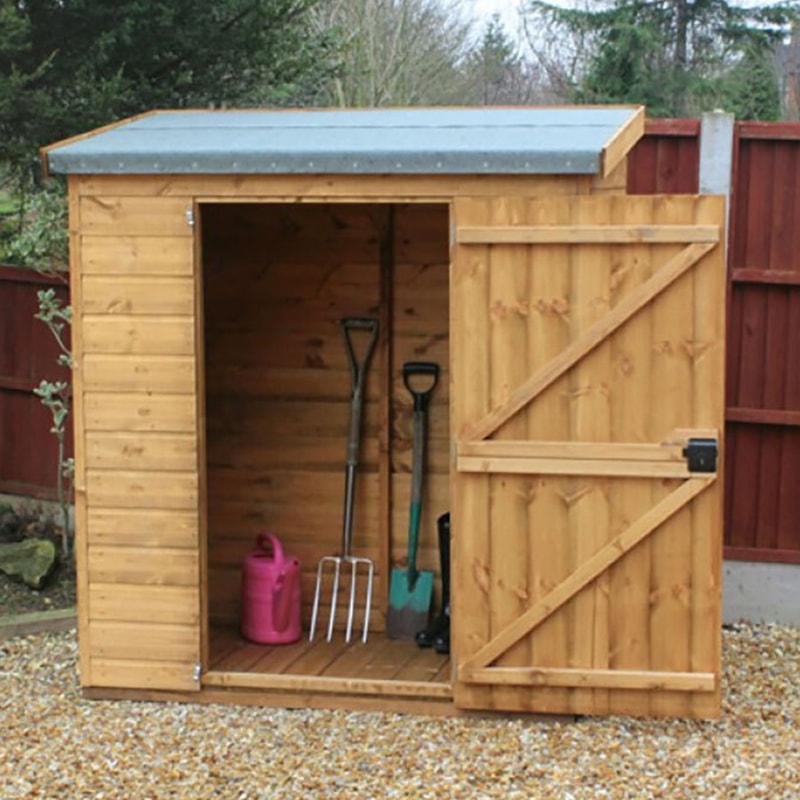
7′ x 4′ Traditional Shiplap Pent Wooden Garden Tool Storage Shed for tidy garden storage, with 12mm tongue and groove cladding, felt roof, lockable door and compact size.
A neat place for tools without taking over the garden
The 7′ x 4′ Traditional Pent Wooden Garden Tool Storage Shed is one of those practical garden buildings that just makes sense when you’ve got spades, hoes, pots, bags of compost and all the bits and pieces that never quite have a home. At 2.14m x 1.22m, it keeps a fairly small footprint, so it can sit neatly in many gardens without dominating the space. That matters if you want storage, but you still want the garden to feel open and usable.
This is a storage shed built for everyday use. It’s not trying to be something it isn’t. It gives you a straightforward place to store tools safely and keep them close at hand, which is handy when you are heading out to do a quick bit of pruning or just need to grab the fork before the rain starts again.
What you’re getting at a glance
Here’s the core spec for this model, because buyers usually want the facts early on:
- Size: 1710mm x 2140mm x 1220mm
- Cladding: 12mm tongue and groove
- Frame: 38mm x 50mm
- Floor: 12mm tongue and groove
- Roof: 12mm tongue and groove with felt covering
- Door: Single door with zinc fittings and key operated lock
- Door position: Can be fitted on any side of the structure
- Finish: Smooth-planed
- Protection: Dip-treated
- Guarantee: 1-year parts guarantee
- Optional upgrade: Pressure-treated version with 15-year anti-rot guarantee and free 15mm cladding upgrade
Why tongue and groove matters more than people think
The shed uses 12mm tongue and groove cladding, and that is a nice practical detail. Tongue and groove boards fit together in a way that helps create a tighter structure than plain overlap boards. For a tool shed, that can mean a more solid feel overall and a better finish too. It’s the sort of feature you may not think about at first, but once you’ve used a shed with flimsy panels, you tend to notice the difference.
The 12mm tongue and groove floor and 12mm tongue and groove roof carry the same idea through the whole building. That gives a more consistent specification, which is good if you want the shed to feel balanced, not just thrown together with one stronger section and one weaker one. The roof also comes with a felt covering, which helps keep out the rain and gives a bit of extra weather protection.
A frame that gives the shed proper structure
Underneath the cladding, the shed is built on a 38mm x 50mm frame. That frame size is there to support the walls and help the shed keep its shape. For a storage unit like this, the frame is doing an important job in the background, even if it’s not the first thing a buyer notices. If a shed is going to hold tools, garden chemicals, hand equipment, or boxes of seasonal bits, a steady frame is a comfort.
It’s also worth saying that this is a compact shed, so having that kind of structural support is useful. Smaller buildings can sometimes be overlooked because they are small, but they still need to stand up to wind, damp, and regular use like any larger garden building.
Practical access with a lockable single door
Access is through a single door with zinc fittings and a key operated lock. That gives you a simple, no-fuss way to get in and out without messing around with awkward fastenings. The lock is a useful point if you keep anything valuable inside, such as decent hand tools, strimmers, fertiliser or replacement parts you’d rather not leave in the open.
The zinc fittings are a sensible detail too. They’re there to do a job, and in a garden setting that matters. The door can also be fitted on any side of the structure, which gives you more flexibility when you are planning where the shed will sit. Maybe you want the opening facing the path. Maybe you need it away from a fence. Either way, being able to choose the side can make the shed fit your garden layout much better.
A finish that looks tidy without trying too hard
The shed comes with a smooth-planed finish, which gives it a cleaner look and makes it feel more finished when compared with rough-sawn alternatives. That’s not just about appearance. A smoother finish often means the shed sits more neatly in the garden, especially if it’s next to a patio, a planting area or a path where you see it often.
This is one of those points where a storage shed can do a bit more than just store things. If it looks cared for, the whole corner of the garden can feel more organised. And when your tools are inside a building that looks decent, it is easier to keep the outside area from becoming cluttered with odds and ends.
Dip-treated now, with upkeep later
This model has been dip-treated, and that gives it initial protection. The important thing to know is that it should be re-treated within 6 weeks of assembly and annually thereafter to help maintain its appearance. That is normal for many wooden garden buildings, but it’s still worth saying clearly, because buyers need to know what maintenance is involved before they order.
If you prefer a lower-maintenance route, there is also the option to upgrade to pressure-treated. That extends the anti-rot guarantee to 15 years, and it includes a FREE 15mm cladding upgrade. The pressure-treated timber will still need waterproofing upon assembly and then yearly, so it is not a zero-care product, but it does offer longer-term reassurance.
Why the pressure-treated upgrade may be worth a look
For some buyers, the standard dip-treated version is enough. For others, the pressure-treated upgrade is the one that makes more sense, especially if the shed will be standing in a more exposed spot or if you simply want to think less about replacement in the near future. The 15-year anti-rot guarantee is a useful selling point, but the extra-thick 15mm cladding is also worth noting, because it changes the feel of the shed as a whole.
If you are comparing models, that free cladding upgrade can tilt the decision. It gives you a bit more timber for the money without having to chase additional upgrades later. That is the sort of thing many buyers appreciate once they’ve gone through a few options and started comparing what is actually included.
What this shed is good for day to day
This shed is aimed at people who need a proper place for garden tools, but don’t want to buy a big building when a smaller one will do. It suits things like:
- Hand tools such as trowels, shears and secateurs
- Long-handled tools like rakes, forks and spades
- Garden supplies including pots, plant supports and twine
- Smaller machines if they fit the internal space
- Seasonal items you don’t want outside through the winter
The compact size means you may need to think carefully about what goes where, but that is actually part of the appeal. A smaller storage shed often encourages better organisation. Instead of piling things in at random, you tend to keep what you really use and store it in a more sensible way.
Space planning before you buy
Although the shed is compact, you should still measure your garden space properly before ordering. The footprint is 1710mm x 2140mm x 1220mm, so it’s worth allowing room not just for the building itself, but for opening the door comfortably and moving around it if needed. If the shed is going near a fence, wall or hedge, check the access route too. Delivery day can be awkward if the space is tighter than you thought.
A Pro Shed Base Kit is available as an optional extra, and that’s something to consider if you want a more prepared installation. A level, stable base is important for wooden sheds. If the base is uneven, the door may not sit quite right, and that can become annoying in a way that grows on you over time.
Useful things to know about the build
Because the specification notes that cladding, floorboards and framing measurements are nominal, there can be a variance of plus or minus 1mm on cladding and floorboards, and plus or minus 5mm on framing. That’s normal in timber products after machining, but it’s still useful for anyone checking fit, planning a base or comparing details across different sheds.
This kind of information might seem a bit dull at first, but it can save trouble later. If you are the sort of person who likes to plan properly, it is good to know these small differences before you begin assembly.
Assembly, care and a bit of common sense
Like most wooden garden sheds, this one will perform better if it is assembled carefully and looked after properly. Once built, it should be treated according to the instructions, and the timber should be kept protected from water where possible. Even the pressure-treated option needs waterproofing upon assembly and annually, so there is still some basic care involved.
It’s also sensible to check that the base is level, the roof felt is fitted correctly, and the door closes properly before you start loading it up. A few minutes spent on those details can make the difference between a shed that feels easy to live with and one that needs constant adjustment. Small things, but they matter.
Other sizes are available if this one is not quite right
If you like the style but need a different footprint, the same wooden storage unit is also available in other sizes, ranging from 5′ x 3′ to 10′ x 4′. That gives a bit of flexibility if your garden is bigger, or if you need more storage than the 7′ x 4′ model can offer. It’s useful because people don’t always want a completely different design just to gain or lose a bit of space.
Delivery and value details
Free delivery to most UK addresses is included, which is another practical point to bear in mind when you are comparing garden sheds. Delivery charges can change the overall cost more than people expect, so it helps when the shipping is already taken care of for many locations.
There is also a 1-year parts guarantee on the standard version. That may not be the longest cover in the market, but it does give a basic level of reassurance at the point of purchase. If you choose the pressure-treated option, the anti-rot cover becomes more substantial, which may suit people planning to keep the shed in use for years rather than seasons.
Who this shed suits best
This shed suits buyers who want something practical, tidy and not overly large. It is a sensible choice for people with:
- limited garden space
- a growing collection of tools
- a need for lockable storage
- a preference for wooden buildings over metal ones
- a wish to keep the garden looking more organised
If that sounds like your setup, this shed is probably worth a proper look. It brings together the main things many buyers want: decent timber specification, compact dimensions, a lockable door, and the option to upgrade for longer protection.
Final thoughts before you add it to basket
The 7′ x 4′ Traditional Shiplap Pent Wooden Garden Tool Storage Shed is a straightforward garden storage solution with a sensible spec and a tidy appearance. It uses 12mm tongue and groove cladding, a 38mm x 50mm frame, matching 12mm tongue and groove floor and roof, plus a felt-covered pent roof that helps with weather protection. The single lockable door, the smooth-planed finish, and the option to fit the door on either side make it more adaptable than a basic tool store.
There are a few choices to think about before buying, mainly whether the standard dip-treated version is enough or whether the pressure-treated upgrade suits you better. Either way, it is a compact wooden shed built for the job it says it does: keeping garden tools safe, dry enough, and ready when you need them. Not fancy, just useful. And for many gardens, that is exactly the point.
Need a compact wooden garden tool storage shed? This 7′ x 4′ model brings together practical storage, lockable access, solid timber construction and a size that works in many gardens. If you want somewhere decent for your tools without giving up loads of space, it is a fair option to consider.


