
wooden gazebos 100 sq ft / 9 m² - Best Deals in UK!
Showing the single result

Wooden gazebos 100 sq ft / 9 m² are a practical size for a tidy garden hideaway, giving you a sheltered spot for dining, seating or a small hot tub area without taking over the plot.
A compact footprint with room to do more
A 100 sq ft / 9 m² wooden gazebo sits in that useful middle ground: not too small to feel cramped, not so large that it dominates the garden. It is the sort of size that works well when you want a defined outdoor room, but still need space left for lawn, borders, paths or planting. For many gardens, that footprint feels more manageable than a big open pergola and more flexible than a tiny summerhouse.
This size can usually hold a small table and chairs, a pair of benches, or a lounge set arranged with a little breathing space. If the layout is right, it can also suit a compact spa or hot tub, though the internal shape and headroom matter quite a bit there. The charm of wooden gazebos in this category is that they make a garden feel planned, not cramped.
Why timber gives the right feel
Wooden gazebos bring a different mood from metal or plastic structures. Timber has a softer look, so the building feels more like part of the garden rather than an item placed on top of it. In a 9 m² footprint, that visual balance matters. You get shelter and structure, but the material still feels natural beside gravel, decking, grass or paving.
Bestseller der Kategorie wooden gazebos 100 sq ft / 9 m²
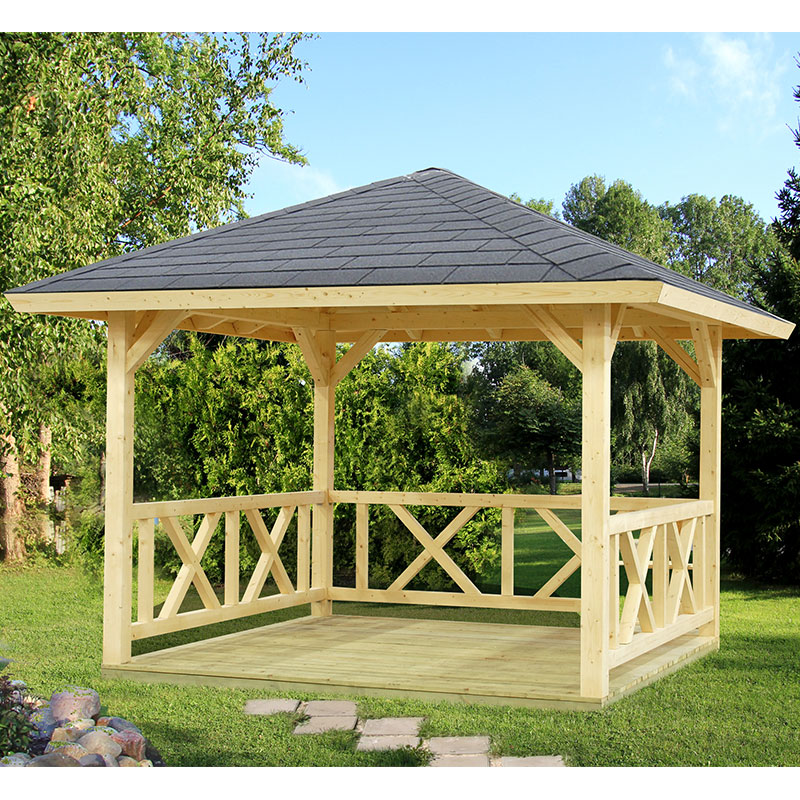
There is also a practical difference in how timber presents a space. A wooden frame can look cosy and grounded, especially when the roofline is low enough to feel enclosed without being dark. Depending on the finish and section sizes, the gazebo may lean toward rustic, traditional or more clean-lined and contemporary. It is a small footprint, yes, but it can still carry a fair bit of character.
Hexagonal, octagonal or square: the shape changes the whole mood
When people search for wooden gazebos 100 sq ft / 9 m², shape is one of the first things that separates one option from another. A square gazebo is often the easiest to furnish because straight sides make it simple to place a table, benches or a bar-style setup. It can feel more architectural and is usually the neatest choice for corners or straight patio lines.
A hexagonal gazebo softens the look a bit and gives a more classic garden structure feel. With six sides, it can suit central seating arrangements and creates a gentle flow around the edges. An octagonal gazebo sits somewhere between decorative and practical. It can feel a touch more formal, with a balanced profile that works well if you want the building to be a feature rather than just a shelter.
There are also more open-sided pavilion styles, where the shape is still defined but the edges feel lighter. These can make a 9 m² space seem less enclosed, which helps if you want views into the garden rather than a full enclosed room. The shape you choose affects not only appearance, but also how easy it is to use the floor area. This is one of those details that sounds small at first, but it really changes the way the space behaves.
Open sides, half walls or enclosed panels
Another useful distinction is how much shelter the gazebo gives. A fully open wooden gazebo has a relaxed, airy feel and is ideal when you want shade and cover overhead without blocking the garden view. It works well for sociable seating and casual meals, where the feeling is more pavilion than room.
A gazebo with half walls or balustrade-style sides creates more privacy and can make the area feel tucked away. It is a good option if you want to reduce draughts or create a more defined zone for dining. The visual effect is also a little more finished, especially in a garden where you want the structure to look intentional from every angle.
More enclosed wooden gazebos can offer stronger shelter and a more room-like atmosphere. These are useful if you prefer a snug, all-weather setting, though they can feel heavier in a smaller garden. With 100 sq ft / 9 m², the amount of openness makes a big difference, because too much enclosure can take away the sense of space quite quickly.
Roof styles that do more than just look nice
The roof is not just decoration. In this size of gazebo, the roof profile shapes the whole experience. A pitched roof gives a traditional look and often feels better for rain run-off and a slightly more generous interior feel. It can make the structure seem taller, which helps when you want the gazebo to feel airy rather than boxy.
A hipped roof is another common choice for wooden gazebos. It gives a neat, balanced appearance and usually feels stable in the garden visually. The lines are softer than a sharp gable, and that can suit square or octagonal layouts very well. For a compact footprint, the roof shape can make the difference between something that feels small and something that feels carefully proportioned.
Some gazebos in this category use a more pagoda-like roofline or a layered top for decorative effect. This tends to suit octagonal or hexagonal frames and adds a distinct centrepiece feel. If your garden already has a lot going on, a simpler roof may be better. If the gazebo is meant to be the focal point, a more detailed roof can make sense without making the base any larger.
What fits inside 9 m², really?
One of the biggest buying questions is how the space will be used day to day. In a 100 sq ft gazebo, the most common uses are garden dining, relaxed seating and small social gatherings. A compact bistro set sits comfortably, but so does a modest dining table if the sides are open enough. The trick is not to overfill it.
If you are thinking about a hot tub gazebo in this size, check the usable internal dimensions carefully. A gazebo can measure 100 sq ft on paper yet feel tighter inside once posts, roof overhang and wall elements are taken into account. The shape matters here too: a square plan can work more cleanly around a rectangular spa, while hexagonal or octagonal layouts may suit a centred tub with circulation around it.
For many buyers, the appeal is that 9 m² gives a proper outdoor destination without needing a huge build. It can work as a breakfast spot, an evening retreat, or a place to gather when the weather is a bit uncertain but you still want to be outside.
Differences that affect buying, not just looks
When comparing wooden gazebos, the details that matter are often the ones people only notice after the garden furniture arrives. Post thickness, roof depth, side openness and internal floor shape can all change how much usable room you really get. A gazebo with chunky corner posts may look strong and well-made, but those same posts can reduce seating flexibility if the footprint is already modest.
Another difference is whether the structure feels more like a gazebo or more like a garden pavilion. The terms get mixed up a bit in real life, but the feel is different. Gazebos usually suggest a decorative, sheltered outdoor room, often with a more distinct roof shape. Pavilions can feel more open and broad. In a 100 sq ft / 9 m² setting, that distinction affects how formal or relaxed the finished space looks.
There is also a practical contrast between fixed-sided shelter and a more open frame. Fixed sides can help create privacy, while open frames feel less enclosed and are easier to blend into lawns or planting. For smaller gardens, that visual lightness can be a deciding factor.
Where this size works best in the garden
A gazebo of this size usually suits a medium garden, a larger patio, or a dedicated corner area where you want to make one zone feel distinct. It can sit neatly on paving, decking or a prepared base, and because it is not oversized, it often leaves enough outdoor space for movement around it. That matters if you still want to keep an open lawn or room for pots, borders or a pathway.
In a garden with long sight lines, a wooden gazebo can act like an anchor point. In a more enclosed garden, it can create a destination at the end of the view. The shape of the gazebo can help with this too: square versions tend to settle into straight-edge landscaping, while hexagonal and octagonal ones often feel like a feature at the heart of the planting.
If the aim is dining, try to allow a little extra circulation space around chairs. If the aim is lounging, think about where you will enter and exit, because a gazebo can feel more comfortable when there is a clear path rather than furniture blocking every side. It sounds obvious, but people often miss it and then wonder why the space feels tighter than expected.
Useful buying tips before you choose
It helps to measure the intended spot more than once, and not only for the base size. With wooden gazebos 100 sq ft / 9 m², the roof overhang can affect how close the structure sits to fences, planting or neighbouring paths. Leave room for the visual edges, not just the footprint itself.
- Check the internal usable area, not only the external measurement.
- Match the shape to the furniture you actually plan to use.
- Consider the roofline if you want the gazebo to feel taller or more enclosed.
- Think about openness if the view into the garden matters.
- Pick a style that fits nearby materials, like stone, decking or timber fencing.
If you are deciding between a more decorative and a more practical look, ask which matters more: the gazebo as a focal point, or the gazebo as a usable room. In this size, you can have both to some extent, but one usually leads.
The appeal is in the balance
What makes wooden gazebos in 100 sq ft / 9 m² such a strong category is the balance between presence and restraint. They are large enough to create a proper outdoor setting, yet compact enough to stay sensible in a real garden. That is a useful sweet spot for buyers who want a structure with purpose, not just decoration.
Whether you prefer a square gazebo for easy layout, a hexagonal gazebo for a softer classic look, or an octagonal design that feels more feature-led, the timber finish keeps the whole thing grounded. The shape, side opening and roof style all change the experience, and that is what makes this category worth comparing carefully. A good choice here is not only about size. It is about how the shelter feels when you stand inside it, sit in it, and look back at it from the rest of the garden.
For buyers who want a clear outdoor room without a bulky build, this category offers a lot of sensible options. It can be formal or relaxed, open or sheltered, simple or decorative. And because the footprint is already defined, the challenge is mostly choosing the version that suits your garden’s proportions and the way you like to spend time outside.
[Sassy_Social_Share]