
Summerhouses 7x4 - Best Deals in UK!
Showing all 2 results
-
20% OFF: 6′ x 4′ Forest Beckwood 25yr Guarantee Double Door Apex Summer House (1.99m x 1.23m) £569.9920%

-
18% OFF: 6′ x 4′ Forest 4Life 25yr Guarantee Double Door Apex Summer House (1.99m x 1.23m) £499.9918%

Summerhouses 7×4 bring a neat, versatile footprint to gardens where space matters: a tidy retreat for seating, storage-friendly layouts, glazing options, apex or pent roofs, and a shape that suits narrow plots, corners and shared boundaries.
A compact footprint with proper purpose
A 7×4 summerhouse sits in that useful middle ground where a garden building feels substantial enough for daily use, yet doesn’t dominate the plot. The 7ft x 4ft format gives you a long, slim room that works well for a quiet reading seat, a compact hobby corner, a small tea spot, or simply a place to enjoy the garden without taking over the whole lawn. For buyers comparing sizes, this one often stands out because it can feel more practical than a tiny 6×4, while still being easier to place than a wider 8×6 or 10×8 building.
What makes this size interesting is the layout. The rectangular shape encourages a natural arrangement: one end for chairs or a small table, the other for storage boxes, a planter stand, or a folding bench. In a garden where width is limited, the 7×4 ratio gives the building a gentle, elongated feel that can sit neatly along a fence line or at the back of a border. It does not ask for a huge clear space, and that can make all the differnce when planning where it goes.
Why the 7×4 shape works so well
The charm of a 7×4 summerhouse is in the proportions. A square building can sometimes feel boxed-in, while a very wide one may need more open ground around it. The 7×4 format offers a balanced, useable rectangle that can be arranged in different ways depending on the door position and window layout. If the door is on the long side, the interior can feel open and sociable. If the door is on the short side, the room can feel more corridor-like, which can actually suit a focused hobby space or a compact garden office style setup.
Bestseller der Kategorie Summerhouses 7x4
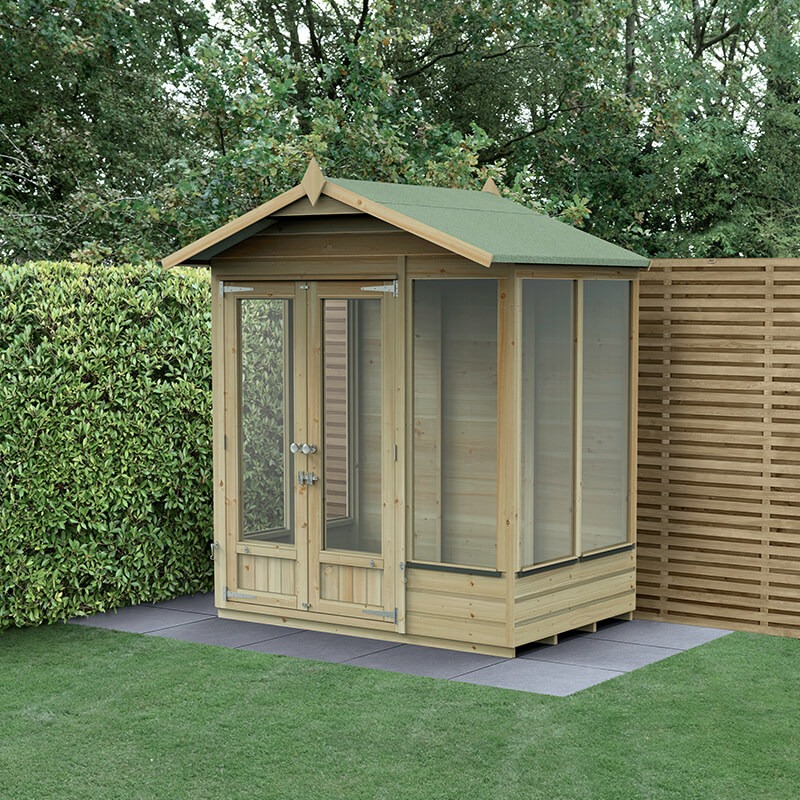
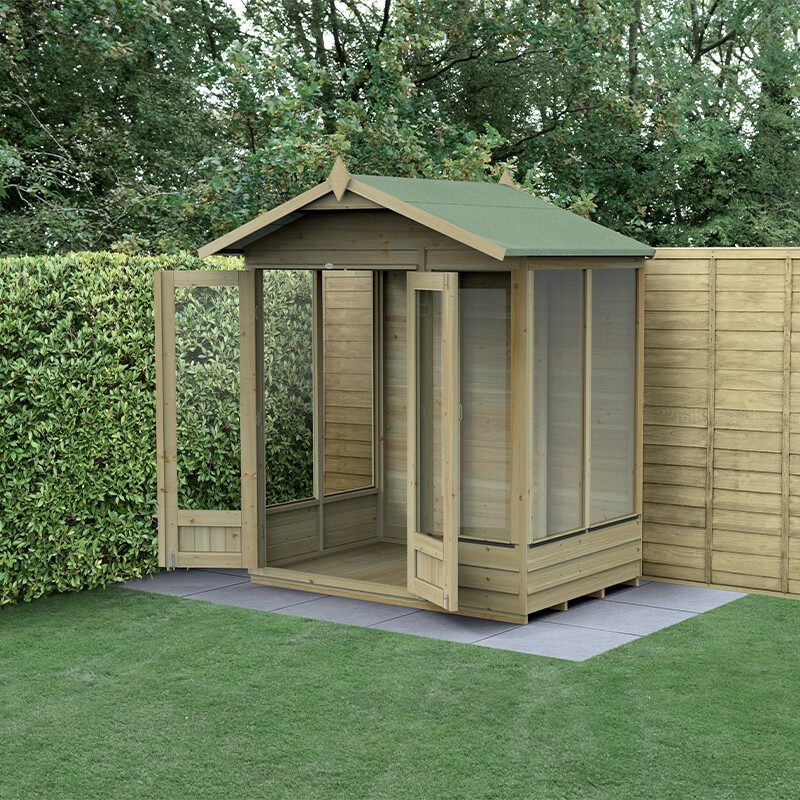
This shape is also handy where access is awkward. If your plot has a narrow side return, a boundary corner, or a section of garden that feels too slim for a larger building, 7×4 summerhouses can fit more naturally. They often appear less imposing from the house too, especially when paired with glazing that allows the structure to look lighter rather than solid and closed-off.
Different roof styles change the whole feel
When shopping for a 7×4 summerhouse, roof style is one of the first details that changes both appearance and headroom. An apex roof gives that classic summerhouse silhouette with a higher centre point and a more traditional garden-room look. This can make the interior feel airier, and it often suits buyers who want the building to look like a proper feature rather than a simple shed with windows.
A pent roof, on the other hand, creates a cleaner, more contemporary line. Because the roof slopes in one direction, it can blend nicely with modern fencing, decking, or simpler landscaping. For a 7×4 footprint, a pent design can also work well where the building needs to sit close to a boundary or where the visual height needs to stay modest. It is a practical difference, not just a style choice.
There are also subtle variations in roof overhang and pitch. A deeper overhang can give the front elevation more presence, while a steeper pitch tends to emphasise the traditional look. Buyers often notice these details when comparing products, even if they do not say it straight away. The roof is what people see first from the garden path, so it matters.
Glazing options that shape light and privacy
Another major difference across 7×4 summerhouses is the amount and style of glazing. Some designs favour large front windows or side panels to pull in daylight and create a brighter seated area. Others use a more measured layout, with fewer glazed sections for a calmer feel and a bit more privacy. If the building faces a neighbouring fence or a busy part of the garden, that balance becomes important.
Full glazing can make a 7×4 feel surprisingly open, almost like a small conservatory-style room without crossing into that type of structure. It suits people who want to sit with a view of the borders, watch the light change, or use the space for creative work. Semi-glazed options offer a compromise, keeping light in while softening the view in and out. For a more enclosed retreat, smaller windows or a mixed arrangement can make the room feel tucked away and private.
There is also a visual difference between single door front layouts and designs with wider double doors. Double doors give a more generous entrance and can make moving furniture or chairs easier. A single door can feel more compact and formal, and sometimes suits a narrower 7×4 plan better. These small decisions influence how the summerhouse is used every day.
Styles that suit different garden characters
Not every garden wants the same kind of summerhouse. A traditional 7×4 summerhouse often includes features like curved windows, decorative bar detailing, or an apex roof, giving it a familiar garden-room feel. This works well in cottage-style plots, established borders, or gardens with timber fencing and softer planting. It can look like it has always belonged there.
Contemporary summerhouses in 7×4 form tend to be simpler in line, with cleaner glazing, flatter roof profiles, and less ornament. These are a good fit for sharper landscaping, porcelain paving, raised beds, or modern composite boundary finishes. They bring a quieter look, which some buyers prefer because it does not fight with the rest of the garden.
There are also corner-friendly interpretations of the 7×4 footprint, where the building is visually lighter or the glazing arrangement helps it sit into an angled plot. While the physical dimensions stay the same, the visual shape can feel quite different depending on how the front face is designed. That is one of the useful things about this size: it can be adapted in style without losing its practical footprint.
What you gain from the smaller, longer format
The biggest advantage of a 7×4 summerhouse is that it offers a dedicated space without demanding a large garden. It gives you a room that can be furnished with purpose, even if only modestly. A bench on one side, a narrow table, two chairs, a shelf, and maybe a small side unit can fit in a way that still leaves room to move. This is especially helpful if you want somewhere to sit that feels separate from the house but not far away.
Because the footprint is compact, it can also help the rest of the garden feel more usable. Rather than losing a broad rectangle of lawn or patio, you keep more open ground for planting, play, or access. That can be particularly useful in urban gardens, terraced houses, or plots where every metre counts. A well-placed 7×4 building can make a garden feel more organised, even if the rest of the space is not large.
There is also a practical angle for buyers who want a building that looks balanced from several viewpoints. A 7×4 summerhouse is long enough to read as a proper structure, but not so large that it overwhelms a smaller border or patio. In that sense, it sits comfortably between a compact shed and a full garden room.
Choosing between a summerhouse, a shed-style look, and hybrid use
Some buyers start out looking for a summerhouse and then realise they need a little more than just seating. The 7×4 size is useful here because it can straddle a few different roles. A pure summerhouse layout leans into relaxation, light and garden views. A more shed-like configuration might prioritise storage and a plainer exterior. Then there are hybrid styles that give you a comfortable room with enough space to tuck away a few practical items without making the whole thing feel like a storage unit.
The difference often comes down to glazing, door style, and interior proportions. More windows, wider doors, and a brighter front face push the building toward a classic summerhouse feel. Fewer openings, solid panels, and a simpler roofline make it more restrained. Neither is right or wrong; it depends on whether you want the building to be a feature or a background piece. In a 7×4 footprint, that distinction is pretty clear once you start comparing options.
For buyers who want to keep things flexible, a 7×4 design can work as a seasonal sitting room, a hobby cabin, or a tucked-away break spot. That flexibility is often what convinces people to choose this size over a smaller garden shed or a larger outbuilding that asks for more garden real estate.
Useful buying points people often overlook
It is easy to focus on the roof shape or window count, but the finer details matter too. The placement of the door changes how the interior feels the moment you step inside. A central door on the long side can create symmetry and a more inviting front. An offset door can make room for a better furniture arrangement. Likewise, the number and position of windows can affect whether one wall feels usable for seating or shelving.
Another point is the interior layout created by the 7×4 plan itself. Because the building is narrower than it is long, you may want to think in zones rather than trying to place everything in the middle. One end might become a quiet corner, while the other stays open for movement or a small table. This avoids the common mistake of trying to furnish it like a square room, which often makes it feel cramped.
It is also worth thinking about how the summerhouse will be seen from outside. A building with more glazing and lighter framing can soften the look in a small garden, while a more solid design can provide a stronger focal point. In both cases, the 7×4 format keeps the profile manageable. That is a quiet benefit, but an important one.
How the 7×4 size differs from other popular dimensions
Compared with 6×4 summerhouses, a 7×4 gives a bit more breathing room. That extra foot of length may not sound like much, but in a narrow building it can make the difference between a couple of small chairs and a usable seating arrangement. Against 8×6 summerhouses, the 7×4 is slimmer and usually easier to slot into a tighter plot, though it offers less floor area for a larger table or multiple seats.
Compared with square formats like 7×7, the 7×4 shape is more directional and often better for boundary placement. It creates a stronger sense of flow from one end to the other. That can suit gardens where the available space is long rather than wide. And compared with larger garden rooms, a 7×4 can feel less formal, less heavy, and a bit more approachable for everyday use.
These differences are not only about size; they influence how people actually use the building. A 7×4 summerhouse can feel less like a permanent structure and more like a well-placed retreat. That is often exactly what buyers want when they are trying to add comfort without changing the garden too much.
Small features that make a big visual difference
In this category, the details often create the appeal. Framed glazing can give the front a more classic look. Shaped roof lines can make the building seem taller or slimmer. Double doors open up the front and can make the interior feel more generous. Even the arrangement of small panes versus larger sheets of glass changes the mood of the room. Some buyers prefer a more traditional pattern, while others want a cleaner, less broken view to the garden.
The exterior finish also plays a role in how the summerhouse sits in the plot. Lighter colours can make the building appear less bulky in a smaller garden, while darker tones can ground it visually. A 7×4 structure is already compact, so the finish can be used to either reduce its presence or make it feel more defined. That’s a useful choice, especially if you want it to blend into planting or stand out as a focal point.
At this size, the summerhouse becomes a kind of garden punctuation mark. Not too large, not too slight. Just enough to suggest a place to stop, sit, and enjoy the space.
Who the 7×4 summerhouse suits best
A 7×4 summerhouse suits buyers who want a dedicated garden space without moving into large-building territory. It is a strong option for smaller family gardens, side returns, narrow lawns, and plots where a wider structure would feel awkward. It also works for people who want a neat summer room but do not need a full-blown studio size footprint.
It can be a sensible choice for couples who want a sitting space, for hobby users who need a focused nook, or for anyone who likes the idea of a garden building that doesn’t swallow the view. Some buyers choose this size because they simply want the garden to stay open and relaxed. Others pick it because it gives them a little more structure without turning the whole plot into a building site. That is a fair reason, really.
If you are comparing options, it is worth looking at where the summerhouse will sit in relation to paths, planting, and sightlines from the house. In a 7×4 layout, placement can be as important as the product itself. A well-sited building can make a garden feel more complete, even if the footprint is modest.
What to look for when browsing the category
When browsing Summerhouses 7×4, it helps to compare the shape, glazing, roof style, and door arrangement side by side. Think about whether you want a more traditional apex profile or a cleaner pent roof. Decide whether the priority is light, privacy, or a bit of both. Look at how the front elevation will appear from the main seating area in the garden, because that view is often the one that matters most.
It can also help to imagine the summerhouse in use, not just in pictures. Where would a chair go? Would there still be space to move around? Would the door open into a sensible area? These questions are simple, but they steer people toward the right 7×4 design more reliably than vague impressions. A small building can still feel generous if the proportions are right.
In the end, the appeal of 7×4 summerhouses is that they offer a practical room-like feel in a garden-friendly size. They are compact, yes, but not limited. They can be traditional or modern, bright or private, decorative or restrained. And for many gardens, that balance is exactly what makes them worth a closer look.
- 7×4 footprint suits narrow or medium-sized gardens where width is limited.
- Apex roofs give a more traditional profile and added central height.
- Pent roofs offer a simpler, more contemporary line.
- Full glazing increases daylight and opens the view to the garden.
- Semi-glazed designs balance brightness with a bit more privacy.
- Double doors can make the entrance feel easier and more open.
- Single-door layouts often suit slimmer or more compact arrangements.
- Traditional styles work well with cottage gardens and softer planting.
- Modern styles fit cleaner landscaping and sharper boundary lines.
- Careful placement can make a small footprint feel more spacious and useful.