
Summerhouses 120 sq ft / 11 m² - Best Deals in UK!
Showing the single result

Summerhouses 120 sq ft / 11 m² give you a usable garden room size for seating, storage, hobbies and quiet time, with compact footprints, varied roof lines, and practical layouts.
Roomy enough for more than one idea
A 120 sq ft / 11 m² summerhouse sits in that useful middle ground: not too small to feel cramped, not so large that it takes over the garden. It is the kind of size that can work as a tea room, a reading space, a place for a desk, or simply a better way to use a corner of the plot that was doing not much at all. If you have been comparing compact cabins and larger garden buildings, this size often feels easier to fit in without losing the sense of open space outside.
The appeal is partly in the balance. You get enough floor area for a table and chairs, a small sofa, or a proper worktop, while still keeping the structure modest in scale. That makes 11 m² summerhouses useful for smaller gardens, but also for larger ones where you want a defined destination rather than a big outbuilding shouting for attention.
Shapes that change the feel straight away
At this size, shape matters more than people expect. A summerhouse that is square gives a neat, efficient layout and is handy when you want the interior to feel ordered. A rectangular form can suit a longer wall of glazing or help separate seating from storage along one side. Then there are models with a more classic or quirky outline, where the roof and front elevation create a softer, more decorative garden feature.
Bestseller der Kategorie Summerhouses 120 sq ft / 11 m²
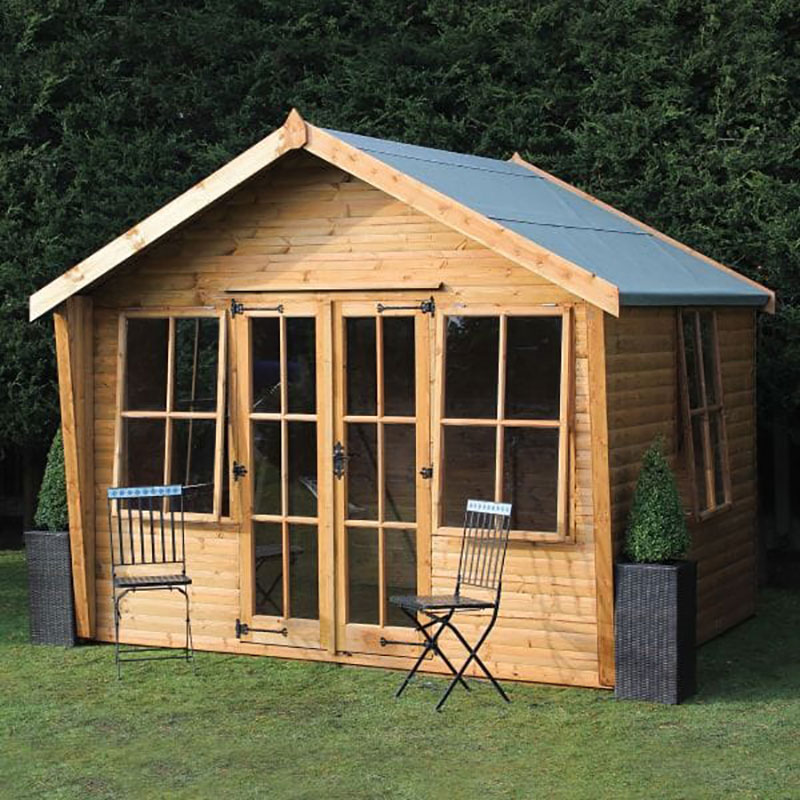
- Square layouts work well for balanced furniture placement and easy zoning.
- Rectangular designs can suit narrow plots or create a clearer front-to-back flow.
- Corner summerhouses are useful when the aim is to make use of an awkward garden edge.
- Hexagonal or octagonal styles bring a more social, pavilion-like feel and usually suit central seating.
The choice is not only about looks. It changes how the room behaves. A square building may feel calm and straightforward, while a faceted shape can give more window angles and a lighter, more open atmosphere. If your garden already has strong lines, a softer shape can break that up nicely. If the plot is tight, a cleaner rectangle may be easier to place and furnish without odd dead corners.
Roof styles with a real impact on the interior
The roof style is one of the biggest differences between summerhouses in this category. A flat roof gives a tidy, contemporary profile and can suit gardens where you want the building to sit low. A pent roof often has a gentle slope that helps the building look streamlined, especially against a boundary or fence. A apex roof brings the familiar pitched look, which many buyers prefer because it adds a more traditional summerhouse character.
Inside, the roof shape affects headroom and the feel of the room. Apex designs can create a slightly more airy centre, while pent-roof models often feel more even and practical for placing shelving or artwork along the walls. Flat or low-pitch roofs tend to make the building feel discreet from the outside, which is useful if you want the summerhouse to blend into the plot rather than dominate it.
- Flat roof: cleaner outline, lower visual profile, often suits modern gardens.
- Pent roof: simple slope, neat lines, often good for side returns or fence-adjacent placement.
- Apex roof: classic shape, familiar summerhouse look, often gives a more traditional finish.
Glazing that changes light, mood and use
For a 120 sq ft / 11 m² summerhouse, glazing is not just decorative; it defines the whole experience. A model with full-height windows can feel very open and garden-facing, which suits social use or a light-filled hobby room. Half-glazed doors and side windows can make the building feel more enclosed and calm, better if you want a quieter corner away from the rest of the garden. Corner glazing, where available, can give a wider view and make the room feel a bit more connected to the outdoors, even without increasing the footprint.
There is also a visual difference between large window areas and more solid wall space. More glass usually gives you a brighter interior, but more wall area can make it easier to place furniture without everything sitting in front of a pane. So the best option depends on how the room will be used. If it is for sitting and looking out, glass matters more. If it is for a desk, a drinks trolley, or a mix of uses, a more balanced wall-to-window layout can be easier to live with.
Popular subtypes in this size range
Within summerhouses of this footprint, a few distinct styles tend to stand out. Some lean towards decorative leisure use, while others are made to feel more like a small garden room. The size does not force one answer, which is why this category is so versatile.
- Traditional summerhouses with a classic garden-room look, often chosen for relaxed seating and a softer feel.
- Gazebo-style summerhouses that can feel more open and social, sometimes with broader glazing and a pavilion mood.
- Corner summerhouses that make very good use of space in smaller or irregular gardens.
- Modern cabin-style summerhouses with straighter lines and a more architectural presence.
- Multi-purpose summerhouses that are designed to handle a mix of seating, occasional work and storage.
The difference between these is often less about the basic size and more about the way the space is framed. A traditional version may feel more like a garden retreat, while a cabin-style building can edge towards a compact studio look. If you want the structure to act as a focal point, the more decorative options usually suit. If you want it to blend into planting and hard landscaping, a simpler profile may fit better.
Why this footprint works for everyday use
11 m² sounds modest on paper, but in practice it can support a lot. You can set up a small dining nook, a pair of armchairs with a side table, or a bench and storage chest without the room feeling busy. That is one of the main reasons people look at this size rather than something tiny. There is room for a proper arrangement, not just a single chair and a hopeful plant pot.
It also gives more flexibility when the garden has to do several jobs. A summerhouse at this scale can sit quietly in the background and still be useful on a daily basis. It can be a place to sit with a cup of tea, keep cushions and outdoor extras out of sight, or host a couple of guests without needing a full outdoor build. Because it is not oversized, it tends to feel easier to place near borders, at the end of a path, or as a feature in a lawned area.
Differences buyers often notice first
When comparing models in this category, people usually notice a few things straight away: the roof pitch, the shape of the front, the amount of glazing, and how the doors open. These details affect not just appearance but how the building is used in day-to-day life.
- Double doors can make the building feel more welcoming and easier to furnish with larger items.
- Single doors can save front space and suit a more compact layout.
- Wide glazing creates a lighter feel, while solid panels offer more wall space inside.
- Symmetrical fronts tend to look formal and balanced, while offset openings can feel more relaxed.
These differences matter because a summerhouse is often bought for a specific mood as much as a specific function. Someone wanting a small retreat for quiet time may prefer a more enclosed design. Someone planning to use the room for gatherings may want broader doors and a brighter frontage. Small changes in layout can make the building feel quite different once it is in the garden, and that is something worth paying attention to before choosing.
Useful placement tips for this size
Choosing where a 120 sq ft / 11 m² summerhouse sits in the garden can change how it feels, even when the building itself stays the same. A spot with a bit of privacy often works well, especially if the room is meant to be used for sitting or reading. A position that catches afternoon sun can make the interior more inviting, but you may also want to think about how the doors open in relation to paths and planting.
If the garden is not huge, the shape of the building can help it settle in properly. A corner design can make a difficult layout easier, while a rectangular model may suit a long back boundary. Leaving a sensible amount of space around the structure can also help the summerhouse look intentional rather than squeezed in. Even a modest building benefits from breathing room, especially if you want it to feel like a destination rather than an afterthought.
Buying for feel, not only for dimensions
It is easy to focus on square footage alone, but in this category the feel of the building matters just as much. The same 11 m² can read as cosy, open, formal or relaxed depending on the form and frontage. That is why a buyer should look at the broad shape of the roof, the balance of windows and wall panels, and whether the overall profile suits the rest of the garden.
For example, a more enclosed summerhouse may suit a garden full of planting, where you want the structure to feel tucked away. A brighter, more glazed version may suit a cleaner paved setting where the room is meant to be part of the view. Neither is right or wrong; they just do different jobs. The right choice is often the one that matches how you already use the outside space, rather than forcing a new idea onto it.
Small details that make a big difference
In a building this size, smaller features can have a bigger effect than expected. A wide doorway can make the room feel more generous the moment you step in. A well-placed window can change the whole seating plan. A roof with a bit more height can make the room feel less boxed-in, which is worth noting if you plan to use it for longer periods.
Buyers often notice the difference between a simple leisure room and a more flexible garden building once they compare the interior flow. If one model has clearer wall sections, it may suit storage baskets or a small table better. If another has more glass and a more open frontage, it may feel better for social use. The trick is to imagine how you would place two chairs, a table, a shelf, or a bench. That tends to reveal whether the shape is practical for your own habits.
A garden feature that earns its place
A summerhouse 120 sq ft / 11 m² can do a lot without asking for too much space in return. It can act as a quiet room, a social corner, a flexible extra space, or simply a more attractive use of garden area that might otherwise stay underused. With the right shape, roof style and glazing, it becomes less like a box at the end of the lawn and more like part of the way the garden works.
If you are comparing options, focus on the details that affect how you will actually use the room: the balance of glass and wall, the footprint shape, the roof profile, and the feel of the entrance. Those are the things that separate a building that merely fits from one that feels right every time you open the doors.
[Sassy_Social_Share]