
polycarbonate greenhouses 70 sq ft / 6 m² - Best Deals in UK!
Showing the single result

Polycarbonate greenhouses 70 sq ft / 6 m² for compact growing spaces, with lean-to, apex and mini-victorian styles, light diffusing panels and practical layouts for herbs, tomatoes and seedlings.
A Small Footprint with Proper Growing Room
70 sq ft / 6 m² sits in that useful middle ground where a greenhouse feels genuinely productive without taking over the whole garden. It is big enough for a few crops at once, yet still suited to smaller plots, side returns, patios and tighter back gardens where every metre has to earn its keep. A polycarbonate greenhouse in this size can be used for early sowing, tender plants, or simply to give regular crops a more reliable place to grow when the weather is doing its usual thing.
What makes this category especially appealing is the balance between space, structure and value. You are not forced into a tiny cold frame set-up, but you also avoid the bigger commitment of larger glasshouses. For many buyers, 6 m² is the point where a greenhouse stops being a nice extra and starts becoming a proper part of the garden. It can hold benches, shelves, staging and pots without feeling cramped, provided the layout is thought through a bit.
Why Polycarbonate Changes the Feel of the Space
Polycarbonate panels give these greenhouses a very different character from traditional glass. The key thing is the way the material diffuses light. Instead of sharp direct glare, the light is softened across the growing area, which helps plants receive a more even spread through the day. This can be useful for younger plants, leafy crops and mixed planting where you do not want the hottest rays hitting one side too hard.
Bestseller der Kategorie polycarbonate greenhouses 70 sq ft / 6 m²
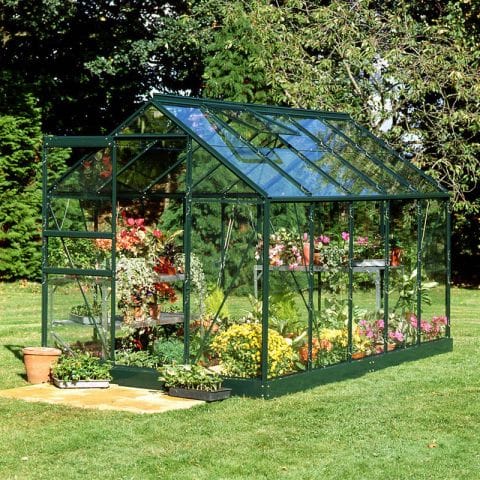
Another practical difference is the general impact resistance of polycarbonate. In a 70 sq ft / 6 m² greenhouse, that matters because the structure may be installed in a more exposed spot or simply in a garden where branches, balls, ladders and general life are not always behaving. The panels also tend to feel less fragile in everyday use, which can give buyers a bit more confidence if they want a greenhouse that is not too delicate.
It is also worth noting the look. Polycarbonate gives a greenhouse a clean, modern finish, but it can still suit traditional gardens depending on the frame shape. That means this category does not sit in one style only. It stretches from practical, simple forms to more decorative designs, with different profiles affecting how much growing space you actually get inside.
Common Shapes That Make the Difference
In a 6 m² category, shape is not just a style choice; it affects where the greenhouse fits, how much usable headroom you get, and whether you can tuck in a bench or two. The most common forms include:
- Apex / gable roof – a familiar pitched form with a central ridge, giving a classic greenhouse look and decent overhead space for taller plants.
- Lean-to – fixed against a wall or fence, making use of existing structure and often working well where ground space is limited.
- Rectangular walk-in designs – straightforward layouts that make it easier to place staging, shelves and trays along the sides.
- Victorian-style or ornamental profiles – usually chosen for appearance as much as function, with curved or more decorative lines that suit period gardens.
- Multi-section compact layouts – helpful when a buyer wants distinct zones for propagation, potting and crop growing, even in a smaller footprint.
The main difference between these shapes comes down to usable internal space. A greenhouse can be 70 sq ft on paper, but the actual feel inside changes a lot depending on roof pitch, wall height and door placement. A steeper roof can improve headroom and air movement, while a lean-to can be more space efficient in a tight plot. So it is not only about size, it is about how the space is shaped.
Lean-to or Freestanding?
A lean-to polycarbonate greenhouse is a smart option when the garden already has a wall, shed or solid boundary that can act as support. It often works well in narrow spaces, courtyard gardens and side passages where a full standalone structure would feel too bulky. Because it uses one side of an existing building, it can feel neat and a bit more integrated. Some buyers like that it keeps the garden looking less cluttered, which is no small thing.
A freestanding greenhouse, by contrast, gives more flexibility in positioning. It can be set where sun exposure is better, or where the layout of the plot makes access simpler. In a 6 m² size, this can matter because the placement decides whether the greenhouse becomes an awkward corner feature or a really productive spot. Freestanding designs often suit buyers who want paths around all sides, better access for cleaning and more freedom with ventilation placement.
The choice between the two usually comes down to site conditions. If space is tight and wall support is available, lean-to can make a lot of sense. If the garden has a clearer open patch and the aim is a self-contained growing zone, freestanding is often the better fit. Neither is automatically the better option; it depends on how the gardener wants to use the space, and where the sun falls through the day.
Panel Styles: Single, Twinwall and the Middle Ground
Polycarbonate greenhouses are not all the same inside the panel. The category may include single-wall polycarbonate and twinwall polycarbonate, and that difference matters more than people often expect. Single-wall panels are lighter and can give a clearer, simpler appearance. Twinwall panels have an internal gap that can improve insulation qualities, which may be attractive if the greenhouse is being used more frequently in cooler months or for earlier starts in the season.
Twinwall polycarbonate tends to give a slightly more substantial feel, while single-wall can look sleeker and may let in a different quality of light. The exact effect depends on thickness and panel structure, but in plain terms: one type feels more robust and insulating, the other a bit lighter and more minimal. For a 70 sq ft / 6 m² greenhouse, that can influence how the structure feels visually and how much of the interior stays usable beyond the main summer stretch.
Some buyers are drawn to panels with a more opaque look because they prefer soft light for tender plants. Others want a clearer panel style if the greenhouse is also serving as a display space for seed trays, potted plants and decorative specimens. Both approaches have a place, and the right choice often comes down to what you plan to grow first.
What This Size Is Good For, Practically Speaking
A 70 sq ft / 6 m² greenhouse is well suited to a mix of growing jobs, which is part of why this category is so popular with keen gardeners who do not want to go too large. It can handle seed starting, young vegetable plants, herbs in pots, hanging baskets, and a collection of tender plants that need shelter. There is usually enough room to keep things separate, so one corner can be for propagation while another is for more established crops.
That separation matters because it makes the greenhouse feel more organised. Instead of every pot fighting for the same bench space, the structure can be split into little growing zones. This works especially well in a rectangular interior, where you can run staging down one side and leave a clearer path through the middle. A compact greenhouse is at its best when the layout is simple, not overfilled with too much kit.
Buyers often like this size because it can support a steady rhythm through the seasons. Not just one task, but several. Start the seedlings. Move them on. Keep the tender stuff protected. Hold the spare pots. Store trays when not in use. It becomes a working space rather than a box to stand in, and that difference is quite important.
Benefits Buyers Notice Straight Away
The first benefit many people notice is light diffusion. In direct sun, polycarbonate can create a more balanced brightness, which is easier on plants that can struggle with harsh exposure. The second is the feeling of everyday durability. These panels are made for practical gardening use, so they tend to suit buyers who want less worry about accidental knocks or the odd rough day in the garden.
Another benefit is the combination of space efficiency and usable volume. With 6 m², you can still fit work surfaces, but you are not drowning in floor area you may never use. That makes this a sensible category for gardeners who want a greenhouse that feels active and manageable, not oversized and half-empty. It is also a good size for people who like to see all their plants in one glance, because the whole setup stays within easy reach.
There is also a visual benefit. Polycarbonate greenhouses can look neat and orderly, with a clean panelled finish that suits both modern and older gardens. Some people prefer the softer look over clear glass because it feels less stark. Others simply appreciate that the structure tends to blend in rather than dominate, which can matter if the greenhouse is visible from the house or patio.
How Different Designs Affect the Growing Experience
The internal experience of a polycarbonate greenhouse changes quite a lot depending on whether it is tall, narrow, broad or low-slung. In a 70 sq ft / 6 m² footprint, a taller apex roof can make the greenhouse feel less compressed and more comfortable to move around in. This is useful if you grow climbing crops, tall pots or want to stand upright in the centre without ducking every few steps.
A lower profile design may be more subtle in the garden and can sometimes sit better in exposed or compact spaces. But it may also feel more limited for taller planting. That is the sort of trade-off buyers should be thinking about before choosing, because the shape affects how many jobs the greenhouse can really do. A greenhouse that looks small from outside might still feel workable inside if the wall height and roof design are well chosen.
Door style can matter too. A wider door opening helps with wheelbarrows, larger pots and full trays. A single narrow door may save space on the frame, but it can make daily use a bit clumsy. For buyers comparing options, this is one of those details that sounds minor but turns out to be quite important once the greenhouse is in regular use.
Useful Buying Tips That Actually Help
Before choosing, it helps to measure the true footprint rather than just imagining the size on paper. A 6 m² greenhouse can feel very different depending on where paths, borders and fences sit around it. Leave enough access space so you can get to the door without squeezing past other garden elements. It sounds obvious, but people do overlook it.
Think about orientation as well. If the greenhouse is meant for early crops and mixed growing, the direction it faces can change how light moves through the day. In a compact structure, even a small shift in position can affect how warm one end feels compared with the other. This is especially relevant for lean-to designs, where the supporting wall and surrounding structures influence the internal climate quite a bit.
Also consider whether you want the greenhouse to be mainly for propagation, mixed vegetables, or ornamental growing. If propagation is the focus, you may want more shelf space and easy access to trays. If it is for mixed crops, a more open floor plan can be better. If it is for display plants, then the look of the panels and frame may matter just as much as the layout.
Small Size, Proper Purpose
What gives this category its appeal is that it does not pretend to be something it is not. A polycarbonate greenhouse 70 sq ft / 6 m² is not a huge commercial house, and it does not need to be. It offers enough room for serious hobby growing, while staying compact enough for ordinary gardens. That makes it a good fit for buyers who want a greenhouse that earns its place without becoming a burden on the layout.
It is also the kind of size that encourages thoughtful planting. You tend to choose crops with more intention, arrange the space better, and get more from each corner. There is a kind of discipline to a smaller greenhouse that some gardeners really enjoy. It keeps things focused, and yes, a bit more tidy too, even if the trays start spreading out when you are not looking.
For anyone comparing greenhouse types, this category offers a useful middle path: enough room to grow well, enough structure to feel substantial, and enough flexibility in shape and panel style to suit different gardens. Whether the aim is a lean-to tucked against a wall, a classic apex walk-in, or a more decorative form with softened light, the 6 m² polycarbonate greenhouse gives buyers a practical way to grow more in a space that still feels manageable.
[Sassy_Social_Share]