
polycarbonate greenhouses 180 sq ft / 17 m² - Best Deals in UK!
Showing the single result

Polycarbonate greenhouses 180 sq ft / 17 m² give you a practical growing space for crops, seedlings and longer seasons, with a choice of shapes, glazing types and layouts for tidy, usable gardening.
A size that feels generous, not awkward
A greenhouse at 180 sq ft / 17 m² sits in that useful middle ground: large enough for proper growing, yet not so huge that it starts to dominate the plot. It suits gardeners who want space for a serious mix of crops, but still need a structure that can fit neatly into a domestic garden. The footprint usually gives room for clear paths, shelving, staging, and a few dedicated growing zones without everything feeling cramped.
This size is especially appealing if you want to move beyond a starter house and into something with real working space. You can separate young plants from fruiting crops, keep tall plants from shading smaller ones, and organise the interior in a way that makes sense instead of having to squeeze everything together. That makes the greenhouse feel calmer to use, and also easier to plan around.
Why polycarbonate changes the experience
Polycarbonate glazing is one of the main reasons buyers look at this category. Compared with glass, it gives a different balance of light, insulation and impact resistance. The look is still clean and classic, but the material brings a more practical edge. For many gardeners, that means a greenhouse that feels less fragile and more suited to everyday use.
Bestseller der Kategorie polycarbonate greenhouses 180 sq ft / 17 m²
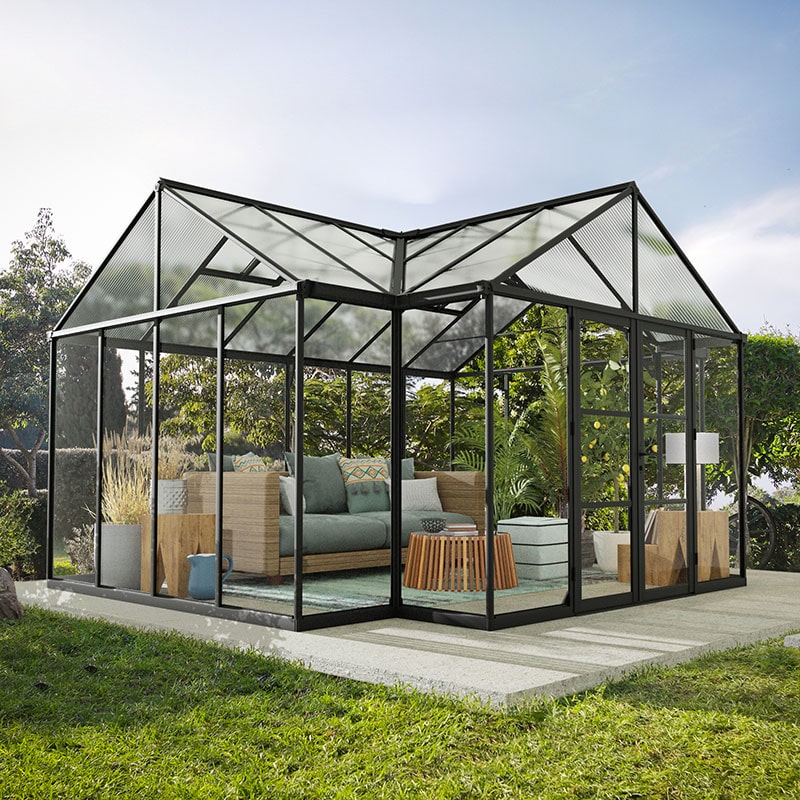
One important point is that polycarbonate is not just one thing. You will find single-wall sheets, double-wall panels and multiwall polycarbonate, each with a different feel. Single-wall sheets let in plenty of light and are lighter in appearance. Double-wall and multiwall options add a more insulated structure, often with a softer spread of light. The difference is not only technical; it changes how the greenhouse behaves with sunlight, warmth and visual privacy.
Shapes that suit the same footprint in different ways
In a 17 m² greenhouse, shape matters a lot. The same floor area can feel very different depending on the form of the frame. A tunnel style gives a more curved interior and often feels efficient for crop rows. A lean-to design can make clever use of an existing wall and works well where garden space is tight on one side. A traditional ridge-and-furrow style, or a more square footprint with a pitched roof, tends to give a straightforward internal layout and easier headroom near the edges.
Some buyers prefer a freestanding rectangular greenhouse because it offers the clearest arrangement for staging, benches and pathways. Others like a more arched form because it sheds wind differently and creates a softer profile in the garden. The right shape is not only about looks; it affects how usable the space feels once plants start filling it.
What 180 sq ft can actually do for you
People often underestimate what fits into this size until they step inside one. A 180 sq ft greenhouse can support a broad mix of planting styles at once. There is often enough space for a central run, with growing areas along both sides, plus room for pots, seed trays and taller specimens. If you like to grow tomatoes, cucumbers, peppers, herbs and bedding plants together, the space can be organised without everything competing for light.
This size is also handy for gardeners who want to stagger crops. For example, one side can hold spring seedlings while the other side carries summer fruiting plants. Later in the year, the same structure can be used for autumn starts, overwintering plants, or raising stock for the next season. It becomes a working space rather than just a shelter.
Different panel options, different growing moods
Not all polycarbonate panels behave the same way. Clearer sheets tend to feel bright and open, which is useful if you want strong light transmission for sun-loving crops. Opal or diffused panels soften the light, reducing harsh glare and spreading sunlight more evenly through the house. That can be useful when you are starting delicate seedlings or trying to avoid patchy light on lower leaves.
There is also a noticeable difference between thin panels and thicker multiwall sheets. Thicker panels usually give more of a buffer against temperature swings and a more substantial feel to the structure. Thinner panels may look lighter and can suit buyers who want a simpler visual profile. Neither is automatically better; it depends on whether you value brightness, insulation, weight or appearance more.
Room for structure inside, not just plants
A greenhouse of this size gives you enough space to think in zones. That is a real advantage. You can create a side for propagation trays, another for larger pots, and a separate stretch for long-term crops. Instead of every plant fighting for the same strip of bench, the greenhouse can work more like a small garden room.
This is where staging height and layout width matter. A wider model may be better if you want two working aisles or more comfortable movement around the house. A narrower but longer footprint can suit row growing and make it simpler to reach each section. If you are buying for the first time, it is worth imagining how you will move a watering can, tray, or barrow through the space before settling on a shape.
Cladding styles that make practical differences
Polycarbonate greenhouses in this size are often chosen because the cladding feels more forgiving than traditional glazing. Multiwall polycarbonate creates small air gaps that can help the structure feel less exposed. That matters in a greenhouse where you want some temperature stability without changing the whole design of the garden. It can also reduce the hard, reflective look some people dislike in full glass houses.
There are visible differences too. Some panels look crisp and modern, while others have a more muted finish. If your garden already has timber, brick or painted fencing, the colour and transparency of the greenhouse can affect how well it sits within the space. A slightly softened panel finish can make a larger greenhouse feel less dominant, which is useful in a modest-sized plot.
Who this size tends to suit best
This category fits gardeners who want something beyond a hobby-sized starter greenhouse. If you grow vegetables in quantity, raise a lot of seedlings, or keep a long season of pots moving through the house, 17 m² gives you breathing room. It can also suit people who split their planting across categories, for example edible crops at one end and ornamental plants at the other.
It is also a sensible choice if you often feel limited by a smaller unit but do not want to jump into something oversized. The greenhouse remains manageable, yet it opens up options that smaller frames simply cannot offer. That includes more orderly spacing, better crop separation and a more usable interior for repeated sowings.
What to compare before buying
Not every polycarbonate greenhouse in this size category feels the same once installed. A few details are worth checking closely. Door width affects how easy it is to carry trays and pots in and out. Roof shape changes headroom, especially near the sides. Wall height matters if you plan to use benches or grow taller crops. Even the exact footprint can alter how much usable space you get after staging is fitted.
It is also worth comparing whether the structure gives you a more open central aisle or a more segmented layout. Some gardeners want a clean run down the middle; others prefer side growing zones with a compact working area. There is no single right answer, but the best greenhouse is the one that matches how you actually grow, not just how it looks on paper.
Forms that make the greenhouse feel more or less spacious
The internal feeling of space can vary quite a bit. A higher ridge generally makes a greenhouse easier to use for taller crops and improves the sense of volume. A lower roof may suit a smaller garden visually, but it can feel more compressed when filled with plants. Arched models sometimes offer a smooth overhead curve, while pitched roofs often create sharper usable corners near the top.
For many buyers, the difference becomes obvious once shelves, hooks and hanging plants are added. A greenhouse with good vertical space can support more than one layer of growing without feeling cluttered. That is useful if you like to stack propagation under taller crops or keep trailing plants above the bench line. In this size, those details can make the greenhouse feel much more efficient.
Why the material suits mixed crops
Polycarbonate is a good match for mixed growing because it balances brightness with a bit of protection. That matters when one part of the house is filled with sun-hungry tomatoes and another with more delicate young plants. The material helps keep the internal climate from feeling too severe, which can be handy in a greenhouse that is used through changing weather.
It also suits gardeners who want a structure that looks neat even when it is busy inside. A polycarbonate house often gives a slightly softer visual line than plain glass, and that can be easier on the eye when the greenhouse is near seating areas, patios or the main garden view. So the choice is not only about function, but also how the building sits in the landscape.
Small differences that add up to a better buy
When you compare products in this category, minor details can be surprisingly important. Panel thickness, frame proportions, roof pitch and door position all influence day-to-day use. A greenhouse can have the same stated size and still feel very different once you start planning how to place staging, pots and access routes.
It is also sensible to think about the type of gardening you do most. If you grow a lot of tall crops, look for a shape that gives usable headroom. If you like propagation, a more organised interior with clear bench space may suit you better. If your focus is on mixed planting and display, a greenhouse with a balanced footprint and good light spread may feel easier to live with.
A category for gardeners who want room to think
What makes polycarbonate greenhouses 180 sq ft / 17 m² appealing is not just the size, but the freedom it gives. You are no longer working in a tight box where every tray has to fight for a place. You get space to separate tasks, try different crops, and shape the interior around the way you garden. That can make the whole process feel more ordered, and a bit less rushed.
If you want a greenhouse that combines practical capacity, different glazing choices, and a form that can suit several garden layouts, this category offers plenty to compare. The differences between shapes, panel types and internal proportions are not minor details; they shape how useful the greenhouse will be once it is full. And that is usually the point, really.
- 170–180 sq ft class offers enough room for mixed crops without feeling oversized
- Single-wall panels suit buyers who want a lighter look and plenty of brightness
- Double-wall or multiwall panels bring a more insulated feel and softer light spread
- Arched forms can create a smoother profile and efficient growing volume
- Pitched-roof forms often give clearer headroom and a more traditional greenhouse feel
- Lean-to styles work well where garden space needs to be used carefully
- Freestanding rectangular layouts make zoning and staging more straightforward
- Clearer glazing may suit sun-loving crops, while diffused finishes help spread light more evenly