
Greenhouses 180 sq ft / 17 m² - Best Deals in UK!
Showing the single result

Greenhouses 180 sq ft / 17 m² offer a practical middle ground for serious growing: enough room for borders, staging, tomatoes, salads and overwintering plants, without needing a huge plot.
A Proper Sized Growing Space, Not Just a Box of Glass
A 180 sq ft / 17 m² greenhouse sits in that useful space where hobby growing starts to feel properly organised. It is roomy enough for dedicated crop zones, yet still compact enough to suit many gardens where space matters. For buyers who want more than a few pots on a shelf, but do not want something that dominates the whole plot, this size makes a lot of sense. You can think in terms of a small growing room outdoors: one area for productive crops, one for staging, and space left for access, which is often the bit that gets overlooked until the greenhouse is already full.
This category suits gardeners who like to do things in a more structured way. 17 m² gives you the chance to separate seed sowing from potting, keep taller crops away from low trays, and organise plants by warmth or height. It is a size where layout starts to matter, and that is part of the appeal. The greenhouse becomes not just a shelter, but a working space for growing through the seasons.
Shapes That Change How the Space Feels
Within the 180 sq ft greenhouse category, the shape makes a clear difference to how usable the space feels. The footprint may be similar, but the internal flow can change a lot depending on whether the design is lean-to, freestanding, ridge-and-furrow style, or a more traditional gable form. Buyers often focus on area first, then realise that the shape decides where you can stand, reach, and place taller plants.
Bestseller der Kategorie Greenhouses 180 sq ft / 17 m²
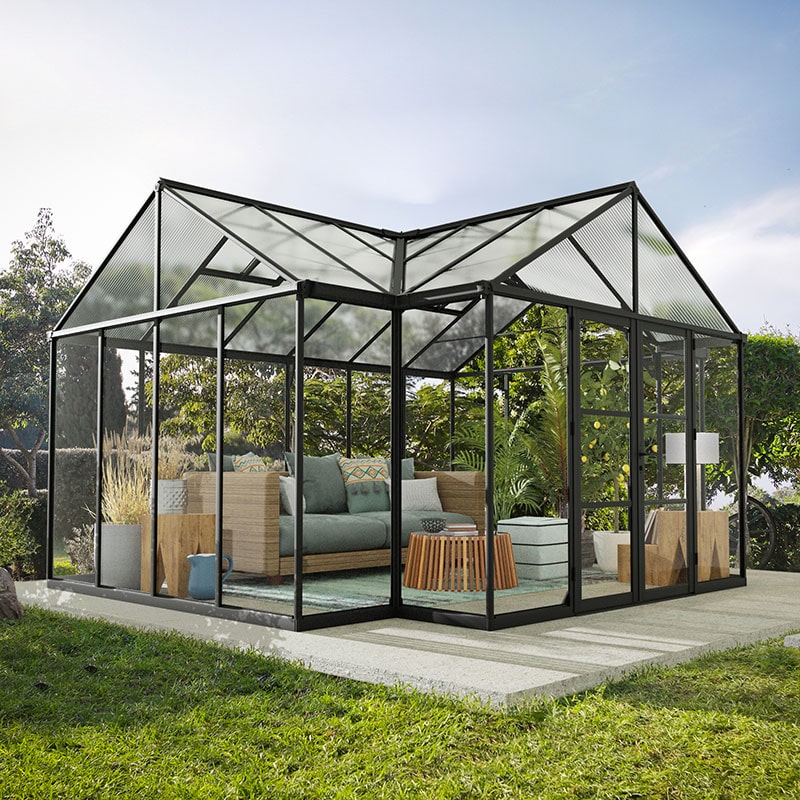
Freestanding greenhouses usually give the most flexible arrangement. They can be approached from all sides, which makes them easier to place in a garden where access matters. A lean-to greenhouse uses an existing wall and can feel efficient if the garden is narrow or if heat retention matters. Ridge and furrow type layouts are less common in private gardens, but the idea behind them is simple: joining sections to create broader growing space with a clear internal rhythm. Then there are the familiar apex and pent shapes, each with its own balance of headroom, drainage and light angles.
- Freestanding for flexible siting and easier circulation
- Lean-to for gardens where one wall can support the structure
- Apex for classic roof lines and good central headroom
- Pent for a more compact profile and a neat side-on look
- Curved or arched forms for a softer silhouette and efficient rain run-off
The shape also affects where you can place benches. A greenhouse with generous eaves and a higher ridge tends to suit taller crops, while a lower or more compact profile can work well for propagation and early-season use. Small difference, yes, but in a greenhouse this size, those differences are what make the space feel either tidy or awkward. And awkward is not what you want when carrying trays through a narrow aisle with muddy boots on.
Materials That Do the Job in Different Ways
Another point buyers compare is the frame and glazing. In this size range, the material choice affects light, weight, appearance and the overall feel of the structure. A aluminium frame greenhouse has a clean, modern look and is often chosen for its lightness and consistency. It suits buyers who want a neat, practical outline without too much visual bulk. A wooden greenhouse brings a warmer, more traditional character, and some gardeners prefer that because it sits naturally in older or more planted gardens.
Glazing is where the internal growing conditions start to differ more noticeably. Horticultural glass gives a classic finish and clear light transmission. Toughened glass is selected when a more robust panel is preferred, while polycarbonate offers a different feel altogether, with a more diffused light pattern and a lighter structure. Each option has its own character. None is “the” answer for everyone, because what works best depends on what you grow, how you use the space, and how much you want the greenhouse to blend in or stand out.
- Glass for a clear, traditional growing environment
- Toughened glass where stronger panels are wanted
- Polycarbonate for softer light and lighter handling
- Aluminium for a crisp, low-fuss frame
- Timber for a more established garden feel
In a 17 m² greenhouse, the glazing choice also influences the mood inside the structure. Clear glass can make it feel bright and open, while more diffused materials soften the look and reduce glare. That matters if you expect to spend time inside the greenhouse, not just pass through it with watering can in hand. A space this size often becomes a place to work, sort, and even pause for a moment, so the atmosphere is worth considering too.
Room for Crops That Need Their Own Corner
The real strength of a 180 sq ft greenhouse is how many different crop types it can handle without everything crowding together. It is large enough for more than one growing style at once. You can run a section for sowing seedlings, another for tomatoes, and still leave room for peppers, cucumbers or overwintering tender plants. That separation is useful because different crops often want different heights, support systems and access space.
This category works particularly well for growers who like to move beyond occasional use. A greenhouse of this size can support a steady crop plan across the year. It allows for seed starting, transplanting, protected cropping and staged plant growth in one enclosed area. If you are the sort of gardener who keeps labels, trays and canes in order, it feels almost made for that. If you are not, the extra space can help you become a bit more organised, even if only by accident.
- Tomatoes and climbing crops that need height and support
- Salad leaves and herbs for quicker turnover and closer planting
- Seedlings and plug plants that benefit from a sheltered start
- Overwintering plants that need protection from rough weather
- Mixed staging for pots, trays and propagation work
Because the footprint is generous enough to create zones, buyers can choose a greenhouse that matches their growing habits more closely. Some prefer a productive layout with long benches down one side. Others want a central aisle with planting on both sides. Some will use the full width for a single crop, which can work especially well for tomatoes or cucumbers where support and access are clear. The difference is not only about space, but about how directly the greenhouse supports the way you already grow.
Why This Size Feels More Flexible Than Smaller Options
Compared with compact greenhouses, the 180 sq ft / 17 m² format offers a noticeably easier internal arrangement. Smaller structures can be perfectly useful, but they often force choices you may not want to make. Do you keep trays or pots? One crop or two? Access or bench space? With this category, those compromises become less severe. You can have a proper working aisle and still keep enough growing surface to make the structure worth using throughout the season.
This is also where the difference between display space and working space becomes clear. A greenhouse may look fine in a garden photo, yet not feel practical once benches, compost bags, watering gear and plant supports arrive. In 17 m², there is enough capacity to make it a usable environment rather than a place where everything gets stacked at the door. That matters more than people think when the greenhouse stops being decorative and starts being busy.
Some buyers choose this size because they have outgrown a smaller frame. Others are planning ahead and want something that does not need replacing too soon. Either way, the attraction lies in the balance: not oversized, not cramped. It is a size that can handle variety without turning into a cluttered shed with plants in it.
Different Internal Set-Ups for Different Growing Habits
How a greenhouse is used often depends on the internal format just as much as the external size. In this category, you will find buyers looking for different organisational styles, and the greenhouse size supports several of them well. A long narrow run of staging suits those who want quick access to pots and trays. A more open central aisle works better for people moving watering cans, trays and support frames in and out with regularity. Some gardeners prefer to keep one wall free for climbers, while others split the space into a working half and a growing half.
That flexibility is one of the reasons greenhouses 180 sq ft / 17 m² are so practical. The structure can support a range of internal setups without feeling forced. If you like a bit of order, it gives you the room to create it. If you prefer to keep things mixed, you can do that too. The point is that the greenhouse adapts to the gardener rather than demanding a single way of working.
- Single-aisle layouts for a clear route through the centre
- Double-bench layouts for maximum use of side space
- Perimeter growing for taller crops and easier access
- Central staging for hands-on potting and sorting
- Mixed zones for seed, crop, and overwintering use together
Useful Buying Points That Make a Difference
When people compare greenhouses in this size, a few details often separate the ones that suit them from the ones that simply look nice online. The door position changes how easily trays move in and out. The ridge height affects taller crops and the comfort of being inside. The wall height can make the side spaces more usable, especially if you plan on side staging. Even the roof line matters, because it influences both headroom and the overall visual balance in the garden.
It is also worth looking at how the shape works with the site. A greenhouse with a wider base may suit a long plot, while a more upright form may fit better where the garden is narrower or overlooked. If you want it to sit neatly without dominating, a pent profile can feel less bulky. If you want a more classic greenhouse appearance, the apex shape often fits that brief. These are the kinds of distinctions that seem small at first, then become very obvious once the structure is in place.
For buyers weighing up different materials and shapes, the question is often less about which one is best and more about which one feels right for the way the space will actually be used. If the greenhouse will be full of propagation trays and smaller pots, a bright, efficient setup may suit. If it will hold taller crops and a more varied plant collection, extra height and a more open frame may matter more. That is the sort of thinking that helps avoid the usual “it looked bigger on the website” moment.
A Size That Leaves Room for Ambition
A greenhouse 180 sq ft / 17 m² is large enough to support proper growing plans, but still realistic for a home garden. That is what makes this category so appealing. It gives you enough room to experiment with different crops, split the space into useful sections, and choose a structure that feels tailored rather than temporary. The differences between glass and polycarbonate, wood and aluminium, apex and lean-to, are not just technical details; they shape the whole experience of using the greenhouse.
If you are comparing options, this size deserves attention because it offers a balanced compromise between freedom and footprint. It can handle the messy, practical side of growing without making the garden feel taken over. And it gives you the kind of usable space that makes buying a greenhouse feel like a proper step forward, not just another outdoor purchase.
For growers who want space to organise, space to grow, and space to change things round as the seasons move on, this category is a very sensible place to start.
[Sassy_Social_Share]