
metal gazebos 60 sq ft / 6 m² - Best Deals in UK!
Showing the single result

Metal gazebos 60 sq ft / 6 m² offer a compact covered space for dining, shade, and seating, with sturdy frames in steel or aluminium, varied roof shapes, and forms that suit smaller gardens, patios, and courtyards.
A neat footprint with real purpose
A 60 sq ft / 6 m² metal gazebo sits in that useful middle ground where a garden structure feels present, but not bulky. It gives you enough room for a bistro table, a small lounge set, two recliners, or a hot tub cover area depending on the layout, while still keeping the footprint manageable. For buyers with a patio, narrow lawn, or a tucked-away corner, this size often makes more sense than a larger garden pavilion that can dominate the space. It can also work well where planning, access, or simply visual balance matters.
The appeal is not only the dimensions. A metal frame brings a different character from timber: cleaner lines, firmer edges, and a look that suits modern, industrial, and even traditional gardens when paired with the right roof style. You get a shelter that feels deliberate rather than temporary, and that matters when the gazebo is meant to stay in place and become part of the garden’s layout.
Steel or aluminium? The frame makes the mood
Most metal gazebos in this size range are built from either steel or aluminium, and the differences are worth noticing before you choose. Steel gazebos tend to feel weightier and more solid in appearance. They suit buyers who want a frame with visual presence, often with thicker posts and a more grounded look. In smaller footprints, that solidity can be a plus because it helps the gazebo feel stable and structured rather than light and lost in the garden.
Bestseller der Kategorie metal gazebos 60 sq ft / 6 m²
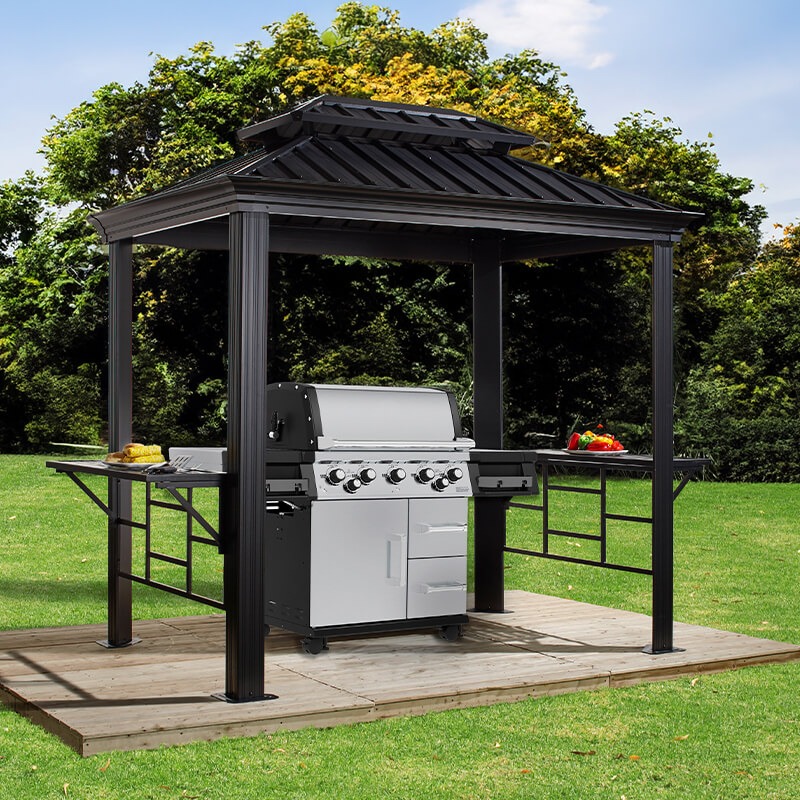
Aluminium gazebos have a slimmer, lighter feel. They are often chosen when the aim is a cleaner outline and less visual heaviness. In a 6 m² setting, aluminium can look tidy, especially beside paving, decking, or contemporary garden furniture. The choice is not just about looks, though. It changes the whole tone: steel feels more architectural; aluminium feels more streamlined. Some shoppers prefer one over the other because it simply fits the garden language better.
For category browsing, it helps to think of the frame as the backbone of the gazebo. The roof, side panels, curtains, and fixings all depend on it. A neat frame with well-proportioned posts can make a compact structure look much more considered. A bulky frame in the same footprint may take up a bit too much of the visual room, even if the floor space is the same.
Shapes that change how the space works
Within the metal gazebo 60 sq ft / 6 m² category, shape matters a great deal. The same footprint can feel very different depending on whether the structure is square, rectangular, hexagonal, or something more open-sided. Each form changes how people move around it, where furniture sits, and how the shelter looks from the house and garden.
- Square gazebos are straightforward and easy to furnish. They suit a table placed centrally, or seating arranged with clear edges.
- Rectangular gazebos work well when the available plot is longer than it is wide, or when the gazebo is being used beside a wall, terrace, or boundary line.
- Hexagonal gazebos feel more decorative and soften the geometry of the garden. They can make a small area seem less rigid.
- Octagonal styles are less common in this size but can offer a more pavilion-like presence, especially if the gazebo is intended as a centrepiece.
- Corner-fitting forms are useful where space is awkward, although the actual usable area depends on the layout and not just the headline size.
There is no single “best” shape here. The right one depends on what the gazebo is meant to do. If it is mainly for dining, a square or rectangle can be easier to plan. If it is more for lounging and a softer garden view, a hexagonal option can feel more inviting. Even in a compact footprint, shape decides whether the structure reads as practical, decorative, or somewhere in between.
Open sides, half walls, and enclosed edges
The side configuration changes a gazebo from a simple shelter into something much more specific. Some metal gazebos are fully open-sided, letting light and views pass through freely. Others include side curtains, netting, or solid side panels, which each bring a different kind of use. In a 6 m² area, this becomes especially important because the edges are close at hand. What happens at the perimeter shapes how spacious the whole structure feels.
Open-sided metal gazebos are airy and easy to approach from every angle. They suit gardens where the gazebo is meant to connect visually with planting, lawn, or water features. Curtain-sided gazebos give a more layered feel and can make the structure seem like an outdoor room. They are handy when you want a bit of shelter from side wind or a more enclosed mood for evenings. Net-sided designs are often chosen for their lightweight visual effect, keeping the structure open while creating a softer boundary.
Some buyers choose a gazebo because they want the edges to feel defined without going fully enclosed. That is where a metal frame with optional side elements can do a good job. It provides a clear room-like outline without turning the garden into a hard box, which would be a bit much for such a compact area.
Roof styles that define the whole look
The roof is one of the clearest differences across this category. On a 60 sq ft / 6 m² metal gazebo, the roof shape has a strong effect because the structure is small enough that the roof is seen at once, not as a distant detail. Buyers often compare hardtop, soft-top, and pergola-style looks, and each does something different.
Hardtop metal gazebos usually present a more fixed, permanent character. They often suit buyers looking for a proper sheltering structure with a more architectural feel. Depending on the design, the roof may be flat, gently sloped, or tiered. A sloped or pitched roof helps the gazebo look more substantial and less boxy, while a flatter roof can sit quietly in a modern setting.
Soft-top gazebos bring a lighter mood. The canopy gives the frame a less rigid appearance, and the whole structure can feel more relaxed. In smaller footprints, this can help avoid visual crowding. They can suit casual seating areas or seasonal use where the look is part of the appeal.
Pergola-style metal gazebos blur the line between a gazebo and a pergola. They may feature a more open roof framework, sometimes with slats or partial cover, and are often picked when the buyer wants shade without full enclosure. In 6 m², this style can feel elegant and tidy, though the level of cover differs from a solid-roof option.
Why this size works so well in smaller gardens
The practical advantage of 6 m² is that it is large enough to be genuinely useful, but not so large that it takes over. That balance matters in real gardens, especially where there are planting beds, paths, sheds, fences, and existing patios to work around. A gazebo of this size can mark out a destination area without swallowing the rest of the plot.
For many shoppers, the category becomes attractive because it creates a defined outdoor zone. It can turn a plain corner into a dining spot, a reading nook, or a sheltered place to sit with guests. It also gives a sense of order to irregular spaces. A narrow lawn or unused paved section can suddenly feel intentional once a metal gazebo sits there.
Another point is proportion. Small gardens often look better when features are scaled with restraint. A metal gazebo in this size range adds structure while leaving enough room for plants, movement, and light. It is a useful compromise for buyers who want shelter but do not want to close the garden in. That is one reason this category keeps drawing attention from both practical and design-minded shoppers.
Different uses, depending on the structure
Not every buyer uses a gazebo in the same way, and the exact structure can change the best fit. A square metal gazebo with a hardtop may be ideal for a compact dining setting. A hexagonal gazebo with open sides might suit a seating circle or a decorative focal point. A rectangular gazebo could work better for a bench line, outdoor sofa arrangement, or as a sheltered link beside a terrace.
There are also style differences that affect function. A gazebo with a fully open perimeter makes movement easy and keeps the atmosphere casual. A design with side curtains offers more definition and can feel more enclosed without becoming a proper room. If the intention is to create an outdoor lounge, that difference matters more than it first seems. The same footprint can feel either like a social spot or a private retreat depending on how much of the sides are covered.
Some buyers compare gazebos by how they frame furniture. That is a sensible approach. A structure should not only fit the ground plan; it should also fit the objects inside it. When the posts, roof span, and openings align with seating or a table layout, the result feels calm and usable rather than cramped. In a 6 m² category, these details make all the diference, even if they are easy to miss at first glance.
What to look for when comparing products
When browsing metal gazebos 60 sq ft / 6 m², it helps to compare a few exact points rather than just looking at the overall image. The headline dimensions are only the start. The way the frame is arranged, how open the sides are, and what kind of roof the product has can change the real experience quite a lot.
- Footprint shape: square, rectangle, hexagonal, or corner-friendly.
- Frame material: steel for a heavier visual presence, aluminium for a lighter outline.
- Roof type: hardtop, soft-top, pergola-style, or a more open canopy concept.
- Side treatment: open sides, curtains, netting, or partial panels.
- Visual weight: whether the frame looks slender or more substantial in a smaller space.
- Intended use: dining, lounging, shade, occasional entertaining, or a feature point.
These details help separate a gazebo that merely fits the dimensions from one that actually suits the way you live outdoors. A good match usually feels clear once you imagine the furniture inside it and the path around it. If that picture seems cramped, the structure may be the wrong shape, even if the measurements are technically right.
Design differences that buyers actually notice
In this category, the design differences are not small. A metal gazebo can look crisp and contemporary, formal and classical, or relaxed and softly decorative, all within the same size band. Some frames use straight, square posts and minimal ornament, which suits clean paved spaces. Others carry a more decorative profile, with curved lines or a pavilion-like roof form that gives the garden a more finished edge.
Colour also changes the effect. Darker metal frames often recede into the garden and make planting stand out. Lighter tones can feel more open, though they also show the outline more clearly. In a compact structure, that visual balance matters because the frame is close enough to be read as part of the furniture, not just as background architecture. Buyers often notice this only once they place it beside chairs, planters, or a wall.
There is a difference, too, between a gazebo that aims to disappear and one that aims to be seen. Some people want the structure to blend in. Others want it to act as a focal point. Metal works well for both, which is why it is such a common choice in this category. The same 6 m² can feel subtle or striking, depending on the finish and shape.
Buying tips for the right fit, not just the right size
Before choosing, it is worth thinking about the exact spot where the gazebo will stand. A 60 sq ft / 6 m² gazebo can look compact on paper and still feel tight if the surrounding area is busy. Allow room for access, chair pull-back, and the way people move in and out. In a garden with narrow paths or raised edges, a rectangular layout may be easier to use than a square one, even if both cover the same area.
Also think about what the gazebo will be doing most days, not just on special occasions. If it is for a table and chairs, check that the internal layout allows comfortable seating without posts getting in the way. If it is for a lounge chair or two, an open-sided design might be enough. If a more enclosed mood is wanted, curtains or side elements can help, but they also change how the space feels. More enclosed does not always mean better; it depends what you want from the shelter.
Another useful point is to compare how the gazebo reads from the house. In a small garden, the view from indoors matters almost as much as the view from inside the structure. A good metal gazebo should look proportionate, tidy, and in step with the rest of the garden. If it does that, the space usually feels improved even before the furniture arrives.
A category for gardens that need structure without overload
Metal gazebos 60 sq ft / 6 m² suit buyers who want a defined outdoor area without giving up too much garden. The size is practical, the frame gives shape, and the range of forms means there is room to match the product to the setting rather than forcing the setting around the product. That is a real advantage in smaller spaces, where every line and corner matters.
Whether the aim is a neat dining nook, a shaded seating area, or a garden feature with a clear outline, this category gives plenty of choice in a compact format. The differences between steel and aluminium, hardtop and soft-top, open and enclosed sides, square and hexagonal shapes all give you ways to narrow the search properly. In other words, it is not just about buying a gazebo; it is about choosing the version that makes the garden feel more put together, and a bit easier to enjoy.
[Sassy_Social_Share]