
metal gazebos 120 sq ft / 11 m² - Best Deals in UK!
Showing the single result

Metal gazebos 120 sq ft / 11 m² offer a practical covered space for dining, lounging, shade and year-round garden use, with rigid frames, tidy lines and options in round, square, octagonal and pergola-style forms.
Why 120 sq ft / 11 m² feels usable, not cramped
A 120 sq ft gazebo is one of those sizes that sits in a sweet spot for many gardens. It is large enough to fit a proper table setting, a pair of garden sofas, or a mixed setup with seating and a side area for drinks, yet it does not swallow the whole plot. In metric terms, 11 m² gives you a clear sense of the footprint: generous, but still compact enough to work in a smaller lawn, patio or corner plot.
This size is often chosen by buyers who want a defined outdoor room without moving into a bulky structure. It can suit a dining area for four to six, a hot tub shelter where dimensions allow, or a calm sitting space with room left to move around. Because the footprint is known in advance, it is easier to plan furniture placement, access paths, and how the gazebo will relate to the house, fence line or planting beds.
What makes a metal gazebo feel different
The main appeal of a metal gazebo is the frame itself. Compared with timber, metal tends to give a sharper, more architectural look, and the structure often reads as lighter even when it is solid. Depending on the design, the frame may be made from powder-coated steel, aluminium, or other metal alloys used for outdoor frames. Each brings its own balance of weight, rigidity and appearance.
Bestseller der Kategorie metal gazebos 120 sq ft / 11 m²
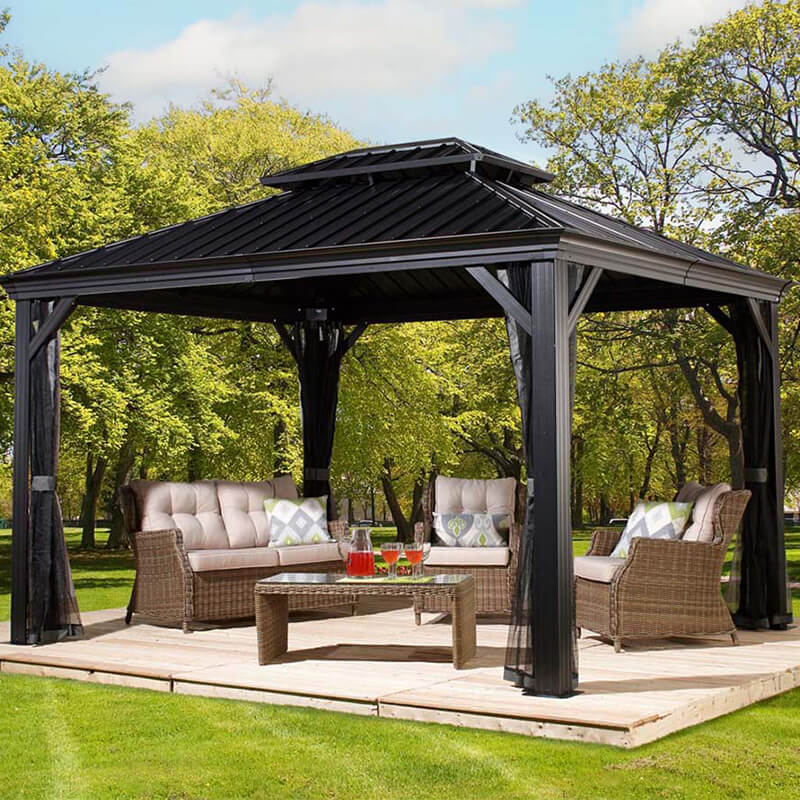
Metal also suits neat roof geometry. You see clean ridge lines, curved tops, domed forms and angular profiles that work well when the gazebo is meant to look organised rather than rustic. For buyers who prefer a smart, ordered garden feature, that distinction matters. A metal frame can tie in with modern paving, grey decking, black railings or contemporary garden furniture without looking forced.
Shapes that change how the space feels
Within the 120 sq ft / 11 m² category, shape is not just about style. It affects how the interior feels and how easy it is to arrange furniture. A square gazebo gives straightforward corners and makes seating plans simple. A rectangular gazebo often works better for a dining table and chairs, because the longer side supports a clear central layout. An octagonal gazebo feels softer and more ornamental, with a centre-point symmetry that suits relaxed seating. Round or domed forms create a more open, pavilion-like atmosphere, while lean-to or wall-adjacent metal gazebos use one side of an existing building for a shelter that feels integrated rather than freestanding.
The shape you choose can also affect how the gazebo sits in the garden. A square footprint tends to look crisp on a paving slab base. A rectangular one can help define a long patio edge. An octagonal shape often becomes a focal point in the middle of a lawn. So the decision is not only about taste, but about how the structure will read in the space you already have.
Frame types: steel, aluminium and the feel of each
Not all metal gazebos behave the same way. Steel frames are usually picked for a firmer, weightier feel and a more substantial presence. They often suit permanent or semi-permanent garden layouts where the gazebo is expected to stay put and hold its line visually. The frame can feel especially reassuring where the design includes heavier roof sections or decorative side panels.
Aluminium frames are generally lighter in appearance and easier to handle during positioning. They can suit buyers who want a less bulky look, or those fitting the gazebo into a space where visual lightness matters. Aluminium often gives a cleaner, slightly more minimal expression, which works well in gardens with contemporary planting and simple materials.
There are also gazebos where the metal frame is combined with textile roof panels, polycarbonate roofing or decorative side screens. The feel changes a lot depending on the roof material. A metal frame with a solid roof reads as more enclosed and room-like. A frame with open sides feels airier and more social, with less visual barrier between inside and outside.
Open sides, partial sides and more private layouts
One useful difference within this category is how enclosed the gazebo is. An open-sided metal gazebo keeps views wide and gives the space a lighter character. It is a good fit for entertaining, where guests move in and out easily and the structure is meant to frame the garden rather than hide it. Open sides also help the gazebo feel more flexible for different uses over the year.
Partial side panels change the mood. These may be decorative lattices, solid sections, or framed openings that offer a bit more shelter and definition. They are useful when you want the gazebo to feel less exposed, especially if it sits near neighbours or a boundary. The structure becomes more like an outdoor room, while still keeping enough openness to avoid a boxed-in look.
More enclosed styles can help define a specific function, such as dining, reading or sheltered lounging. The difference is not just visual. It affects whether the gazebo feels like a backdrop, a meeting point, or a small destination in its own right.
Roof styles that shape the whole look
The roof is one of the first things people notice in a metal gazebo 120 sq ft setup. A domed roof gives a soft, elegant curve and can help the structure feel less rigid. A peaked roof gives a more classic gazebo silhouette and creates a clear central height, which many buyers like because it makes the interior seem more open above the head. A flat or low-slope roof tends to feel more modern and compact, which can suit contemporary gardens and tighter spaces.
Roof covering also changes the experience. A gazebo with a solid roof can provide a proper sheltered zone for dining or seating. A design with vented top features or layered roofing can feel more balanced visually and may be chosen for comfort and airflow. Some buyers prefer the more architectural feel of a hard roof; others want a lighter frame that allows more sky to show through. The choice depends on how enclosed you want the space to feel, and how much visual weight you want the structure to carry.
How the footprint affects furniture layout
In a gazebo around 11 m², layout matters more than people often expect. A round table can work nicely in an octagonal or circular frame, because the shape echoes the furniture and leaves circulation space around it. A rectangular dining table suits a rectangular gazebo very naturally, especially if there is enough room for chairs to pull out on all sides without catching the frame.
If you want a lounge feel, a compact sofa set, two armchairs and a small table can fit well, but it helps to check the internal dimensions rather than only the outer size. Some gazebos have thicker posts or angled corners that reduce usable space a little. That does not make them less appealing, but it does mean the interior layout should be thought through before buying. A well-planned 120 sq ft gazebo can feel calm and ordered; a poorly matched one can feel just slightly off, and you’ll notice it every time you sit down.
Practical advantages that matter in real gardens
The useful side of metal gazebos is easy to understand once you start comparing them with other garden structures. Metal gives a defined frame without the broad visual mass of some timber builds. It can suit modern hard landscaping, and it often looks tidy against patios, gravel, or paved terraces. The structure can also provide a clear boundary for an outdoor room, which helps when the rest of the garden is open and you want one area to feel properly anchored.
Another advantage is consistency of form. Metal frames can hold clean straight lines and stable proportions, so the gazebo does not look soft or uneven as easily. This can be helpful in gardens where straight edges and symmetrical planting already set the tone. The visual result feels organised, and that can make even a modest outdoor space seem more deliberate.
There is also flexibility in style. Depending on the frame and roof design, a metal gazebo can lean modern, traditional, decorative or understated. That range makes it easier to match different house styles, from a brick terrace to a detached home with a more contemporary extension.
Differences to look for before you choose one
When comparing gazebos in this size, look closely at a few details that change the use of the space. Post thickness influences the visual weight of the structure. Thicker posts can look grounded and substantial, while slimmer frames can feel more elegant and less intrusive. Roof pitch affects headroom and the overall profile. A taller peak may make the gazebo feel roomier, while a lower roof can suit a more compact corner.
Also compare corner style. Rounded corners soften the look and can be easier on the eye in a planted garden. Crisp square corners suit a modern setting. The base layout matters too. Some gazebos sit neatly on a patio slab or deck area, while others are better framed by gravel or a level lawn section. If you already have a seating area in mind, matching the footprint to that area can save a lot of awkward fitting later.
Useful buying tips without the fluff
Measure the exact area you have, then allow a little extra space around the gazebo for chairs, movement and the visual frame. A gazebo that fits only by the slimmest margin can feel tighter once furniture is inside. If the plan is for dining, test the likely table shape first, because the difference between round and rectangular can change the whole arrangement.
Think about how the gazebo will sit in relation to the house. A nearby wall, French doors or a patio edge can make a metal gazebo feel more connected to daily use. If it is further down the garden, it becomes more of a destination space. Neither is wrong, but the placement changes the buying decision.
It also helps to decide whether you want a structure that reads as architectural or more decorative. The first relies on clean geometry and calm lines. The second may use more ornament in the roof, corners or side details. Both can work well in 120 sq ft, but they send a very different message in the garden.
Where this size fits best
A metal gazebo 120 sq ft / 11 m² suits a wide range of real garden uses: patio dining, small entertaining areas, a shaded sitting spot near a lawn, or a defined outdoor lounge beside planting beds. It can also work as a visual centrepiece in a garden that otherwise feels a bit broken up. Because the footprint is measured and manageable, it gives structure without overpowering the rest of the layout.
Buyers often choose this size when they want something that feels substantial enough to use often, but not so large that it demands a full redesign. That balance is one of the strongest reasons to consider it. A good metal gazebo in this category does not just fill space. It gives the garden a purpose, a shape, and a place where people naturally want to sit a little longer.
Small details that make a big difference
In this category, the finer points often decide whether the gazebo feels right. The finish on the frame can alter how it blends with nearby fencing, outdoor furniture or planters. A darker frame tends to recede visually, while a lighter one stands out more. The roof colour and side detailing also affect whether the structure feels airy, formal or discreet. Even the style of top crown or finial, where present, can change the character from simple to more decorative.
So when looking at metal gazebos 120 sq ft / 11 m², it helps to think beyond the label and focus on the shape, frame type, roof profile and how the structure will work with your own outdoor setup. The best choice is usually the one that fits the garden naturally, gives enough room to use properly, and looks like it belongs there from the first glance.
- Square layouts: easy to furnish, neat on patios, clear corner lines.
- Rectangular layouts: good for dining tables and longer seating plans.
- Octagonal layouts: softer look, central focus, more decorative feel.
- Round or domed forms: open atmosphere, gentle silhouette, less angular.
- Steel frames: weightier presence, firm visual structure, suited to permanent-feeling setups.
- Aluminium frames: lighter look, cleaner lines, easier to place visually.
- Open-sided designs: broader views, social feel, flexible use.
- Partial side panels: more definition, added shelter, more room-like effect.