
metal carports 600 sq ft / 60 m² - Best Deals in UK!
Showing the single result

Metal carports 600 sq ft / 60 m² give you covered space for cars, vans, trailers and bulky outdoor gear, with a solid steel frame, clear span layouts and practical shelter.
Room that does not feel cramped
A 600 sq ft / 60 m² metal carport sits in that useful middle ground where a single parking bay no longer feels like enough, but a full garage can seem unnecessary. This size gives you proper breathing room around vehicles, so doors can open without a daily shuffle, and there is space for boots, bikes, garden tools or a workbench along one side. For many buyers, the appeal is not just coverage, but the fact that the footprint can handle real life use: one large vehicle plus storage, two cars parked with space to spare, or a camper van with a little extra clearance.
Because the area is generous, the structure can be arranged in different ways. Some people want a simple drive-through shelter, others want a side bay for equipment, and some are looking for a multi-use covered zone that works as parking, loading space and informal outdoor storage. The size also makes it easier to think about turning space, which is a small detail until you are reversing in with a trailer on a wet evening.
What counts as 600 sq ft / 60 m²?
In practical terms, this category usually refers to carports with a surface area around 600 square feet, which is roughly 60 square metres. The actual shape may vary quite a bit. One design may be long and narrow, another more square, and the exact proportions affect how the space feels and what it suits best. A 600 sq ft structure could be around 20 x 30 ft, but the dimensions are not fixed, so the layout matters as much as the headline size.
Bestseller der Kategorie metal carports 600 sq ft / 60 m²
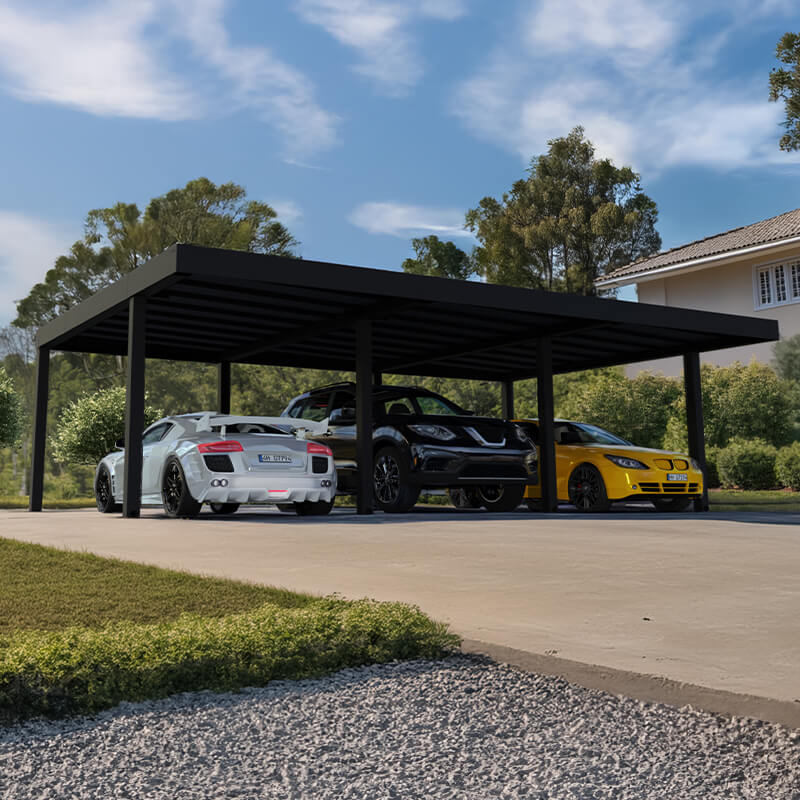
That difference in proportion is worth paying attention to. A wider span can make parking easier side by side, while a longer frame may suit vehicles parked nose-to-tail or provide a sheltered apron for manoeuvring. When shoppers compare metal carports in this size band, they are often really comparing clear width, eave height, and depth, not only the total area.
Steel frames with different personalities
The main draw of a metal carport is the steel structure. It brings a clean, functional look and a feeling of order that wooden shelters do not always give in the same way. Within the category, there are several common subtypes, each with a different look and use pattern.
- Flat roof carports – neat in appearance, with a straightforward profile that suits contemporary settings and places where a lower visual line is preferred.
- Gable roof carports – recognisable pitched shape, often chosen when buyers want a more traditional look and a roof form that reads clearly from the outside.
- Regular style carports – more rounded or arched framing, often linked with simple, functional coverage and a less angular appearance.
- Vertical roof carports – roof panels are arranged to help shed rain more directly, with a form that many buyers choose when they want a more defined roof line.
- Side-shed or combo carports – a carport plus an attached enclosed or semi-enclosed section, useful when the 600 sq ft area needs to do more than just park vehicles.
Each type changes the sense of space underneath. A flat profile can feel understated and compact, while a gable roof often creates a more open visual centre. The regular style gives a softer silhouette, and the vertical roof layout can help the structure look more purposeful on a plot where rain runoff is a concern. None of these are simply cosmetic choices; they shape how the carport works in daily use.
Single bay, double bay, or mixed-use layout
With 60 m² of covered space, buyers can choose between a more vehicle-focused layout and a mixed-use one. A single bay design may leave a broad side strip for storage, while a double bay arrangement can make sense for two vehicles parked in parallel. Some layouts place the open side to one edge and keep the centre clear, which works well if one vehicle is larger than the other, or if you want a path for loading and unloading.
For example, a double carport in this size can be ideal for two medium cars, but it can also be used more flexibly: one bay for a car, the other for a trailer, ride-on mower or stack of boxed items. A narrower, longer layout may suit a campervan or a vehicle with tow bar clearance. The point is that the size gives options, and those options are what make the category appealing.
Open sides, partial sides and enclosed combinations
Metal carports in this size range are not all the same in how much they shield the vehicle from the surroundings. The simplest version is an open-sided carport, which provides a roof and support frame while keeping air movement easy and entry simple. That can feel practical if you want quick parking, less visual bulk and no awkward posts in the way.
A partially enclosed carport adds one or more side panels, offering a more defined shelter zone without turning the whole structure into a garage. This can be useful where wind direction is predictable, or where one side faces a neighbour and you want a tidier edge. A combo unit adds enclosed storage at one end or side, which can help keep tools, tyres, outdoor furniture or seasonal kit out of the way. In this category, the difference between open and part-enclosed is often the difference between “just parking” and “parking plus proper organisation”.
Why metal makes sense at this size
At 600 sq ft / 60 m², the structure has enough scale that the material choice matters more. Metal carports are popular here because they keep the frame visually light but structurally serious. Steel does not need the bulk that some other materials require, so the shelter can feel less cluttered underneath. That matters when the area is large enough to be used in several ways.
There is also a clear practical side to this size. A bigger roof means more load to think about, and a metal frame gives buyers confidence that the structure is designed for a defined purpose rather than an improvised cover. For people comparing products, the metal option often reads as more orderly, more predictable and easier to match with a home, farmyard, workshop entrance or commercial parking area. It is not about fuss; it is about having a frame that does the job without looking overloaded.
Roof shapes that change the whole feel
The roof shape is one of the biggest visual and functional differences within the category. A flat roof style has a low, straightforward outline and can sit quietly beside a house or outbuilding. It is often chosen when height needs to stay controlled or when a clean edge suits the plot.
A gable roof gives the carport a more classic profile with a central rise, which changes how light and air move through the space below. It also adds a bit of visual definition, which some buyers prefer when the carport is seen from the road. A vertical roof arrangement is more about the panel direction than the basic roof outline, and it tends to appeal to buyers who want the structure to feel more deliberate and robust in form.
The difference is not only about looks. Roof shape affects headroom perception, side profile, and how well the carport fits beside buildings, fencing or driveways. A buyer with limited boundary height may lean toward a flatter silhouette, while someone with a wider plot may want the more open feel of a pitched roof form.
Useful details buyers notice straight away
People shopping for a 600 sq ft metal carport tend to notice practical details quickly, because the space is large enough that small differences become obvious. These are the features many compare first:
- Clear span width – fewer interior obstructions means easier parking and less dodging around posts.
- Eave height – important for SUVs, vans, roof boxes and utility vehicles.
- Door clearance – especially relevant if the carport is used with a trailer or a taller model.
- Frame spacing – influences the sense of openness and the structure’s visual rhythm.
- Anchoring configuration – a key part of how the carport suits a slab, hardstanding or other prepared base.
- Side coverage – useful if the site is exposed or if one side faces prevailing wind.
These points may sound technical, but they shape the everyday experience. A carport can look similar in a photo and still feel quite different once a vehicle is parked under it. This is why the category tends to attract buyers who want something more exact than a rough shelter.
Where a 600 sq ft carport fits best
This size works well in a range of settings, but it suits some uses better than others. For a home with two vehicles, the area can provide covered parking and extra margin for opening doors, unloading shopping or keeping bicycles alongside. On a larger plot, the same structure can support a caravan, classic car or work vehicle while leaving room for storage.
It is also useful for properties where a garage would feel too closed in, but uncovered parking is not enough. A metal carport gives a sense of structure without enclosing everything. For many buyers, that is the sweet spot: they want shelter from rain, sun and falling debris, yet still want easy access and a space that feels open. It can also make a driveway feel more organised, especially when several vehicles or machines need a defined place.
Advantages that matter in daily use
The key advantages of this category are practical, not decorative. First, the size offers usable coverage rather than token shelter. Second, the metal frame gives a more consistent shape across the full span, which helps the area feel reliable for parking and loading. Third, the open or semi-open nature makes access simple. You are not negotiating a tight door opening every time you come and go.
There is also the matter of flexibility. A 600 sq ft carport can start as vehicle shelter and later become a covered work area, outdoor staging point or storage zone. That adaptability gives the category long-term value, because the structure does not become useless if your needs change. Some buyers also appreciate the cleaner visual line compared with larger enclosed buildings. It gives function without making the plot feel boxed in.
Differences between carport styles that affect buying choice
Shoppers sometimes assume all metal carports in this category do roughly the same job, but the differences become clear when you compare how each design uses the footprint. An open-sided flat roof carport is efficient and straightforward, but it offers less side protection. A gable roof version may feel more spacious overhead, though it can read taller and more prominent on the site. A regular arch style can be a good fit when simplicity and a less boxy outline matter. A vertical roof model often appeals when the buyer wants the roof form to be a visible part of the design rather than just a covering.
The choice between these styles often comes down to three questions: how much clearance is needed, how visible the structure will be, and whether the carport must share space with storage or loading. There is no single right answer, which is exactly why the category has room for different buyers and different plots.
Tips that help narrow the right option
When comparing metal carports 600 sq ft / 60 m², it helps to think in terms of the actual vehicles and items you need to fit. A carport can sound large on paper but feel tight if the bay width is not generous enough for door swing or if a taller vehicle needs more headroom. Likewise, if the plan includes a trailer, ride-on mower or stacked equipment, side access matters as much as frontage.
It is also worth looking at how the carport will sit on the plot. A long narrow footprint may be easier to place along a boundary line, while a broader square-ish layout can make parking simpler. If the site is exposed, side panels may be worth considering. If the space is mainly for repeated in-and-out parking, an open layout will feel more direct. Buyers who take a few minutes to match shape, height and access to their real use usually end up with a better fit.
Why this category suits careful buyers
This is not a casual size. A 600 sq ft / 60 m² metal carport is the sort of purchase people make when they want a proper solution, not a temporary fix. It offers enough area for serious day-to-day use while staying simpler than a fully enclosed building. That balance is what draws buyers in: enough structure to make parking easier, enough openness to keep access flexible, and enough scale to serve more than one job.
For anyone comparing metal carports, this category is a good place to look when the brief includes space, clarity and a design that works hard without crowding the plot. The right shape, roof form and side arrangement can turn a basic shelter into a practical part of the property layout. And once the space is set up well, it tends to feel like one of those purchases that quietly makes everything else easier.
[Sassy_Social_Share]