
Gazebos under £700 - Best Deals in UK!
Showing the single result

Gazebos under £700 offer a practical way to create sheltered outdoor space, with options in steel, wood and pop-up styles, plus square, hexagonal and rectangular shapes.
More shelter, less spend: what this price band really gives you
When you look at gazebos under £700, you are usually moving into the sweet spot where the structure starts to feel more like a proper outdoor room and less like a temporary cover. At this level, you can often expect a more considered frame, a more defined roof shape, and a better balance between appearance and everyday use. That does not mean every gazebo will be identical, of course. Some are made for occasional entertaining, others for regular garden seating, and some are there to give a neat focal point without taking over the space.
The main appeal is that this price range often covers the features buyers really notice: a steadier frame, a roof that looks more structured, and enough visual presence to make a patio, lawn or decking area feel planned rather than left over. It is also a range where you can compare size, shape, frame material and roof style quite carefully, instead of just settling for the first thing that fits the budget.
Frame types that change the whole feel
One of the biggest differences in gazebos under £700 is the frame material. A steel gazebo tends to suit buyers who want a cleaner, more contemporary look, often with straight lines and a neater outline. Steel frames are usually chosen for their solid feel and their ability to support a more permanent garden feature. They can work well on patios and terraces where the gazebo is meant to stay in place for a while.
Bestseller der Kategorie Gazebos under £700
Wooden gazebos have a different character altogether. They usually feel warmer and more traditional, and that suits gardens with planting, gravel paths or a softer, cottage-style layout. A wooden frame can make the gazebo feel less like a separate object and more like part of the garden itself. It is a good option if you want the structure to blend with fences, pergolas or timber furniture.
Then there are pop-up gazebos, which sit in a slightly different category. These are usually chosen for flexibility and quicker setup, especially if you need cover for a one-off event or want the option to move the gazebo around. In this budget, pop-up styles can still offer a neat canopy and useful shelter, but the difference is in their portability rather than their sense of permanence. They are a good match for people who want a gazebo that can be put away, shifted, or used in different parts of the garden.
Shapes that do more than change the outline
The shape of a gazebo affects not only how it looks, but how it works in the space. A square gazebo is often the easiest to place because its lines sit neatly against paving, fencing or a garden edge. It can be useful if you want to position a dining set inside, since the corners help define the usable area in a very obvious way.
Rectangular gazebos are often better when the furniture arrangement is long rather than compact. If you want a bench, narrow table or a row of seating under cover, the longer footprint can feel more natural. This shape can also suit a garden where the available area is beside a wall or along the side of a patio.
Hexagonal gazebos and other multi-sided designs bring a softer, more decorative feel. They often look less boxy, which can help in a garden that already has curves, planting beds or rounded borders. A hexagonal form can be useful when the gazebo is meant to stand as a central feature rather than just a practical shelter. It gives a more pavilion-like feeling without needing a huge amount of space.
Some buyers prefer a capped roof or pagoda-style shape because it adds height and a more structured silhouette. Others prefer a flatter profile when the goal is to keep sightlines open. The shape you choose should match both the garden and the way you plan to use the space. A dramatic outline is nice, but if the gazebo feels awkward beside the patio, it may end up being admired from a distance rather than used.
Roof styles that alter comfort and appearance
The roof is one of the clearest signs of difference between gazebo types under £700. A soft-top roof usually gives a lighter, more relaxed look and is often paired with steel or aluminium-style frames. It can suit casual gatherings and provides a less formal feel, especially in a garden that already has softer furniture or parasols. The trade-off is that it tends to feel more seasonal and less architectural.
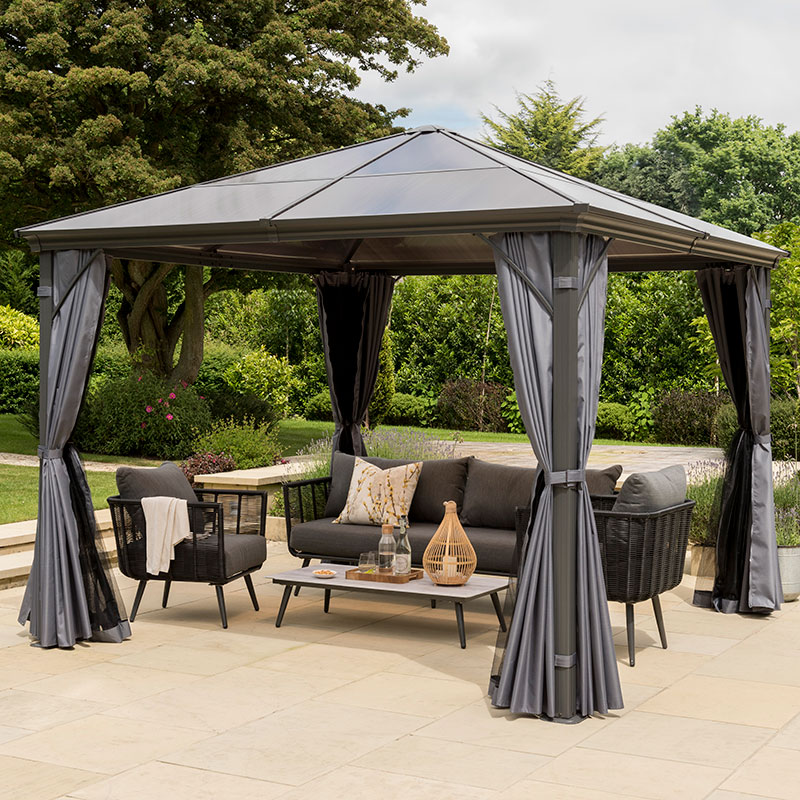
A hardtop gazebo, where available in this budget, usually feels more substantial. It gives a stronger sense of structure and can make the gazebo appear more like an outdoor extension of the house. Hardtop designs may appeal to buyers who want the garden feature to look fixed and well rooted in place. They are often chosen for a patio that needs a clearer finish.
There are also roofs with vented tops, which can change the feel of the space beneath. A vented roof often helps the gazebo seem less closed in, and it gives the structure a more balanced profile from the outside. Visually, that can matter quite a bit if the gazebo sits in a small garden and you do not want it to look too heavy. The roof style really does change the character of the whole thing, not just the practical cover.
Why this budget works for real garden use
Gazebos under £700 are often attractive because they let buyers move beyond basic shade and into something that feels more intentional. If you want a place for a garden table and chairs, a sheltered spot for guests, or a defined seating area away from the main house, this budget often gives enough choice to find a gazebo that fits properly rather than forcing you to compromise too much.
A useful advantage in this price bracket is the chance to choose between open-sided and more enclosed styles. Open-sided gazebos can feel breezier and more social, making it easy to step in and out. More enclosed versions may include side panels or curtain options, which can give the space a more private feel. This difference matters if the gazebo is meant to sit near neighbours, a boundary fence or a busy part of the garden.
Another plus is visual balance. A gazebo does not have to be huge to make a garden feel more finished. In many cases, a modest structure under £700 can frame an area better than a much larger, pricier one that does not suit the space. The point is not just shelter; it is giving a garden a clear purpose.
Picking between open, partially enclosed and fully covered
Gazebos in this category are often best compared by how open or enclosed they feel. Open gazebos are useful when you want a light frame overhead without too much visual weight. They work nicely in gardens where you still want to see planting, sky and the rest of the layout.
Partially enclosed gazebos usually add a little more definition, either through side panels, rail-style sides, or a framework that suggests enclosure without fully closing the space. These can be handy if you want some shelter but still want the gazebo to feel connected to the garden. They are often a good middle ground for people who are not quite ready for something fully sealed off.
Fully covered gazebos usually feel more purposeful and sometimes more formal. They create a stronger boundary between the covered area and the rest of the garden, which can work well for dining or a fixed seating nook. The difference is not just about weather cover; it is about how much of the outside world you want the gazebo to keep at arm’s length. A buyer who wants a bit of atmosphere may lean towards this type, while someone wanting openness may not.
Materials that give different strengths and looks
At this price, the material choice often tells you what kind of use the gazebo is meant for. A powder-coated steel frame generally points to a clean, modern appearance with a more structured look. It can suit contemporary paving and garden furniture quite well. The finish often looks neat and does not try too hard, which is part of its appeal.
Timber gazebos sit in a different visual world. They often feel grounded and more handmade, even when they are not especially ornate. The appeal lies in texture and tone, and that can make a garden feel calmer and more settled. Timber can be a good choice if the garden already includes wood accents or natural materials.
Some gazebos use a mix of frame and canopy materials, and this can be important when comparing options. A stronger frame with a lighter top can create a more airy look, while a heavier roof on a simpler frame can make the structure feel more anchored. Buyers often focus on price first, but the actual feel of the materials often decides whether the gazebo looks temporary or deliberately chosen.
Choosing for dining, shade or a simple focal point
Different gazebo types under £700 suit different roles in the garden. If the main aim is outdoor dining, a square or rectangular model is often the most straightforward because it works naturally around tables and chairs. It gives a neat outline and can make the seating area look organised rather than improvised.
If the goal is shade for relaxed sitting, a lighter open-sided style can feel easier to live with. It gives enough cover to make the space useful, but still keeps a sense of openness. That can matter in smaller gardens where a heavy structure might crowd the view.
If the gazebo is mainly there as a feature piece, the shape becomes more important than sheer practicality. A hexagonal or pagoda-style outline can add interest even before anyone sits beneath it. These designs can look especially good when set against planting or a simple lawn, because the shape itself becomes part of the garden’s layout.
Practical tips that make comparison easier
When browsing gazebos under £700, it helps to look closely at the proportions rather than only the headline size. A gazebo that seems compact on paper can still feel large in a small garden if the roof overhang is wide or the frame is visually heavy. Likewise, a taller design may feel more open than expected, even if the floor area is modest.
It is also worth noticing whether the style is meant to feel formal, casual or transitional. Formal gazebos often have stronger lines and a more architectural presence. Casual designs can appear softer and more relaxed. Transitional styles sit between the two and are often easier to place in a mixed garden setting. That little difference can be the reason one gazebo looks right and another just feels a bit off.
Another useful point is how the gazebo will sit with the rest of the garden furniture. If your seating is chunky or your table has a strong visual presence, a delicate frame may look under-scaled. If the furniture is simple and light, a more defined gazebo can provide the missing structure. In other words, the best choice is not always the biggest or the most decorative, but the one that looks like it belongs where it stands.
What tends to make a gazebo feel worth the price
A gazebo under £700 can feel worth buying when the shape, material and overall look line up with the way you use your garden. The best options in this range tend to offer a clear purpose: dining, lounging, shade, or a more defined outdoor room. They do not need to do everything. In fact, the stronger choices usually know exactly what they are for.
Buyers often respond well to details that make the gazebo feel more finished, such as a well-proportioned roof, a frame that looks balanced, or a shape that gives the garden a clearer centre. These things might sound small, but they change how the space feels on a daily basis. A gazebo can make a patch of paving feel intentional, and that is often what nudges someone from browsing to buying.
There is also the simple appeal of getting a structure that can make the garden seem more usable without stretching the budget too far. For many homes, that is the point: a shelter that brings form and function together in a way that does not feel overdone, yet still looks like a proper part of the outdoor space.
Finding the right fit for your garden layout
Before choosing, think about where the gazebo will sit and what it will frame. A square garden may suit a centred gazebo that becomes a focal point, while a longer plot may feel better with a rectangular design placed along one side. A hexagonal gazebo can soften a more rigid layout, especially where straight fencing or paving needs a counterbalance.
Also consider how much visual attention the gazebo should draw. Some buyers want it to stand out straight away. Others want it to support the garden without shouting about it. That difference is important, because a gazebo is not just about cover. It changes the way the whole outdoor space is read at a glance.
For many shoppers, the best gazebo under £700 is the one that gives a garden a bit more shape, a bit more shelter, and a more settled look, without feeling fussy. That combination is why this category stays popular: it offers choice, style and a practical reason to spend more time outside.
- Square gazebos suit neat layouts and dining sets.
- Rectangular gazebos work well for longer seating areas.
- Hexagonal gazebos add a softer, more decorative outline.
- Steel frames often feel modern and structured.
- Wooden frames bring warmth and a more traditional look.
- Open-sided styles feel lighter and less enclosed.
- More enclosed designs give a clearer sense of shelter and privacy.
- Soft-top roofs tend to feel relaxed and seasonal.
- Hardtop roofs often create a firmer, more permanent look.