
Gazebos under £10000 - Best Deals in UK!
Showing all 8 resultsSorted by price: low to high
-
22% OFF: Large Wooden Gazebo with Roof and Deck Floor – 15×13 Hexagonal Gazebo (4.7x4m) – Seats up to 19 people £7,779.9922%

-
27% OFF: 13’x12′ (4×3.5m) Luxury Wooden Furnished Garden Gazebo with Traditional Timber Roof – Seats up to 15 people £8,069.9927%

-
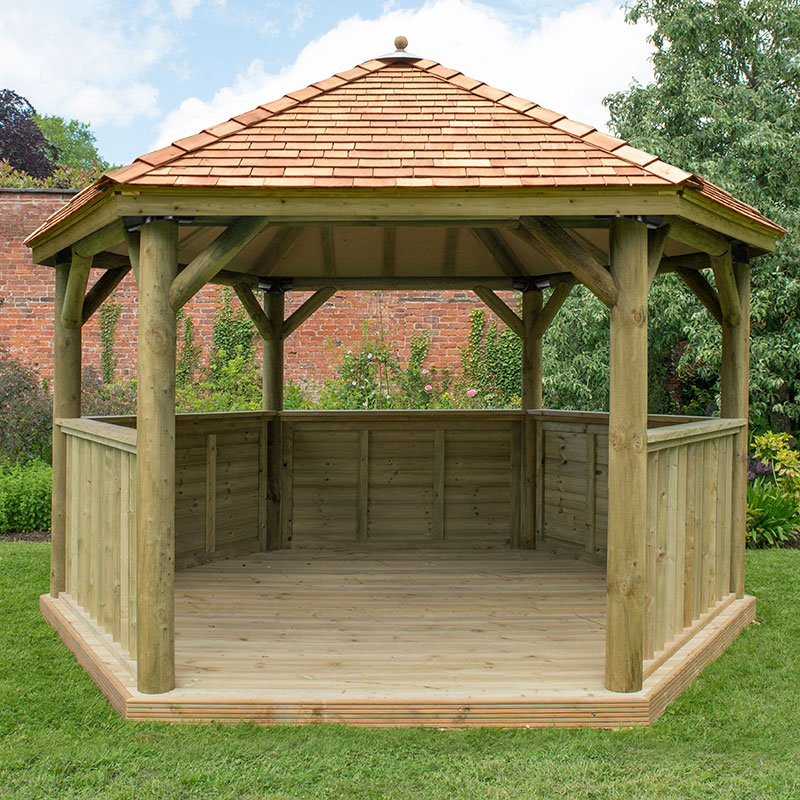
25% OFF: 13’x12′ (4×3.5m) Luxury Wooden Garden Gazebo with New England Cedar Roof – Seats up to 15 people £8,191.9925%
-
22% OFF: 12’x10′ (3.6×3.1m) Luxury Wooden Furnished Garden Gazebo with New England Cedar Roof – Seats up to 10 people £8,399.9922%

-
19% OFF: 17’x12′ (5.1×3.6m) Premium Oval Wooden Garden Gazebo with Timber Roof – Seats up to 22 people £9,679.0019%

-
22% OFF: 13’x12′ (4×3.5m) Luxury Wooden Furnished Garden Gazebo with New England Cedar Roof – Seats up to 15 people £9,779.9922%

-
18% OFF: 15’x13′ (4.7x4m) Luxury Wooden Furnished Garden Gazebo with Timber Roof – Seats up to 19 people £9,789.9918%

-
19% OFF: 11’x11′ (3.5×3.5m) Square Wooden Garden Gazebo with New England Cedar Roof £9,859.9919%

Gazebos under £10000 cover solid garden structures in wood, metal and composite styles, with open, half-open and fully enclosed options for seating, dining, shade and year-round outdoor use.
Popular products in this range
- 27% off 13’x12′ (4×3.5m) Luxury Wooden Furnished Garden Gazebo with Traditional Timber Roof – Seats up to 15 people
- 25% off 13’x12′ (4×3.5m) Luxury Wooden Garden Gazebo with New England Cedar Roof – Seats up to 15 people
- 22% off 13’x12′ (4×3.5m) Luxury Wooden Furnished Garden Gazebo with New England Cedar Roof – Seats up to 15 people
Why this budget opens up more than a simple shelter
At this price point, a gazebo is usually no longer just a quick cover for a patio set. You start seeing substantial frames, more considered roof shapes, better proportions and designs that feel like part of the garden rather than something only used at the weekend. That matters if you want a structure that looks intentional, gives proper weather cover, and still leaves room for furniture, lighting or a dining table without everything feeling cramped.
Under £10000, buyers can often choose between compact entertaining spaces and larger statements for a lawn, terrace or courtyard. The difference is not only size. It is also about form, material, privacy and how the space is used. A small hexagonal gazebo can feel calm and intimate, while a larger rectangular one can work more like an outdoor room. If you are comparing options, think less about the word gazebo itself and more about what sort of garden function you want it to serve.
Shapes that change the whole feel
Gazebos come in several forms, and the shape does more than affect appearance. It changes the way people move inside, how furniture sits, and how the structure meets the rest of the garden. Some forms suit conversation areas, others work better for dining, and some simply feel more balanced in open space.
- Round gazebos create a softer look and suit social seating layouts where everyone faces inwards.
- Hexagonal gazebos give a classic garden feel, with enough angles to look detailed without being fussy.
- Octagonal gazebos tend to feel more spacious and decorative, often chosen when the gazebo is meant to be a feature.
- Square gazebos are straightforward to furnish and suit clean, modern layouts.
- Rectangular gazebos work well for dining tables, outdoor kitchens or longer seating arrangements.
The shape also affects how the roof reads from outside. A pitched roof gives a familiar, traditional profile. A flat roof or near-flat design leans modern and neat. A curved or pagoda-style roof can soften hard landscaping and make the gazebo feel a bit more architectural. These differences matter if your garden has a strong style already, like cottage planting, a contemporary terrace or a more formal layout.
Open, half-open or enclosed: what suits your space
One of the clearest differences in gazebos under £10000 is how open they are. Some buyers want a breezy structure that frames the view and gives light shade. Others want a more protected space that feels like an outdoor room. Neither is better, but each changes the experience quite a lot.
Open gazebos are airy and social. They are good if you want a covered seat without blocking the garden. Half-open gazebos often have side panels, lattice, or partial screening, which can help define the space and cut down on wind from one side. Fully enclosed gazebos are better where privacy matters, or where you want a more sheltered setting for dining, relaxing or using the space more often through the seasons.
A useful point: the more enclosed the gazebo, the more it starts to feel like a garden room. That can be a big advantage if you want a little escape from the rest of the garden, but it may feel too heavy in a small plot. In a compact garden, lighter sides and open corners often look less crowded.
Wood, metal or composite: the look is only half the story
Material choice does a lot of work here, and it is not only about style. It changes the feel of the gazebo, how prominent it looks, and how it pairs with other garden features. Buyers under this budget often compare timber gazebos, powder-coated metal frames, and composite-style builds where available, each with a different character.
- Wooden gazebos tend to feel warm, traditional and easy to blend with planting, decking and natural stone.
- Metal gazebos can look slimmer and more structured, which suits contemporary gardens or spaces where the frame should stay visually light.
- Composite details are often chosen when buyers want a cleaner look with less visual fuss, especially alongside modern paving or fencing.
Wood usually brings a softer, more established feel. Metal often reads as sharper and more architectural. If you want the gazebo to stand out, a strong frame and dark finish can make it feel deliberate. If you want it to blend in, natural tones and open sides can help it sit quietly in the landscape. That difference is surprisingly important, because a gazebo can either become the focus of the garden or sit back and support the rest of it.
Roof styles that shape shade, height and character
The roof is not just a top. It changes the whole silhouette, and it affects how the gazebo feels to sit under. Roof shape also influences headroom, the sense of shelter, and how bold the structure looks from further away. With gazebos under £10000, roof design is often one of the quickest ways to narrow down choices.
Pitched roofs usually feel familiar and practical, with a clear peak that gives the gazebo presence. Hip roofs offer a more compact, balanced look and can suit square or octagonal frames well. Pagoda-style roofs bring a more decorative profile, often with lifted edges that give a slightly lighter outline. Flat roofs, where available, create a simpler, contemporary form and can look neat beside modern buildings.
If you want a gazebo that feels spacious, look at roof height as well as floor size. A taller roof can make even a modest gazebo feel less closed in. If the gazebo will sit near a house wall or boundary fence, a lower roof might keep the whole layout from feeling top-heavy. It is a small detail, but it changes the balance of the garden more than people expect.
How the layout changes what you can actually do inside
Different gazebo types support different uses, and that is one of the main reasons to compare them carefully. A gazebo for a tea table and two chairs is a different proposition from one meant for a long bench, dining set or hot-weather seating area. Under £10000, you can usually choose a layout that suits the way you already use the garden, rather than forcing the furniture to fit an awkward shape.
- Dining-focused gazebos work best in rectangular or square footprints, with enough space to move chairs without knocking the frame.
- Lounge-style gazebos suit wider openings and softer shapes, making room for armchairs, low tables and relaxed seating.
- Feature gazebos can be slightly more decorative and are often chosen for lawns or focal points, where the structure is part of the view.
- Compact gazebos are useful where the garden has limited room but still needs a defined covered spot.
A good layout should leave breathing room around the furniture. If a gazebo is too small for the intended use, it can feel like a box rather than a place to spend time. If it is too large, it may overwhelm a small patio. The best fit usually lands somewhere in the middle, with enough shelter to feel useful and enough openness to still enjoy the garden around it.
Privacy, shade and a bit of calm without closing the garden off
One of the main reasons people look at gazebos in this price range is the balance between openness and refuge. A gazebo can give shade from strong sun, a sense of privacy from neighbouring houses, and a quieter corner for eating or sitting out. It does this without needing to feel boxed in like a shed or fully closed structure.
Side panels, partial screens and built-in framing can help create that calm feeling. Even a simple open-sided structure can make the garden feel more organised by marking out a zone. This is useful if your outdoor space currently does too many jobs in one place. A gazebo separates the seating area from the lawn or planting, and that can make the whole garden feel more considered, not just more furnished.
The difference between a gazebo and a pergola often comes up here. A pergola is usually more open and airy, while a gazebo usually gives stronger overhead cover and a more enclosed outline. If you want more shelter and a clearer destination in the garden, a gazebo is often the better fit. If you want something looser and lighter, pergola-style designs may feel more suitable, though they serve a different purpose.
Choosing between a feature piece and a practical everyday space
Some gazebos are chosen because they make the garden look finished. Others are chosen because they are used every week. Under £10000, it is often possible to find something that does both, but the emphasis changes the type of gazebo you should be looking at. A more decorative octagonal form might suit a central lawn, while a straight-edged design may be better if the gazebo needs to work hard for meals, gatherings and regular sitting.
Feature-led gazebos usually draw the eye with roof shape, proportions or detail in the sides. Practical gazebos often focus more on usable floor area, easy access and furniture placement. Neither approach is wrong. It simply depends whether the gazebo is meant to be a visual anchor or a frequent-use space. Many buyers want both, of course, and that is where shape and material become important again, because the right combination can stop the structure from feeling too formal or too plain.
Small details that make a bigger difference than you’d think
When you compare gazebos under £10000, the broad style is only the starting point. Little details can change whether the gazebo feels right in the garden. The width of the opening, the depth of the roof overhang, the style of side panels and the height of the frame all influence how comfortable it feels once it is in place.
- Wide openings make it easier to move furniture in and out, and help the gazebo feel less boxed in.
- Side screening can soften views of bins, fences or neighbouring walls without fully closing the space.
- Decorative rails or lattice suit classic gardens and can tie the gazebo into planting.
- Clean lines work well in modern plots where you want the structure to look neat, not busy.
- Balanced proportions matter a lot; a tall roof on a small base can look awkward, and so can a very low structure in a large garden.
It helps to think about what the gazebo will sit next to. Decking, paving, lawn edges, fences and planting all affect how big the structure appears. A gazebo that seems modest in a showroom can feel much more substantial in a small garden. So, measuring carefully and picturing the full outline is worth doing, even if it feels a bit tedious.
What tends to make buyers choose one style over another
People usually narrow their choice by a mix of appearance, space and how sheltered they want to feel. A round or octagonal gazebo is often picked for charm and visual balance. A square or rectangular one is often chosen for convenience and furniture fit. Open designs appeal to those who want light and easy access, while enclosed versions suit buyers who want more privacy or a sense of separation from the rest of the garden.
If the goal is to create a place for meals, look closely at floor shape and headroom. If the goal is to make a quiet corner for sitting with a book or a drink, then side screening, roof depth and the way the gazebo sits within planting may matter more. And if the gazebo is meant to become a visible part of the garden’s design, the frame material and roof profile will probably carry more weight than anything else.
A category with room for proper choice, not just a quick decision
Gazebos under £10000 give buyers enough room to be selective without slipping into unnecessary excess. That is useful because this category has real variety: compact and large, open and enclosed, traditional and modern, decorative and practical. The main differences are not just cosmetic. They affect how the gazebo feels, how it works with seating, and how well it suits the rest of the garden.
If you are comparing options, start with the shape, then decide how open you want the sides to be, then look at the frame material and roof style. That order often makes the choice clearer. A gazebo should feel like it belongs where it is placed, and it should make the garden easier to use, not more awkward. The right one can turn an unused corner into somewhere people actually sit, eat, and stay a while, which is really the point.