
Gazebos 170 sq ft / 16 m² - Best Deals in UK!
Showing the single result

Gazebos 170 sq ft / 16 m² offer a balanced outdoor shelter size for dining sets, lounge layouts, and year-round garden structure planning, with choices in shape, frame style, and roof design.
A practical footprint with room to do something proper
A 170 sq ft / 16 m² gazebo sits in a useful middle ground: large enough to create a clear outdoor “room”, but not so vast that it swallows the garden. That size works well when you want a defined gathering point for a table and chairs, a compact lounge arrangement, or a mix of seating and open floor space. It is the sort of footprint that feels intentional rather than makeshift.
Because the area is measured at around 16 m², it helps buyers think in layouts rather than just dimensions. A round table with chairs, a long bench arrangement, or a small conversational set all behave differently inside the same shelter. The value of this category is that it gives you enough flexibility to choose between a more intimate setup and a semi-open entertaining zone, without moving into oversized pavilion territory.
Shapes that change the feel of the same space
The shape of a gazebo makes a bigger difference than many people expect. In the 170 sq ft category, the most common forms each create a different atmosphere:
Bestseller der Kategorie Gazebos 170 sq ft / 16 m²
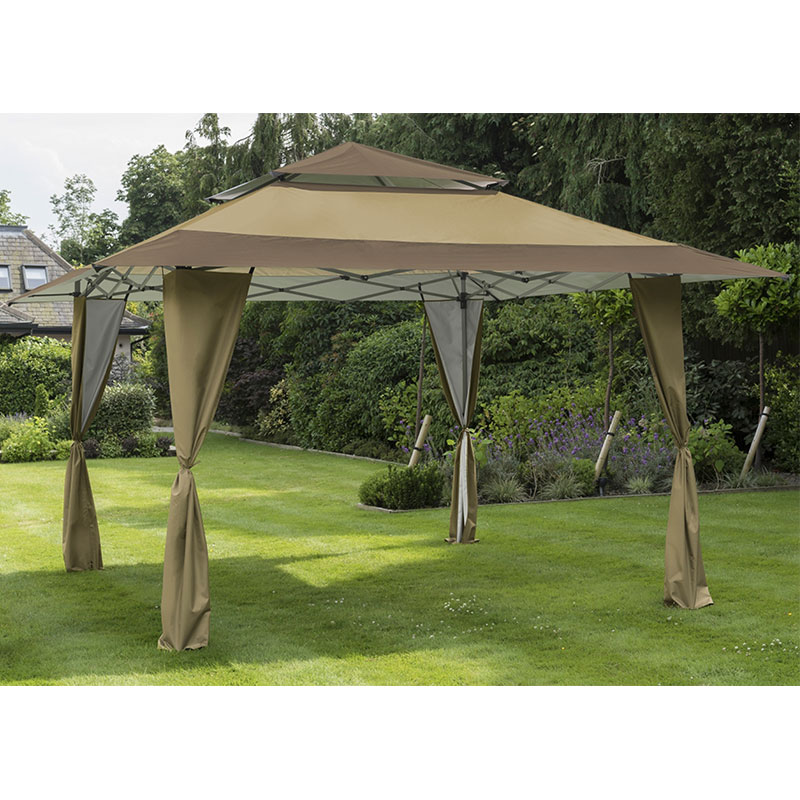
- Octagonal gazebos give a classic garden look and create a balanced centre point for seating.
- Rectangular gazebos suit dining tables, outdoor sofas, and straight-edged layouts better than rounder forms.
- Square gazebos are straightforward to furnish and often feel more architectural.
- Hexagonal gazebos sit between the traditional and the compact, with a softer outline than a square frame.
- Oval or rounded designs tend to feel more relaxed and can soften hard landscaping.
The shape affects how people move through the structure as well. A rectangular gazebo can feel efficient for hosting, while an octagonal version often places attention in the centre, which works well when the gazebo itself is meant to be a visual feature. In smaller gardens, that shape choice can be the difference between the space feeling organised or slightly awkward.
Frame styles: what changes under the surface
Even when two gazebos share the same size, their frame type changes the whole buying decision. A 16 m² gazebo may be built with a timber frame, powder-coated metal frame, or a mixed structure that combines materials for looks and strength. Each has its own character.
Wooden gazebos usually suit gardens that already have planting, fencing, or natural textures around them. They tend to sit quietly in the landscape and can look at home beside lawns or gravel areas. The appeal is often in the warm, solid feel rather than anything flashy.
Metal gazebos, including steel or aluminium-framed options, can create a cleaner outline. They are often chosen where the garden has a more contemporary feel, or when sharper lines are wanted to echo paving, planters, or modern boundary treatments. Aluminium generally feels lighter in visual terms, while steel brings a more grounded presence. That difference matters when the gazebo is going to be seen from indoors as well as used outside.
Some buyers compare frame types mainly on appearance, but the practical difference is also about how the structure sits in the garden. A heavy timber gazebo can feel like a garden feature in itself, while a slender metal frame can let the planting around it remain the focus. Neither is better in every case; it depends on whether the gazebo is meant to lead the eye or support the rest of the scheme.
Roof choices that shape the use of the shelter
The roof is not just a top section; it decides how the gazebo behaves in real use. In this category, buyers will often find pitched roofs, hexagonal roof lines, flat or low-profile designs, and sometimes more decorative multi-sided roof forms. Each option gives the space a different sense of height and shelter.
Pitched roofs feel familiar and can add a more traditional garden building look. They often create a stronger vertical profile, which is useful if the gazebo is intended to become a visual anchor in the garden. Low-profile roofs can feel more restrained and work well where height matters, such as under trees or close to boundary lines, though they can appear less ceremonial. That is not a bad thing; sometimes a simpler silhouette is exactly right.
Roof design also affects how enclosed the gazebo feels from inside. A higher roof can make a compact footprint seem less cramped, while a lower roof can create a snug, more contained atmosphere. For many people shopping at around 170 sq ft, that balance is part of the attraction: enough cover without losing the sense of being outdoors.
Open sides, half walls, or screened edges?
Gazebos in this size often come with different side treatments, and that changes how they are used more than most product pages admit. An open-sided gazebo keeps the space airy and flexible, which is useful when the aim is seating, dining, or casual social time. It keeps views open and lets the structure frame the garden rather than block it.
Half-wall or balustrade styles create a clearer boundary. These can make the gazebo feel more like a dedicated room outdoors, which suits setups where furniture is left in place and the structure is expected to define the area. It can also help the gazebo feel settled in a garden with lots of movement around it, such as near paths or family seating zones.
Screened or panelled edges can offer a stronger sense of enclosure, and are often considered by buyers who want a bit more separation from neighbouring views or breezes. The visual difference is important too: panels give a more solid, architectural presence, while open frames feel lighter and easier to place into a planted setting.
What fits inside 170 sq ft without forcing it
One of the main reasons people look at 16 m² gazebos is that the space is large enough for real use. Not every garden shelter can do more than stand there looking nice. This category can actually function as an outdoor room. The trick is to match the plan to the footprint.
A typical dining arrangement might include a table for six to eight people, though the exact number depends on table shape and the amount of circulation you want around it. Rectangular gazebos are often better for longer tables, while octagonal ones can suit a round table and chairs where movement is centred around the middle.
For a lounge layout, the space can hold a compact sofa, two chairs, and a low table, with enough breathing room to avoid that overfurnished look. If you prefer a mixed setup, part of the gazebo can be left open for standing space, serving, or simply giving the arrangement room to feel less packed. That split-use approach is one reason this size is so popular for gardens that need to do more than one job.
The difference between a feature and a function
Some gazebos are bought because the garden needs a focal point. Others are bought because people want usable cover. In the 170 sq ft / 16 m² category, you often get both. The better choice depends on which role matters more.
If the gazebo is mainly a feature, then shape, roofline, and frame finish matter a lot. A well-proportioned octagonal or hexagonal design can act like a centrepiece, especially when placed at the end of a path or set against planting. If the gazebo is mainly a function, then access, table placement, edge openness, and furniture compatibility matter more than decorative detailing.
That difference may sound obvious, but it often gets overlooked until the structure arrives. A visually lovely gazebo can still feel awkward if the layout inside is too tight, while a simpler design may prove much more useful than expected. Buyers tend to appreciate that clarity once they start picturing how they will actually sit, eat, or gather under it.
Where this size works especially well in the garden
A 170 sq ft gazebo tends to work best when there is enough surrounding space for it to breathe. It can sit comfortably on a lawn, beside a patio, at the end of a garden axis, or in a larger planted area where it becomes a destination rather than just another structure. The footprint is substantial enough to define a zone, but still manageable in medium gardens if planned carefully.
It can also make sense where you want an outdoor dining point that does not dominate the whole plot. Compared with very large shelters, this size is easier to position without taking over circulation routes. That makes it useful for gardens with a mix of paths, planting beds, and sitting areas that need to remain visually connected.
When placed well, the gazebo starts to behave like a “pause” in the garden: somewhere to stop, sit, and look out. That kind of placement often makes the whole outdoor space feel more finished, even if the rest of the garden is fairly simple. Not in a dramatic way, just in a way that makes sense.
Choosing by look, not just by dimensions
People often begin with size, but the finished impression depends heavily on the details. In this category, small choices can shift the whole mood. A darker frame can feel grounded and tailored, while a lighter finish may sit more quietly against the garden backdrop. Straight lines create a more formal read; curved or faceted forms feel softer.
There is also a difference between a gazebo that looks like an outdoor building and one that feels like a framed room. Some designs lean towards a more substantial garden structure, with stronger posts and deeper roof edges. Others appear lighter and more pavilion-like. Neither is merely decorative; the visual language changes how the space is used and how people approach it.
For buyers who want the gazebo to blend in, a simple frame and restrained roofline often work best. For those who want it to stand out, more pronounced shapes and stronger proportions can help. It is less about trends and more about whether the gazebo should quietly support the garden or provide the main point of interest.
Useful buying thoughts that save regret later
Before choosing a gazebo in the 170 sq ft / 16 m² range, it helps to think beyond the product photo. The same size can feel generous or tight depending on the intended furniture. A gazebo meant for dining will need different internal proportions from one intended for lounging or mixed use. That sounds basic, but it is where a lot of decisions go a bit wrong.
- Check the internal shape as well as the external footprint.
- Think about circulation around tables and chairs, not just whether they fit.
- Match the roof style to the garden’s visual language, not only to taste.
- Consider how enclosed you want the sides to feel in use.
- Look at the setting the gazebo will sit in: lawn, paving, planting, or mixed surfaces.
These details help narrow the choice between models that may sound similar on paper but feel very different in the garden. A well-chosen gazebo is one that suits the way people gather, not just the square footage on the listing.
Why buyers keep coming back to this size
The appeal of gazebos 170 sq ft / 16 m² is that they do a very specific job without demanding a huge garden to justify them. They offer enough room for proper furniture, enough shelter to make the space feel deliberate, and enough presence to act as a focal point. That combination is harder to find than it sounds.
They also give buyers room to decide what the gazebo should be: a dining shelter, a relaxed seating zone, a garden feature, or a mixture of all three. Shapes vary, rooflines vary, frame materials vary, and side designs vary, which means there is a lot to compare even inside a single size category. For someone who wants the garden to feel more complete, that variety is exactly what makes the search worthwhile.
Gazebos in this category are not about filling space for the sake of it. They are about giving the garden a usable centre, with enough structure to make it feel like somewhere you would actually stay. That is the part buyers remember when they picture the finished setting.
[Sassy_Social_Share]