
Gazebos 160 sq ft / 14 m² - Best Deals in UK!
Showing all 4 resultsSorted by price: low to high
-
19% OFF: 13’x12′ (4×3.5m) Luxury Wooden Garden Gazebo with Timber Roof – Seats up to 15 people £6,479.9919%

-
27% OFF: 13’x12′ (4×3.5m) Luxury Wooden Furnished Garden Gazebo with Traditional Timber Roof – Seats up to 15 people £8,069.9927%

-
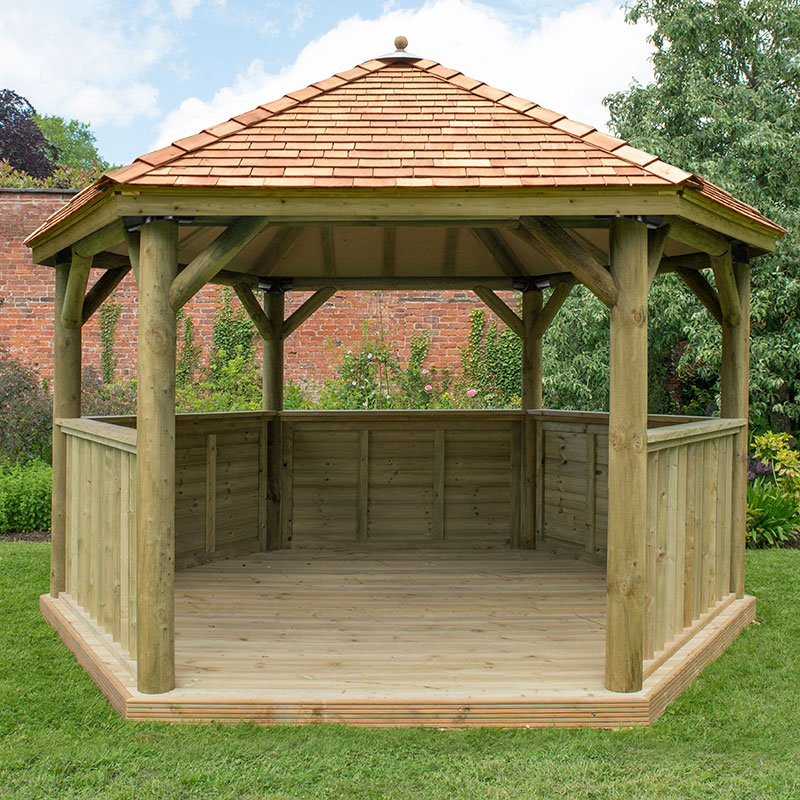
25% OFF: 13’x12′ (4×3.5m) Luxury Wooden Garden Gazebo with New England Cedar Roof – Seats up to 15 people £8,191.9925%
-
22% OFF: 13’x12′ (4×3.5m) Luxury Wooden Furnished Garden Gazebo with New England Cedar Roof – Seats up to 15 people £9,779.9922%

160 sq ft / 14 m² gazebos give you a clear, usable outdoor room for dining, shade, hot-tub shelter, or a calm seating zone. Compare shapes, roof styles and layouts to find the right fit.
Popular products in this range
- 27% off 13’x12′ (4×3.5m) Luxury Wooden Furnished Garden Gazebo with Traditional Timber Roof – Seats up to 15 people
- 25% off 13’x12′ (4×3.5m) Luxury Wooden Garden Gazebo with New England Cedar Roof – Seats up to 15 people
- 22% off 13’x12′ (4×3.5m) Luxury Wooden Furnished Garden Gazebo with New England Cedar Roof – Seats up to 15 people
Why 160 sq ft feels like a proper garden room
A 160 sq ft gazebo sits in that useful middle ground where it does not feel tiny, but it also does not dominate a plot. In metric terms, 14 m² is enough space for a table and chairs, a compact lounge set, or a pair of benches with room to move around them. That makes this size a very practical choice for buyers who want a structure that does more than just look decorative.
What makes this category so appealing is the balance between shelter and openness. You get enough cover from sun or light rain to use the space often, while still keeping the garden feeling airy. For many households, this is the point where an outdoor feature starts acting like a real destination in the garden rather than an extra ornament near the edge.
Shapes that change the feel straight away
Gazebos in this size are often chosen for their footprint and shape as much as for their materials. The outline changes how the space reads from the house, how people sit inside it, and how easily it fits into a particular corner of the garden.
- Octagonal gazebos bring a classic pavilion look and create a central, balanced seating area. They suit gardens where the gazebo is meant to be a focal point.
- Square gazebos are easier to furnish, because tables, benches and corner seating line up neatly with the walls. They often feel more practical for dining.
- Rectangular gazebos work well when the space is meant to follow a terrace, boundary or long lawn edge. They can make 14 m² feel a bit more like an outdoor room.
- Round or oval styles are less common, but they soften the visual impact and can suit garden layouts with curved paths or planting beds.
The difference is not only visual. A square or rectangular gazebo tends to make furniture placement simpler, while an octagonal form often feels more open inside because the corners break up the walls in a gentle way. If the gazebo is going to be used for meals, straight-sided designs are often the easier choice. If the aim is a more relaxed seating nook, a many-sided shape can feel a bit more special without being awkward.
Open-sided, partly enclosed, or fully sided
One of the biggest decisions in this category is how much enclosure you want. A gazebo of this size can be built as a fully open structure, with partial side panels, or with more enclosed wall sections. Each version changes the atmosphere quite a lot.
Open-sided gazebos are best if the garden view matters and you want the structure to feel light. They give shade and a frame without closing in the space. This makes them popular where the gazebo is used mainly for summer sitting or for covering a dining set that benefits from fresh air.
Partly enclosed gazebos offer a more sheltered feel. Side panels, half walls or fitted screens can cut down on sideways weather and make the space feel less exposed. These are useful when you want to use the gazebo in a slightly broader range of conditions, but do not want a fully closed room.
Fully sided designs are less airy, yet they can make the 14 m² footprint feel more defined and contained. They suit buyers looking for a stronger sense of privacy or a more room-like setting. The trade-off is that the gazebo becomes visually heavier, so it may need a better-balanced garden setting.
Roof styles that do more than just sit there
The roof has a big effect on both the look and the use of a 160 sq ft gazebo. This is where the structure starts to feel either relaxed, traditional, or more architectural.
- Pitched roofs give a familiar gazebo profile and help the building look more substantial. They also create a pleasing sense of height in the centre.
- Hip roofs are common on octagonal and square gazebos, where the roof slopes down on several sides. They tend to make the gazebo feel neat and balanced.
- Flat or near-flat roofs suit more contemporary garden layouts. They read as simple and tidy, though they usually feel less decorative than pitched versions.
- Pagoda-style roofs add a more distinctive silhouette with layered lines or upturned corners. They are less understated and can become a feature in their own right.
Roof shape also affects how tall the gazebo feels inside. A steeper roof gives more headroom and a greater sense of air, which matters if you plan to stand up often, host meals, or use taller furniture. A lower roof can look sleek, but in a 14 m² footprint it may feel more compact. So, the right roof is not only about style; it changes the whole feel of the interior space. That bit is easy to overlook, honestly.
Materials that change the character of the space
In this size range, materials matter because the gazebo is large enough to influence the garden’s overall character. The same footprint can feel rustic, crisp, or softly traditional depending on what it is made from.
Wooden gazebos have a natural look that blends easily with planting, stone and timber decking. They suit gardens where the gazebo should feel integrated rather than imposed. The visible grain, posts and roof lines can make the structure feel warmer and more rooted in the setting.
Metal-framed gazebos usually read as lighter and more defined. They can suit cleaner garden layouts or more structured outdoor zones. The profile is often slimmer, which can help a 14 m² gazebo feel less bulky. For buyers who want clear lines and a less rustic appearance, metal can be the better match.
Mixed-material gazebos combine different visual cues, for example a timber look with a metal frame or decorative supports with a more solid roof. This type can sit neatly between traditional and modern, which is useful when the garden does not lean fully in one direction.
How 14 m² works for real use, not just for looks
What a lot of buyers want to know is simple: what can actually fit in there? In a 160 sq ft gazebo, the answer depends on the layout, but the space is generally enough for several practical arrangements without everything feeling packed in.
- Dining set for four to six, with room to pull chairs out properly.
- Compact lounge seating, such as two chairs, a small sofa and a low table.
- Hot tub shelter where the gazebo frames the tub and leaves a workable border around it.
- Mixed-use layout with one side for seating and the other for a serving table or planter zone.
The key difference from smaller gazebos is that 14 m² can support a layout with breathing room. That matters if the gazebo is meant to be used for more than an occasional chair and table. You can create a proper zone for conversation, meals or a quiet retreat, and it does not all collapse into one cramped centre point. That extra bit of usable margin is often what buyers notice once they start planning furniture.
Focal point or tucked-away corner?
A gazebo of this size can work in very different parts of a garden. Some buyers want it as a centrepiece on a lawn or terrace, where it becomes a visual anchor. Others prefer it placed slightly apart, maybe in a corner or near a boundary, so it creates a sheltered destination without taking over the main outdoor area.
If the aim is a focal point, a more decorative shape such as an octagon or pagoda-style roof tends to suit the role. These forms stand out well when seen from the house or across the lawn. If the gazebo is meant to blend in, a square or rectangular footprint with a quieter roofline may be a better fit. It can feel more like a natural extension of a patio, which some people prefer because it makes the garden seem organised rather than themed.
Placement also affects how the gazebo is used during the day. A position that catches morning light can make the space feel inviting early on, while a more shaded spot may suit lunchtime seating better. Again, nothing fancy here, just sensible planning that makes the gazebo used more often.
Which styles suit dining, relaxing, or sheltered gathering
Because the size is generous but not huge, the style should match the main purpose. That keeps the structure from feeling overdesigned or underused.
For dining, a square or rectangular gazebo is often the easiest route. Straight sides give the table a natural place, and the chairs can be set without odd gaps. A pitched or hip roof also helps the dining area feel more open above head height.
For lounging, the softer forms can work nicely. An octagonal gazebo with open sides often gives a calm, central seating feel. It frames the group without making the arrangement too formal.
For mixed use, partly enclosed styles are useful because they let you separate the space into zones. One side can hold seats, another can fit a small table, and a corner can be left clear. This is where 14 m² really earns its keep, because the layout can stay flexible without becoming a cluttered mess.
Differences you notice before you even step inside
Some gazebo differences show up immediately, even before anyone uses the structure. The proportions, roof height, wall openings and footprint all change how the garden feels from the outside.
A taller roof makes the gazebo feel more generous and less boxed in. A lower profile can blend into the landscape, which some buyers prefer if they do not want a heavy visual object in the garden. Wide openings create a friendly, easy-going look, while more enclosed sides create a stronger room-like effect. None of these choices is right for everyone; it depends on whether the gazebo should whisper or announce itself a bit more.
The footprint also matters for movement. In this size category, a good layout should allow people to walk around furniture without turning sideways. If chairs are too close to the posts, the gazebo starts feeling smaller than it is. So, a shape that suits the intended use can be more important than a shape that simply looks nice in a picture.
Useful buying tips for this size range
A few practical checks make a big difference when choosing a 160 sq ft gazebo. The first is to think in terms of the exact job it needs to do. If it is mainly for dining, focus on a shape that handles a table well. If it is for a sitting area, think about openings, corner visibility and how enclosed it should feel.
- Check the internal usable area, not just the external footprint, because posts and roof supports can take some of the space.
- Match the shape to the furniture; straight-sided layouts usually suit dining sets better.
- Look at roof height if you want the gazebo to feel airy rather than compact.
- Think about the garden view from inside and outside, because a gazebo changes both.
- Consider how enclosed it should be so the space fits the way you actually plan to use it.
It also helps to imagine the gazebo in everyday use, not only on a neat product page. Where will people enter? Is there enough space to move chairs? Will the structure sit comfortably next to the patio or lawn edge? These small questions often decide whether a gazebo feels like a good buy or one that looked fine until it landed in the garden.
A category made for gardens that need a clear centre
Gazebos 160 sq ft / 14 m² are a strong match for buyers who want a defined outdoor room without going into very large structures. The size gives enough room to do something useful with the space, while the form lets you decide whether it should look classic, modern, open or more sheltered.
That is why this category is so varied. The shape changes the furniture plan, the roof style changes the profile, the side treatment changes the sense of privacy, and the material changes the whole character. Put together, those choices make a gazebo feel personal rather than generic. And when the dimensions are right, the garden tends to feel more complete, like there is finally a proper place to sit instead of just a few chairs dotted about.
For many buyers, that is the real attraction: a 14 m² gazebo gives enough space to be useful, enough structure to be noticed, and enough variety to suit a range of garden layouts without looking overdone.