
Garden Structures under £6000 - Best Deals in UK!
Showing the single result

Garden structures under £6000 for patios, lawns and corners: pergolas, gazebos, arches, summerhouses and more, with practical shapes, material choices and layout ideas for smaller budgets.
Frame the Garden Without Overstating It
Choosing garden structures under £6000 is often about getting the balance right: enough presence to change how a space feels, but not so much that the budget gets swallowed by one feature. In this range, buyers can look at a wide spread of forms, from compact arches and decorative arbors to more substantial pergolas, gazebos, summerhouses and open-sided pavilions. The point is not simply to fill a gap in the garden, but to create a clear purpose for it — a place to sit, to divide zones, to give climbing plants structure, or to add a visual focal point that feels built in rather than added on.
What makes this category useful is the range of sizes, roof forms and levels of enclosure that sit below the £6000 mark. A shopper can look for something open and airy, something with more shelter, or something that leans into storage and year-round use. The differences matter: a lightweight frame gives a different feel from a closed-sided room-like building, and a hexagonal gazebo does not behave like a long linear pergola when it comes to views, shade and seating. That is the sort of detail that helps a buyer choose well, instead of simply picking the biggest thing that fits.
What Sits in This Budget Bracket
Under £6000, the category usually covers structures that are still ambitious in shape, but more measured in footprint and specification. That can mean pressure-treated timber pergolas with posts and crossbeams, metal-framed arches, timber gazebos with pitched roofs, compact summerhouses, corner shelters, and open garden rooms that focus on covered seating rather than full insulation. Some are designed as standalone features, while others are made to sit against a wall or alongside a terrace. The budget can also stretch to better detailing, such as thicker timber sections, decorative braces, integrated benches or more refined roof profiles.
Bestseller der Kategorie Garden Structures under £6000
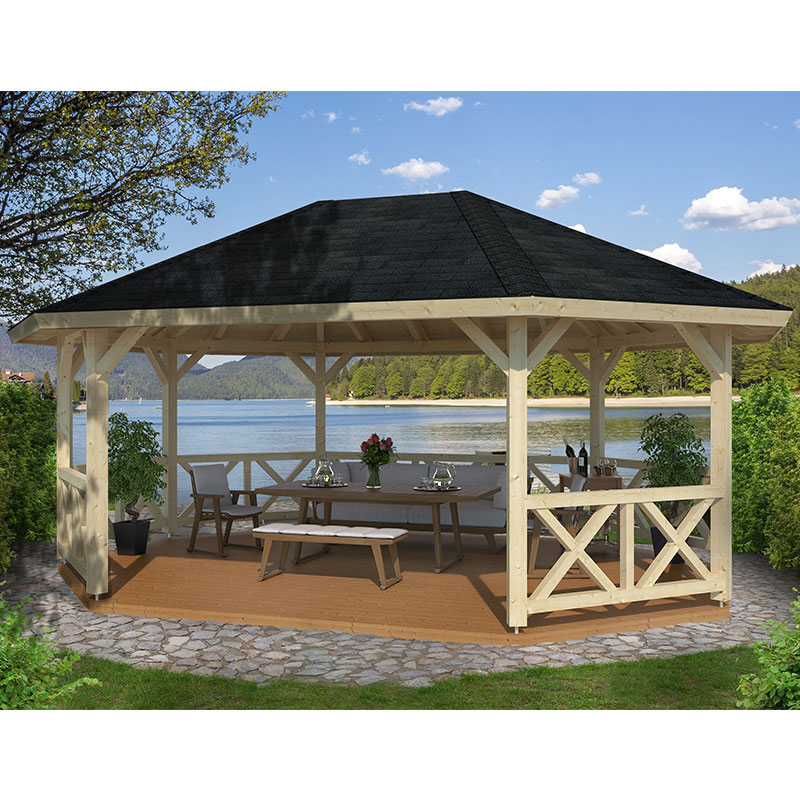
This price range tends to suit buyers who want more than a simple planter arch but do not need a large outbuilding. It is a useful middle ground for people looking to create a destination point in the garden. That might be a dining spot under a pergola, a sheltered reading corner under a gazebo, or a framed pathway that leads the eye from house to lawn. The structure becomes part of the garden layout, not just a decorative add-on.
Pergolas, Arches and Arbours: Open, Light and Flexible
Pergolas are one of the most adaptable choices in this category. Their open roof structure keeps them visually light, which is handy in gardens where a solid building would feel too heavy. They work well over paving, decking or a border edge, and the long, linear shape helps define an outdoor room without shutting it in. A pergola under £6000 might come as a simple timber frame, a more sculptural slatted design, or a wall-fixed option that extends shading from the house outward. The main difference is how much coverage you want: some are built for a sense of frame only, while others can carry climbing plants and create a surprisingly shaded walk-through area.
Arches and arbours are smaller, but they do an important job. An arch can mark an entrance between two parts of the garden, create a transition over a path, or support roses and clematis in a very focused way. An arbour is often more enclosed, sometimes with side panels or a seat, so it feels a bit more like a pause point than a passage. These pieces are usually chosen for atmosphere, scale and movement through the garden. They are not about dominance; they are about guiding the eye, softening boundaries and adding height where a flat border would otherwise feel a bit plain.
One useful difference: arches lead through, arbours invite a stop, and pergolas shape a wider area. That simple distinction can make the buying decision easier, especially if the plan is to use climbing plants as part of the design.
Gazebos and Pavilions: Shelter With a Clear Centre
In the under-£6000 range, gazebos often give the strongest sense of an outdoor gathering place. Their roofed form offers shelter from sun and light rain, and their shape can change the way a garden is used. A round or octagonal gazebo creates a central point, often with seating arranged around the edges, while square and rectangular forms can feel more organised and easier to place near patios or lawns. This makes a difference in smaller gardens too, where a structure that is too sprawling can block movement, but a tighter footprint can make the whole area feel more deliberate.
Pavilions tend to sit somewhere between an open shelter and a more formal outdoor room. They may have a stronger roofline, more defined posts and a more architectural feel. Compared with a gazebo, a pavilion often feels less decorative and more structural, though the two do overlap quite a bit in everyday use. If the goal is to host a table, a pair of chairs or a lounge-style arrangement, the shape of the roof and the openness of the sides matter as much as the footprint. A low, broad roof gives a different mood than a taller peaked one, and that affects how the structure sits in the garden visually.
Buyers often compare these two for practical reasons: gazebos feel more enclosed and focal, while pavilions can read as broader and more architectural. Both can work beautifully under £6000, but the choice usually comes down to how formal the garden is and how much shelter is actually needed.
Summerhouses and Garden Rooms: More Covered, More Defined
Summerhouses are a strong option when the brief is not just “something to sit under” but “somewhere that feels like a destination”. In this budget band, a summerhouse may offer more wall space, glazed openings, and a proper roof form that gives it a clearer room-like feel. That makes it different from open-sided structures: it offers more visual separation from the rest of the garden, which is useful if the aim is quiet seating, hobby use, or a sheltered place to gather without being fully exposed.
Compared with pergolas or gazebos, a summerhouse can bring a more settled feeling to a plot. It tends to work best where there is enough space for it to breathe, since a closed or semi-closed building needs visual room around it. Rectangular summerhouses suit straight boundaries and formal plots, while corner designs can make better use of limited ground area. A buyer looking at this type of structure should think about the shape of the garden first: long and narrow spaces often suit a linear form, while square lawns can carry a more central feature with less effort.
What makes summerhouses attractive in this category is the shift in function. They are less about decoration alone and more about turning a section of the garden into a usable spot with a stronger sense of purpose. It is a different proposition from a simple frame, and that difference matters when comparing value.
Materials That Change the Feel Without Changing the Brief
Material choice has a noticeable effect on how a structure reads, even when the overall purpose is similar. Timber remains a common choice because it suits planted gardens, softens against grass and borders, and tends to feel at home in both rustic and tidy layouts. It can look chunky and traditional, or slimmer and more contemporary depending on the section sizes and finish. Metal structures, meanwhile, often bring sharper lines and a lighter visual profile. They are useful where a buyer wants the structure to stay in the background a bit more, letting planting and furniture carry the scene.
There are also mixed approaches, where a timber frame is paired with a solid roof detail or decorative metal fixings. These can be helpful in this price range because they create contrast without jumping into a much higher budget. A buyer may also notice that the same structure form feels very different depending on whether the posts are square, chamfered or turned. The details matter more than people expect. A square post can feel plain and modern, while a shaped post can bring a softer, more crafted look.
For many gardens, the real difference is not just material but visual weight. A structure that is too bulky can close the space in, while one that is too thin may look underdone. Getting that balance right is part of what makes this category interesting.
Shapes That Suit Different Garden Layouts
Shape plays a big part in how a structure works. Rectangular pergolas are easy to align with paving, decks and house walls, which makes them a natural fit for straight-edged layouts. Square gazebos can feel compact and balanced, especially in medium gardens where a central feature is wanted without taking over. Hexagonal and octagonal forms have a more decorative mood and often look best when the garden has softer planting or curved paths around them. These forms can make a structure feel a bit more special without needing extra ornament.
There is also the difference between open-sided and partly enclosed forms. Open-sided structures allow views to pass through and keep the garden feeling larger. Partly enclosed versions give a stronger sense of retreat. Neither is better in general; it depends on whether the buyer wants connection or separation. If the garden is already busy with borders and ornaments, a cleaner shape may help. If the plot is very plain, a richer form can add the missing character.
It is easy to overlook the roofline too. A flat or low-pitched roof feels calm and contemporary. A peaked roof gives more height and presence. A curved or pagoda-style top creates a more decorative note. These differences can look subtle on a page, but in the garden they change how the whole structure reads against the sky.
Why This Price Band Appeals to Practical Buyers
There is a reason garden structures under £6000 draw attention: they sit in a part of the market where design choices are still broad, but the spending feels more contained. Buyers can compare open and enclosed forms, decorative and practical styles, compact and room-like footprints, without moving into a bracket that needs a bigger commitment. That makes it easier to match the structure to the garden rather than reshaping the whole garden around the structure.
This band can also make sense when the goal is to invest in a single feature that changes how the outdoors is used. For example, a pergola can make a dining area feel planned, while a gazebo can make an otherwise empty lawn feel like a place to stop. A summerhouse might turn a forgotten corner into a proper siting area. The value is not only in shelter or looks; it is in how the structure changes movement, seating and the overall rhythm of the plot.
Another advantage is that buyers can often choose between a more decorative version and a more stripped-back one, depending on whether they want the structure to be a strong focal point or a quieter frame for planting. This is where browsing by form, not just by price, really helps.
Small Details That Help a Buyer Choose Better
When comparing structures in this category, it helps to look at a few details that shape the final result:
- Footprint — whether the structure is compact for a corner or wide enough for seating and circulation.
- Roof style — pitched, flat, peaked or open slatted, each giving a different sense of shelter and height.
- Sidedness — fully open, partly screened, or more enclosed, depending on how private or airy the space should feel.
- Garden position — against a wall, at the end of a path, over a patio, or standing alone on the lawn.
- Visual weight — chunky posts and deep rooflines feel rooted; lighter frames feel more discreet.
- Shape — linear, square, hexagonal or octagonal, with each one changing how people move around it.
It sounds simple, but these details are the difference between a structure that fits nicely and one that never quite feels settled. A buyer might think they want the largest option in budget, yet a smaller structure placed in the right part of the garden often looks and works better. In some gardens, that’s just the way it goes.
Tips for Matching the Structure to the Space
The best choice is usually the one that answers a clear question. If the garden needs an entrance, an arch or arbour is often enough. If the aim is shade over seating, a pergola may fit more naturally. If the brief is shelter and a centre point, a gazebo or pavilion can make more sense. If the garden needs a more defined outdoor room, a summerhouse has a different level of presence again. Thinking in those terms helps stop the purchase becoming vague.
It also helps to match the structure to the style of the rest of the garden. Straight paths, clipped edges and paved terraces often suit cleaner geometry. Looser planting, winding beds and informal lawns often work well with softer forms and decorative roof shapes. A mismatch is not always a problem, but it can feel a bit accidental if the structure and the setting pull in opposite directions. That’s one of those things people notice only after the fact.
If the plan includes climbing plants, the structure should have enough open framework or fixing points to make that possible. If the main aim is seating, then clearance and head height matter more than ornament. If the structure is meant to be seen from the house, proportions become more important than ever, because it will read as part of the view every day, not just when it is being used.
A Category Built Around Use, Shape and Presence
Garden structures under £6000 offer a strong mix of purpose and character. The category includes open frames, framed walk-through features, sheltered seating spots and more room-like garden buildings, each with its own role. The real choice lies in how much shelter, how much enclosure and how much visual impact the garden needs. Some buyers want a light structure that leaves the planting in charge. Others want a focal point that changes the layout at once. Both approaches sit comfortably here.
What makes this category worth browsing carefully is the variety of forms available at a manageable budget. A well-chosen structure can sharpen a layout, create a resting point, connect different parts of the garden or simply make an outdoor space feel more considered. And when the shape, material and scale land well together, the result looks like it belongs there, rather than something that just got dropped in. That’s often the difference between a nice addition and a piece that really earns its place.
For patios, lawns, paths and tucked-away corners, this range gives buyers room to choose a structure that suits the way they actually use the garden.
[Sassy_Social_Share]