
Garages 18x12 - Best Deals in UK!
Showing the single result

18×12 garages give you a practical mid-sized footprint for car storage, workshop space, bike cover, or a tidy place for garden kit, with choices in single, double, pitched, and flat-roof forms.
A footprint that feels planned, not squeezed
An 18×12 garage sits in that useful middle ground where the building is large enough to do more than just keep a vehicle under cover, but not so large that it dominates the plot. In simple terms, the size gives you room to think about how the space will work before you buy, rather than having to make do with whatever is left. For many buyers, that is the main appeal: it is a balanced size that can suit a car, tools, outdoor equipment, or a bit of extra room to move around the sides.
Because the dimensions are fixed, the category tends to attract people who already know they need a defined footprint. That makes it easier to compare styles. Some buyers want a more traditional building that blends in with a house and garden. Others want a simpler, more straightforward design that does the job with less visual weight. Either way, an 18×12 garage gives you enough space to work with different internal layouts without having to jump to a much larger structure.
Shapes that change the feel of the space
One of the useful things about this category is that the same 18×12 size can be presented in different forms. The shape of the roof and the outline of the building can change how it looks, how it sits in the garden, and how it feels to use.
Bestseller der Kategorie Garages 18x12
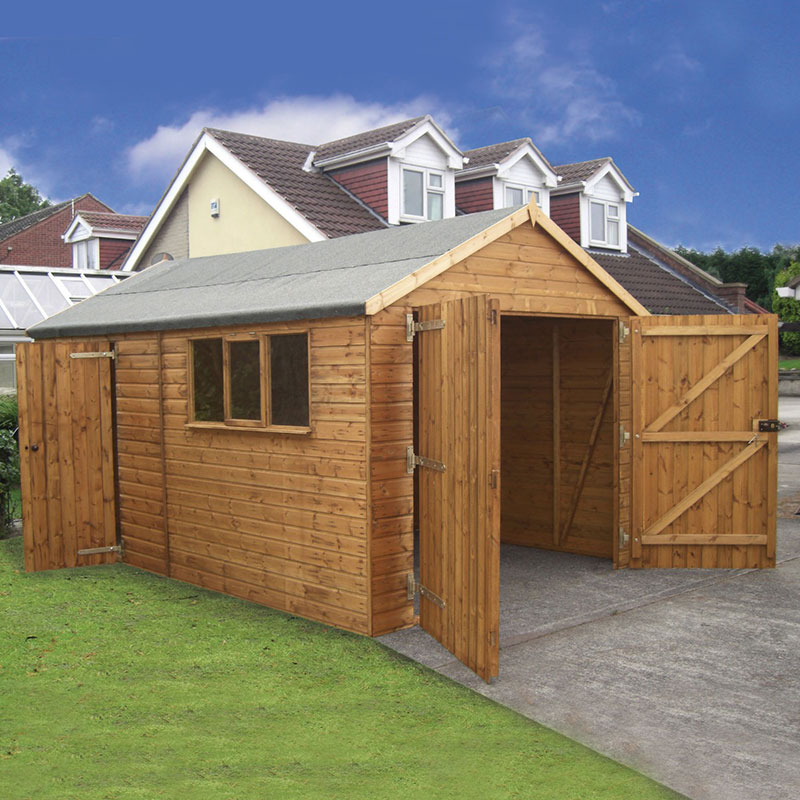
- Single garage form – a simpler footprint, often chosen when the main aim is to house one vehicle with space along one side.
- Double garage form – suits buyers who want parking for two smaller vehicles, or one vehicle plus storage and work area.
- Pitched roof design – gives a more traditional appearance and often feels better suited to homes with classic garden layouts.
- Flat roof design – can look neat and compact, especially where a lower visual profile is wanted.
- Side-door layout – handy when you need separate access without opening the main doors every time.
- Front-opening layout – more direct for vehicle entry, and often the first choice for car use.
The shape matters because an 18×12 garage is not just about area on paper. It is also about how the space is divided and approached. A pitched roof may give the building a more familiar look, while a flat roof can feel less imposing. A wider front opening can make parking easier, while side access can be helpful if the garage will be used as a store for bikes, tools, or garden items. The right choice depends on how the building is likely to be used most days, not just on what seems tidy at first glance.
What the size lets you do inside
An 18×12 garage is often chosen because it gives enough floor area to support more than one use. That is a major difference compared with smaller garages where every item has to earn its place. In this size range, buyers often look for room to park a vehicle with space left for shelving, workbenches, or a few bulky items that are awkward to keep elsewhere.
For car owners, the obvious benefit is cover and security for the vehicle. But the space is also useful if your vehicle is not the only thing you need to protect. Bikes, garden machinery, ladders, seasonal furniture, and storage boxes all benefit from being kept in a proper garage rather than under tarps or pushed into corners of the shed. If the building is used for a hobby or light work, the extra width can make it easier to keep a sensible walking route around the centre of the room.
This category is especially appealing when the goal is to avoid a garage that feels too tight. A good 18×12 layout can leave enough breathing room for doors to open properly, for larger items to be moved in and out, and for the space to feel organised rather than improvised.
Different uses, same footprint
Not every buyer wants the same thing from an 18×12 garage, and that is where the category becomes interesting. The same dimensions can support very different priorities.
- Vehicle storage – keeps a car sheltered and off the driveway, which can free up outside parking.
- Workshop use – gives enough room for a bench, hand tools, and a practical working lane.
- Garden storage – useful for mowers, strimmers, compost bags, pots, and larger seasonal items.
- Mixed-use space – a combination of parking and storage, where the layout needs to stay sensible.
- General utility space – ideal if you need a place for things that do not belong inside the house.
The attraction here is flexibility without drifting into excess. An 18×12 garage can be large enough to solve several problems at once, but still remain manageable in a domestic garden setting. That means you can plan around one clear structure instead of adding separate storage pieces that clutter the plot. For many buyers, that is the difference between a space that works and one that slowly fills up with compromises.
How material and build style influence the choice
Within the garage category, the build style can shift the whole character of the structure. Buyers often compare options based on how the garage will sit beside the house, what sort of look they want, and how much of the available plot they are willing to dedicate to it. Even within the same size, the appearance can vary a lot.
A more traditional build usually suits homes where the garden has a classic layout or where the buyer wants the garage to feel like part of the property rather than a separate add-on. A cleaner, simpler build can suit more modern settings or tighter side areas. The 18×12 size works well in either direction because it is large enough to feel intentional but not so large that it forces a single style.
Some buyers will be focused on the visual balance of the building, while others are more interested in the clear internal area. That is why the category is useful: it brings those needs together. If the garage is going to be seen from the house, the garden, and the driveway, the shape, height, and frontage matter as much as the floor space. A good match can make the whole outside area feel more settled, even before anything is stored inside.
Why the 18×12 size often feels easier to plan around
The 18×12 garage is not an awkward afterthought size. It gives a proper rectangular footprint, which makes planning simpler for many buyers. That kind of proportion is useful because it helps you think in zones: one area for parking, one area for storage, and one area for access. That is especially helpful if you want to avoid stacking too much along the front or blocking the way in and out.
Another advantage is that the dimensions make it easier to compare internal arrangements. A narrower garage can leave you short of side space; a much larger one may ask for more land than you want to give. This size sits in a middle band where decisions feel more practical. It can suit a household that needs a serious storage solution, but it does not demand a full outbuilding scale.
That balance can also help when deciding between door positions and internal usage. If you want the garage to serve more than one purpose, you are less likely to feel trapped by the dimensions. That is one of the reasons buyers often return to this category after looking at smaller sheds or tighter garages and realising they need just a bit more room.
Things buyers usually compare before deciding
When people shop for an 18×12 garage, they usually look at a few key differences rather than just the headline size. These details matter because they change how usable the building will feel day to day.
- Roof style – pitched for a more traditional outline, flat for a lower profile.
- Front opening width – important if you want easier vehicle access.
- Side access – useful when the garage is used for storage or general entry.
- Internal openness – some layouts feel more open for manoeuvring items.
- Visual impact – important if the garage sits close to the house or boundary.
- Intended use – parking, storage, workshop, or a mix of all three.
These are the comparisons that help a buyer make a clear choice. A garage can look suitable from the outside yet still feel awkward if the doors, roofline, or proportions do not match the intended use. With an 18×12 footprint, there is enough room to be selective, which is useful because the right garage should solve a layout problem, not create another one.
Small differences that make a real change in use
When browsing this category, it is easy to think the main decision is just size. In practice, the smaller differences can matter a lot. A garage with a higher roofline can feel more comfortable for storage of taller items. A more compact roof shape may suit a property where height is a concern. A broader frontage can make vehicle entry feel simpler. A side door can save time when you need to grab one item quickly rather than using the main opening each time.
For buyers using the space as a mix of garage and store, these details can be the deciding factor. An 18×12 garage is often chosen by people who want the building to do several jobs at once, so even modest changes in the layout can alter how successful the whole setup feels. This is why it helps to imagine not just where the car will go, but also where the bulkier things will sit, how often you need access, and whether the entrance style fits the way you actually move through the space.
Tips that help you buy the right one first time
A few practical checks can make the choice feel much clearer, especially when comparing different 18×12 garages.
- Measure the plot carefully so the garage fits the space without crowding paths or boundaries.
- Think about door clearance if you plan to park a vehicle inside rather than just store items.
- Match the roof style to the look of the property, so the garage feels part of the site.
- Plan for your largest item first – once that fits, the rest is easier to arrange.
- Decide on the main use before comparing layouts, because storage and parking needs are not the same.
These checks may sound basic, but they are the ones that usually save time later. An 18×12 garage should feel like a straightforward answer to a storage or parking need. If you know what it has to hold, how often you will use it, and how visible it will be from the rest of the garden, choosing becomes less of a guess and more of a sensible decision.
A category for people who want room without waste
What makes this garage category stand out is the way it avoids extremes. It is not a tiny structure that forces every item into a compromise, and it is not a vast building that asks you to redesign the whole plot. The 18×12 format offers enough generosity for useful everyday storage, while still keeping the project grounded in a normal domestic setting.
That makes it a strong fit for buyers who prefer clear proportions, useful internal space, and a shape that can be matched to different garden styles. Whether the priority is a vehicle, tools, bikes, or a practical mixed-use room, the category offers enough variation to narrow things down without making the choice feel complicated. If you are comparing garages and want something that is easy to live with, 18×12 is a size that often lands in the right place.
Why people keep coming back to this size
Buyers tend to return to the 18×12 garage because it solves a common problem: there is usually more to store than a small garage can handle, but not everyone wants to commit to a very large structure. This size gives enough length and width to make a proper arrangement inside, while still leaving the garage feeling like part of a domestic garden rather than an oversized outbuilding.
It also gives room for sensible trade-offs. You can decide whether you want more of the floor area reserved for parking or whether the garage should lean towards storage. You can choose a shape that blends into the property or one that feels more direct and functional. You can focus on front access, side access, or a combination that fits the way you use the space. That kind of choice is useful, because a garage is usually bought with a purpose in mind, and the better the fit, the less likely you are to end up rearranging things later.
In short: if you need a garage that feels measured, adaptable, and genuinely useful, the 18×12 category offers a smart starting point with enough variation in style and layout to suit real-life needs.
[Sassy_Social_Share]