
70mm Log Cabins - Best Deals in UK!
Showing all 6 results
-
9% OFF: Palmako Heidi 6.2m x 3.4m Log Cabin Garden Building (70mm) £11,489.009%

-
7% OFF: Palmako Heidi 8.4m x 3m Log Cabin Garden Building (70mm) £13,489.007%

-
6% OFF: Palmako Helena 5.4m x 4.2m Log Cabin Garden Building (70mm) £8,989.006%

-
Palmako Helena 5.4m x 5.4m Log Cabin Garden Building (70mm) £10,489.005%

-
Palmako Sandra 6.3 x 4.5m Log Cabin Garden Building (70mm) £14,489.00

-
Palmako Anna 7.8m x 4.8m Log Cabin Garden Building (70mm) £19,749.00

70mm log cabins offer a sturdy timber build, thicker wall boards, and a more solid feel for garden rooms, studios, offices, and leisure spaces where extra depth matters.
Why 70mm feels different from slimmer log cabin walls
A 70mm log cabin sits in a very useful middle ground for buyers who want more than a light summer cabin, but do not want to step straight into the bulk and cost of very heavy timber structures. The wall thickness is the feature that shapes much of the experience: the cabin feels more substantial, the logs interlock with a stronger visual presence, and the building tends to give a more composed, enclosed feel when you step inside.
Compared with thinner wall options, 70mm timber walls generally give a firmer sense of structure. That matters when you are looking at a garden building that should feel like a proper room rather than a basic shed with windows. The difference is not only about looks. The extra timber depth changes how the cabin reads in the garden, how “finished” it appears, and how confidently it can be used as a workspace, hobby room, home gym, or relaxation area.
For many buyers, 70mm log cabins are chosen because they look balanced. They are not overbuilt in appearance, yet they do not feel flimsy either. That balance is often what makes the category so popular with people comparing garden rooms for regular use.
Bestseller der Kategorie 70mm Log Cabins
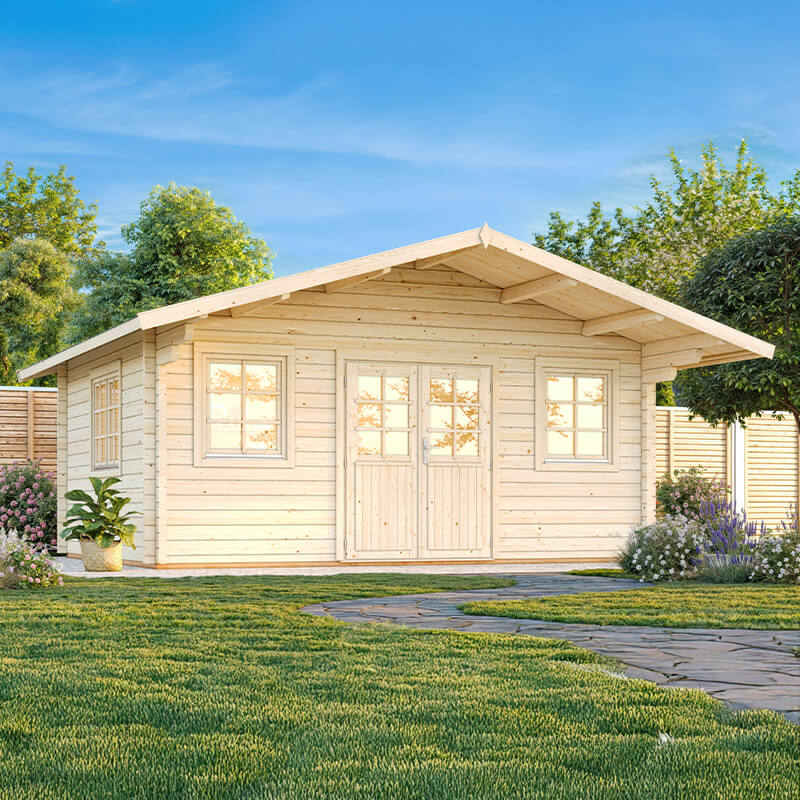
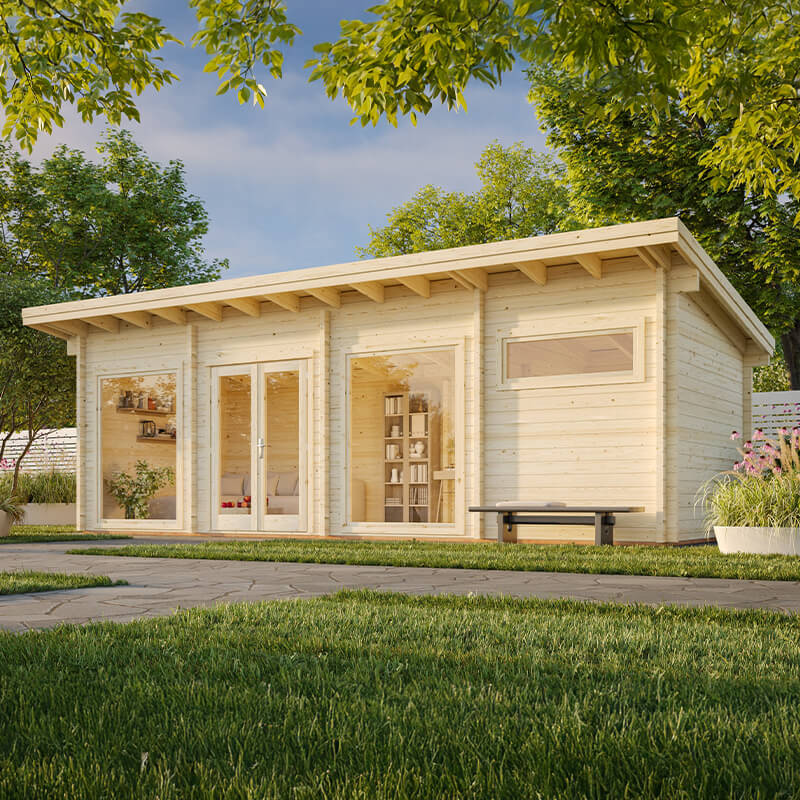
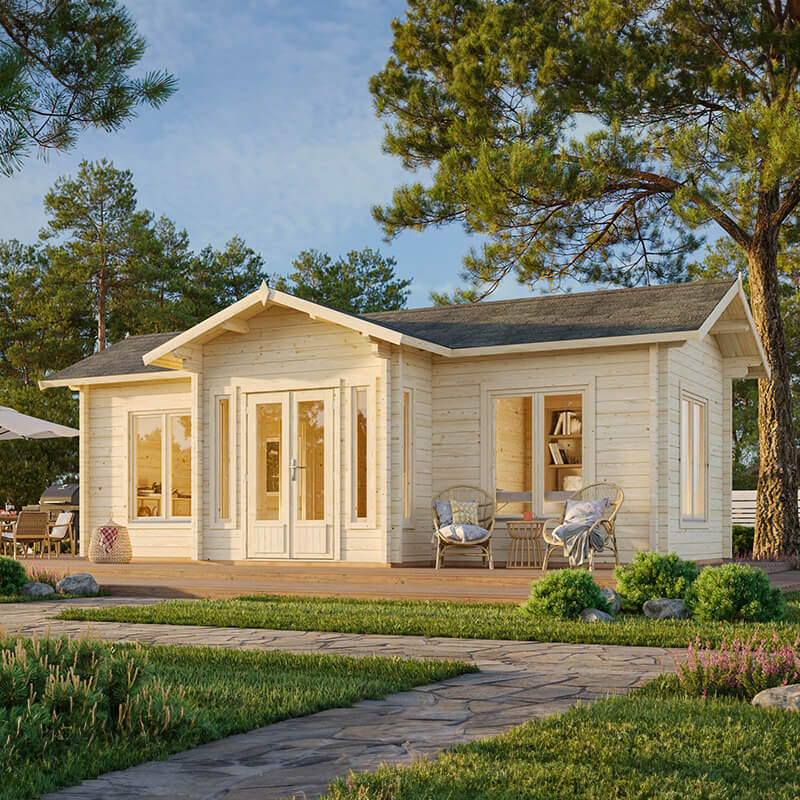
The shapes you will usually see in this category
One of the most useful things about 70mm log cabins is that the wall thickness works across several layouts. The shape you choose affects how the cabin sits in the garden and how you use the internal space.
- Aped roof log cabins give a traditional house-like profile with a central ridge and sloping sides. This shape often suits customers who want a familiar look and good headroom in the middle of the building.
- Pent roof cabins have a single slope from back to front or side to side. They tend to look neat in modern gardens and can work well where height restrictions matter.
- Corner log cabins use the garden angle more efficiently, making them useful where the footprint needs to tuck into an edge or awkward space.
- Chalet-style cabins usually feature a more decorative front profile, often with a stronger roof shape and a more characterful façade. They can give the garden building a softer, more relaxed feel.
- Rectangular cabins are the plainest in form, but often the most flexible inside. If you want to arrange furniture, a desk, or seating without odd corners, this shape makes life easier.
The shape is worth thinking about early, because the 70mm log wall construction will look and behave a little differently depending on whether the roof line is steep, shallow, or offset. A well-chosen shape can make the cabin feel more spacious than its footprint suggests.
What the 70mm log wall actually gives you
When people compare log cabins, wall thickness is often the deciding line. In the 70mm category, you are looking at a timber structure that feels more purposeful than lighter wall sections. The logs themselves are wider and more visually pronounced, which creates a richer exterior finish and a deeper internal wall profile.
That extra thickness can be useful if you want a cabin that feels like a room you can spend time in more regularly. It also gives the building a more solid visual weight in the garden. Some buyers simply prefer that presence. A 70mm log cabin often looks more “built” and less temporary, which can help if the garden building needs to suit a house and not look like an afterthought.
There is also a practical side to the wall depth. Thicker logs can provide a better base for a more enclosed-feeling space, especially when compared with thinner summerhouse-style buildings. It is one reason the category often appeals to people planning a dedicated space for working, reading, training, or meeting family use, rather than only occasional sitting out.
Different cabin uses that suit 70mm construction
The category covers more than one style of use, and that is part of its appeal. A 70mm log cabin is commonly chosen for spaces that need to feel more like an extension of the home than a casual garden shelter.
- Garden office use benefits from the more solid wall feel, especially if you want a room that separates work from the house.
- Studio space for art, music practice, or craft work can suit the calmer, more enclosed feel of a thicker log build.
- Leisure rooms make use of the inviting timber finish and the stronger sense of being in a proper room.
- Home gym spaces often need a building that feels grounded and substantial, rather than light and flimsy.
- Guest-style garden rooms can benefit from the more finished appearance that 70mm walls provide.
The key point is that 70mm log cabins tend to suit spaces where the room has a clear purpose. If you want the building to feel intentional, the thicker wall profile can help set that tone from the start.
How different roof styles change the look and use
Roof form matters just as much as wall thickness, and with a 70mm log cabin the roof can change the personality of the whole building.
Aped roofs often feel more traditional and open the possibility of more headroom under the ridge. That can help the building feel airy even though the walls are thicker. Pent roofs, by contrast, create a cleaner line and are often chosen where the garden layout is modern or where you want a more understated profile. Reverse apex layouts can change the internal flow too, depending on where the doors and windows sit. In some spaces, that makes furniture placement easier. In others, it gives a more balanced outside elevation.
If you are comparing forms, it is worth looking at how the roof shape affects the entrance side. A cabin may be the same wall thickness, yet one version can look bold and tall while another appears lower and more compact. That difference often decides whether a cabin feels like a feature in the garden or blends quietly into the boundary.
Doors, windows and the feel of the interior
In a 70mm log cabin, glazing and openings are a big part of the buying decision. Because the walls themselves look substantial, the size and position of doors and windows can either soften or sharpen the overall feel.
Large double doors can create a more open connection to the garden, which is useful if the cabin will act as a social space. Smaller window sets may suit a room intended for focus, privacy, or work. Corner glazing, where available in a design, can make the most of the thick timber walls by creating a lighter interior without losing the solid exterior character.
It is worth paying attention to how the openings sit within the log structure. Some cabins look very symmetrical, with centered doors and balanced windows. Others feel more dynamic, with offset layouts or side-entry formats. Neither is better in every case, but the arrangement should match how you plan to use the space. A cabin for quiet use might benefit from a more enclosed front. A family room may feel better with wider doors and more light.
Where 70mm stands among other wall thicknesses
Buyers often compare 70mm log cabins with thinner and thicker options, and the difference is not only technical. It affects price, appearance, and the intended use of the building.
Compared with 44mm cabins, the 70mm category usually feels more robust and more suited to regular use. Compared with 28mm or 34mm builds, it gives a more substantial visual and physical presence. On the other hand, once you move into even thicker ranges, the cabin may look and feel heavier again, which can be ideal for some projects but less practical for others.
That is why 70mm is often seen as a strong choice for customers who want a proper garden room without moving into the next step of weight and scale. It gives a sense of quality that people can see straight away, while still keeping the design choices broad and manageable.
Practical buying tips that matter with 70mm cabins
There are a few details worth checking before choosing a 70mm log cabin, and they can make a real difference to whether the building suits your garden and your plans.
- Check the footprint carefully so the cabin works with the space you actually have, not only the size you wished you had.
- Look at the door position and imagine how you will move furniture, desks, or seating in and out.
- Think about window placement in relation to the sun path, privacy, and the view from inside.
- Compare roof height if the cabin needs to sit near a boundary or under planning limits.
- Choose the shape for the use rather than only for looks, because the internal layout matters more than people expect.
- Pay attention to the floor plan and corners, since these can affect how open the room feels once furnished.
A good purchase decision usually comes down to fit. The right 70mm log cabin should suit the garden, the purpose, and the way you actually live, not just the photo on the page.
Why the timber look keeps buyers coming back
Part of the appeal of 70mm log cabins is the material itself. Timber gives a warmth that sheet-metal or plastic structures simply do not have. The visible log profile creates rhythm on the exterior, and the thickness of the wall boards reinforces that look. It feels crafted, not stamped out.
That matters for buyers who want the garden to gain something with character. A log cabin can act as a focal point without feeling over-designed. The wood grain, the interlocking corners, and the layered wall depth all contribute to a building that feels more rooted in the garden setting. It is a style that can sit naturally beside planting, paving, or lawn, while still looking like a deliberate addition.
Many people also like the fact that a 70mm timber cabin can move between roles more easily than a very specific leisure structure. One year it might be a workspace, later a hobby room or reading room. The build feels adaptable, which is handy when life and garden use change.
Details that help a cabin feel worth choosing
When comparing 70mm log cabins, small differences often decide the final choice. Two cabins can share the same wall thickness but feel very different because of their proportions, opening layout, or roof design.
For some buyers, it is the depth of the front elevation that matters. For others, it is the sense of space inside, especially if the cabin is to hold a sofa, a desk, or training equipment. Some will prefer a simple, compact footprint. Others want a wider room that can split into zones more easily. That is why it helps to read the design as a whole, not just the thickness on its own.
If you are comparing cabins for a garden project, try to picture the room in use rather than in empty form. A 70mm log cabin with the right proportions can feel balanced, practical, and more satisfying to live with than a larger building that does not really suit the plot. That sort of match is often what turns a browsing decision into a proper purchase.
The category in one glance
70mm log cabins suit buyers who want a timber garden building with a firmer wall feel, a more substantial presence, and enough flexibility for several room types. The category includes different shapes, roof styles, and opening layouts, so the choice is not limited to one look. Whether you want an apex, pent, corner, or more characterful profile, the 70mm wall thickness helps the cabin feel like a proper part of the garden rather than a light extra.
If the aim is a room with purpose, a neat timber finish, and a structure that feels considered from the outside in, 70mm log cabins are a strong category to compare. The details matter, and that is exactly why so many people end up choosing this wall thickness when they want a garden building that looks settled, useful, and ready for real plans.
[Sassy_Social_Share]