Glass vs. Polycarbonate Greenhouses: Which One Is Better?
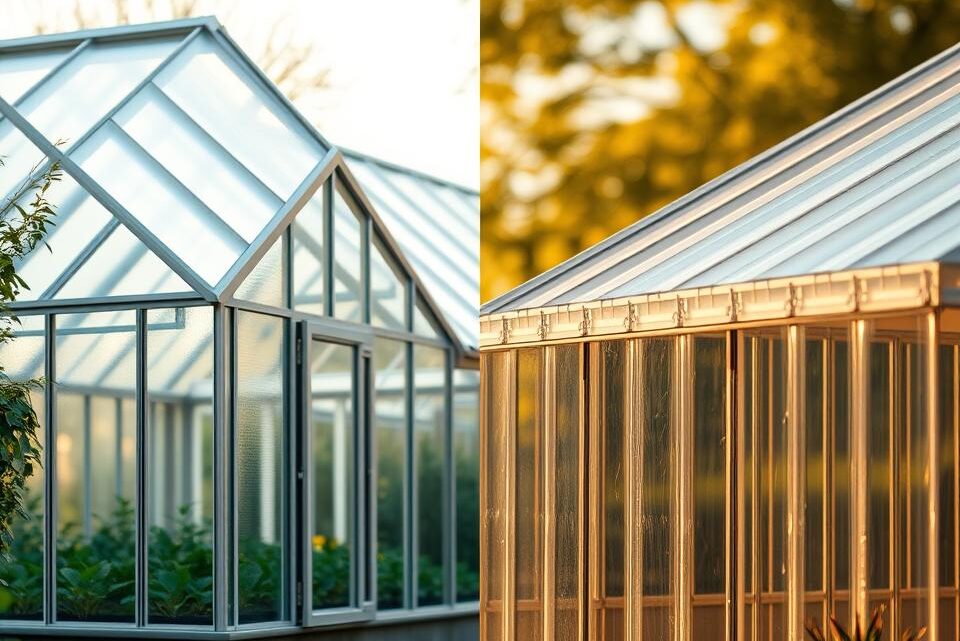
Selecting the right greenhouse materials can transform your gardening experience. When considering greenhouse materials comparison, gardeners face a critical choice between traditional glass and modern polycarbonate coverings. The best greenhouse covering depends on multiple factors that impact plant growth, durability, and overall performance.
Glass vs. polycarbonate represents more than just a material selection—it’s about creating the optimal environment for your plants. Each material brings unique characteristics that can significantly influence your gardening success, from light transmission to thermal efficiency.
Understanding these differences will help you make an informed decision tailored to your specific gardening needs. Whether you’re a professional horticulturist or a passionate home gardener, choosing the right greenhouse material is crucial for nurturing healthy, thriving plants.
Inhaltsverzeichnis
Key Takeaways
- Greenhouse materials dramatically influence plant growth
- Glass and polycarbonate offer distinct advantages
- Climate and local conditions affect material selection
- Initial investment differs between glass and polycarbonate
- Light transmission varies with chosen material
Understanding Greenhouse Materials: A Comprehensive Guide
Greenhouse materials have undergone remarkable transformations throughout agricultural history. From simple glass structures to advanced polycarbonate innovations, the evolution of greenhouse technology reflects human ingenuity in protecting and nurturing plant growth.
The greenhouse material history reveals a fascinating journey of scientific and horticultural development. Early greenhouse designs relied exclusively on glass, which provided basic environmental control for delicate plants.
Traditional Glass Greenhouses Through History
Glass greenhouses emerged during the Renaissance, initially serving wealthy European botanical enthusiasts. Key milestones in their development include:
- 16th-century orangeries in royal European gardens
- Victorian-era sophisticated glass conservatories
- Experimental botanical research structures
The Rise of Polycarbonate in Modern Gardening
Polycarbonate innovation transformed greenhouse engineering in the late 20th century. This lightweight, durable material offered significant advantages over traditional glass, including:
- Enhanced thermal insulation
- Greater impact resistance
- Reduced manufacturing costs
Basic Material Properties Explained
Understanding material properties is crucial for selecting the right greenhouse covering. Let’s compare glass and polycarbonate:
| Property | Glass | Polycarbonate |
|---|---|---|
| Weight | Heavy | Lightweight |
| Durability | Fragile | High impact resistance |
| Light Transmission | Excellent | Very Good |
| Thermal Insulation | Poor | Superior |
Each material offers unique benefits, making the choice dependent on specific gardening requirements and environmental conditions.
Glass vs. Polycarbonate Greenhouses: Which One Is Better?
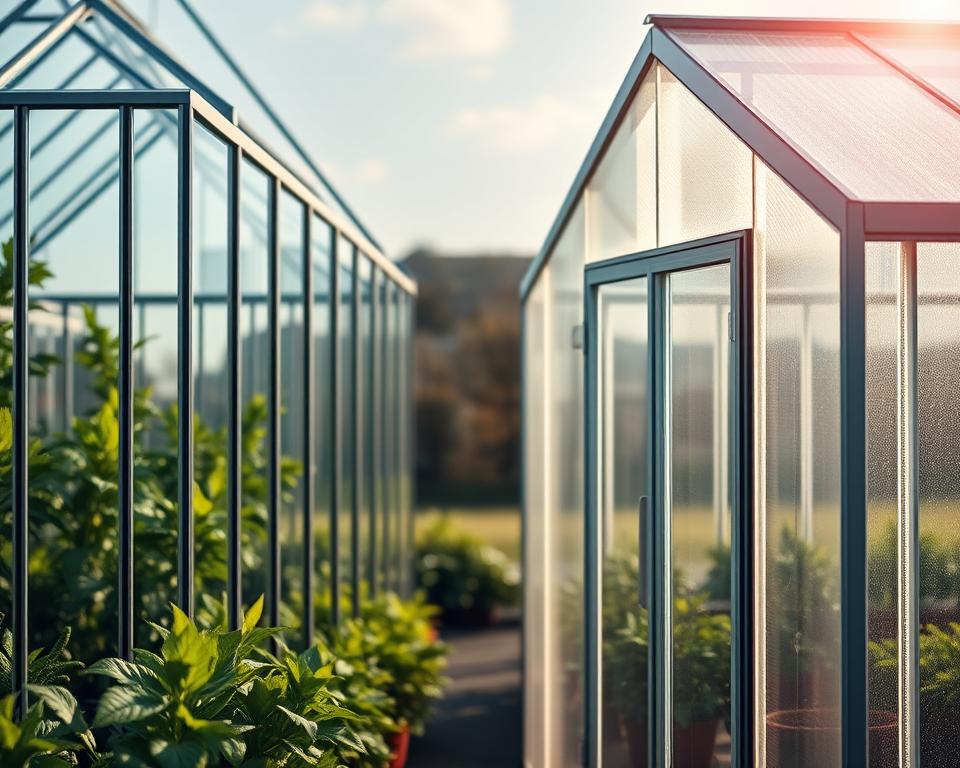
Selecting the right greenhouse material is crucial for gardeners seeking optimal growing conditions. The greenhouse material comparison reveals distinct advantages and challenges for both glass and polycarbonate options.
When exploring pros and cons of glass greenhouses, gardeners encounter a classic material with exceptional transparency and traditional aesthetic appeal. Glass offers superior light transmission and creates a timeless look for garden structures.
- Glass greenhouses provide crystal-clear visibility
- Natural aesthetic that complements traditional garden designs
- Excellent light penetration for plant growth
Advantages of polycarbonate greenhouses include remarkable durability and lightweight construction. These modern alternatives present significant benefits for contemporary gardeners looking for practical solutions.
- Shatterproof and impact-resistant material
- Lightweight panels for easier installation
- Better insulation properties compared to traditional glass
The choice between glass and polycarbonate depends on individual gardening requirements, budget constraints, and specific environmental conditions. Each material offers unique characteristics that cater to different gardening preferences.
Selecting the right greenhouse material can significantly impact plant growth and overall gardening experience.
Understanding the nuanced differences between these materials helps gardeners make informed decisions about their greenhouse investments.
Light Transmission and Growing Conditions
Selecting the right greenhouse material is crucial for optimal plant growth. Greenhouse light transmission plays a vital role in creating the perfect environment for cultivating healthy plants throughout different seasons.
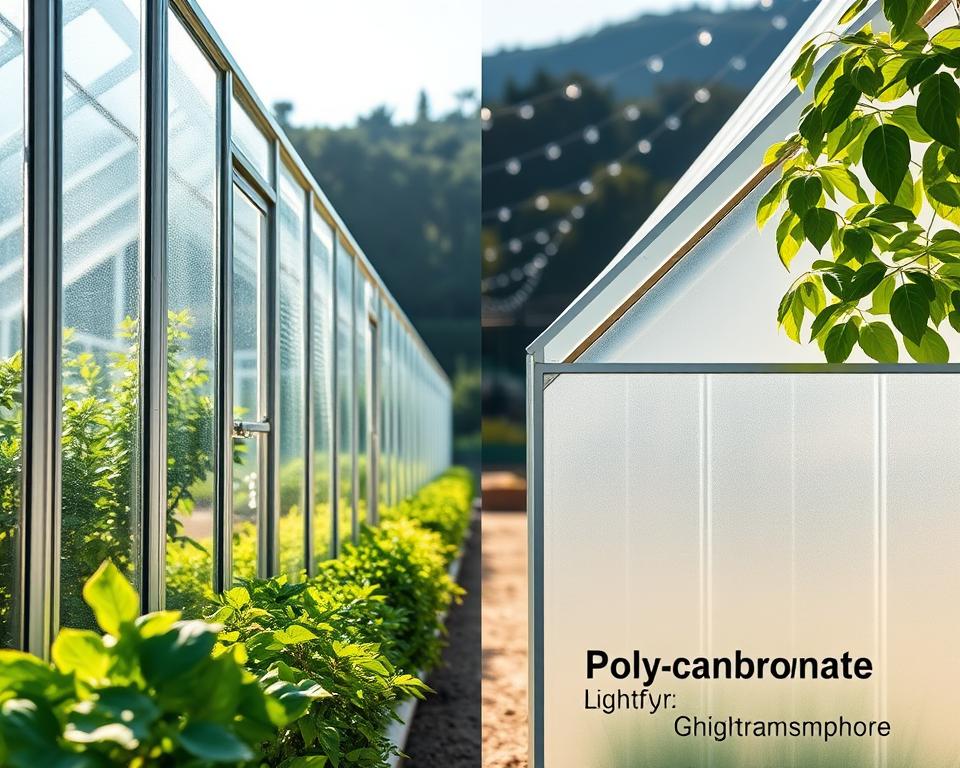
Different greenhouse materials significantly impact plant development through their unique light transmission and UV protection properties. Understanding these characteristics helps gardeners make informed decisions about their growing spaces.
UV Protection and Plant Growth
UV protection for plants is essential in maintaining robust and healthy vegetation. Different greenhouse materials offer varying levels of protection:
- Glass provides natural UV filtration
- Polycarbonate offers enhanced UV-blocking capabilities
- Specialised coatings can improve plant protection
Seasonal Light Performance
Seasonal growing conditions directly influence plant development. The right greenhouse material can help manage light exposure throughout the year.
| Material | Winter Performance | Summer Performance |
|---|---|---|
| Glass | Lower light diffusion | Direct sunlight exposure |
| Polycarbonate | Better light distribution | Reduced heat intensity |
Heat Retention Properties
Greenhouse materials significantly impact heat retention and energy efficiency. Polycarbonate typically offers superior insulation compared to traditional glass, helping maintain consistent temperatures for optimal plant growth.
The right greenhouse material can make the difference between thriving and struggling plants.
Durability and Weather Resistance
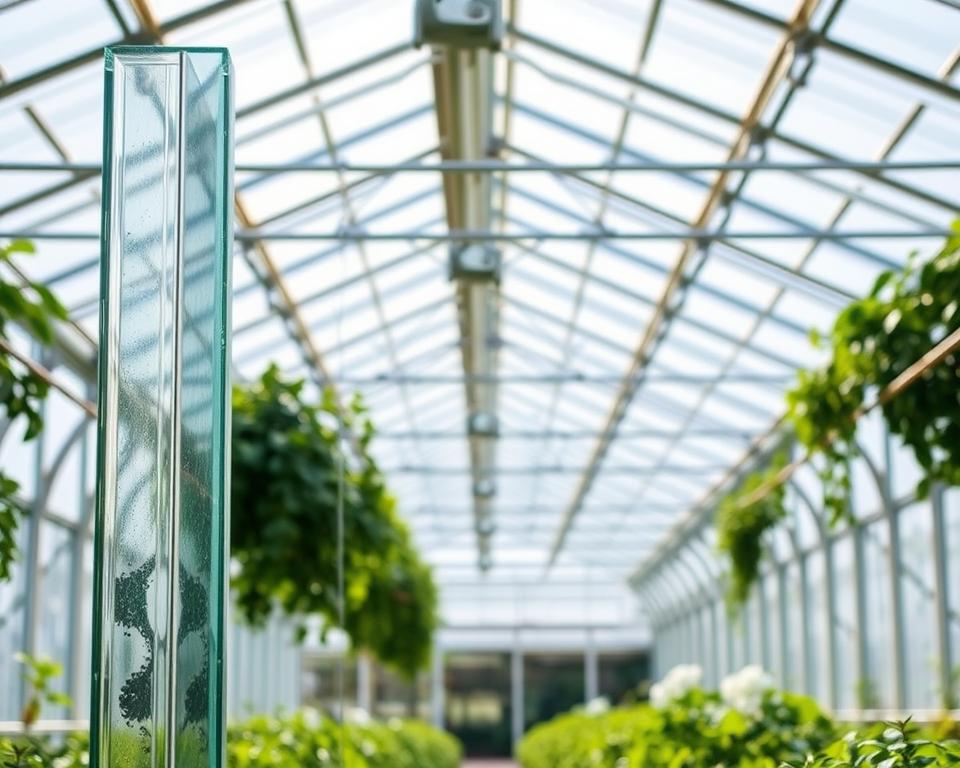
Selecting the right greenhouse material is crucial for creating long-lasting greenhouse structures that can withstand diverse weather conditions. Both glass and polycarbonate offer unique durability characteristics that gardeners must carefully consider.
When evaluating greenhouse durability, several key factors come into play:
- Impact resistance
- UV protection
- Temperature tolerance
- Structural integrity
Polycarbonate emerges as a superior choice for weather-resistant materials. Its remarkable strength allows it to resist hailstones, strong winds, and extreme temperature fluctuations. The material’s flexibility prevents shattering, unlike traditional glass which can crack under pressure.
“Durability isn’t just about surviving – it’s about thriving in challenging environments.” – Greenhouse Engineering Research Group
Glass greenhouses, while aesthetically pleasing, require more frequent maintenance. Polycarbonate panels typically last 10-15 years compared to glass’s shorter lifespan, making them a more economical long-term investment.
The key differences in durability include:
- Polycarbonate is 250 times stronger than glass
- Polycarbonate offers better thermal insulation
- Glass requires more careful handling during installation
Professional gardeners increasingly recommend polycarbonate for its exceptional resilience and protective qualities against harsh environmental challenges.
Cost Comparison and Long-term Value
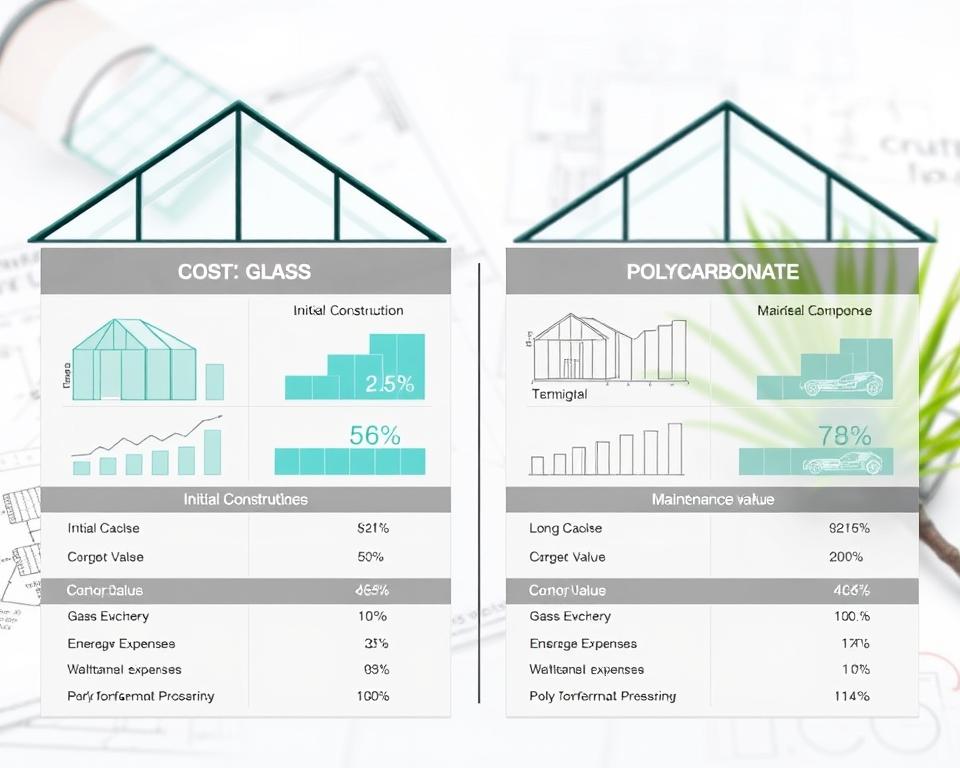
Choosing the right greenhouse involves a comprehensive greenhouse cost analysis that goes beyond the initial price tag. Gardeners and agricultural enthusiasts must consider the long-term value comparison between different greenhouse materials to make an informed decision.
Initial Investment Analysis
When evaluating energy-efficient greenhouses, the upfront costs can vary significantly. Glass greenhouses typically require a higher initial investment compared to polycarbonate alternatives. Gardeners should consider these key financial aspects:
- Material costs for glass vs. polycarbonate panels
- Installation expenses
- Frame construction requirements
- Additional structural support needed
Maintenance Expenses Over Time
The true value of a greenhouse emerges through its long-term performance. Polycarbonate greenhouses often present lower maintenance expenses, with more durable materials that resist cracking and degradation.
Energy Efficiency Savings
Energy-efficient greenhouses can significantly reduce heating and cooling costs. Polycarbonate materials typically offer superior insulation, potentially saving gardeners up to 30% on annual energy expenses. The thermal properties of different materials play a crucial role in overall greenhouse economics.
Investing in the right greenhouse material can lead to substantial long-term financial benefits for passionate gardeners.
Installation and Maintenance Requirements
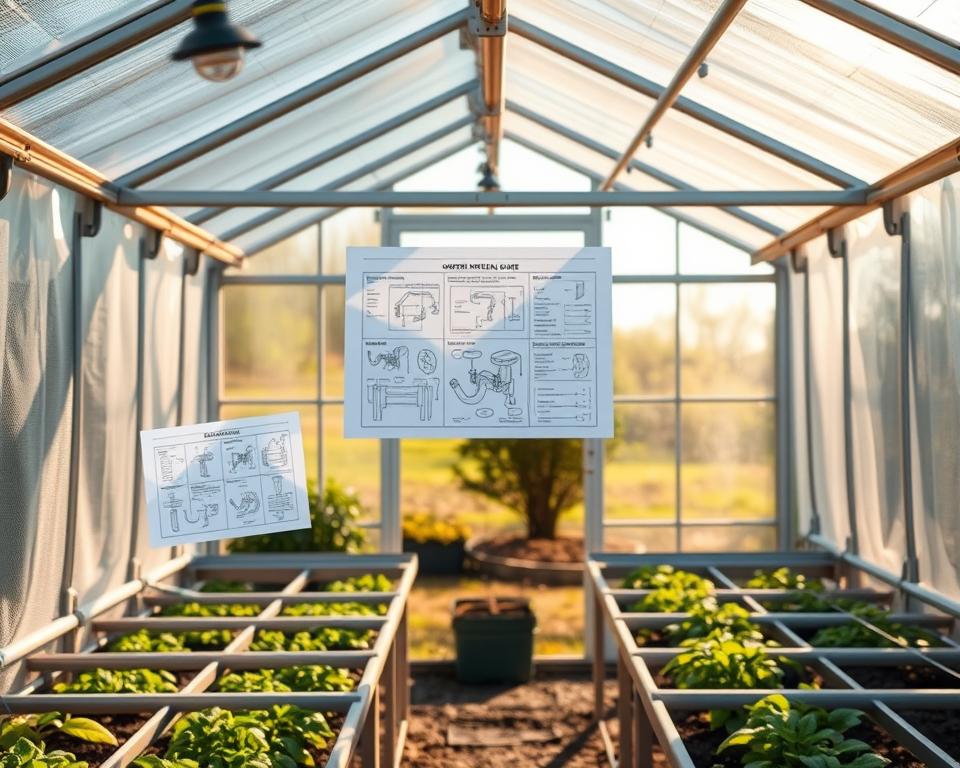
Choosing the right greenhouse involves understanding installation and maintenance challenges. Both glass and polycarbonate greenhouses require specific approaches for successful DIY greenhouse projects.
Glass greenhouses demand careful handling during installation. The weight and fragility of glass panels necessitate professional skills or experienced DIY enthusiasts. Specialised tools like suction cups and protective gloves become essential for safe manipulation.
- Select appropriate foundation materials
- Ensure level ground preparation
- Use protective equipment during installation
- Check structural integrity before final assembly
Polycarbonate greenhouses offer more flexibility for maintenance tips for greenhouses. These lightweight panels resist breakage and simplify replacement processes. Gardeners can typically manage repairs without extensive technical expertise.
| Material | Installation Difficulty | Maintenance Complexity |
|---|---|---|
| Glass | High | Complex |
| Polycarbonate | Low | Simple |
Regular maintenance remains crucial for both greenhouse types. Annual cleaning, seal inspection, and structural assessments help preserve your greenhouse’s longevity and performance.
“Proper installation and consistent maintenance are the keys to a successful greenhouse project.” – Gardening Experts
Considering your skill level and available resources will guide your greenhouse installation guide strategy, ensuring a successful and sustainable gardening environment.
Environmental Impact and Sustainability
Sustainable gardening has become a critical consideration for environmentally conscious gardeners. When selecting eco-friendly greenhouses, understanding their environmental footprint is paramount to making responsible choices that minimise ecological impact.
The environmental performance of greenhouses extends far beyond their initial construction. Both glass and polycarbonate materials present unique sustainability challenges and opportunities for greenhouse recycling.
Carbon Footprint Comparison
Greenhouse materials significantly influence carbon emissions throughout their lifecycle. Let’s examine the key environmental considerations:
- Manufacturing energy requirements
- Transportation emissions
- Potential for material reuse
- Long-term environmental degradation
Recycling Possibilities
Sustainable gardening practices demand careful material selection. The recyclability of greenhouse materials varies considerably:
| Material | Recyclability | Environmental Impact |
|---|---|---|
| Glass | High | Low energy reprocessing |
| Polycarbonate | Moderate | Complex recycling process |
Lifetime Environmental Cost
Evaluating the total environmental expense involves considering durability, energy efficiency, and end-of-life disposal. Eco-friendly greenhouses require a holistic approach to sustainability.
Gardeners must weigh the long-term ecological implications of their greenhouse materials, balancing performance with environmental responsibility.
Safety Features and Building Regulations
When considering greenhouse construction, understanding greenhouse safety standards becomes crucial for gardeners across the United Kingdom. Safe gardening structures require careful planning and adherence to specific building regulations for greenhouses.
Local authorities typically enforce strict guidelines to ensure structural integrity and user safety. These regulations cover multiple aspects of greenhouse design:
- Structural stability
- Material strength
- Wind resistance
- Foundation requirements
Safety considerations differ between glass and polycarbonate greenhouse materials. Glass greenhouses must meet additional shatter-resistance standards, while polycarbonate structures offer inherent safety advantages.
| Safety Feature | Glass Greenhouse | Polycarbonate Greenhouse |
|---|---|---|
| Impact Resistance | Moderate | High |
| Shatter Risk | High | Low |
| UV Protection | Limited | Excellent |
“Proper planning prevents poor performance in greenhouse construction” – Royal Horticultural Society
Gardeners must consult local planning departments to understand specific building regulations. Some municipalities require permits for structures exceeding certain dimensions, ensuring safe gardening structures are professionally assessed.
Prioritising safety standards not only protects your investment but also safeguards your plants and personal well-being.
Conclusion
Selecting the right greenhouse material requires careful consideration of multiple factors. Your best greenhouse material choice depends on specific gardening needs, local climate, and personal preferences. Both glass and polycarbonate offer unique advantages for greenhouse enthusiasts seeking optimal growing environments.
The greenhouse buying guide we’ve explored reveals that glass provides superior clarity and traditional aesthetic appeal, while polycarbonate delivers exceptional durability and thermal efficiency. Your polycarbonate decision should balance performance characteristics with budget constraints and long-term maintenance expectations.
Gardeners must evaluate their individual requirements – from light transmission and weather resistance to installation costs and environmental impact. Professional horticulturists recommend assessing local weather patterns, plant species, and personal gardening goals before making a final selection.
Ultimately, both materials can create successful greenhouse environments when selected thoughtfully. By understanding the nuanced differences between glass and polycarbonate, you’ll be empowered to create an ideal growing space that supports healthy plant development and meets your specific gardening aspirations.
FAQ
What is the primary difference between glass and polycarbonate greenhouses?
The main difference lies in the material composition and performance characteristics. Glass is a traditional, transparent material with excellent clarity, while polycarbonate is a modern, lightweight plastic material that offers better insulation and durability.
Are polycarbonate greenhouses more cost-effective than glass greenhouses?
Generally, polycarbonate greenhouses have a lower initial investment and reduced maintenance costs. They are lighter, easier to install, and provide better energy efficiency, which can lead to long-term savings on heating and replacement expenses.
How do light transmission properties differ between glass and polycarbonate?
Glass provides superior light clarity, allowing more direct sunlight to penetrate. Polycarbonate offers diffused light, which can be beneficial for plant growth by reducing harsh shadows and providing more even light distribution.
Which material is more durable and weather-resistant?
Polycarbonate is significantly more durable, with high impact resistance and better performance in extreme weather conditions. It can withstand hail, strong winds, and temperature fluctuations more effectively than traditional glass panels.
Do polycarbonate greenhouses provide adequate UV protection?
Most modern polycarbonate greenhouse panels are specifically designed with built-in UV protection, often featuring a protective coating that filters harmful ultraviolet rays while allowing beneficial light to reach plants.
What are the environmental considerations when choosing between glass and polycarbonate?
Polycarbonate generally has a lower environmental impact due to its lighter weight, improved energy efficiency, and potential for recycling. However, the specific environmental footprint depends on manufacturing processes and disposal methods.
Are there any building regulations I should be aware of when installing a greenhouse?
In the UK, planning permissions may vary depending on the size and location of your greenhouse. Typically, smaller structures fall under permitted development rights, but it’s always best to check with local planning authorities before installation.
How long can I expect a polycarbonate greenhouse to last?
A high-quality polycarbonate greenhouse can last 10-15 years with proper maintenance, compared to glass greenhouses which may require more frequent panel replacements.
Is it difficult to clean and maintain a polycarbonate greenhouse?
Polycarbonate greenhouses are relatively easy to maintain. They require gentle cleaning with mild soap and water, and their lightweight nature makes repairs and panel replacements much simpler compared to glass structures.
Can I retrofit an existing glass greenhouse with polycarbonate panels?
Many greenhouse frames can be retrofitted with polycarbonate panels, but it’s essential to ensure compatibility with the existing structure and potentially make minor modifications to support the new material.