How Close Can I Put a Shed to My Neighbour’s Fence?
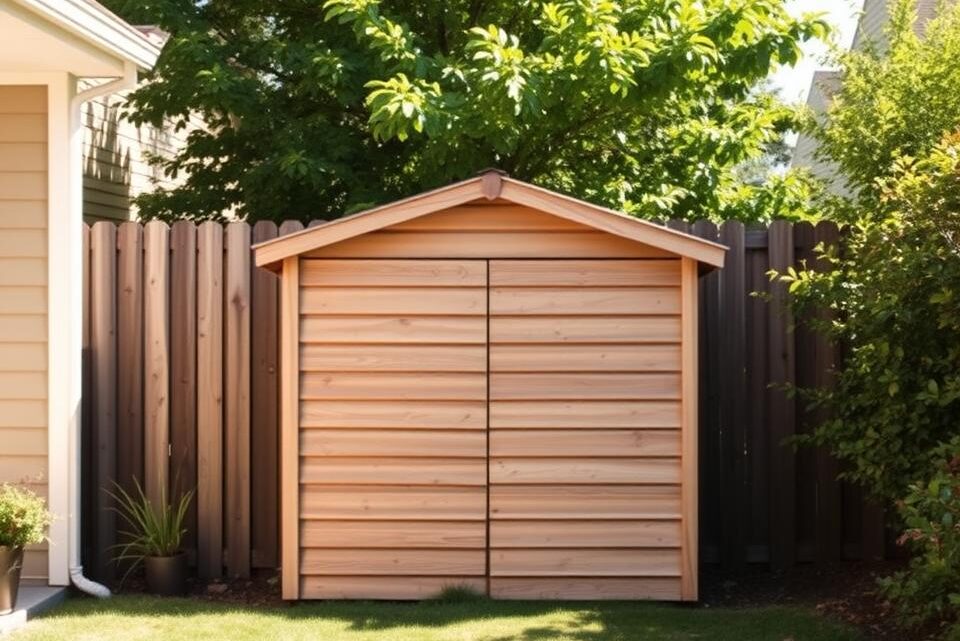
Navigating shed placement near a neighbour’s fence can be a tricky endeavour for UK homeowners. Understanding the legal and practical considerations of garden structures is crucial to maintaining harmonious relationships and avoiding potential disputes.
When planning shed placement, homeowners must carefully consider property boundaries, local regulations, and the potential impact on neighbouring properties. The proximity of a shed to a fence involves multiple factors that require thoughtful consideration.
Each garden is unique, and shed placement depends on specific local guidelines, property layout, and individual circumstances. Residents must research their local council’s regulations and potentially discuss plans with their neighbours to ensure smooth implementation of garden structures.
Inhaltsverzeichnis
Key Takeaways
- Check local planning permissions before shed installation
- Understand property boundary regulations
- Maintain good relationships with neighbours
- Consider shed height and size restrictions
- Evaluate practical maintenance requirements
- Measure recommended distances from property lines
- Consult professional guidance if uncertain
Understanding Property Boundaries and Legal Requirements
Navigating the complexities of property boundaries can be challenging for homeowners planning to install a garden shed. Understanding the legal landscape is crucial to avoiding potential disputes and ensuring compliance with local regulations.
Property boundaries represent the legal demarcation between two adjacent land parcels. Knowing these precise lines helps prevent conflicts with neighbours and ensures your shed placement meets all necessary requirements.
Property Line Demarcation
Identifying your exact property boundaries involves several key steps:
- Consult your property deed documents
- Check land registry records
- Use professional land surveying services
- Review architectural site plans
UK Planning Permission Basics
Planning permission for garden structures depends on specific criteria. Most garden sheds fall under permitted development rights, but certain conditions must be met:
- Total shed area must not exceed 50% of garden space
- Maximum height restrictions apply
- Distance from property boundaries must be considered
- Structural materials must comply with local guidelines
Party Wall Act Considerations
The Party Wall Act becomes relevant when construction might impact shared boundaries. Communicating with neighbours and potentially serving formal notices can help prevent legal complications related to shed installation.
Proactive communication and thorough research are key to successfully navigating property boundaries and legal requirements for your garden shed project.
Minimum Distance Requirements for Garden Sheds
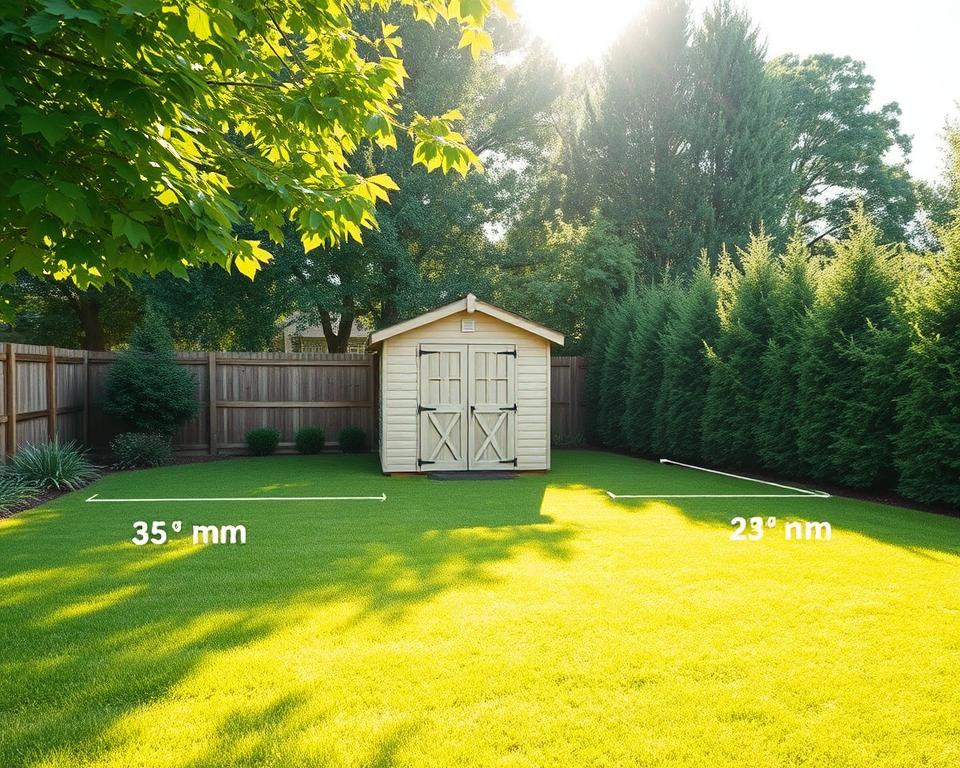
Navigating shed distance regulations can be tricky for UK homeowners. Understanding garden structure placement is crucial to ensure compliance with local guidelines and maintain good neighbourly relations.
Different factors influence the minimum distance requirements for garden sheds. Property type, local council regulations, and shed dimensions all play significant roles in determining appropriate placement.
- Typical garden shed distance from property boundaries: 50-100 cm
- Maximum permitted shed height without planning permission: 2.5 metres
- Distance from neighbouring fence lines: At least 30-50 cm
Local councils often have specific shed distance regulations that homeowners must follow. These guidelines help prevent potential disputes and ensure safe, harmonious garden environments.
| Property Type | Recommended Shed Distance | Planning Permission Required |
|---|---|---|
| Detached House | 1-2 metres from boundary | No (if within size limits) |
| Semi-Detached House | 75-100 cm from boundary | Possible (depending on size) |
| Terraced House | 50-75 cm from boundary | Likely required |
Pro tip: Always check with your local planning authority before installing a garden shed to ensure full compliance with shed distance regulations.
Garden structure placement requires careful consideration. Measure your space, review local guidelines, and communicate with neighbours to create a smooth shed installation process.
How Close Can I Put a Shed to My Neighbour’s Fence?
Navigating shed placement rules can be tricky, especially when considering fence proximity and potential neighbourly tensions. Understanding the right distance between your shed and a neighbouring fence is crucial for maintaining good relationships and complying with local regulations.
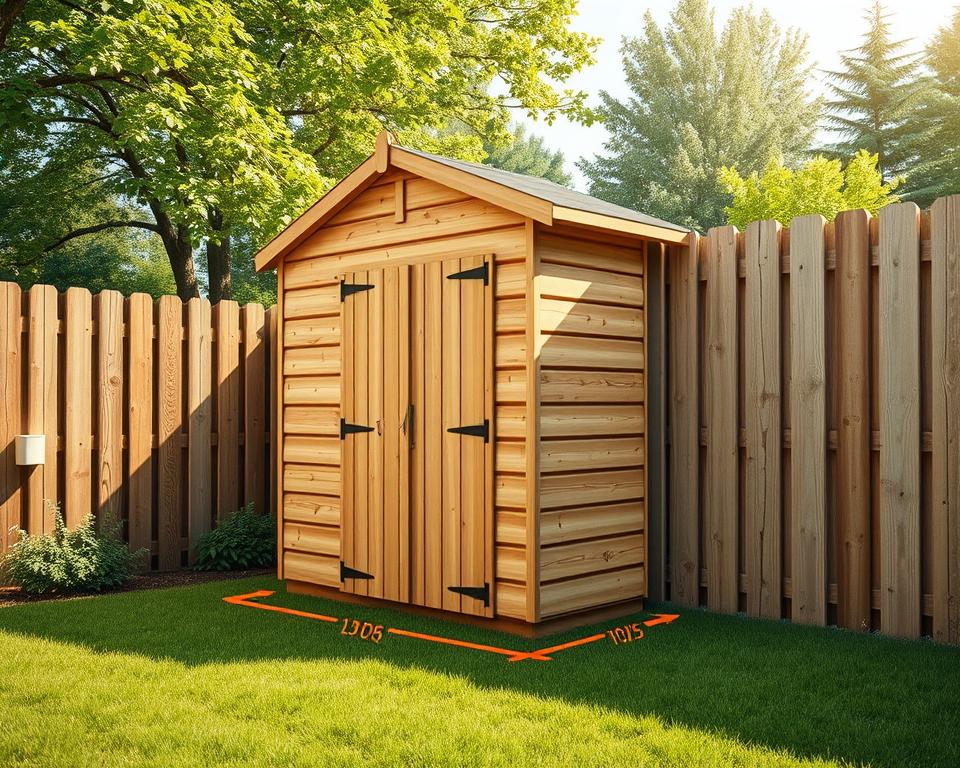
When planning your garden shed, several key factors determine how close you can position it to a fence:
- Property boundary limits
- Local planning permissions
- Specific terraced house regulations
- Structural considerations
Standard Measurements for Shed Placement
Typically, garden shed placement follows these standard guidelines:
| Shed Location | Recommended Distance from Fence |
|---|---|
| Standard Residential Garden | Minimum 50 cm (500 mm) |
| Terraced House | Minimum 30 cm (300 mm) |
| Conservation Areas | Specific local restrictions apply |
Regional Variations in Shed Regulations
Shed placement rules can differ across UK regions. Local council guidelines play a significant role in determining exact positioning requirements. Rural areas might offer more flexibility, while urban settings often have stricter fence proximity regulations.
“Always check with your local planning authority before finalising shed placement” – UK Planning Experts
Special Considerations for Terraced Houses
Terraced house regulations demand extra attention. Limited garden space means precise shed positioning becomes critical. Typically, terraced homeowners must:
- Maintain minimum 30 cm clearance from boundary fences
- Ensure no obstruction to neighbouring properties
- Check specific local planning restrictions
Careful planning and communication with neighbours can help prevent potential disputes and ensure smooth shed installation.
Impact of Shed Height on Placement Regulations
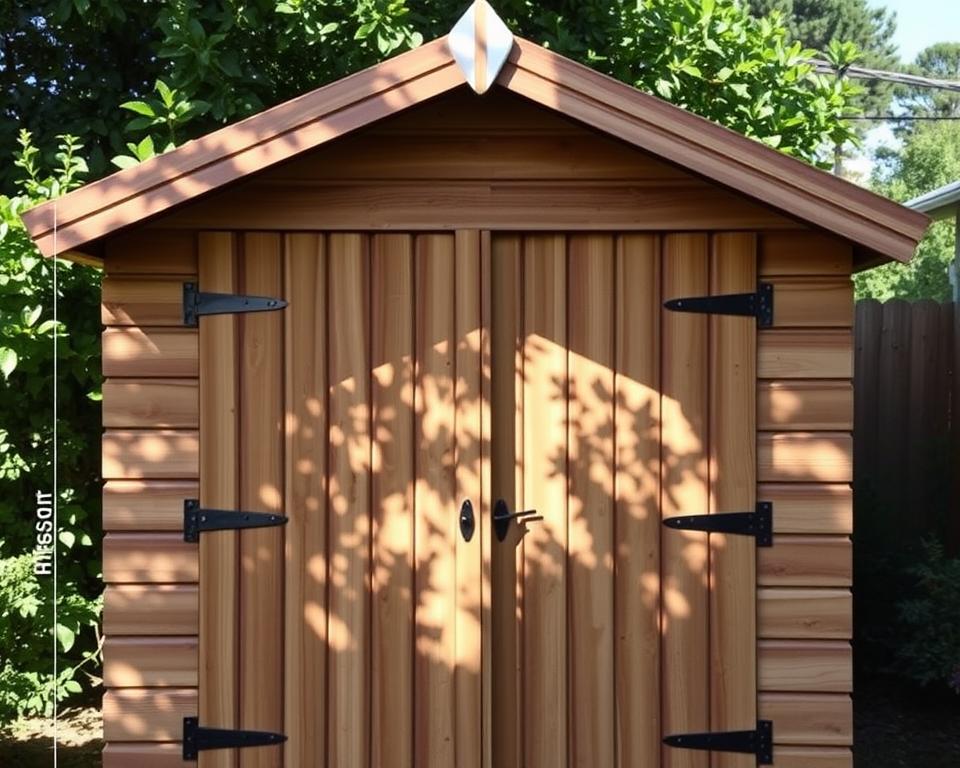
Navigating shed height restrictions can be crucial when planning your garden structure. Building regulations play a significant role in determining where and how tall you can build your shed. Understanding these guidelines helps prevent potential legal complications and neighbourhood disputes.
Different local authorities have specific shed height restrictions that homeowners must follow. Typically, these regulations vary depending on the shed’s proximity to property boundaries and neighbouring structures.
- Sheds under 2.5 metres typically require no special permissions
- Heights exceeding 3 metres might need detailed planning consent
- Roof design can impact overall height calculations
The placement of your shed directly correlates with its height. Taller structures often demand greater setback distances from property lines. This ensures that your garden building doesn’t overshadow or infringe on neighbouring properties.
| Shed Height | Typical Placement Requirements | Planning Permission Likelihood |
|---|---|---|
| Up to 2.5m | Minimal restrictions | Rarely required |
| 2.5m – 3m | Some boundary limitations | Occasional review needed |
| Over 3m | Strict setback rules | Likely requires permission |
Consulting your local planning department can provide precise guidance on shed height restrictions specific to your area. These regulations protect both property owners and maintain neighbourhood aesthetics.
Maintenance Access and Practical Considerations
Planning the perfect shed location involves more than just aesthetics. Smart shed placement requires careful consideration of maintenance access, weather protection, and long-term building requirements. Your shed’s positioning can significantly impact its durability and ease of upkeep.

Effective shed maintenance starts with strategic positioning. Homeowners must create sufficient space around their structure to ensure easy access for repairs and routine care.
Essential Maintenance Space
When planning shed placement, consider these critical access requirements:
- Leave at least 60 cm of clearance on all sides for shed maintenance
- Ensure unobstructed pathways for tools and equipment
- Account for potential repair work and future modifications
Weather Protection Requirements
Protecting your shed from harsh weather conditions is paramount. Proper positioning can mitigate potential damage and extend the structure’s lifespan.
- Position away from areas prone to water accumulation
- Consider natural windbreaks like fences or trees
- Ensure adequate drainage around the shed’s foundation
Access for Building and Repairs
Building access plays a crucial role in shed installation and future maintenance. Select a location that allows:
- Easy transportation of building materials
- Sufficient space for construction equipment
- Potential future expansions or modifications
Strategic planning of your shed’s location can save significant time and resources in the long run, preventing potential access challenges and weather-related complications.
Building Materials and Their Influence on Positioning
Selecting the right shed materials plays a crucial role in determining its optimal placement and overall performance. Different building materials offer unique characteristics that impact structure durability, fire safety, and positioning requirements.
When considering shed materials, homeowners should evaluate several key factors:
- Material resistance to weather conditions
- Structural integrity and longevity
- Fire safety properties
- Weight and load-bearing capabilities
Wooden sheds, popular for their aesthetic appeal, require careful positioning to minimise moisture exposure. Pressure-treated timber offers enhanced durability against rot and insect damage. These structures need adequate ventilation and protection from direct ground contact to maintain structure durability.
Metal sheds present different considerations for positioning. Galvanised steel provides excellent fire safety characteristics and resistance to corrosion. Their lightweight nature allows more flexible placement options, but proper foundation preparation remains critical.
Composite materials represent a modern solution, combining multiple shed material properties. These innovative options often deliver superior fire safety ratings and improved resistance to environmental challenges.
Careful material selection directly influences your shed’s long-term performance and positioning strategy.
Professional builders recommend assessing local building regulations, environmental conditions, and specific site characteristics when choosing shed materials and determining optimal placement.
Neighbour Relations and Communication Guidelines
Building a garden shed isn’t just about construction—it’s about maintaining positive relationships with your neighbours. Effective neighbour communication can prevent potential disputes and create a harmonious living environment.
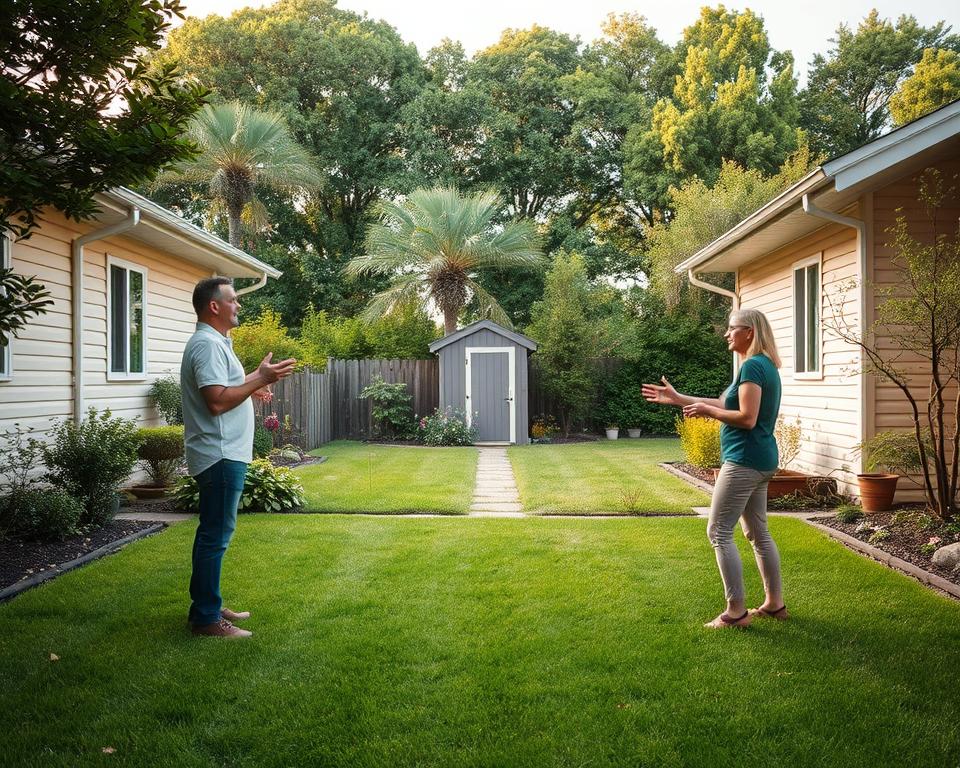
Navigating property agreements requires a delicate balance of respect, transparency, and proactive dialogue. Understanding the right approach can transform potential conflicts into collaborative opportunities.
Approaching Your Neighbour
When planning your shed placement, early communication is crucial. Consider these strategies for productive neighbour interactions:
- Schedule an informal conversation before starting construction
- Bring visual sketches or plans to demonstrate your proposed shed location
- Listen to their concerns and be open to reasonable suggestions
- Explain how the shed might potentially benefit or minimally impact their property
Dispute Resolution Methods
Despite best intentions, disagreements can arise. Knowing effective dispute resolution techniques can help maintain neighbourly relationships:
| Resolution Method | Key Characteristics |
|---|---|
| Mediation | Neutral third-party facilitates discussion |
| Compromise | Finding mutually acceptable solutions |
| Professional Consultation | Seeking advice from local planning authorities |
Written Agreements
Formalising property agreements in writing can prevent future misunderstandings. A written document should clearly outline:
- Exact shed location
- Dimensions and height
- Potential impact on shared boundaries
- Maintenance responsibilities
Remember, clear communication and mutual respect are the foundations of successful neighbourly interactions when planning your garden shed.
Common Mistakes to Avoid When Positioning Your Shed
Navigating shed placement can be tricky, with numerous potential pitfalls that homeowners often overlook. Shed placement errors can lead to costly mistakes and potential disputes with neighbours.
Understanding common planning oversights is crucial for a successful shed installation. Many DIY enthusiasts rush into positioning their shed without careful consideration of critical factors.
- Ignoring property boundary lines
- Neglecting local planning regulations
- Failing to check underground utility locations
- Overlooking drainage and water runoff issues
Local councils have specific guidelines that can catch unsuspecting homeowners off guard. Measuring twice and planning carefully can save significant time and money in the long run.
| Common Mistake | Potential Consequence | Prevention Strategy |
|---|---|---|
| Incorrect boundary placement | Neighbour disputes | Verify exact property lines |
| Ignoring height restrictions | Forced removal | Check local planning permissions |
| Poor foundation preparation | Structural instability | Ensure level, stable ground |
Professional advice can be invaluable when navigating the complexities of shed placement. Consulting local authorities or a professional surveyor can help you avoid potential legal and practical complications.
Alternative Shed Placement Options
When traditional garden shed placement seems impossible, creative shed positioning can unlock exciting space-saving solutions for homeowners with limited outdoor areas. Innovative approaches can transform seemingly challenging spaces into functional storage zones.
Exploring alternative placement strategies can help maximise your garden’s potential while maintaining aesthetic appeal and practical functionality.
- Lean-to shed designs against existing walls
- Corner placement strategies
- Integrated structure solutions
- Multi-functional space utilisation
Homeowners can consider several innovative approaches for creative shed positioning:
- Vertical Storage Integration: Utilise wall-mounted or elevated shed designs that minimise ground footprint
- Compact Corner Solutions: Maximise unused garden corners with custom-fitted shed configurations
- Architectural Blending: Design sheds that complement existing property structures
Space-saving solutions aren’t just about reducing size—they’re about intelligent design and strategic placement. Modern shed options can seamlessly integrate with your garden’s unique landscape, providing storage without compromising visual harmony.
| Placement Strategy | Space Efficiency | Visual Impact |
|---|---|---|
| Wall-Mounted Shed | High | Minimal |
| Corner Placement | Medium | Moderate |
| Integrated Structure | High | Low |
By thinking creatively about shed positioning, you can transform seemingly restrictive spaces into efficient, functional storage areas that enhance your property’s overall utility and aesthetic appeal.
Conclusion
Navigating shed placement requires careful consideration of legal compliance and neighbourhood dynamics. Your shed project demands thoughtful planning, understanding local regulations, and maintaining positive relationships with neighbours. By researching property boundaries and considering practical aspects, you can create a successful garden structure that enhances your outdoor space.
The shed placement summary highlights critical factors like distance from property lines, height restrictions, and potential access requirements. Local councils and planning regulations play a significant role in determining where and how you can position your shed. Consulting professional resources or local authorities can provide specific guidance tailored to your unique property circumstances.
Effective neighbour relations are paramount when undertaking any garden improvement project. Open communication, transparent discussions about your plans, and willingness to address potential concerns can prevent future disputes. By approaching your shed installation with respect and consideration, you’ll not only comply with legal requirements but also maintain harmonious relationships with those living nearby.
Armed with comprehensive knowledge about shed placement, you’re now prepared to transform your garden vision into reality. Remember that each property is unique, and professional advice can offer invaluable insights specific to your situation. Embrace this project with confidence, understanding that careful planning leads to successful outdoor improvements.
FAQ
Do I need planning permission to install a garden shed near my neighbour’s fence?
The need for planning permission depends on several factors, including the shed’s size, height, and proximity to the property boundary. Generally, for sheds under 2.5 metres in height and covering less than 10 square metres, you may not require planning permission. However, it’s always best to check with your local council to confirm specific local regulations.
How close can I legally place my shed to my neighbour’s fence?
Typically, it’s recommended to place your shed at least 50 centimetres (0.5 metres) away from the boundary fence. This allows for maintenance access and helps prevent potential disputes with neighbours. Some local councils may have specific guidelines, so it’s crucial to consult your local planning authority for precise requirements.
What should I do if my neighbour objects to my shed placement?
Open communication is key. Discuss your plans with your neighbour before installation, showing them your proposed design and location. If they have genuine concerns, try to find a compromise. If disputes persist, consider mediation services or seek advice from local council planning departments.
Are there different rules for terraced houses?
Terraced houses often have more restrictive placement regulations due to limited garden space and closer property boundaries. You may need to be more careful about shed size, height, and exact positioning. Always check local planning guidelines and consider the unique constraints of terraced properties.
How do building materials affect shed placement?
Different materials have varying fire safety and durability characteristics that can impact placement. Wooden sheds might require more careful positioning due to fire risks, while metal or plastic sheds might have different considerations. Consider materials’ weather resistance and potential impact on nearby structures when choosing placement.
What maintenance access should I consider when positioning my shed?
Ensure you leave enough space around the shed for routine maintenance, repairs, and potential future modifications. Typically, aim for at least 50-60 centimetres of clearance on all sides to allow for painting, treating wood, or addressing any structural issues.
Do height restrictions apply to garden sheds?
Yes, height restrictions are crucial. Most permitted development rights allow sheds up to 2.5 metres in height. Taller structures may require planning permission. The specific height can affect placement regulations, so always verify local guidelines before installation.
How can I protect my shed from weather damage near a fence?
Ensure proper ventilation and water drainage. Leave enough space between the shed and fence to prevent moisture buildup. Consider the prevailing wind direction and potential water runoff. Use weatherproof treatments and consider a slight elevation to protect against ground moisture.