Is It better to paint or stain a log cabin? – Expert Guide

Protecting your log cabin’s exterior is a critical decision that impacts both aesthetics and longevity. Wood protection for log cabin maintenance requires careful consideration of painting versus staining techniques. Homeowners face a crucial choice that affects their property’s durability, appearance, and resilience against environmental challenges.
The log cabin exterior represents a significant investment that demands strategic preservation. Weather conditions, wood type, and maintenance requirements play pivotal roles in determining the most suitable protection method. Selecting between paint and stain involves understanding each approach’s unique characteristics and potential long-term outcomes.
Inhaltsverzeichnis
Key Takeaways
- Log cabin exterior protection is essential for wood preservation
- Paint and stain offer different levels of wood defence
- Environmental factors significantly influence protection strategies
- Regular maintenance prevents structural deterioration
- Proper surface preparation ensures optimal protection results
Understanding Log Cabin Exterior Protection
Protecting a log cabin requires a deep understanding of wood’s intricate relationship with environmental challenges. Wood preservation is critical for maintaining the structural integrity and aesthetic appeal of your log cabin, especially when facing diverse weather conditions.
Natural wood is a breathable, living material that responds dynamically to environmental changes. Weather resistance becomes paramount in protecting your cabin from potential damage caused by moisture, UV rays, and temperature fluctuations.
Natural Wood Properties and Weather Interaction
Log cabins are uniquely vulnerable to environmental stressors. Understanding wood’s natural properties helps develop effective protection strategies:
- Wood expands and contracts with temperature changes
- Moisture can cause warping, rotting, and structural weakening
- Untreated wood attracts insects and fungal growth
Environmental Factors Affecting Log Cabin Care
Different environmental conditions demand specific log cabin care approaches. Regions with high humidity, extreme temperatures, or significant rainfall require more robust protection methods.
Long-term Maintenance Requirements
Consistent maintenance is crucial for preserving your log cabin’s longevity. Regular inspections, timely repairs, and appropriate protective treatments can significantly extend the life of your wooden structure.
Proactive wood preservation is always more cost-effective than reactive repairs.
Implementing a comprehensive protection strategy ensures your log cabin remains beautiful, structurally sound, and resilient against environmental challenges for years to come.
The Essential Differences Between Paint and Stain
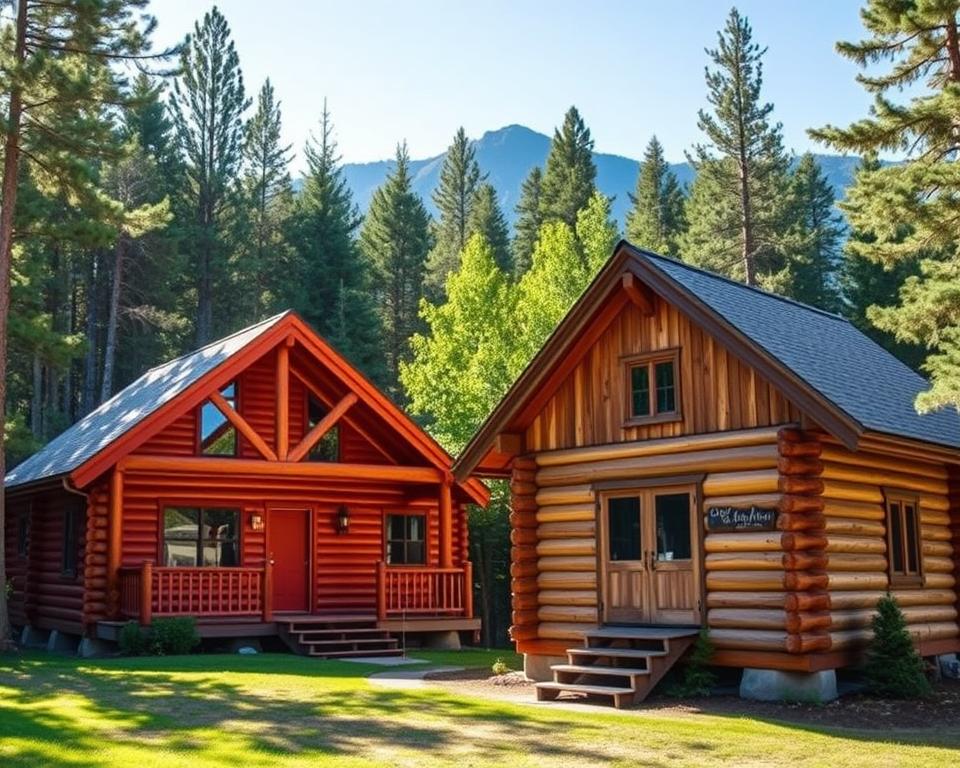
Choosing between paint and wood finishes for your log cabin requires understanding their fundamental differences. Each wood finish offers unique characteristics that impact the cabin’s appearance, protection, and long-term maintenance.
Wood finishes can be categorised into two primary options: paint and stain. These cabin exterior options serve different purposes and provide distinct aesthetic outcomes:
- Paint creates a solid, opaque layer that completely covers the wood’s natural grain
- Stain penetrates the wood, highlighting its natural texture and character
Composition plays a critical role in determining the performance of these wood finishes. Paint typically consists of pigments, resins, and solvent bases that form a protective film on the wood surface. Stains, by contrast, are designed to soak into the wood fibres, offering a more translucent finish.
“The right wood finish can transform your cabin’s appearance while protecting it from environmental challenges.”
When comparing paint vs stain, consider these key differences:
- Durability: Paint offers more robust surface protection
- Aesthetic appeal: Stains preserve wood’s natural beauty
- Maintenance requirements: Stains typically need more frequent reapplication
- Cost: Paint generally provides longer-lasting coverage
Understanding these nuanced differences helps homeowners make informed decisions about their log cabin’s exterior protection and visual appeal.
Benefits of Staining Your Log Cabin
Protecting your log cabin requires strategic decisions about exterior treatment. Wood stain benefits extend far beyond simple aesthetics, offering comprehensive protection against environmental challenges.

Staining provides multiple layers of defence for wooden structures, ensuring longevity and maintaining the natural beauty of your cabin.
Types of Wood Stains Available
Choosing the right wood stain involves understanding different product characteristics:
- Oil-based stains for deep penetration
- Water-based stains for easier application
- Solid stains for maximum colour coverage
- Semi-transparent stains for subtle wood grain visibility
UV Protection Features
UV protection is crucial for preserving wood’s structural integrity. Quality wood stains create a protective barrier that prevents sunlight from degrading wood fibres, reducing colour fading and preventing surface cracking.
| Stain Type | UV Protection Level | Recommended Usage |
|---|---|---|
| Clear Sealant | Low | Sheltered areas |
| Semi-Transparent | Medium | Moderate sun exposure |
| Solid Stain | High | Direct sunlight regions |
Moisture Control Properties
Effective moisture control prevents wood deterioration. Premium wood stains create a breathable yet water-resistant surface, preventing moisture penetration while allowing wood to release internal humidity.
Key moisture control benefits include:
- Reducing wood swelling
- Preventing rot and fungal growth
- Minimising structural warping
- Extending cabin lifespan
Selecting the right wood stain transforms protection into an art form, safeguarding your log cabin against nature’s most challenging elements.
Advantages of Painting Log Cabins

Choosing log cabin paint offers homeowners a versatile and protective solution for exterior wood surfaces. Paint provides exceptional coverage and durability that transforms the appearance of wooden structures while shielding them from environmental challenges.
Log cabin paint presents remarkable benefits for property owners seeking comprehensive protection:
- Complete surface coverage with uniform finish
- Extensive colour options for personalisation
- Enhanced weather resistance
- Superior protection against moisture penetration
The colour options for log cabin paint have expanded dramatically in recent years. Homeowners can select from hundreds of shades, enabling precise customisation of their exterior aesthetic. Modern paint technologies allow for rich, vibrant colours that maintain their intensity despite harsh weather conditions.
“Paint provides a comprehensive shield for log cabins, combining visual appeal with robust protection.”
Paint durability has significantly improved with advanced formulations. High-quality exterior paints now offer:
- UV resistance
- Mould and mildew prevention
- Crack and peel resistance
- Long-lasting colour retention
When selecting log cabin paint, consider professional-grade products designed specifically for wooden exterior surfaces. These specialised paints ensure maximum protection and longevity for your cherished log cabin.
Is it better to paint or stain a log cabin?
Choosing between paint and stain for your log cabin exterior is a critical decision that impacts both aesthetics and long-term maintenance. The paint or stain comparison involves several key considerations that can significantly influence your cabin’s appearance, protection, and overall value.
When evaluating cabin exterior costs and log home aesthetics, homeowners must weigh multiple factors to make an informed choice.
Cost Comparison Analysis
The financial investment varies between painting and staining your log cabin. Here’s a breakdown of typical expenses:
- Paint typically costs £25-£45 per gallon
- Wood stain ranges from £20-£40 per gallon
- Professional application can add £500-£2,000 to total costs
Durability Factors
Durability plays a crucial role in your decision. Stains generally penetrate wood more deeply, providing better protection against moisture and UV damage. Paint creates a surface layer that might crack or peel more quickly.
Aesthetic Considerations
Log home aesthetics differ dramatically between paint and stain:
- Paint: Completely covers wood grain, offers bold colour options
- Stain: Highlights natural wood texture, provides more subtle colour variations
Ultimately, your choice depends on personal preference, budget, and the specific environmental conditions surrounding your log cabin.
Professional Application Techniques
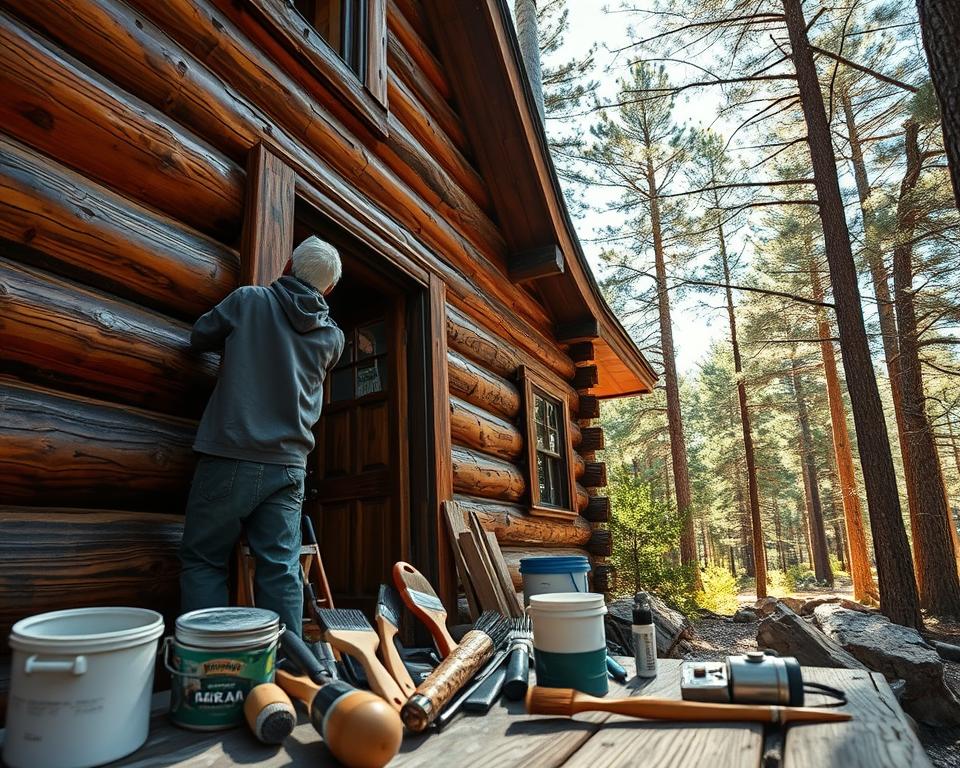
Professional painting and staining methods are critical for achieving a superior log cabin finishing that protects and enhances your wooden structure. Skilled professionals bring expertise that goes beyond simple application, ensuring long-lasting protection and aesthetic appeal.
When considering professional log cabin finishing, experts recommend several key techniques:
- Comprehensive surface preparation
- Precise application methods
- Selection of high-quality materials
- Specialised equipment usage
Professional staining methods typically involve multiple critical steps. Painters use specialised tools like high-quality sprayers, rollers, and brushes designed specifically for log cabin surfaces. These tools enable even coverage and deeper penetration of protective coatings.
“The difference between amateur and professional painting is in the details of preparation and application.” – Professional Painting Association
Key considerations for professional log cabin finishing include:
| Technique | Purpose | Professional Approach |
|---|---|---|
| Surface Cleaning | Remove dirt and old coatings | Pressure washing and chemical treatments |
| Wood Conditioning | Prepare surface for coating | Sanding and moisture assessment |
| Application Method | Ensure uniform coverage | Specialised spraying and rolling techniques |
Investing in professional painting services can significantly extend the lifespan of your log cabin’s exterior while maintaining its natural beauty.
Preparation Steps for Both Methods
Successful log cabin preparation requires meticulous attention to detail. Professional wood treatment ensures optimal protection and aesthetic appeal for your exterior surfaces. Proper surface cleaning and preparation are critical steps that can significantly impact the longevity and quality of your log cabin’s finish.

Before beginning any wood cleaning or surface treatment, gather the necessary equipment and materials. A comprehensive approach will help you achieve professional-grade results.
Surface Cleaning Requirements
Effective log cabin preparation starts with thorough surface cleaning. Follow these essential steps:
- Remove dirt, debris, and loose paint using a pressure washer
- Inspect wood for signs of mould, mildew, or rot
- Use specialised wood cleaning solutions designed for exterior surfaces
- Allow surfaces to dry completely before further treatment
Wood Treatment Procedures
Wood treatment is a crucial phase in log cabin maintenance. The right approach protects against environmental damage and enhances wood durability.
| Treatment Step | Purpose | Recommended Product |
|---|---|---|
| Wood Preservation | Protect against moisture and decay | Boron-based wood preservative |
| Sanding | Create smooth surface for coating | Medium-grit sandpaper (120-150 grit) |
| Primer Application | Enhance paint/stain adhesion | Exterior wood primer |
Professional log cabin preparation requires patience and precision. Take time to thoroughly clean and treat your wood surfaces for the best possible outcome.
Maintenance Schedule and Requirements
Effective log cabin upkeep requires a strategic approach to exterior maintenance. Your wood care routine plays a crucial role in preserving the beauty and longevity of your log cabin. Regular maintenance prevents costly repairs and protects your investment from environmental challenges.
A comprehensive wood care routine should include several key elements:
- Annual visual inspection of exterior surfaces
- Cleaning and removing dirt or mildew
- Checking for signs of wood damage or moisture penetration
- Reapplying protective finishes every 3-5 years
Seasonal maintenance is critical for log cabin preservation. In spring, conduct a thorough examination of your cabin’s exterior. Look for:
- Cracks or gaps in wood surfaces
- Signs of water damage
- Areas where protective coating has worn thin
“Preventative maintenance is always less expensive than extensive repairs” – Professional Cabin Preservation Expert
Your log cabin’s exterior maintenance schedule will depend on several factors, including local climate, wood type, and exposure to sunlight. Wooden surfaces in harsh environments may require more frequent attention.
Budget approximately 2-4 hours annually for comprehensive log cabin upkeep. Investing this time will significantly extend your cabin’s lifespan and maintain its aesthetic appeal.
Common Mistakes to Avoid
Protecting your log cabin requires careful attention to detail. Homeowners often encounter numerous challenges when painting or staining their wooden structures. Understanding these potential log cabin mistakes can save you time, money, and frustration in the long run.
Successful log cabin preservation depends on avoiding critical painting errors and staining problems that can compromise the wood’s integrity and appearance.
Application Errors to Watch Out For
- Skipping surface preparation, which leads to poor adhesion
- Applying products in incorrect weather conditions
- Using inappropriate tools or techniques
- Neglecting to clean and sand surfaces thoroughly
Critical Product Selection Issues
Selecting the wrong protective coating can result in significant damage to your log cabin. Staining problems often stem from:
- Choosing products incompatible with your specific wood type
- Selecting low-quality materials that deteriorate quickly
- Ignoring the wood’s moisture content before application
- Failing to match the product to your local climate conditions
Professional tip: Always test products on a small, inconspicuous area before full application to prevent potential log cabin mistakes.
Proper preparation and product selection are the keys to long-lasting log cabin protection.
Weather Considerations for Application
Choosing the right outdoor painting conditions can make or break your log cabin exterior project. Staining weather plays a crucial role in ensuring a successful application that protects and beautifies your wooden structure.
The ideal cabin exterior timing depends on several critical environmental factors. Temperature and humidity are paramount when planning your painting or staining project.
- Temperature Range: Aim for 10-24°C (50-75°F) for optimal results
- Avoid painting during extreme heat or cold
- Seek days with low humidity (below 70%)
“Timing is everything in log cabin exterior maintenance” – Professional Painter’s Handbook
Seasonal considerations are vital for successful outdoor painting conditions. Late spring and early autumn typically offer the most stable weather for log cabin treatments. These periods provide moderate temperatures and reduced moisture risks.
When planning your staining weather window, consider these key aspects:
- No rain forecast for 24-48 hours
- Minimal wind to prevent dust contamination
- Indirect sunlight for even drying
Professional painters recommend checking local weather forecasts meticulously before starting your cabin exterior timing. Proper preparation ensures a durable, attractive finish that protects your wooden structure for years to come.
Environmental Impact and Eco-friendly Options
Protecting your log cabin while minimising environmental impact has become increasingly important for conscientious homeowners. The world of wood finishes now offers remarkable eco-friendly solutions that balance performance with sustainability.
Choosing sustainable products for log cabin protection involves understanding their environmental footprint. Low VOC paints and eco-friendly wood finishes have emerged as responsible alternatives to traditional coating methods.
VOC Content Comparison
Volatile Organic Compounds (VOCs) represent a significant environmental concern in wood finishing products. Different finishing options present varying levels of environmental impact:
| Finish Type | VOC Content | Environmental Rating |
|---|---|---|
| Traditional Oil-Based Stains | 500+ g/L | Poor |
| Water-Based Low VOC Stains | 50-150 g/L | Good |
| Zero VOC Eco Finishes | 0-5 g/L | Excellent |
Sustainable Product Choices
When selecting sustainable stains for your log cabin, consider these key factors:
- Renewable raw material sources
- Minimal chemical processing
- Low environmental impact during production
- Biodegradable ingredients
Modern eco-friendly wood finishes now provide exceptional protection while significantly reducing environmental harm. Brands specialising in sustainable stains offer products that deliver excellent durability without compromising ecological responsibility.
Protecting your log cabin and the planet can go hand in hand with thoughtful product selection.
Conclusion
Selecting the optimal exterior finish for log cabin protection requires careful consideration of multiple factors. Your wood preservation choice will ultimately depend on specific environmental conditions, aesthetic preferences, and long-term maintenance capabilities. The decision between paint and stain is not simply about appearance but about protecting your valuable wooden structure.
Professional experts recommend evaluating your log cabin’s unique characteristics before making a final exterior finish decision. Consider the local climate, wood type, sun exposure, and potential moisture challenges. Each log cabin presents distinctive requirements that will influence whether paint or stain provides the most effective wood preservation choice.
Budget, maintenance commitment, and desired visual outcome play crucial roles in determining the best protective strategy. Stains offer natural wood grain visibility and easier reapplication, while paints provide more robust coverage and colour options. Whichever method you select, regular maintenance and proactive care remain essential for preserving your log cabin’s structural integrity and visual appeal.
By understanding the nuanced differences between paint and stain applications, homeowners can make informed decisions that protect their investment for years to come. Prioritise professional consultation and thorough surface preparation to ensure the most effective log cabin protection strategy.
FAQ
How often should I repaint or restain my log cabin?
The frequency depends on the product used and exposure to weather conditions. Typically, wood stains require reapplication every 2-3 years, while paint can last 5-7 years. Factors like sun exposure, humidity, and local climate will impact the maintenance schedule.
What’s the most cost-effective option for protecting my log cabin?
Wood stain is generally more cost-effective in the long run. It requires less preparation, is easier to apply, and typically costs less than paint. Stain also allows for easier touch-ups and doesn’t require complete removal before reapplication.
Can I apply paint or stain myself, or should I hire professionals?
While DIY is possible, professional application ensures better results. Professionals understand surface preparation, have specialised equipment, and know how to address unique log cabin surfaces. If you’re inexperienced, hiring a professional can prevent costly mistakes.
How do weather conditions affect paint or stain application?
Temperature and humidity are crucial. Ideal application conditions are typically between 10-25°C with low humidity. Avoid applying during direct sunlight, extreme heat, or when rain is forecast. Moisture and temperature can significantly impact the finish and durability.
What’s the best way to prepare a log cabin surface before painting or staining?
Proper preparation involves thorough cleaning, sanding, and treating the wood. Remove any existing finish, repair damaged areas, clean with a wood-specific cleaner, and ensure the surface is completely dry before application. This ensures better adhesion and a longer-lasting finish.
Are there eco-friendly options for log cabin exterior protection?
Yes, many low-VOC (volatile organic compounds) and water-based stains and paints are available. Look for products certified by environmental organisations that offer sustainable protection while minimising environmental impact.
How do I choose between paint and stain for my log cabin?
Consider factors like desired appearance, maintenance requirements, climate, and wood condition. Stain allows wood grain to show through and requires less preparation, while paint offers more colour options and can hide imperfections.
What protection do paint and stain provide against UV damage?
Both offer UV protection, but stains typically provide more breathable protection that allows wood to naturally expand and contract. Many modern stains contain UV inhibitors that help prevent wood discolouration and degradation from sunlight exposure.
Can I change from paint to stain or vice versa?
Changing requires complete removal of the existing finish. Paint is more challenging to remove and may require chemical strippers or professional help. Stain is generally easier to transition between different types or colours.
How do I prevent moisture damage when protecting my log cabin?
Choose a breathable finish that allows moisture to escape while providing protection. Ensure proper sealing of joints and gaps, maintain good ventilation, and regularly inspect for signs of moisture penetration or wood decay.