How to Mix Concrete for the Foundation of a Garden Shed

Building a sturdy garden shed starts with a solid foundation, and mastering concrete mixing is crucial for DIY enthusiasts. Proper concrete mixing for a garden shed foundation ensures stability, durability, and long-lasting structural integrity.
Successful DIY concrete work requires careful planning, precise measurements, and understanding the right techniques. Whether you’re a weekend warrior or a first-time builder, this guide will walk you through the essential steps of creating a robust concrete foundation for your garden shed.
From selecting the right materials to executing perfect concrete mixing techniques, this comprehensive guide will empower you to tackle your garden shed project with confidence and professional skill.
Inhaltsverzeichnis
Key Takeaways
- Understanding concrete mixing is essential for garden shed foundations
- Proper preparation prevents structural complications
- DIY concrete work requires precision and careful planning
- Quality materials guarantee long-lasting foundation strength
- Following professional techniques ensures successful project completion
Essential Tools and Materials for Concrete Mixing
Preparing to mix concrete for a garden shed foundation requires careful selection of concrete tools, safety gear, and the right materials. Understanding the essential equipment will help you create a sturdy and reliable foundation with confidence.
https://www.youtube.com/watch?v=z-vGkb-VCdk
Safety Equipment and Personal Protection
Your safety is paramount when working with concrete. Always wear comprehensive safety gear to protect yourself from potential hazards:
- Waterproof safety goggles to shield eyes from cement dust
- Thick rubber gloves to prevent skin contact with caustic cement
- Dust mask or respirator to avoid inhaling harmful particles
- Sturdy work boots with steel toe protection
- Long-sleeved clothing to minimise skin exposure
Measuring Tools and Mixing Equipment
Precise measurements are crucial for creating the perfect concrete mix. Invest in quality measuring tools and mixing equipment:
| Tool | Purpose | Recommended Type |
|---|---|---|
| Measuring Bucket | Accurate material proportions | Graduated plastic bucket with clear markings |
| Wheelbarrow | Mixing and transporting concrete | Heavy-duty steel wheelbarrow |
| Concrete Mixer | Large volume mixing | Electric or petrol-powered rotating drum mixer |
| Shovel | Mixing and spreading | Square-headed landscaping shovel |
Types of Cement and Aggregates
Selecting the right cement types and aggregates is critical for foundation strength. Different projects require specific materials:
- Portland Cement: Standard cement for most garden shed foundations
- Aggregate options:
- Crushed stone
- Gravel
- Sand
By carefully choosing your concrete tools, safety gear, cement types, and aggregates, you’ll be well-prepared to create a solid foundation for your garden shed.
Understanding Concrete Mix Ratios and Proportions
Creating a robust garden shed foundation starts with understanding the critical science behind concrete mix ratios. The right concrete mix ratio determines the strength, durability, and performance of your construction project.
A standard concrete mix ratio typically follows a specific cement-sand-aggregate ratio that ensures optimal structural integrity. Professional builders recommend different proportions based on the specific requirements of the project.
- Classic concrete mix ratios include:
- 1:2:4 (cement:sand:aggregate) for standard foundations
- 1:1.5:3 for high-strength applications
- 1:3:5 for less demanding structural needs
The water-cement ratio plays a crucial role in determining concrete’s workability and strength. Too much water weakens the mixture, while too little makes it difficult to spread and compact.
Professional engineers suggest maintaining a water-cement ratio between 0.4 and 0.6, depending on environmental conditions and specific project requirements. This precise balance ensures optimal concrete performance for your garden shed foundation.
Remember: Precision in measuring your concrete mix ratio is key to creating a long-lasting, stable foundation.
When selecting materials, choose high-quality cement, clean sand, and well-graded aggregates to guarantee the best possible concrete mix ratio for your garden shed project.
Site Preparation and Foundation Layout
Successful garden shed foundation construction begins with meticulous ground preparation. Proper site selection and levelling are critical steps that determine the long-term stability and durability of your structure.
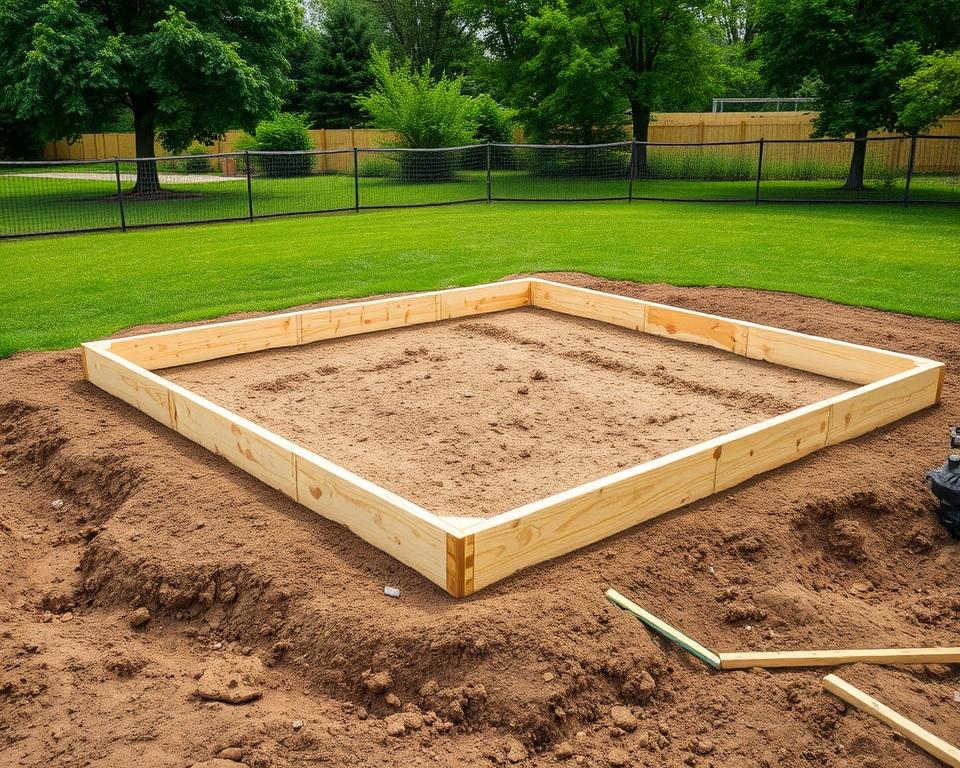
Before starting your foundation project, assess the proposed location carefully. Look for a level area with good drainage to prevent water accumulation beneath your shed.
Ground Levelling Techniques
Site levelling requires precision and careful approach. Use these essential techniques to create a perfectly flat surface:
- Remove existing vegetation and topsoil
- Use a spirit level to check ground evenness
- Employ a plate compactor for soil stabilisation
- Create a slight gradient for water runoff
Setting Up Foundation Forms
Foundation forms provide the crucial structural outline for your concrete base. Accurate placement ensures a square and level foundation.
- Mark out the exact perimeter using string lines
- Measure diagonally to confirm square alignment
- Use wooden stakes to secure form boards
- Check form height and level with a laser level
Moisture Barrier Installation
A robust moisture barrier prevents ground moisture from penetrating your concrete foundation, protecting against potential structural damage.
| Barrier Type | Thickness | Recommended Use |
|---|---|---|
| Polyethylene Sheet | 1000 gauge | Most residential projects |
| Bitumen Membrane | 3-4 mm | Areas with high moisture |
Pro tip: Overlap moisture barrier edges by at least 150mm and seal joints with waterproof tape for maximum protection.
How to Mix Concrete for the Foundation of a Garden Shed

Mastering the concrete mixing process is crucial for creating a sturdy garden shed foundation. DIY concrete mixing might seem challenging, but with the right approach, you can achieve professional results at home.
Before starting your manual concrete mixing, gather all necessary materials and tools. You’ll need:
- Cement
- Sand
- Gravel
- Water
- Wheelbarrow
- Shovel
- Protective gear
The key to successful DIY concrete mixing is maintaining the correct proportions. A standard mix for foundation work typically follows a 1:2:3 ratio:
- 1 part cement
- 2 parts sand
- 3 parts gravel
Begin by mixing dry ingredients thoroughly in your wheelbarrow. Ensure an even distribution of materials before adding water. Gradually introduce water, mixing continuously to achieve a consistent, workable texture. The concrete should hold its shape without being too runny or too stiff.
Pro tip: Mix small batches to maintain control and prevent wastage during the concrete mixing process.
For best results, work systematically and avoid overworking the mixture. Manual concrete mixing requires patience and attention to detail to create a strong, durable foundation for your garden shed.
Water Content and Consistency Guidelines
Achieving the perfect concrete consistency is crucial for a strong and durable garden shed foundation. The water-cement ratio plays a pivotal role in determining the overall quality of your concrete mix. Getting this balance right requires careful attention and practical skill.

Understanding concrete consistency involves more than simply adding water to cement. The right mixture ensures structural integrity and workability. Professional builders know that subtle adjustments can make a significant difference in the final result.
Performing the Slump Test
The slump test helps assess concrete workability and provides critical insights into mix quality. Here’s a step-by-step approach:
- Prepare a standard conical mould
- Fill the mould with freshly mixed concrete
- Remove the mould carefully
- Measure the concrete’s vertical drop
Water-Cement Ratio Adjustment Techniques
Proper water-cement ratio adjustment requires precision. Too much water weakens the mixture, while too little creates an unworkable blend. Professional concreters recommend these strategies:
- Start with recommended water quantities
- Add water incrementally
- Mix thoroughly after each addition
- Conduct repeated slump tests
Mastering concrete consistency takes practice. Each mix presents an opportunity to refine your technique and develop a keen understanding of material behaviour.
Proper Mixing Techniques and Common Mistakes

Achieving a uniform concrete mix requires skill and attention to detail. Professional concrete mixing tips can help you avoid common pitfalls that compromise your project’s structural integrity. Understanding the nuances of mixing concrete will ensure a strong and durable foundation for your garden shed.
Concrete mixing mistakes often stem from improper technique or lack of preparation. The key to a perfect mix lies in maintaining the right balance of ingredients and following precise mixing methods.
- Use a clean mixing surface to prevent contamination
- Measure ingredients accurately using precise tools
- Mix thoroughly to eliminate dry pockets
- Rotate the mixer or wheelbarrow consistently
When creating a uniform concrete mix, pay close attention to water content. Too much water weakens the concrete, while too little prevents proper binding. Professional concreters recommend a consistent folding technique that ensures complete ingredient integration.
The secret to perfect concrete is patience and precision in mixing.
Common mixing mistakes include rushing the process, inadequate mixing time, and incorrect ingredient proportions. Always take your time and follow recommended mixing guidelines to guarantee a strong, reliable concrete foundation.
- Mix for at least 3-5 minutes
- Check consistency before pouring
- Avoid adding water after initial mixing
- Use clean water and fresh ingredients
By mastering these concrete mixing tips, you’ll create a robust foundation that will support your garden shed for years to come.
Pouring and Spreading Methods
Achieving a smooth and level concrete surface requires careful technique and precision. Concrete pouring is a critical stage in creating a sturdy garden shed foundation that will support your structure for years to come.

The success of your concrete spreading depends on several key factors. Proper preparation and methodical approach can transform an amateur project into a professional-looking result.
Mastering the Screed Technique
The screed technique is essential for creating a perfectly level concrete surface. Follow these crucial steps:
- Begin pouring concrete from one corner of the foundation
- Spread concrete evenly using a long straight board
- Move the screed in a sawing motion across the surface
- Ensure consistent pressure to eliminate air pockets
Achieving a Smooth Surface
After initial spreading, use these methods to level concrete surface with precision:
- Use a long wooden or aluminium screed board
- Work systematically from one end to another
- Apply gentle, consistent pressure
- Remove excess concrete during the process
Pro tip: Work quickly but carefully, as concrete begins to set relatively fast. Your goal is a smooth, even finish that provides a solid base for your garden shed.
Curing Process and Protection Measures
Concrete curing is a critical phase in creating a robust garden shed foundation. The process ensures your concrete develops maximum strength and durability by maintaining optimal moisture retention and preventing rapid water evaporation.
Protecting your newly poured concrete requires careful attention during the initial days after placement. The primary goal of concrete protection is to create an environment that allows the material to develop its full structural potential.
- Keep the concrete surface consistently moist
- Maintain temperatures between 10-25°C
- Prevent direct sunlight exposure
- Avoid foot traffic during initial curing period
Professional tip: The first 48 hours are most crucial for concrete curing.
“Proper curing is the foundation of long-lasting concrete structures” – Construction Engineering Quarterly
Several practical methods exist for effective concrete protection:
- Cover with plastic sheeting
- Apply liquid membrane-forming curing compounds
- Use wet burlap or cotton mats
- Regularly spray water on the surface
Typically, concrete requires 7-10 days for comprehensive curing, with strength continuing to develop over 28 days. Monitoring moisture levels and temperature during this period will significantly impact your garden shed foundation’s long-term performance.
Reinforcement Options for Foundation Strength
Creating a robust concrete foundation requires careful consideration of concrete reinforcement techniques. The right reinforcement method can significantly enhance the durability and structural integrity of your garden shed foundation.
Strengthening your concrete foundation involves two primary approaches: steel mesh and fibre-reinforced concrete. Each method offers unique benefits for ensuring long-lasting structural support.
Steel Mesh Reinforcement
Steel mesh serves as a traditional and reliable concrete reinforcement method. Typically made from welded wire fabric, this material provides crucial structural support by:
- Distributing weight evenly across the foundation
- Preventing crack formation
- Increasing overall tensile strength
When installing steel mesh, position the mesh approximately one-third from the bottom of your concrete form. Ensure proper overlap between mesh sections and secure them with wire ties to maintain stability during concrete pouring.
Fibre Reinforcement Alternatives
Fibre-reinforced concrete presents an innovative alternative to traditional steel mesh. These synthetic or natural fibres are mixed directly into the concrete mixture, offering several advantages:
- Enhanced crack resistance
- Improved impact durability
- Reduced surface shrinkage
Synthetic fibres like polypropylene or steel micro-fibres can be added at a rate of 0.1% to 0.5% by volume, providing an effective reinforcement solution for garden shed foundations.
Pro tip: Consult with a local building professional to determine the most suitable reinforcement method for your specific project requirements.
Conclusion
Creating a robust garden shed base through DIY concrete mixing is an achievable skill that empowers homeowners to build sturdy foundations. By understanding the critical steps of concrete mixing, from preparation to pouring, you’ve gained valuable knowledge to tackle your garden shed foundation project with confidence.
The success of your DIY concrete foundation depends on precise measurements, careful preparation, and attention to detail. Proper site levelling, accurate mix ratios, and understanding water consistency are key elements that contribute to a strong and durable garden shed base. Each step you’ve learned builds towards achieving a professional-quality result.
Remember that concrete mixing success is not just about technical skills but also about patience and practice. Your newly acquired expertise will serve you well in future home improvement projects. With the right tools, techniques, and a methodical approach, you can create a solid foundation that will support your garden shed for years to come.
As you embark on this exciting DIY journey, trust in your abilities and the knowledge you’ve gained. Your garden shed foundation will stand as a testament to your skill, craftsmanship, and determination to create something lasting and functional with your own hands.
FAQ
How long does it take for concrete to cure completely?
Concrete typically takes about 28 days to reach its full strength, although it begins to set within 24-48 hours. During the first week, the concrete will gain most of its strength, with gradual strengthening continuing over the next few weeks. However, you can usually walk on the surface after 24-48 hours and start light construction after about a week.
What’s the best time of year to pour a concrete foundation for a garden shed?
The ideal time is during mild weather conditions – typically late spring or early autumn. Avoid extreme temperatures, as very hot weather can cause rapid drying and cracking, while freezing temperatures can prevent proper curing. Aim for temperatures between 10°C and 25°C with minimal wind and no expected heavy rainfall.
How much concrete will I need for a typical garden shed foundation?
The amount of concrete depends on the size of your shed. As a general rule, measure the length and width of your planned foundation and multiply by the desired thickness (usually 10-15 cm). For a standard 2.4m x 2.4m shed, you’ll typically need about 0.86 cubic metres of concrete. Always add 10% extra to account for potential waste or uneven surfaces.
Can I mix concrete by hand, or do I need a mixer?
While it’s possible to mix small amounts of concrete by hand using a shovel and wheelbarrow, a concrete mixer is recommended for larger projects. Hand mixing is labour-intensive and can result in an inconsistent mix. For a garden shed foundation, a mechanical mixer will save time and ensure a more uniform concrete mixture.
What’s the most common mistake people make when mixing concrete?
The most frequent error is adding too much water to the mix. This weakens the concrete and reduces its strength. Always follow the recommended water-to-cement ratio carefully, adding water gradually and mixing thoroughly. The concrete should be workable but not runny – it should hold its shape when scooped.
Do I need to use reinforcement in my garden shed foundation?
For most garden shed foundations, reinforcement is highly recommended. Steel mesh or fibreglass reinforcement can significantly increase the strength and durability of your concrete. It helps prevent cracking and provides additional structural integrity, especially in areas with unstable soil or temperature fluctuations.
How do I protect my new concrete foundation from moisture?
Install a proper moisture barrier before pouring the concrete. This typically involves laying a thick polythene sheet directly on the prepared ground. During the curing process, keep the concrete moist by covering it with plastic sheeting or using a curing compound. This prevents rapid drying and helps the concrete achieve maximum strength.
What safety equipment do I need when mixing concrete?
Essential safety gear includes:
– Waterproof gloves
– Safety goggles
– Dust mask
– Long-sleeved clothing
– Steel-toed boots
– Hard hat (recommended)
Concrete can cause skin irritation and potential chemical burns, so protecting yourself is crucial during the mixing and pouring process.