
Workshops under £2000 - Best Deals in UK!
Showing all 4 results
-
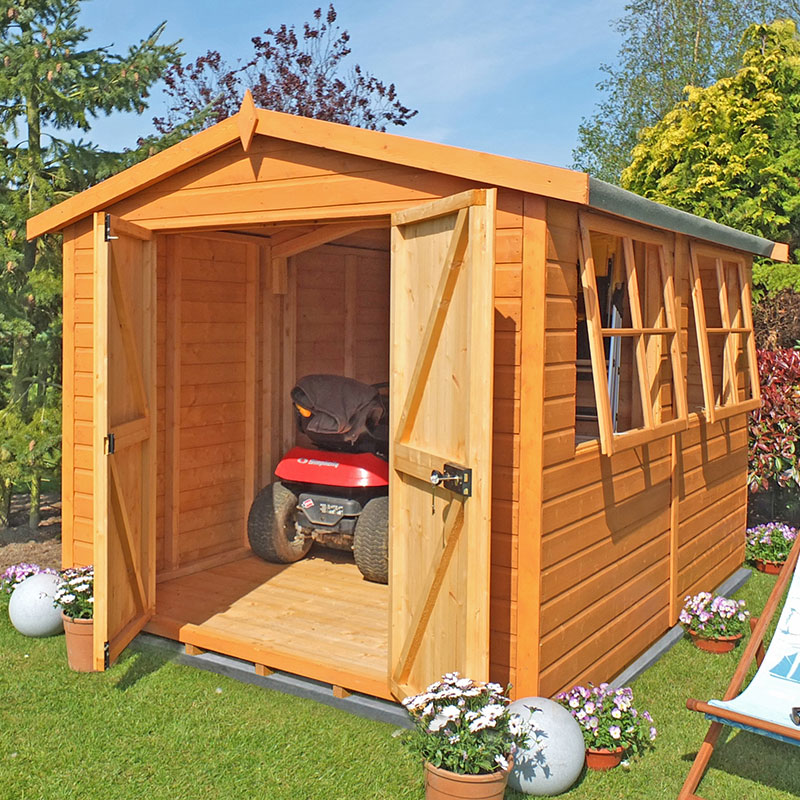
15% OFF: 12′ x 8′ Shire Bison Heavy Duty Double Door Wooden Workshop (3.71m x 2.56m) £1,739.0015%

-
15% OFF: 10′ x 8′ Shire Bison Heavy Duty Double Door Wooden Workshop (3.21m x 2.56m) £1,649.0015%

-
14% OFF: 10′ x 10′ Shire Bison Heavy Duty Double Door Wooden Workshop (3.16m x 3.21m) £1,889.0014%

-
12% OFF: 14′ x 8′ Shire Bison Heavy Duty Double Door Wooden Workshop (4.31m x 2.56m) £1,939.0012%

Garden workshops under £2000 give you a proper place for potting, pruning, tool storage and small projects, with options in timber, metal and compact modular formats.
Why a workshop changes the way a garden works
A garden workshop under £2000 is less about adding a building for the sake of it and more about creating a usable corner for the jobs that always end up on the patio or kitchen table. For many buyers, the appeal is the mix of practical storage and working space in one footprint. You get a place for seed trays, hand tools, compost bags, watering cans, repair jobs and those half-finished bits that never quite fit in the shed.
Within this budget, the range usually sits in the more compact end of the market, so the differences matter. Some workshops are built to prioritise internal height and elbow room, while others focus on straightforward tool storage with just enough work surface to be useful. That is where the category becomes interesting: two options can look similar from the outside, yet feel very different once you try to move a bench, hang tools or stand up straight inside.
Timber, metal or composite? The main forms side by side
Most workshops in this price band fall into a few clear types. Timber workshops are often chosen for their warmer feel and the way they sit naturally in a planted garden. They tend to be the easiest to adapt visually, which matters if the workshop is going near a border or lawn rather than hidden at the end of a plot. Timber also works well when you want a space that feels more like a proper potting room than a storage box.
Bestseller der Kategorie Workshops under £2000


Metal workshops are usually more about no-fuss utility. They can suit buyers who want a straightforward place to keep tools, garden machinery, or bags of feed without much decorative detail. The shape is often simple, the lines are neat, and the focus is on making the most of every inch inside. They can be a sensible fit for smaller gardens where the visual footprint needs to stay tidy.
Composite or mixed-material workshops can sit between the two, giving a practical shell with a less traditional look. They may appeal if you want a clean finish and a structure that feels less rustic than timber, but not as plain as metal. In this budget, mixed-material builds often help with balancing appearance, durability and cost, although the exact feel depends on the layout and cladding style.
What the budget tends to buy you
Under £2000, you are usually looking at compact to mid-sized workshops rather than large studio-style buildings. That does not make them limited, just more focused. The value is in choosing a format that matches how you actually garden. If your work is mainly seed sowing, repotting and tool organisation, a smaller layout with a sensible door position may suit better than something bigger but awkward to use.
Many buyers find that this price point is where practical details start to matter more than just length and width. Think door width, headroom, internal depth, and whether a bench can sit against one side without blocking movement. A workshop that feels tight in the wrong places can be less useful than a slightly smaller one with a better shape, so it is worth looking beyond the headline dimensions.
There is also a difference between a workshop that is mainly for storage and one that is genuinely for working in. Storage-first designs often have a more closed layout, with fewer openings and a stronger emphasis on keeping items dry and out of sight. Work-focused layouts may have wider openings, more usable wall space and a shape that makes it easier to bring in bags, trays or a small bench.
Layouts that suit different garden jobs
One of the most useful ways to compare workshops is by layout. A single-door, narrow footprint workshop is handy where access is limited and the route through the garden is tight. It can hold tools and smaller items well, and if you mainly need a place to sort through pots or store winter items, this format can be enough.
A wider-front workshop gives a very different feel. The broader opening makes it easier to carry in awkward items and to work with materials that do not bend or fold neatly. This form often suits people who want to use a bench along the back wall, leave room for trays on the floor and still have enough space to move around without feeling boxed in.
There are also corner-friendly shapes, which can be useful if the garden has an odd layout or a space that is hard to use for anything else. These workshops may not offer the same straight-line interior as a rectangular build, but they can make better use of awkward ground and help keep the rest of the garden open.
Some compact workshops come with a more hut-like profile, while others lean into a more low, shed-style shape. The taller profile can feel better if you plan to stand and work inside for longer periods, while the lower profile may sit more quietly in the garden and draw less attention. Both can work well, but they serve slightly different priorities.
Features that make a real difference
The most useful features are often the ones people notice only after they have tried to use a space. A wide-opening door can make a workshop feel much easier to use, especially when carrying trays, compost or bulky tools. A narrower door may be fine for storage, but it can feel restrictive if the workshop is meant to be an active work area.
Windows or glazed panels can matter more than expected, not for decoration alone but because a brighter interior is easier to work in. If you are sorting cuttings, reading labels or handling small parts, natural light helps. That said, some buyers prefer a more enclosed style if the workshop is mainly for storing tools and keeping the contents tucked away.
Internal shelving options and simple wall space are also worth checking. Even without built-in extras, a workshop that gives you enough plain wall and clear floor area is often easier to organise. In a smaller build, this can be the difference between a neat and useful corner and a space that fills up fast.
Another detail is the roof shape. A pitched roof can give a bit more useful headroom and may feel less compressed inside. A flatter or more restrained roof line can help if the workshop needs to sit below fencing or nearby planting, but it can reduce that sense of standing space. Buyers sometimes overlook this, yet it affects how easy it feels to spend time inside.
Where timber feels different from metal
The choice between timber and metal is not only about appearance. Timber workshops often suit people who want a warmer, more traditional garden feature. They tend to look more at home beside planting, gravel paths and raised beds. If the workshop will be part of the garden scene rather than hidden away, timber can make the whole area feel more joined up.
Metal workshops usually feel more direct and pared back. They are a good match when the priority is straight storage and a tidy outline. The internal feel can also be different, with more emphasis on open usable space rather than a crafted, room-like atmosphere. For buyers who want a place to keep equipment together and sorted, that simplicity can be a plus.
The two also differ in how they present visually over time. Timber often lends a softer, more garden-led look, while metal stays more uniform and functional in appearance. Neither is better across the board; it is really about whether you want the workshop to blend into the planting or stand as a cleaner, more practical structure. That difference matters when the building sits near the main view from the house.
Useful buying checks before you choose
It helps to measure the space not just for the workshop itself but for how it will be used. Door swing, clearance around the building and the route for carrying items in all matter. A workshop may fit the plot on paper, yet still feel awkward if the access path is tight or if the opening faces an inconvenient direction.
Think about the sort of items you will actually store. Long-handled tools, folding chairs, seed trays, bags of compost and small electric tools all take different kinds of space. A narrow, deep workshop can suit some of these better than a squarer one, while a more open frontage can be easier if you often bring in multiple items at once.
If you want to use the workshop for sorting, assembling or light potting work, look closely at the internal shape rather than just the external size. A workshop that allows a shallow bench on one side and free movement on the other is often more usable than a slightly larger build that leaves no clear working zone.
It is also worth checking whether the design gives you enough room to keep some items visible and some tucked away. Many gardeners like a mixed approach: tools within reach, less attractive items hidden from view. That balance is one of the main reasons a workshop can feel more satisfying than a standard garden storage unit.
How this category helps different buyers
For keen gardeners, a workshop under £2000 can be the space where planting plans stop living on paper. It gives you somewhere to divide bulbs, label pots, prepare trays and keep the next job ready. For buyers with a smaller garden, the right compact workshop can reduce clutter without taking over the whole plot. For those with a slightly bigger space but a limited budget, it offers a way to add structure without moving into a much higher spend.
There is also a clear appeal for anyone who wants a work area separate from the house. Seed compost and damp tools are not always welcome indoors, and a workshop gives them a place of their own. That separation can make garden jobs feel more contained, and it can be easier to leave half-finished tasks in one place until you are ready to return.
Some buyers are drawn to the category because a workshop can sit between a shed and a garden room. It is more purposeful than a basic store, but less committed than a full outdoor room. That middle ground is useful if you want something with a working feel, not just a place to park items out of sight. It’s a bit of a practical compromise, but in a good way.
Small details that improve day-to-day use
When comparing options, look out for features that support the sort of gardening you actually do. A low threshold can make moving bags or trays easier. A clear central space helps if you need to turn or set items down quickly. A roofline that allows decent standing room is often more useful than decorative height on the outside.
Some workshops work better as all-purpose garden hubs, while others suit a single job such as potting or tool storage. The difference is often in the balance of open space to enclosed storage. If you enjoy switching between jobs, choose a layout that does not force you into one fixed use. If you prefer a tidy, dedicated setup, a more enclosed structure may suit you better.
It can also help to think in zones: one area for tools, one for potting, one for spare items. Even in a smaller workshop, this kind of separation makes the space easier to live with. The workshop does not need to be large to feel organised, but it does need a shape that allows you to put things where they make sense.
A practical finish that still feels part of the garden
The best workshops under £2000 tend to do two things at once: they solve a storage problem and they give the garden a more settled look. That is particularly true when the building is chosen with the right material, proportion and opening style. A neat timber workshop can soften a boundary, while a metal one can keep the space visually clean. Both can be right, depending on what the rest of the garden is already doing.
If you are comparing styles, focus on the differences that affect real use rather than just the pictures. Ask whether you need a space that feels like a small working room, a straightforward store, or something in between. Once that is clear, the rest becomes easier to judge. Size, shape, light, access and layout all fall into place much more sensibly when the workshop has a clear purpose.
For organised gardeners, compact tool stores, potting corners and everyday project space, this category offers a useful middle ground. It gives you options that are manageable in size, grounded in function and suited to real garden work, not just display. And that is often what makes a workshop worth choosing in the first place.
- Timber workshops for a warmer, more garden-led look
- Metal workshops for simple, tidy storage focus
- Wide-front layouts for easier access and work space
- Narrow compact forms for tighter plots and lighter use
- Corner-friendly shapes for awkward or unused garden areas
- Glazed options for more natural light inside
- Pitch-roof designs for a roomier feel overhead
- Storage-first builds for tools and seasonal items
- Work-focused builds for potting, sorting and small garden projects