
wooden Summerhouses 7x6 - Best Deals in UK!
Showing all 2 results
-
27% OFF: 7′ x 5′ Forest Beckwood 25yr Guarantee Double Door Pent Summer House (2.26m x 1.7m) £659.9927%

-
24% OFF: 7′ x 5′ Forest 4Life 25yr Guarantee Double Door Pent Summer House (2.26m x 1.7m) £589.9924%

Wooden summerhouses 7×6 offer a neat balance of compact footprint, useful headroom and flexible garden use, with timber character, practical layouts and a size that suits many UK plots.
A 7×6 footprint that feels considered, not cramped
A 7×6 wooden summerhouse sits in that useful middle ground where it does not swallow the garden, yet still gives you enough room to do something worthwhile with it. The proportions work well for smaller lawns, side spaces and tucked-away corners, and the format often feels more versatile than a very narrow structure. In a garden shop category, that matters, because buyers are usually looking for a space that can act as a seating nook, a hobby room, a reading spot or a quiet place to get away from the house without needing a huge base area.
What makes this size appealing is the way it can feel more open than expected. The 7×6 shape is compact, but not awkwardly so. You can position furniture along one wall, leave a central walkway, or create a small zone for a table and chairs without every corner feeling full. That makes it easier to picture the summerhouse as a real part of the garden rather than just an extra shed-like box at the end of it.
Timber character that changes the whole feel
A wooden summerhouse has a warmth that metal and plastic structures simply do not give in the same way. The grain, the visible join lines and the softer appearance of timber help the building sit more naturally amongst planting, paving and lawn. In a 7×6 format, that visual softness is especially useful because the summerhouse is often seen from close range and from several angles. It is not a building that can hide; it needs to look good from the path, the patio and the back window.
Bestseller der Kategorie wooden Summerhouses 7x6
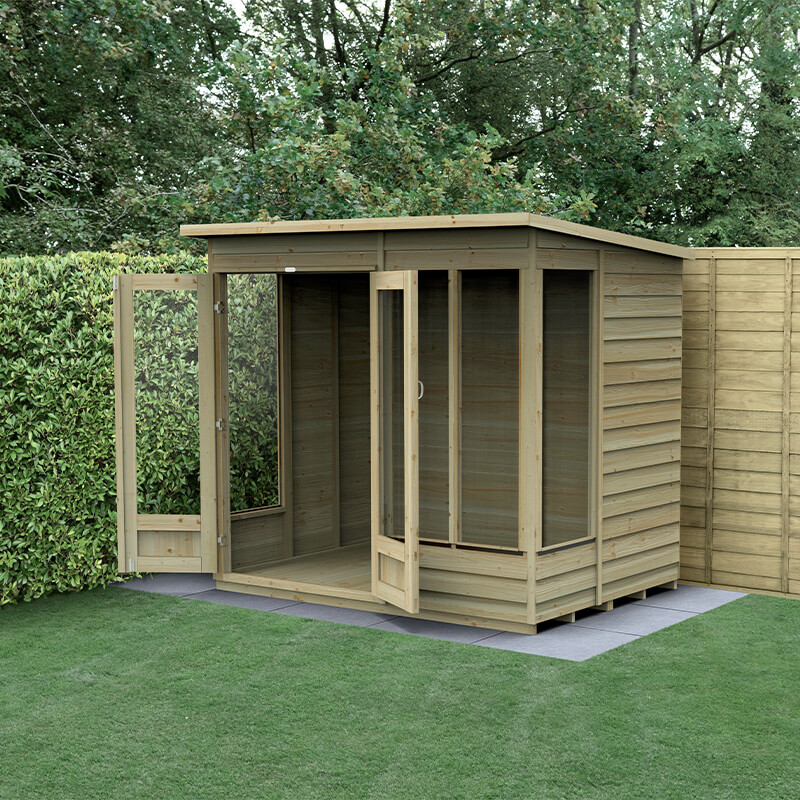
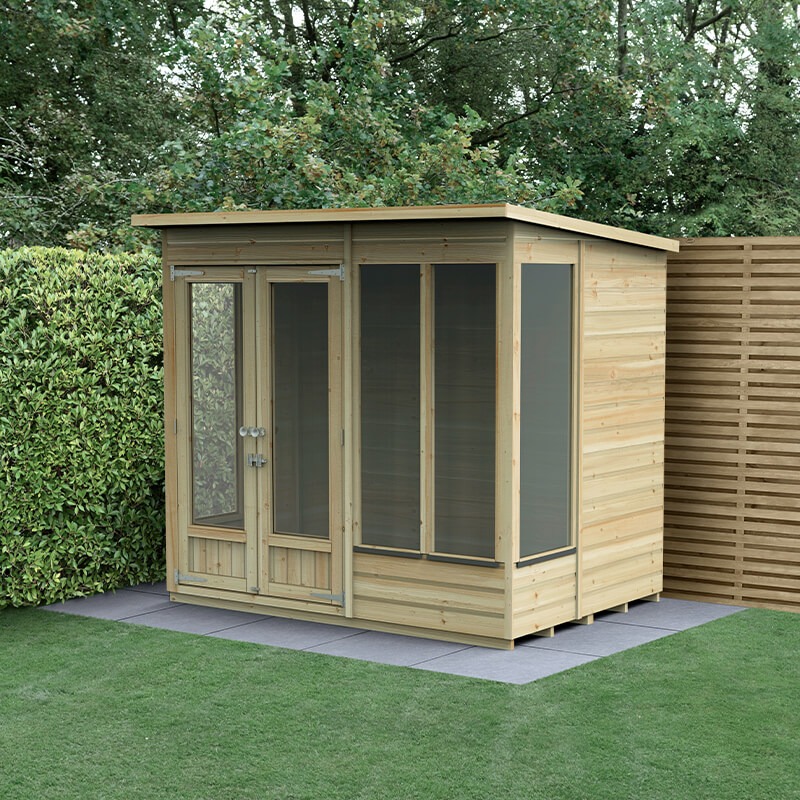
Different timber styles also affect the feel of the category. A clad wooden summerhouse gives a more traditional garden-room look, while tighter boards and cleaner edges can create a simpler, more contemporary mood. Some buyers prefer a more rustic finish because it blends into a cottage-style garden. Others want something that feels straight-lined and tidy beside modern fencing or paving. The same 7×6 footprint can suit both, which is part of the attraction.
Which shape fits the garden best?
Within the 7×6 summerhouse category, shape is one of the most useful things to look at. The footprint may be fixed, but the front profile and internal sense of space can vary quite a bit. This is where the choice becomes more than just measurements.
- Corner-style shapes can help the building sit neatly into a boundary or unused edge, making the garden feel more organised.
- Traditional rectangular fronts usually make it easier to arrange furniture and create a simple room-like layout.
- Lean-to inspired profiles can work well when the look needs to stay understated, especially in tighter plots.
- Gazebo-like forms feel more open and sociable, with a softer line between inside and out.
The difference is not only visual. A more rectangular summerhouse often feels easier to furnish, while a more angled or corner-based form can free up space elsewhere in the garden. If the plot has a strange line, the shape of the summerhouse can either soften that awkwardness or make it stand out in a useful way.
Where 7×6 works better than bigger sizes
Some buyers start by looking at larger summerhouses, then realise a 7×6 wooden model does the job without taking over the whole garden. This size is often a good fit where there is still a need for open lawn, play space, planting or access around the building. It can also suit gardens where planning to keep the centre open matters more than creating one big structure.
Compared with a larger footprint, a 7×6 model can feel less dominant and easier to place. That does not mean it lacks purpose. For many people, it gives enough usable space for two chairs, a small table and some shelving, or for a compact garden office setup with the feel of a separate room. It is a useful size when the buyer wants a proper timber building, but not the scale that comes with a full garden room.
In practical terms, this size also tends to be easier to visualise. Buyers often know whether 7×6 will sit beside a patio or at the end of a path. Larger sizes can be harder to picture until the base is marked out, which can delay decisions. A 7×6 format feels more approachable, and that can help turn browsing into buying.
Styles that change the mood of the same size
Even at the same dimensions, wooden summerhouses can look and function differently depending on the style of roof, glazing and front opening. These details shape how the building feels when you stand in the garden and look at it.
- Flat-front styles give a cleaner, simple outline and can feel less busy in a small garden.
- Pent roof designs create a neat slope that suits modern plots and can make height feel controlled.
- Aped roof summerhouses bring a more classic silhouette and can add a familiar garden-building shape.
- Verandah fronted versions extend the usable feel, giving a little covered pause-space at the front.
- Fully glazed fronts draw in light and make the interior feel more connected to the garden.
These are not just styling choices. A glazed front can make the inside feel brighter and more open, which is useful if the summerhouse is used for sitting, sketching or working. A more solid front, by contrast, can feel calmer and less exposed, which suits buyers who want a quieter, less glass-heavy look. The right style depends on whether the priority is light, privacy, or a bit of both.
Why glazing matters more than people think
With a wooden summerhouse 7×6, the amount and layout of glazing can change the whole impression of the interior. It is one of the main differences buyers notice once they step inside. More glass means more light, and in a compact footprint that can make the room feel useful rather than tight. Less glass can give a more enclosed, settled feel, which some people prefer for reading, crafting or simply sitting out of sight of the neighbours.
Glazed doors and windows also affect where furniture can go. If the front is heavily glazed, the room can feel more open, but you may want to leave that wall less cluttered. If the glazing is split across side panels, the layout may be easier to organise along the front wall. For some buyers, the key point is that the summerhouse should not become dark by default. In a timber building, good light often makes the space feel like something more than a garden box.
Another useful difference is between single doors and double opening fronts. Single doors can be better where the building is used more quietly, while wider openings make it feel easier to move furniture, chairs or a small desk in and out. In a 7×6 size, that opening width can alter the sense of freedom inside quite a bit.
Roof lines, headroom and the way space feels
The roof is easy to overlook when browsing, yet it has a strong effect on how a 7×6 summerhouse feels from inside and out. A higher roof pitch can create a roomier sense above head height, while a lower line may keep the structure neat and less obtrusive in the garden. If the summerhouse is going to be used for longer sitting periods, the feeling of space above you matters more than you might expect.
A pitched roof tends to suggest a more traditional garden building. It can make the timber structure look settled and familiar. A pent roof often feels cleaner and more contemporary, and it may suit a plot where the garden design already leans toward straight edges and simple materials. The shape is not only about appearance; it changes how the summerhouse sits against fences, trees and nearby buildings. That is why the roof line is worth looking at alongside the footprint.
Use it as a room, not just as a structure
One reason buyers choose wooden summerhouses 7×6 is that the size can support more than one use without feeling improvised. A single space can become a morning coffee spot, a quiet place for a laptop, a place for art materials, or a sheltered seating area away from the noise of the house. The category works well for people who want a recognisable room shape, but do not need a huge footprint.
Because the dimensions are manageable, the room can be arranged in clear zones. A small table near the light, a chair in a calmer corner, a storage bench against the wall — these arrangements feel possible without making the interior look overfilled. That is a genuine benefit of the size: it encourages usable simplicity. There is room to breathe, but not so much that the space gets wasted.
For buyers comparing options, it is helpful to think about how the summerhouse will feel on a daily basis. A bigger build may sound appealing, but a 7×6 version is often easier to furnish sensibly. That can make the whole purchase feel more grounded, as though the building already has a purpose before it even reaches the garden.
Little details that separate one model from another
Small construction details can make a surprisingly big difference in this category. The width of the doorway, the number of opening windows, the placement of the glazing, and the style of the front all change how the building is used. If two wooden summerhouses both measure 7×6, they may still feel very different once you look closely at the openings and proportions.
- Wider doors make access easier and can suit furniture placement better.
- Side windows help spread daylight across the room rather than keeping it at the front only.
- Symmetrical fronts create a balanced, neat look that many gardens benefit from.
- Offset openings can leave more usable wall space inside.
- Mixed glazing gives a blend of outlook and privacy, depending on where the summerhouse is placed.
These differences matter because a summerhouse is often bought for how it will function as much as for how it looks. A buyer who needs a clear wall for seating may not want too much front glazing. Someone who wants an airy sitting room may prefer the opposite. The point is not to chase one perfect layout, but to match the shape and openings to how the building will actually be used.
Placement tips that make the size feel right
Although this category is about the summerhouse itself, placement is part of the buying decision. A 7×6 wooden summerhouse can feel quite different depending on where it stands in the garden. Set against a boundary, it may act like a tidy destination point. Placed with a little space around it, it can feel more like a feature building. The same measurements can create a different mood depending on nearby planting, patio edges and the line of the lawn.
A useful tip is to think about the approach to the building. If the doorway faces the house, the structure may feel more connected to daily life. If it turns toward a quieter corner, it can feel more private and separate. Neither choice is better in every case, but the direction does affect how often the summerhouse gets used. Buyers often notice afterwards that access shape and sight lines matter almost as much as the product photo.
It is also worth considering how the form of the garden frames the summerhouse. In a long narrow plot, a 7×6 model can work as a stopping point. In a wider space, it may sit more comfortably as one element among several. Either way, the size is flexible enough to be placed with intention, not just dropped into the nearest open patch.
Why wooden construction still draws buyers in
There is a reason wooden summerhouses keep a strong place in garden shopping. Timber feels rooted in outdoor use. It suits planting, paving, seating and the casual rhythm of the garden in a way that feels natural rather than forced. A 7×6 size makes that quality even easier to appreciate because the building is close enough to interact with, but not so large that it feels like a separate house.
For buyers, the appeal is often a mix of feel and function. The structure brings a recognisable garden-room shape, but the timber gives it warmth and a more lived-in look. It can be used in a quiet, almost hidden way, or styled to become a visible feature of the plot. That flexibility is part of the category’s pull, especially for people comparing more rigid alternatives.
If the goal is to add a practical wooden building with a clear purpose and a pleasing garden presence, the 7×6 format is easy to understand and easy to like. It is not oversized, it is not awkward, and it leaves room for the rest of the garden to still be the garden.
What buyers usually want to know before choosing
Before deciding on a 7×6 wooden summerhouse, buyers often compare a few simple but important points. The first is whether they want a light-filled room or a more sheltered one. The second is whether the shape should look classic, modern or quietly rustic. The third is how much of the garden they are willing to give to the building, because that choice affects the whole layout of the plot.
- Choose glazing based on how bright you want the interior to feel.
- Match the roof shape to the garden style already in place.
- Check door width if you plan to move furniture or larger items inside.
- Look at wall layout if you need space for seating, shelves or a desk.
- Think about the garden view from the house, not only the summerhouse from the lawn.
Those small decisions help narrow down the right model without overcomplicating things. A good 7×6 summerhouse is usually the one that fits the plot neatly, looks natural in timber, and offers enough room for the way you genuinely want to use it. That is often the point where the category starts to feel less like browsing and more like choosing something that will earn its place in the garden.
[Sassy_Social_Share]