
wooden Summerhouses 7x5 - Best Deals in UK!
Showing all 4 results
-
23% OFF: 7′ x 5′ Forest Beckwood 25yr Guarantee Double Door Apex Summer House (2.28m x 1.53m) £659.9923%

-
21% OFF: 7×5 Double Door Apex Summer House (2.28m x 1.53m) – Forest 4Life 25yr Guarantee £589.9921%

-
17% OFF: 6’7×5’5 Shire Haddon Traditional Wooden Summer House £669.9917%

-
11% OFF: 6’7×5’5 Shire Haddon Traditional Wooden Summer House £716.9911%
Wooden summerhouses 7×5 bring a compact yet usable garden room to smaller plots, with enough space for seating, storage, or a quiet work corner, in timber styles that suit many layouts.
Why the 7×5 Foot Footprint Works So Well
A 7×5 summerhouse sits in that useful middle ground between a very small garden shed and a larger outbuilding. The shape gives you a room that feels practical without taking over the whole garden, which is why it often suits narrow lawns, side spaces, and tucked-away corners. In a wooden summerhouse 7×5, the proportions usually feel long enough for a bench, compact table, or armchair arrangement, while still leaving a sensible area for movement.
Because the footprint is not square, the layout tends to suit one main wall run, with the opposite side kept open for circulation. That can make the interior feel more structured than a square cabin. It is the sort of size people choose when they want a garden building that can serve a clear purpose without looking oversized. For many buyers, that balance is the real appeal.
What Wooden Summerhouses 7×5 Are Often Used For
The 7×5 size gives a workable base for several uses, depending on the style and opening layout. Some buyers look for a relaxed seating spot for summer afternoons, while others want a small garden office feel, a reading room, or a place to keep hobby equipment away from the house. The timber finish also gives the building a more natural look than plastic or metal alternatives, which helps it sit well among planting and fencing.
Bestseller der Kategorie wooden Summerhouses 7x5

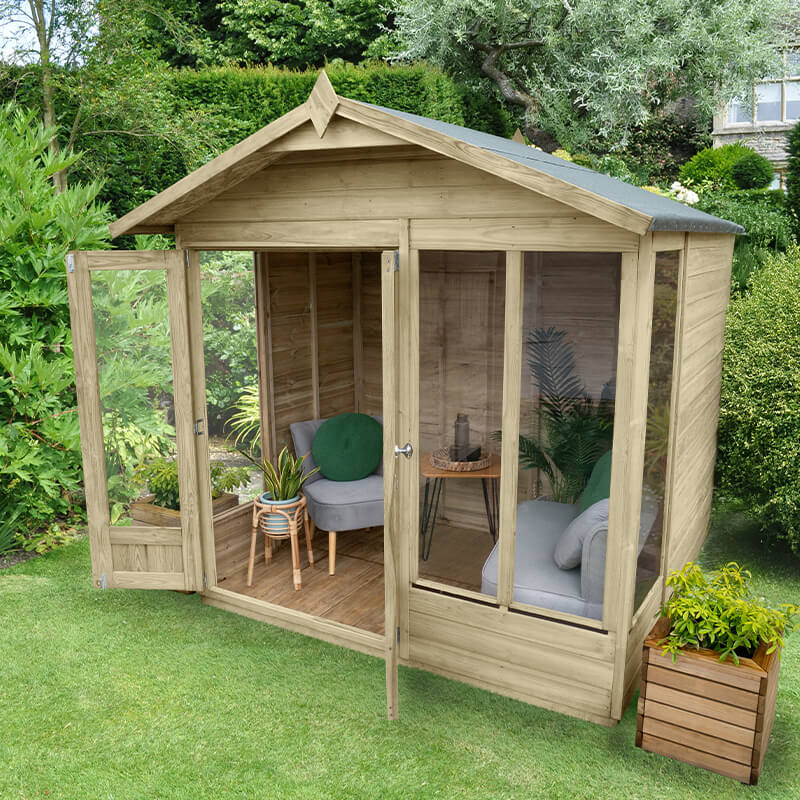
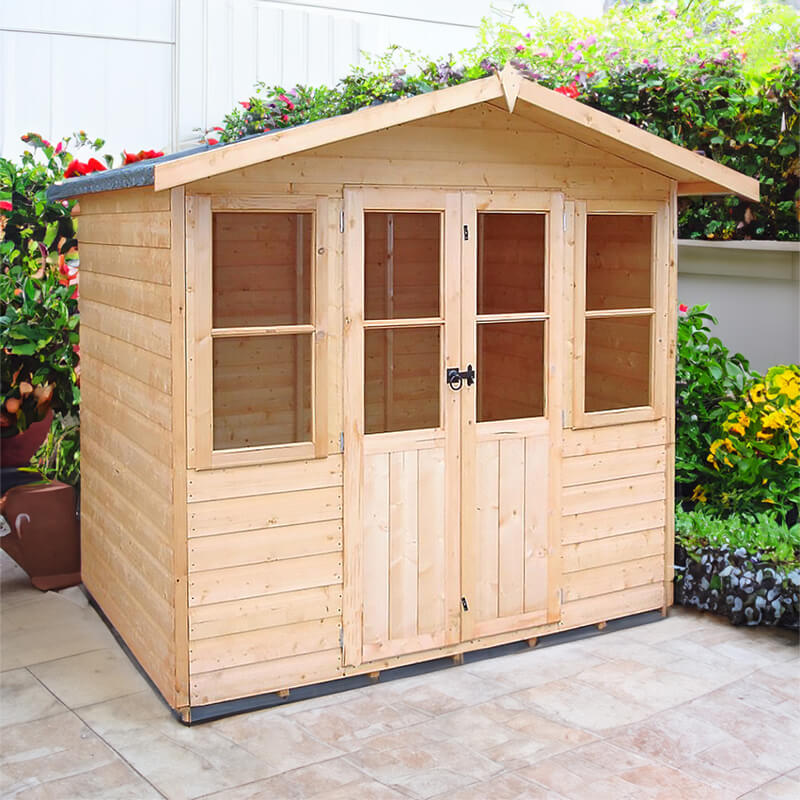
Common uses include:
- Garden seating room with a small table and chairs
- Home office corner for lighter desk setups
- Craft or hobby space where tools and materials need a fixed place
- Relaxation room with a bench, armchair, or daybed style layout
- Multi-use garden retreat combining seating and storage
Because it is a modest size, a 7×5 building usually works best when the intended use is fairly clear. It can do more than one job, but it is still worth deciding whether the main priority is sitting, working, or storing. That helps with choosing the right door position and window placement, which makes a big difference once furniture goes in.
Shapes and Styles That Change the Feel
Not all wooden summerhouses 7×5 feel the same. The roof style, door design, and window layout can change both the appearance and the usable interior. Some buyers prefer a traditional pitched roof because it gives the building a cottage-like look and can add a little more headroom in the centre. Others like an apex roof for its familiar garden-building profile, especially when they want it to blend with fencing, sheds, and other timber structures.
A pent roof gives a more modern line and often suits contemporary gardens where clean edges and lower overall height matter. On a 7×5 footprint, this can be useful if the summerhouse sits under boundary restrictions or simply needs to look a bit more restrained. It also tends to create a neat front-to-back slope, which suits long, narrow plots rather well.
There are also differences in glazing and front openings. A model with full-width front doors and generous windows will feel brighter and more open, while a version with smaller side windows can feel more enclosed and private. That is not just a style choice; it affects how the room is used. If you want a garden room for daytime sitting, a brighter layout usually works better. If you want a more tucked-away retreat, a smaller glazed area can be more suitable.
Traditional Timber Look or Cleaner Modern Lines
The term wooden summerhouses covers a wide range of appearances. Traditional versions often have overlap or shiplap boarding, decorative bargeboards, and cottage-style doors. These details give a softer garden feel and suit older properties, planted borders, and more informal layouts. A 7×5 size in this style can look surprisingly settled, almost like a small room placed into the garden rather than an add-on.
More modern timber summerhouses lean towards straighter edges, simpler framing, and larger glazed sections. On a 7×5 base, that can make the room feel more open and slightly more architectural. The difference is not only visual. Traditional styles often feel better if the summerhouse is meant to be part of a relaxed garden scene, while cleaner styles work well when the building needs to match a contemporary terrace or a neatly arranged patio.
Some buyers also look at whether the timber is finished in a natural tone or painted elsewhere, but with category browsing it is often the structure that matters first. The grain, panel shape, and window arrangement all contribute to how the building sits in the garden, and those details are easy to overlook if you only look at the footprint.
Window Layouts That Affect Light and Privacy
In a 7×5 wooden summerhouse, the glazing pattern often decides how usable the interior feels. Front-facing windows can pull in plenty of daylight, but side windows matter too, especially on a narrower build. A model with windows on two sides can make the room feel brighter through the day, which helps if the building is for reading, work, or indoor plants.
There is also the privacy question. Large panes and wide front doors give a light, open feel, but they do mean the room is more visible from the garden. That is not a problem for everyone, though some people prefer a slightly more enclosed layout so the summerhouse feels like a private nook. In that case, smaller side windows or a more sheltered door arrangement can suit better.
If the building will face a neighbour, road, or a busy part of the garden, the placement of the windows matters a lot. A carefully chosen layout can allow daylight without making the whole room feel exposed. It is a small detail on paper, yet it changes the experience once the summerhouse is in use.
Door Options That Change Everyday Use
The door style on wooden summerhouses 7×5 can alter how the room is accessed and furnished. Full-glass double doors create a wide opening and make the interior feel connected to the garden, which is handy if the space is used for entertaining or relaxed sitting. They also help when you want to move a chair, table, or storage box inside without awkward turning.
Single doors can suit a more compact or private feel. They may leave more wall space inside, which is useful if the layout needs to hold a desk, shelving, or a longer sofa-style seat. In a 7×5 room, wall space is at a premium, so the choice between single and double doors can make a practical difference.
Some designs place the doors centrally, while others offset them. A centred door gives a balanced front view and often makes sense for a classic summerhouse look. An offset entrance can free up better interior wall runs, which is useful if the room has one main purpose. It is one of those small layout choices that tends to be felt more than seen.
Benefits That Matter in a Smaller Garden
The clearest advantage of a wooden summerhouse 7×5 is scale. It gives proper room presence without dominating the garden. That makes it a strong choice where space is limited but a separate outdoor room is still wanted. The timber structure also adds a softer visual line than harder materials, which helps the building sit naturally among plants, gravel paths, and fencing.
Other useful benefits include:
- Balanced size for gardens where every metre counts
- Timber character that suits both traditional and modern plots
- Flexible layout for seating, working, or hobbies
- Good light potential where glazing is well placed
- Defined garden room feel without the bulk of a larger cabin
Compared with a larger summerhouse, the 7×5 version is usually easier to place visually. It can work against a fence line, near the back of a lawn, or in a more awkward corner that would not suit a bigger structure. Compared with a smaller hut, it offers enough room to avoid the cramped feel that can make garden buildings less useful than expected.
When a 7×5 Size Is Better Than 6×4 or 8×6
Size comparisons matter when choosing a garden building. A 6×4 summerhouse can be compact and tidy, but it may leave limited floor space once furniture is added. By contrast, a 7×5 summerhouse gives a bit more elbow room and often allows a better arrangement of seating and side access. That extra width or depth, depending on orientation, can make the room feel less cramped.
On the other side, an 8×6 summerhouse gives noticeably more space, but it also needs a stronger setting in the garden. In some plots, that larger footprint can start to dominate visually or reduce lawn space more than you want. The 7×5 category is often chosen because it feels like a sensible step up without reaching the scale of a full garden room.
This middle sizing also helps if the summerhouse is intended for more than one season of use. It is easier to arrange a useful interior with a chair, narrow table, and a bit of storage, even if you are not trying to fit a full suite of furniture inside. It is not just about square footage; it is about whether the shape gives usable walls and a layout that works in practice.
Practical Tips Before You Choose
When comparing wooden summerhouses 7×5, it helps to think beyond the first glance. The same footprint can feel very different depending on the opening style, roof pitch, and window arrangement. If you want the building for sitting, choose a layout that keeps the most open wall clear for furniture. If you want a work space, check that the door position leaves room for a desk and chair without blocking circulation.
It is also worth looking at how the summerhouse will sit in the garden. A pitched roof can create a stronger feature at the end of a plot, while a pent roof may feel neater if the building is near a boundary. If the summerhouse will be seen from the house, the front elevation matters more than people often expect. A well-balanced façade can make the whole garden feel more put together, even before anything goes inside.
Useful points to keep in mind:
- Check internal layout rather than only external size
- Match door and window positions to the main intended use
- Think about the view from the house as well as the garden
- Choose a roof shape that suits the surrounding space
- Leave enough access room around the building for the feel you want
The Small Details That Make a Big Difference
What often separates one wooden summerhouse 7×5 from another is not just the size, but the fine details. The depth of the front overhang, the arrangement of the glazing, the way the doors open, and the balance of solid panel to glass all change how the building looks and works. A slightly more open front can make the room feel airy, while a stronger timber presence can make it feel more grounded and private.
Texture matters too. Timber boarding gives a warmth that suits garden planting and softer outdoor materials. It has a more settled character than smoother, industrial-looking materials, which is why many buyers search specifically for wooden summerhouses. Even within this category, the feel can shift from neat and compact to more cottage-like or more contemporary, depending on the structure.
If you are choosing one for a garden that already has hard landscaping, a timber summerhouse can soften the overall layout. If the garden is full of borders and natural shapes, it can also look as though it belongs there from the start. That versatility is a quiet strength of this category, and it is one reason the 7×5 size keeps proving useful.
A Final Look at What Makes the Category Worth Browsing
Wooden summerhouses 7×5 offer a good mix of proportion, character, and flexibility. They are small enough to fit many gardens, yet large enough to create a proper outdoor room. With the right roof style, door choice, and window layout, the same footprint can lean towards a bright seating space, a private retreat, or a practical hobby area. That variety is the main reason this category is worth a close look.
For buyers comparing styles, the key difference is often not whether the summerhouse is wooden, but how the timber design uses the 7×5 area. Some will feel more open, others more sheltered; some will suit traditional gardens, others cleaner contemporary spaces. The right choice is usually the one that fits the plot, the intended use, and the way you want the garden to feel when you look out at it.
Wooden summerhouses 7×5 are, in simple terms, a neat solution for people who want extra room outdoors without going too far with size. And that is exactly why they remain such a practical category to browse.
[Sassy_Social_Share]