
wooden Summerhouses 7x4 - Best Deals in UK!
Showing all 2 results
-
20% OFF: 6′ x 4′ Forest Beckwood 25yr Guarantee Double Door Apex Summer House (1.99m x 1.23m) £569.9920%

-
18% OFF: 6′ x 4′ Forest 4Life 25yr Guarantee Double Door Apex Summer House (1.99m x 1.23m) £499.9918%

Wooden summerhouses 7×4 offer a neat, usable garden room with enough space for seating, storage and a quiet corner, while fitting comfortably into narrower plots and side spaces.
A 7×4 footprint that makes sense in real gardens
A 7×4 wooden summerhouse is a practical size for people who want a proper garden building without taking over the whole lawn. The shape is usually measured in feet, so the footprint is compact, but not cramped. That gives you a room that can work as a reading spot, hobby space, breakfast nook, or just a place to sit out of the breeze. Because the layout is rectangular, it often suits gardens with a defined boundary, a long border, or an area tucked along a fence line.
What many buyers like about this size is the balance. It is larger than a small corner shed-style room, yet far easier to site than a wider building. A 7×4 summerhouse can feel tidy and deliberate, especially if you want something that looks built into the garden rather than dropped into it. The shape also gives you clearer options for windows, seating runs and door placement, which matters a lot once you start picturing how the space will actually be used.
Rectangular, pent, and apex: the main roof shapes
When people search for wooden summerhouses 7×4, they are often comparing more than just size. The roof shape changes the whole feel of the building. A pent roof slopes in one direction and gives a clean, modern look. It can suit a more contemporary garden and is often chosen where the building sits against a fence or wall. An apex roof, by contrast, creates that familiar pitched profile, bringing a softer, more traditional look that blends well in cottage-style plots or classic family gardens.
Bestseller der Kategorie wooden Summerhouses 7x4
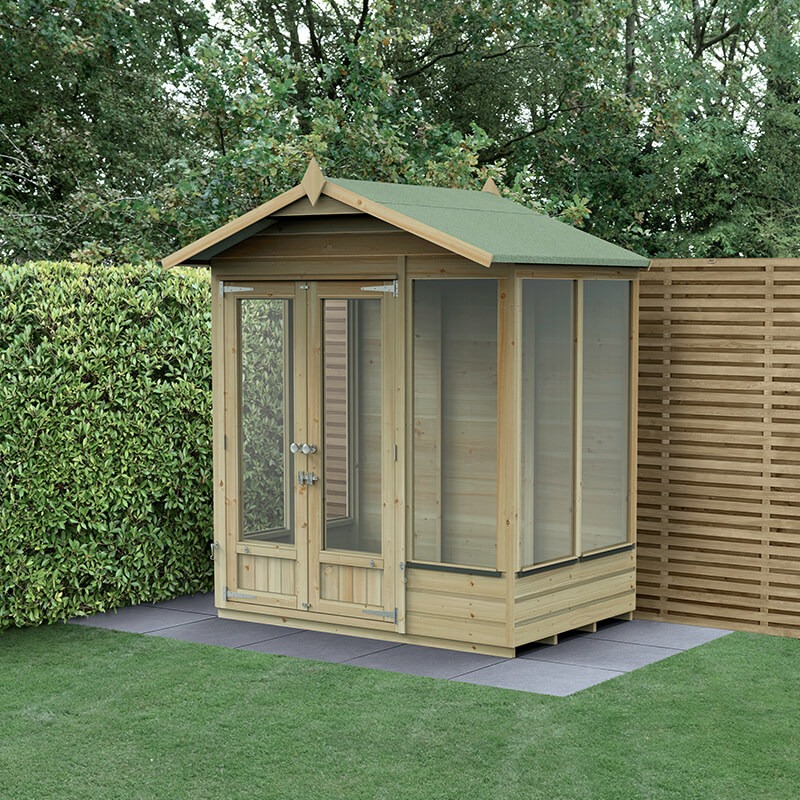
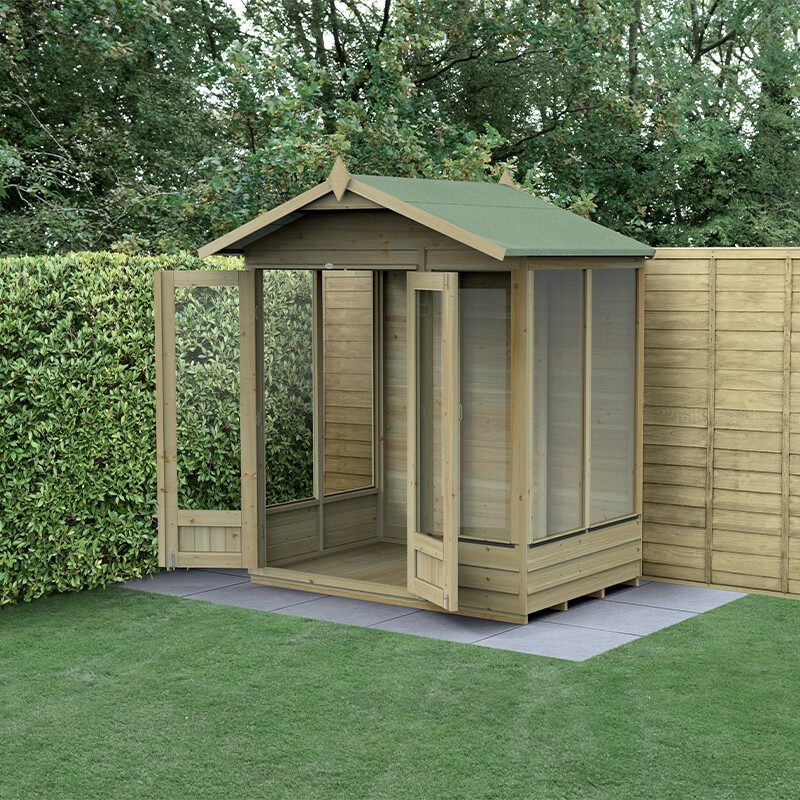
There are also differences in how the roof affects the interior. A pent roof can feel slightly more linear and restrained, while an apex can bring a bit more headroom through the centre. That does not mean one is better than the other; it simply depends on how you imagine using the room. If you plan to place taller furniture inside, or want the building to feel more open above the eye line, the roof shape becomes an important part of the decision.
Some 7×4 summerhouses are designed with a more rectangular, straight-edged frontage, while others soften the outline with a central door and flanking windows. This changes the visual rhythm of the building. A straight, symmetrical front can look tidy and formal. A design with offset glazing can feel more relaxed and less predictable, which some buyers prefer because it gives the garden room its own character.
Glazing that changes the mood, not just the light
The glazing on a 7×4 wooden summerhouse has a big impact on both appearance and use. Full-height windows create a brighter room and make the inside feel connected to the garden. Half-glazed doors or lower window panels can give a bit more privacy and a more enclosed, room-like atmosphere. Some buyers lean towards larger panes because they want the building to feel airy; others prefer a more modest amount of glass so the space can work as a sheltered retreat.
The difference between full glazing and partial glazing is not only about light. It also changes how the summerhouse sits in the plot. More glass makes the structure look lighter and less bulky, which can be useful in a smaller garden. Less glass can make the building feel more solid and cabin-like. Both approaches work, but they create a different relationship with the outdoors.
In a 7×4 layout, glazing is often arranged to keep the room usable rather than overcomplicated. That means you may see a front door with side windows, or a side door with a wide glazed panel to bring in daylight from the garden side. The key thing is to match the window layout to the way you plan to arrange the interior. If the main seat will be against one wall, you do not want the best light blocked by a sofa or table. It sounds obvious, but people do overlook it.
More than one kind of summerhouse, even in the same size
Not all wooden summerhouses 7×4 feel the same, even if the footprint matches. A traditional summerhouse usually has a softer, more classic profile, often with decorative joinery or a familiar apex roof. A contemporary summerhouse tends to use sharper lines, simpler cladding detail and a more restrained look. Then there are corner-style influences adapted into a 7×4 format, where the emphasis is on making the best use of a tucked-away position, though the building itself remains rectangular.
Another distinction is how enclosed the structure feels. Some 7×4 designs are made to feel like a small room with windows, almost an extension of the house. Others are more like a garden sitting shelter, somewhere between an outbuilding and a leisure spot. That difference matters if you are trying to decide between a place for quiet reading and a more social setting for two or three chairs and a small table.
Buyers also compare single-door and double-door styles. A single door makes the frontage feel compact and secure, which can suit a narrower garden. Double doors create a wider opening, which helps the room feel more connected to the patio or lawn. In a 7×4 building, this choice can change not just access, but the way the whole structure reads from outside.
Cladding styles that quietly change the whole look
The cladding on a wooden summerhouse 7×4 can shift the character from rustic to crisp without altering the footprint at all. Shiplap cladding is a common choice because its overlapping boards create a neat finish and a familiar garden-building look. Tongue and groove cladding gives a tighter, more joined appearance and often feels more substantial. Some buyers are drawn to a more rustic board style because it gives the summerhouse a natural, less polished presence in the garden.
The difference between cladding types often comes down to appearance and the impression of solidity. A smoother profile can look refined and tidy, while a more textured profile can feel softer and more traditional. In a 7×4 design, where the exterior surface area is not huge, the cladding choice becomes more noticeable. It sets the tone very quickly when someone sees the building from the path or patio.
If you are trying to match an existing shed, greenhouse or fencing style, the cladding can help the new building sit in the same visual family. If you want the summerhouse to stand apart, a different board direction or a cleaner frontage can do that without making the structure feel out of place. It’s a subtle decision, but one that affects the whole garden composition.
How the 7×4 format changes the inside layout
The beauty of a 7×4 wooden summerhouse is that the interior can be arranged with a clear purpose. The long side usually gives you room for a bench, narrow sofa, or folding table, while the shorter side can hold a chair, storage chest, or a slim shelving unit. Because the room is not square, it naturally guides how the furniture sits. That is helpful if you want an orderly feel rather than a space where everything floats awkwardly in the middle.
A 7×4 layout works well for:
- Two-chair seating areas with a small table in between
- Reading rooms where one wall can hold a day chair and lamp
- Garden workrooms with a compact desk and a little storage
- Tea rooms where there is just enough space for a table, chairs and easy movement
- Mixed-use spaces combining sitting room and light storage
Because the footprint is elongated, it can make sense to think in zones. One end can be for sitting, the other for a small table or cupboard. That division is especially useful if the summerhouse will be used by more than one person at a time. It stops the room feeling like a single block and makes the space feel more lived-in, without needing much square footage.
Why buyers keep coming back to wooden construction
There is a reason wooden summerhouses 7×4 remain a popular choice. Wood gives a natural appearance that sits comfortably in a planted garden, and the building looks less harsh than a plastic or metal alternative. For many buyers, that matters as much as the practical side. A wooden summerhouse feels like part of the garden composition, not just an object placed on it.
Wooden construction also brings a sense of warmth inside. Even before any furniture is added, the room tends to feel more inviting than a hard-surfaced structure. A 7×4 format in timber can suit both neat suburban plots and slightly larger country gardens, because the material and size work together to create something modest but useful. It is not showy, and that is often the point.
Another advantage is the range of visual styles available within the same size. The same 7×4 footprint can appear classic, modern, cabin-like or pared-back, depending on the roofline, glazing, cladding and door layout. That flexibility makes it easier to choose a building that feels right for the garden you already have, rather than forcing the garden to adapt to the building.
Picking a look that suits the plot, not just the product
Before choosing a 7×4 summerhouse, it helps to imagine how it will sit in relation to fencing, planting and paths. If the space is long and narrow, a rectangular building often feels more natural than a wider one. If the garden has a small terrace or a side return, the 7×4 proportions may help the structure tuck in without closing the space off. That makes it a practical choice for buyers who want the room to feel intentional, not squeezed in.
Style-wise, you might favour a traditional summerhouse if the rest of the garden has curved borders, roses, or old brick edging. A cleaner, more contemporary form can suit gravel, raised planters and straight paving lines. Neither is a rule, just a useful guide. The right match tends to be the one that makes the whole area look settled when you step back from it.
It is also worth thinking about how visible the building will be from the house. A 7×4 summerhouse with strong glazing can become a visual focal point from the kitchen or patio doors, while a more enclosed design can sit quietly in the background. Some people want the room to draw the eye; others want it to blend in. Both approaches make sense, but they lead to different product choices.
Small details that make the buying decision easier
When comparing wooden summerhouses 7×4, many shoppers get caught up in the overall shape and forget the finer points. Yet things like door position, window balance and internal proportions can make a real difference once the building is in place. For example, a side-opening layout may leave the front cleaner for seating or display, while a central front door can create a more formal, balanced look.
Useful points to check before choosing include:
- How the door opens and whether it suits the path or patio area
- How much glazing you want for privacy versus daylight
- Whether the roof shape matches the style of the garden
- How the cladding looks beside existing timber features
- Whether the proportions suit seating, storage, or a mixed-use setup
These are the kinds of details that decide whether a summerhouse feels merely fitted into a space or properly at home there. A 7×4 size gives you enough room to make those decisions matter, while still keeping the overall build manageable. That is one reason it remains such a practical category for buyers looking for something useful, tidy and visually calm.
A size that leaves room for the rest of the garden
The appeal of a wooden summerhouse 7×4 is not only what it offers inside, but what it leaves untouched outside. Because it is compact, the building can provide a genuine garden room without swallowing the planting beds or patio areas around it. That is especially valuable if you want the garden to keep its open feel. In other words, you get a dedicated space, but you do not lose the sense of having a garden left over.
This is where the 7×4 format does a lot of quiet work. It gives structure to the garden layout, creates a useful destination at the end of a path, and still leaves space for borders, pots, lawn or a sitting area nearby. For buyers who want something that feels considered rather than oversized, it can be the right middle ground.
Wooden summerhouses 7×4 suit people who want a garden building with character, useful proportions and a clear purpose. Whether you are drawn to a pent roof, an apex profile, more glazing or a more enclosed look, the 7×4 footprint gives you room to choose a style that fits how you live outdoors. And that is often what makes the difference between a building you simply own and one you actually use.
[Sassy_Social_Share]