
wooden Summerhouses 12x9 - Best Deals in UK!
Showing all 2 results
-
28% OFF: 12′ x 8′ Forest Beckwood 25yr Guarantee Double Door Apex Summer House (3.6m x 2.61m) £1,119.9928%

-
24% OFF: 12′ x 8′ Forest 4Life 25yr Guarantee Double Door Apex Summer House (3.6m x 2.61m) £1,019.9924%

Wooden summerhouses 12×9 give you a generous garden room for seating, storage, hobbies and quieter time outdoors, with a natural timber finish that suits classic and modern spaces alike.
A 12×9 footprint that actually feels useful
A 12×9 wooden summerhouse gives you a layout that works for more than one purpose without feeling overlarge in the garden. The 12ft width creates a broad front or side elevation for doors and glazing, while the 9ft depth gives enough internal space for a table, chairs, a daybed, a desk, or a mix of all three. This size is often chosen when a smaller shed feels a bit tight and a larger garden room would take over the plot. It sits in that in-between space where you still keep open lawn or planting around it, but gain a proper enclosed room outdoors.
For many buyers, the appeal is in the balance. A wooden summerhouse 12×9 can act as a calm retreat at the bottom of the garden, a spot for morning coffee, or a place to sit when the weather turns a bit iffy. It is roomy enough for two people to use without bumping elbows, yet it does not need the same scale of garden as a full-size outbuilding. If you want a structure that looks like part of the garden rather than a block placed into it, timber tends to do that rather well.
Why timber changes the feel of the whole structure
The word wooden matters here, because timber summerhouses have a different character to plastic or metal buildings. The grain, the natural tone, and the way the material settles into planting all help the structure feel less hard-edged. In a 12×9 size, that matters even more, because the building is visible enough to be a feature but not so big that it dominates. A timber finish can sit alongside fencing, pergolas, raised beds and sheds without looking out of place.
Bestseller der Kategorie wooden Summerhouses 12x9
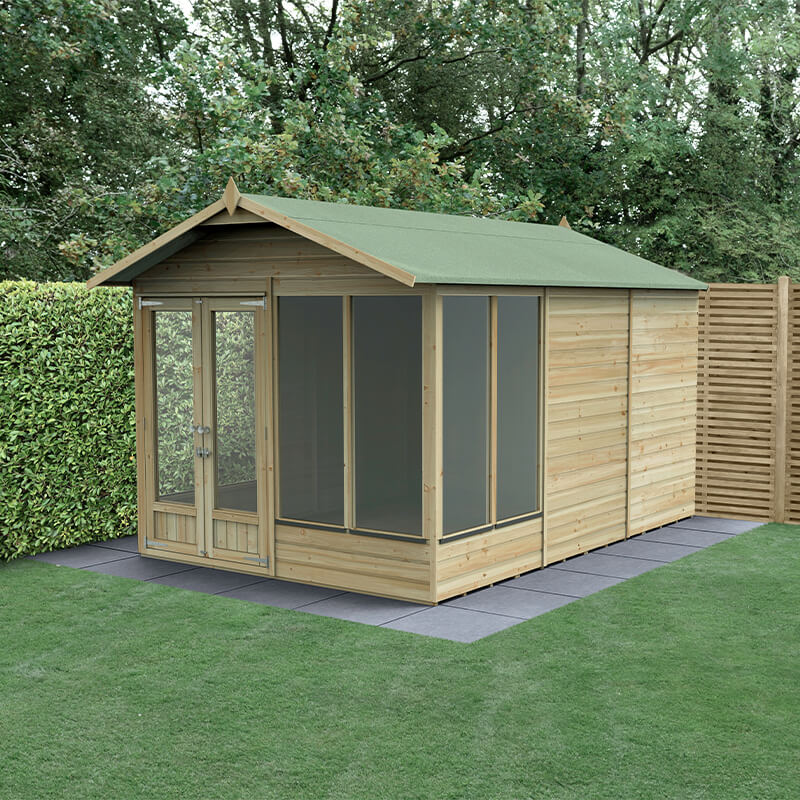
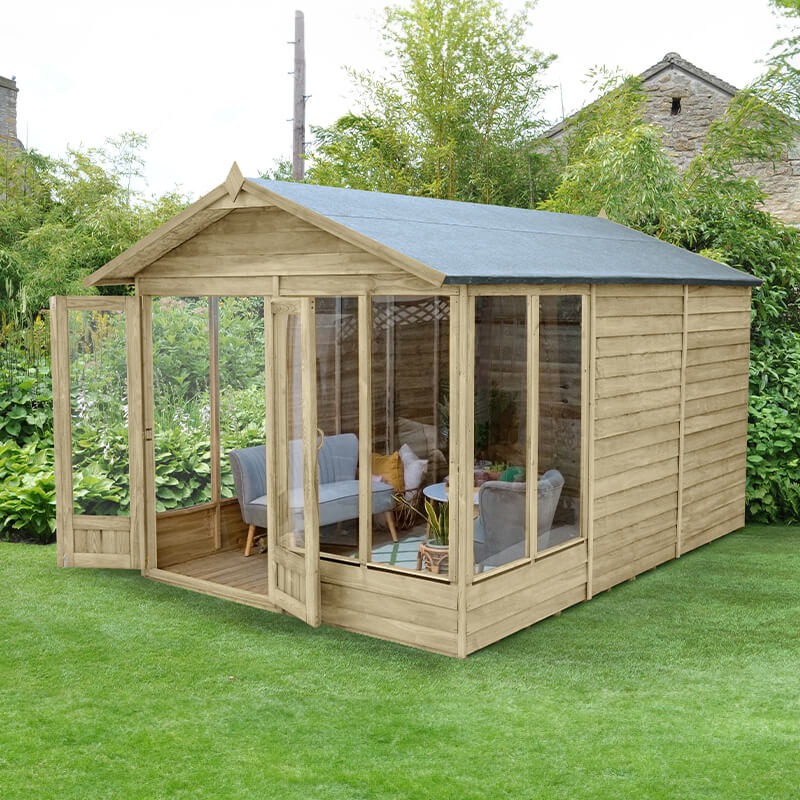
Another reason people choose wooden summerhouses is the flexibility of the look. Depending on the design, a timber summerhouse can lean traditional with rustic cladding and small panes, or look more contemporary with clean lines and broad glazing. That difference changes not only the style but also how the interior feels when you use it. Some people want a cottage-like hideaway; others want a sharper garden room for working, reading or entertaining. Timber gives both options a natural starting point.
Subtypes that make a 12×9 summerhouse feel different
Not every 12×9 summerhouse is built the same way. The underlying footprint may be identical, but the roof shape, glazing layout and door position can make the building feel quite different inside and out. If you are comparing options, the subtype is worth a close look because it affects light, headroom and how the room fits into the garden.
- Corner summerhouses for a diagonal garden position, useful when you want to save central lawn space.
- Hexagonal or octagonal styles that give a softer profile and a more ornamental look.
- Rectangular front-facing designs that make the most of wall space and feel straightforward to furnish.
- Side-entry layouts that suit narrow access or a garden path running along one side.
- Full-front glazed designs that bring in more daylight and feel more open.
- Half-glazed or mixed-panel versions that offer a bit more privacy and a more enclosed room feel.
The subtype you choose changes the atmosphere more than many people expect. A fully glazed front can make a 12×9 room feel brighter and more social, while a model with more solid panels may feel better for focused use, such as a studio or reading space. If you like a room that does not feel too exposed from the garden, a mixed design is often a sensible middle ground.
Shape choices: square, rectangular and softer outlines
Although the size is described as 12×9, the way the footprint is arranged can still vary. A more rectangular layout often gives the easiest furniture placement, with clear wall runs for shelving, benches or a table. That shape tends to suit buyers who want practical use first. By contrast, a summerhouse with a more rounded or angled profile can feel more decorative, especially in a garden with curved paths, lawns or planted borders.
One big difference is how the shape influences circulation. In a rectangular wooden summerhouse 12×9, it is simpler to create separate zones, such as one end for seating and another for a desk or storage. A softer shape, such as hexagonal, can feel more intimate, but it may ask a bit more of your furniture planning. There is no right answer, just a difference in how the room behaves once it is in place.
Glazing that changes the mood inside
Glazing is one of the clearest ways to compare wooden summerhouses 12×9. A lot depends on whether you want the room to feel open and airy or a little more sheltered. Large panes can make the interior seem broader and better connected to the garden, especially if the summerhouse faces a flower border, patio or pond. Smaller panes, or a more balanced panel-and-window mix, give a quieter feel and can be better if the summerhouse sits close to neighbours or a boundary.
Some buyers are drawn to full-height glazed doors, which create a more room-like finish and let in a good spread of light. Others prefer smaller leaded-style windows for a more traditional look. In practical terms, more glazing usually means the room feels less enclosed, but more solid timber panels often make the building feel calmer and more private. It is a trade-off between openness and seclusion, and the right choice depends on how you plan to use the space.
What a 12×9 size gives you that smaller units cannot
The most obvious benefit of a 12×9 wooden summerhouse is usable floor area. A compact garden building can be handy, but it often ends up with one purpose only. With this footprint, you can combine functions without everything feeling crammed together. That means a small sofa and side table, or a pair of chairs with a coffee table and a storage chest, can all fit more comfortably.
For buyers, that extra space often translates into a better day-to-day experience. You are less likely to move things around every time you use the room. If you want a space for family time, the 12×9 layout can take a couple of chairs plus a children’s table or craft area. If you want a quieter room for work, there is usually enough depth to place a desk without sitting too close to the door. It is a size that gives you options, which is often what makes the purchase feel more worthwhile.
Useful differences between summerhouse types and garden rooms
People often compare summerhouses with garden rooms, sheds or cabins, but the feel is not quite the same. A summerhouse is usually chosen for lighter, more relaxed use. It tends to be more open in appearance, with more glazing and a gentler look in the garden. A shed is more about utility, and a cabin often feels heavier and more enclosed. The 12×9 format sits neatly in the summerhouse category because it offers enough room to be functional, while still keeping the softer, sociable look that many buyers want.
That difference matters if you are trying to decide what fits your garden. If your aim is to create a place for tea, reading, chats, hobbies or occasional work, a wooden summerhouse 12×9 can feel more inviting than a purely practical building. If you want the structure to blend with planting and outdoor seating, the summerhouse format often feels less severe. It is not trying to be an office block in the garden; it is trying to be a room with a view, which is a bit different.
Roof styles and what they do for the space
Roof design is another area where small changes make a noticeable difference. A pent roof gives a clean, modern edge and can suit contemporary gardens or places with lower visual lines. A apex roof feels more traditional, with a familiar profile that many people immediately read as a summerhouse. A hipped roof can soften the overall shape and make the structure look more settled from different angles.
Inside the room, roof choice can influence headroom and the feeling of space near the centre. In a 12×9 timber summerhouse, the roof is not just an outer feature; it affects how comfortable the building feels when you are sitting inside for longer periods. A higher central point can help the room feel less boxy, while a lower pitch may suit a sleeker look. Buyers often notice this once the furniture goes in, so it is worth paying attention early on.
Practical features buyers tend to look for
When comparing wooden summerhouses in this size, there are a few features that often decide the final choice. These are not flashy details, but they shape how the building feels every time you use it. A door that opens the right way, enough window area, and a sensible wall layout can matter more than a decorative trim.
- Double doors for an easier sense of access and a more open front.
- Single doors where space is tighter or a more compact entrance is preferred.
- Front windows that maximise daylight into the main seating area.
- Side windows that help light reach deeper into the room.
- Internal wall space for shelves, artwork or a small desk.
- Balanced solid panels for privacy and a quieter feel.
These features may sound simple, but they shape day-to-day use. A 12×9 wooden summerhouse can be a lovely buy on paper, yet the real difference comes from whether the interior layout works for the life you want to lead in it. It is worth imagining where a chair, a table, and a mug of tea would actually go, not just how the building looks from the path.
How the 12×9 format suits different garden settings
This size works in a range of garden settings, which is part of the reason it stays popular. In a long garden, a wooden summerhouse 12×9 can anchor the far end and create a destination. In a wider garden, it can sit off-centre with planting around it, giving a more relaxed, less rigid feel. If you have a patio area, it can also connect the hard landscaping with the softer parts of the garden, especially when matched with timber furniture or planters.
It is also a size that can look proportionate without needing to dominate every view. Too small, and the building can seem like an afterthought. Too large, and the garden starts to feel like it belongs to the structure. A 12×9 footprint often lands in the middle, which helps the summerhouse feel intentional rather than squeezed in. That makes a difference when you want the garden to keep its shape and not just become a building plot.
What to think about before you choose a design
When you are comparing wooden summerhouses 12×9, try to think in terms of use rather than just appearance. A stylish exterior is nice, but the inside needs to suit your routine. If you plan to use the space for quiet sitting, you might want more glazing and a softer visual style. If it is for mixed use, then a more rectangular shape and sensible wall space might be better. If privacy matters, a design with fewer large panes may feel more comfortable.
A few simple questions help narrow things down:
- Will the summerhouse be mainly social or mainly private?
- Do you want open views into the garden, or more enclosure?
- Is furniture layout more important than decorative shape?
- Do you prefer a traditional timber look or a cleaner outline?
- Will the room need to feel bright throughout the day?
Answering those before you buy can stop a pretty design turning into a slightly awkward room. And awkward rooms are the sort of thing people regret later, even when the building itself is fine. The best wooden summerhouse is usually the one that fits the way you live, not the one that just looks nice in the first picture.
Why buyers keep coming back to this size
There is something appealing about a building that is large enough to use properly, but not so large that it takes over the garden. That is where the 12×9 wooden summerhouse earns its place. It offers room for more than one activity, it gives you a proper sense of separation from the house, and it still keeps a gentle garden feel. It can be a seating space, a hobby room, a quiet spot for reading, or somewhere to gather when the weather is not behaving itself.
For many shoppers, the decision comes down to this: a timber summerhouse of this size gives you a room outdoors without making the garden feel crowded. The combination of natural wood, practical floor space, and a choice of layouts makes it a versatile pick. If you want something that feels personal, not overdone, and useful from the first day it is in place, a wooden summerhouse 12×9 is a strong place to start looking.
[Sassy_Social_Share]