
wooden sheds 200 sq ft / 18 m² - Best Deals in UK!
Showing the single result

Wooden sheds 200 sq ft / 18 m² give you a roomy garden building for storage, a workshop or hobby space, with natural timber character, flexible layouts and a size that sits neatly between compact sheds and full outbuildings.
Room to work with, without taking over the plot
A 200 sq ft / 18 m² wooden shed offers a practical middle ground for gardens that need proper space, but not a structure that dominates the whole site. At this size, there is usually enough room for a ride-on mower, bicycles, tools, shelving, a bench, and still a clear walkway. That makes these sheds a popular choice for people who want more than simple storage, yet do not need a full garden room.
What makes timber appealing here is not just the look, but the way wooden construction can be adapted to different uses. A plain storage shed, a chalet-style unit, or a workshop with extra headroom can all sit within the same floor area, but each one feels quite different in daily use.
What 200 sq ft / 18 m² really gives you
In practical terms, 18 m² is enough to divide the space into zones. One wall can be fitted with racking or hooks, another can hold longer items such as ladders, hand tools or timber offcuts, and the centre can stay open for access or working space. If the shed is being used as a hobby shed, that same size can hold a workbench, cabinets and a small seating area without feeling too tight.
Bestseller der Kategorie wooden sheds 200 sq ft / 18 m²
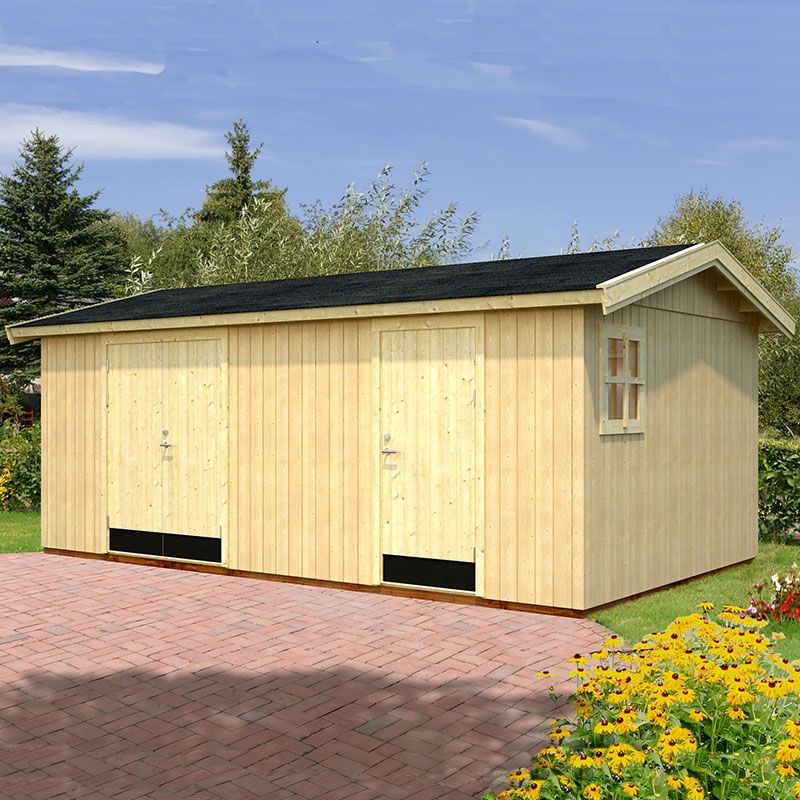
The layout matters a lot at this footprint. A square shed gives you a balanced interior, while a rectangular one can feel better for storing long items down one side. If you want to park equipment inside, a wider front opening and a straight internal run are often more useful than an awkward shape with deep corners.
Cabin style, apex style or pent style?
Within this category, the roof shape changes both the appearance and the way the shed can be used. A pent roof slopes in one direction and usually suits modern gardens, especially where the shed is placed against a boundary or wall. It can give a slightly lower front profile, which some buyers prefer when planning around neighbours’ sightlines.
A apex roof creates the classic pitched look. It often gives a stronger sense of volume inside, with more headroom near the centre. That is handy if you plan to stand at a bench or store taller items. Then there is the log cabin style, which tends to look more substantial, with interlocking timber boards and a fuller wall profile. People often choose this style when they want the shed to feel less like a box and more like a proper timber building.
Each roof style brings a different balance of style and function. Pent roofs can feel neat and low-key, apex roofs feel more traditional, and cabin-style forms lean towards a heavier, more grounded appearance.
Boarded walls, tongue and groove, and framed timber
Not every wooden shed is built the same way, even if the floor area is identical. One of the main differences is in the wall construction. Tongue and groove cladding is commonly chosen for a neater fit and a more refined finish. The boards interlock, which helps create a tight wall surface and a more solid feel overall.
Overlap boarding is another common type. It has a more rustic, layered look, with boards overlapping each other to shed water. This style can work well for those who want a more traditional garden-shed appearance. Framed timber sheds use a structural frame with cladding fixed to it, which can make the building feel more rigid and suitable for heavier doors, windows or internal fittings.
The difference is not just visual. A buyer looking for a workshop space may lean towards a framed build or a thicker wall section, while someone who simply needs a tidy storage shed may be satisfied with a lighter boarded design.
Single door, double door, and the entry that fits the job
At 200 sq ft / 18 m², access becomes a big part of the buying decision. A single door can be fine if the shed is mainly for tools, boxes and smaller items. It keeps the front simple and leaves more uninterrupted wall space inside for shelves.
Double doors are useful when you need to move bulkier items in and out, such as lawn tractors, patio furniture, large planters or wheelbarrows. They also make the shed feel more open, which can matter if it is doing double duty as a working space. Some buyers prefer doors placed centrally, while others like an off-centre position so one side wall can be used more efficiently. It depends on what is going inside, obviously.
Windows, daylight and the way the shed feels inside
Windows can make a big difference at this size. A wooden shed of 18 m² with a couple of glazed panels feels less enclosed, and that can matter if it will be used for painting, repair work, sewing, model making, or just sorting garden items in daylight. A shed with windows on opposite sides can also feel easier to work in because the light is more evenly spread.
For buyers comparing options, the main difference is between a shed that is purely practical and one that supports longer spells inside. Small fixed windows keep the look simple. Opening windows can add ventilation, though this category is often chosen for use rather than comfort alone, so the style of glazing should suit the purpose of the shed, not just the look.
Why timber changes the character of the build
Wooden sheds have a different presence from metal or plastic alternatives. Timber tends to sit more naturally in a garden setting, especially where planting, fencing, and other wooden features are already part of the landscape. It also gives a warmer visual feel, which can matter when the shed is visible from the house or patio.
There is also the matter of flexibility. Timber surfaces are generally easier to fit with internal shelving, hooks, worktops and panel fixings. For buyers who know they will want to tailor the inside, wood often gives more freedom. A bare, undecorated timber shell can be turned into a tidy storage room, a potting area or a tool workshop without needing to fight against the material.
Best uses when 18 m² is the right size
This size is well suited to a few specific jobs. It can be a garden storage shed with zones for machinery, hand tools and seasonal items. It can also work as a workshop shed, especially if the layout includes a bench and wall storage. For keen gardeners, it may serve as a combined tool store and potting shed, with enough floor area to keep bags, trays, pots and compost organised without cluttering the whole floor.
Some buyers use this size for bikes, mobility equipment, sports kit or outdoor furniture. Others want a base for hobbies that need a bit more elbow room. What matters is that the footprint is large enough to separate tasks, so the shed stops being one crowded pile of things and becomes an organised space, even if there’s still a box or two sat in the corner.
Subtle shape differences that matter in real gardens
The external footprint may read as 200 sq ft / 18 m², but the proportions can change how the shed fits the garden. A square layout is useful when you want a balanced interior with access from several directions. A long rectangular layout can be better for boundary lines, allowing the shed to sit neatly along a fence with clear storage down one side.
Corner placement can also make a difference. A pent roof shed often looks well-placed in a side return or along a wall, while an apex design may suit a more central position where the roofline can be appreciated. For some plots, the building’s shape can make it feel smaller or larger than the same floor area would suggest. That is one of those details people notice after the shed arrives, not always before.
Features buyers often compare before ordering
- Wall thickness – affects the feel of the building and how substantial it seems
- Roof type – pent, apex or cabin roof changes both look and internal volume
- Door style – single or double, depending on what needs to fit through
- Window count – important for daylight and how enclosed the shed feels
- Internal height – useful if the shed will include shelving or upright storage
- Floor area layout – square, wide or long depending on the garden and intended use
- Timber profile – tongue and groove, overlap or framed construction
How the size affects storage logic
At 18 m², storage can be planned more intelligently than in a small shed. Instead of stacking everything in one heap, you can create proper routes through the space. For example, long-handled tools can sit on one wall, bulky items on another, and the middle can stay open. That makes the shed easier to use day to day, especially if it is accessed often.
This is also the size where vertical storage starts to pay off. Tall shelving units, pegboards, and wall-mounted racks become genuinely useful, because there is enough floor area left for movement. In a smaller shed, those add-ons can make the space feel cramped. Here, they can actually help it feel calmer. Slightly less chaos, if that’s the word.
Workshop or storage? A useful split
One of the main decisions in this category is whether the shed is being bought as a pure storage unit or as a working shed. A storage-led shed may prioritise broad access, simple shelving, and strong wall sections. A workshop-led shed may need more windows, a more comfortable roof shape, and a layout that leaves one clear side for tools and another for work surfaces.
The 200 sq ft / 18 m² size can do both, but not always equally. If the building is crammed full of stored items, it may stop feeling like a place where you can actually do anything. If it is too open, it may waste useful wall space. The best designs strike a balance: storage fixed to the edges, usable space in the middle, and doors positioned so larger items can still move through without a fight.
Why wooden sheds suit mixed seasons and mixed jobs
Timber sheds work well when the use changes across the year. In spring, the space may be full of planting supplies, seed trays and pots. In summer, it might hold barbecues, furniture cushions and garden games. In autumn, the focus can shift to storage for tools and outdoor kit. At 18 m², there is enough room to move things around without rearranging the whole building.
That sort of flexibility is one reason buyers choose wood in the first place. The structure feels less fixed and more adaptable. Even when the shed is bought for one clear purpose, it often ends up handling a few more jobs than expected. That is not a bad thing; it’s just how garden spaces tend to work.
Practical tips before choosing a model
Before deciding on a specific shed, it helps to think about the object sizes that need to go inside. A lawn mower, a wheelbarrow and a bike all need different clearances. A wide doorway may matter more than extra wall height, and a roof style that gives usable headroom can be more helpful than a purely decorative shape.
Also consider how the shed will be approached. If it is likely to be entered often with larger items, a straight path to the doors will feel better than a cramped corner route. If the building is mainly for storage, prioritise wall access and shelving depth. If it is for more hands-on use, daylight and standing space become more important. It sounds obvious, but it is easy to miss when looking at photos.
A category that sits between simple and substantial
Wooden sheds 200 sq ft / 18 m² appeal because they are big enough to feel useful, but still manageable in a garden setting. They can be plain and practical, or more polished in appearance. They can lean towards storage, workshop use or a hybrid of the two. The key differences come down to roof shape, door layout, timber profile, and how the internal space is planned.
For buyers comparing options, this size gives room to think beyond “where do I put the rake?” and into how the shed will actually support garden life. That is where the category starts to earn its place. Not by being flashy, but by being properly usable, with enough timber, enough space, and enough choice to suit a range of gardens and jobs.
[Sassy_Social_Share]