
wooden sheds 14x7 - Best Deals in UK!
Showing all 3 results
-
19% OFF: 13’2 x 6’6 Shire Jersey Double Door Wooden Garden Shed (4.33m x 2.2m) £1,074.9919%

-
6% OFF: 13’2 x 6’6 Shire Jersey Double Door Wooden Garden Shed (4.33m x 2.2m) £1,249.006%

-
6% OFF: 13’2 x 6’6 Shire Jersey Double Door Wooden Garden Shed (4.33m x 2.2m) £1,248.996%
Wooden sheds 14×7 give you a proper amount of storage without taking over the whole garden, with room for tools, bikes, lawn kit or a compact workshop in a size that feels practical and well balanced.
A 14×7 footprint that actually works in real gardens
A 14×7 wooden shed sits in that useful middle ground where you get more than a basic cupboard-sized shed, but do not end up with a building that dominates the plot. The shape is long enough to organise items along the walls and still keep a clear walking line through the middle. That makes this size popular when a smaller shed feels cramped and a larger one would be awkward to place beside a fence, path or patio. It also tends to suit gardens with a narrower layout, where the length can run neatly along one side rather than sticking out into the whole space.
Because the proportions are quite specific, 14×7 sheds often appeal to buyers who already know what needs to fit inside. Think garden tools on one side, a mower and pressure washer at the end, maybe a bike or two, plus room for boxes and seasonal bits that you do not want cluttering the house. The size can also work well for people who need a shed that feels more like an organised utility space, not just somewhere to chuck things and shut the door.
Why timber changes the feel of the shed
Choosing a wooden shed rather than metal or plastic changes both the look and the use of the building. Timber has a warmer, more traditional appearance, which helps the shed sit naturally in a garden setting. It often blends better with fences, planting and other timber structures, so the whole outdoor area can feel more joined up. For buyers who care about the visual side as much as the storage, that matters quite a bit.
Bestseller der Kategorie wooden sheds 14x7
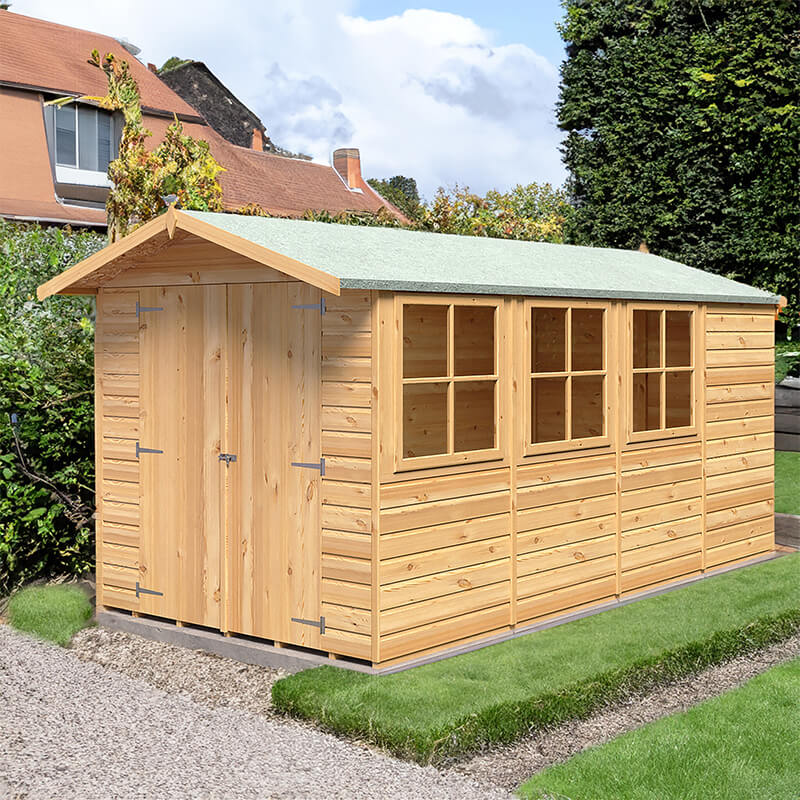


There is also a practical side. Wooden sheds are often chosen because they can be specified with different finishes, cladding styles and roof shapes, which gives more choice when matching the building to the garden. A 14×7 shed in wood can feel more custom in character, even when it is still a standard category item. It is the kind of structure that can look like it belongs there, instead of feeling dropped in for utility alone.
Vertical overlap, shiplap and tongue-and-groove: the cladding question
One of the main differences between wooden sheds comes down to the cladding style. This affects the look, the wall feel and how the shed behaves as a building. In a 14×7 category, cladding matters because the shed is large enough for wall quality to make a real difference in day-to-day use.
- Overlap cladding has boards fixed so each one overlaps the next. It gives a more simple, functional finish and is often found on budget-conscious sheds.
- Shiplap cladding uses rebated boards that fit neatly together. It usually gives a tidier appearance and a more refined wall profile.
- Tongue-and-groove cladding interlocks the boards for a tighter-feeling wall construction. It is often chosen where buyers want a more solid, structured shed.
In a 14×7 size, the cladding choice can influence how the interior feels. If you want a space that feels better organised and a bit more finished, tongue-and-groove and shiplap are the styles people often compare. Overlap still has its place, especially where the aim is simple storage and the priority is keeping costs sensible. It is less about fashion and more about what kind of shed you actually need.
Roof styles that change both look and usable space
The roof shape can make a surprising difference in a 14×7 wooden shed, not only in appearance but in how the interior feels. Because the shed is long, the roof profile can either add height and presence or keep the building lower and more tucked in.
- Appex roofs create a classic pitched shape and often give a more traditional shed look. They can also help the interior feel less flat and boxy.
- Pent roofs slope in one direction and suit a more modern or compact design. They can work neatly against a boundary wall or under a lower line of sight.
- Reverse apex designs place the ridge running across the width, which may affect where the doors and interior headroom are best used.
For a shed this size, the roof style can affect what you place inside and where you stand most often. A pent roof can be handy if you want the shed to sit lower in the garden and look a bit cleaner from neighbouring plots. A pitched roof often feels more familiar and can make the building seem less like a box. The right choice usually comes down to space, style and how the shed sits in relation to the rest of the garden, not just looks on a page.
Single doors, double doors and access that suits the job
Access is one of those things people sometimes under-estimate until the shed arrives and the mower will not turn comfortably through the opening. In wooden sheds 14×7, door style matters because the internal length gives you storage options, but only if getting things in and out is easy enough.
- Single doors can suit a shed mainly used for smaller garden tools, boxes and hand items.
- Double doors make loading bulkier items easier, which is useful for bikes, larger mowers or wider storage shelves.
- Side doors, where available, can improve access if the front faces a path or if you want the main opening away from the most visible part of the garden.
In a 14×7 layout, double doors often make the shed more flexible because the long interior invites larger items and a wider opening helps avoid awkward manoeuvring. If you are planning to use the shed as a small workshop, the door position can matter even more. A good access point means the space feels usable, not just technically large enough.
What fits inside a 14×7 shed without it feeling stuffed
This size works because it can be split into zones. One end can hold bigger equipment, the middle can stay open for movement, and the other side can take shelves, hooks or stacked storage. That layout is one reason 14×7 wooden sheds are often chosen over smaller versions. There is room to arrange things with a bit of logic instead of piling everything up in one corner.
- Garden machinery such as mowers, strimmers and hedge trimmers
- Bikes, depending on how many and what type
- Seasonal storage like cushions, pots, parasols and outdoor decorations
- Workshop bits including hand tools, paint tins and small benches
- General household overflow if the aim is freeing space indoors
The advantage here is not just capacity but organisation potential. A 14×7 shed can be a proper storage system rather than a dumping ground. That can be a major difference for people who have grown tired of constantly shifting things around just to reach the item at the back.
When a 14×7 shed feels better than a smaller or larger one
Buyers often compare 14×7 sheds with more common small formats like 8×6 or 10×8, and the difference is easy to understand once you think about use. A smaller shed may fit the garden more easily, but it can feel tight once a few bigger items go in. A larger shed gives more room, but it can be harder to place, heavier in visual impact and perhaps more than you need if the storage list is limited.
14×7 is a useful compromise when the garden needs a dedicated building but there is still a desire to leave outdoor space open. It is also long enough to create a clear route through the shed, which helps with practicality. If the garden narrows towards the end, the rectangular footprint can still work better than a square shed that leaves odd corners or blocks a seating area.
This size also suits people who want to keep some separation between stored items. For example, gardening tools at one end, leisure gear at the other, and the middle kept free. That kind of zoning is harder in very small sheds, where everything ends up stacked together and access gets annoying pretty quickly.
Frame feel, panel build and what that means on the day
Not every wooden shed feels the same once you stand in front of it. The way the frame and panels are put together can affect how sturdy it seems and how much confidence you have in it as a proper garden building. In the 14×7 category, this can be more noticeable because the structure is long enough for build quality to show up in the look of the walls and roof line.
- Framed panel sheds can feel straightforward to assemble and are common in many garden ranges.
- Sturdier timber builds may suit buyers who want a more substantial storage space.
- Panelled sections can also influence how easy it is to position the shed if access to the garden is a bit awkward.
For a buyer, the key point is to compare how the shed is built as well as how it looks. The same size can feel quite different depending on panel thickness, join style and door construction. If you are storing heavier items or want the shed to do more than basic storage, that build feel is worth checking carefully rather than just focusing on the outside dimensions.
Windows, light and the difference a brighter interior makes
Another detail that can shift the usefulness of a 14×7 shed is the presence of windows. Some buyers want them, others prefer a plain, enclosed feel. There is no single right answer, but the choice does change how the space works.
Windows can make the interior easier to use if you are often in and out with tools or if the shed doubles as a small work area. Daylight helps when you are sorting items, checking labels or finding something in a hurry. On the other hand, a windowless shed may be preferred if privacy matters or if the space is mainly for storage and you want a more closed-off look.
In a 14×7 size, windows can help the shed feel less tunnel-like along the length. That can be handy if you plan to stand inside for longer periods. But if the shed is going in a visible spot and security is a consideration, some buyers may prefer fewer openings. It is a simple choice, yet it affects the whole feel of the shed more than people expect.
Practical buying points that make a difference later
When choosing from wooden sheds 14×7, the little details can be what separates a decent purchase from one that keeps annoying you. It helps to think through the placement and the intended load inside, not just the exterior style. A shed that suits your actual use is usually the one that stays helpful over the years rather than becoming a clutter trap.
- Check the door width if you expect to store bikes, a wheelbarrow or larger machinery.
- Look at the roof shape in relation to fences, trees and nearby walls.
- Think about the interior length and whether you want zones for different items.
- Choose cladding style based on the balance of look, structure and budget.
- Consider window placement if you want natural light without giving up too much privacy.
It also helps to picture how the shed will sit in the garden from different angles. A 14×7 shed is substantial enough to become part of the garden layout, so the shape and finish should feel in step with the rest of the space. That is often where timber has the edge, because it looks more at home alongside planting and boundary lines than a harder-looking material might.
Why this category keeps attracting practical buyers
The appeal of wooden sheds 14×7 is that they answer a very particular need: enough space to be genuinely useful, but not so much that the shed turns into a project in itself. They can store the awkward things that never seem to fit anywhere else, while still leaving the garden with a sense of openness. For many buyers, that balance is the real selling point.
Different sub-types let you choose the version that suits your space and how you use it. A more traditional apex roof with double doors may suit a mixed storage setup. A pent roof with a cleaner profile may be better where the shed has to sit lower or closer to a boundary. Shiplap and tongue-and-groove options are often picked where the buyer wants the shed to feel more solid and composed, while overlap keeps things simpler.
If you are after a timber shed that does more than sit in the corner, this size has a lot going for it. It is a category that feels thought-through: long enough for tidy storage, flexible enough for several uses, and still compact enough to work in a realistic garden layout. That is often what people are really looking for, even if they start by searching only for the dimensions.
[Sassy_Social_Share]