
wooden sheds 12x9 - Best Deals in UK!
Showing 13–13 of 13 results

Wooden sheds 12×9 give you a roomy, timber-built garden structure for storage, hobby use and tidy outdoor organisation, with sizes and layouts that suit tools, bikes, potting, or a small workspace.
A 12×9 footprint that feels properly usable
A 12×9 wooden shed gives you a practical balance of width and depth, so the space does not feel cramped the moment you add shelving, a mower, a bike, or a workbench. In metric terms, it sits in that useful middle ground where you can still move around inside without the shed becoming a large building that dominates the garden. For many buyers, that is the real appeal: enough room to do something useful, but not so much that it takes over the plot.
The 12×9 layout also works well when you need zones. One side can be kept for garden tools and storage boxes, while the other side can hold a bench, seasonal items, or a compact DIY corner. That split is not always possible in smaller sheds, which is why this size is often chosen by people who are tired of stacking everything in one awkward pile.
What wooden sheds do differently from other materials
Compared with metal or resin buildings, a wooden shed has a more natural feel and tends to sit more comfortably in a planted garden. Timber has a softer look, so a 12×9 shed can appear less stark against fencing, borders, and lawn edges. That matters if the shed is visible from the house or patio, because the building becomes part of the garden scene rather than just a storage box.
Bestseller der Kategorie wooden sheds 12x9
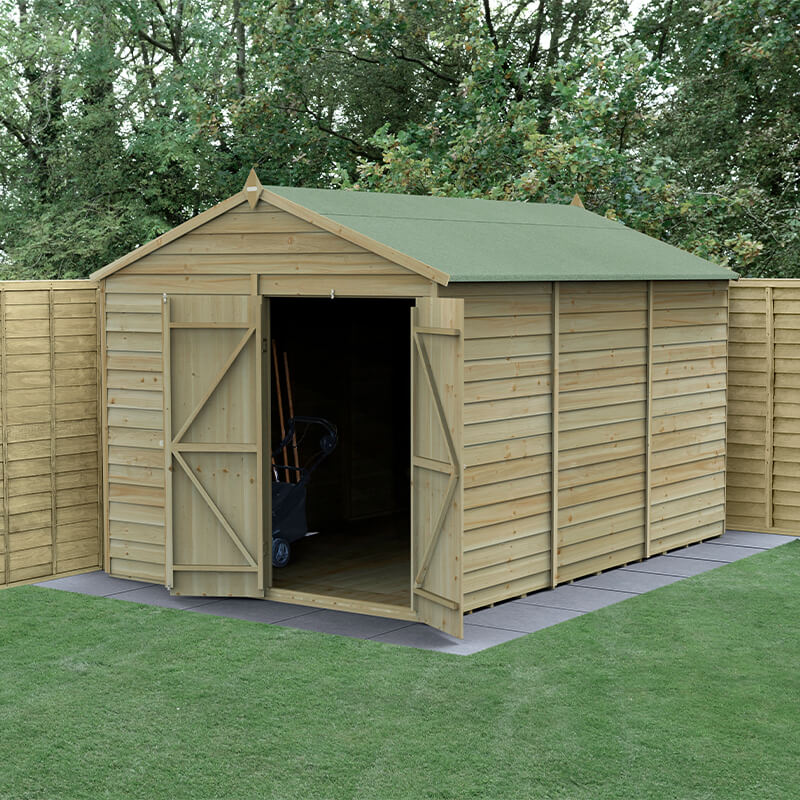
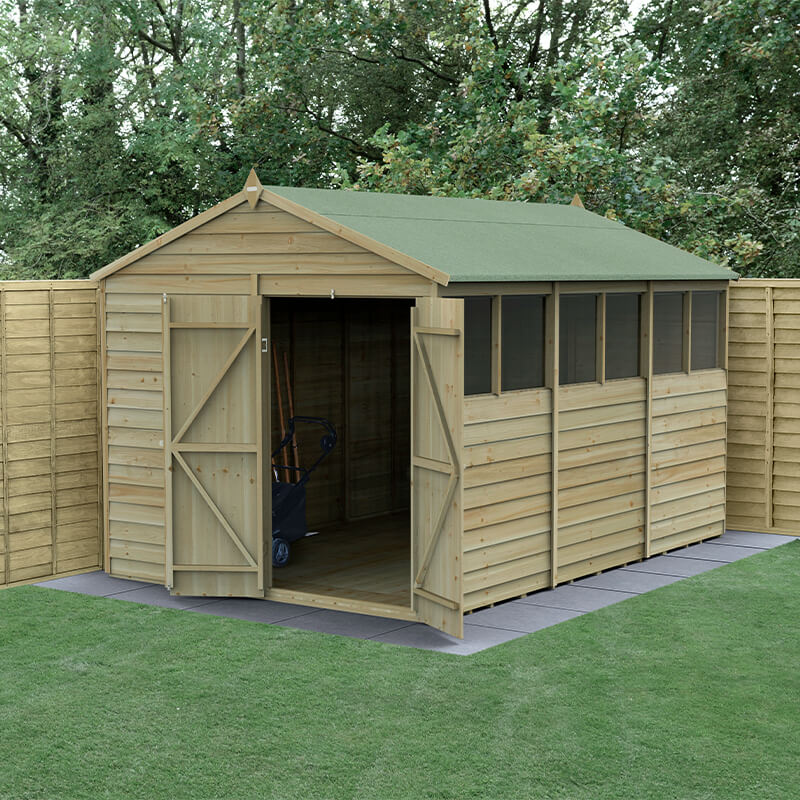
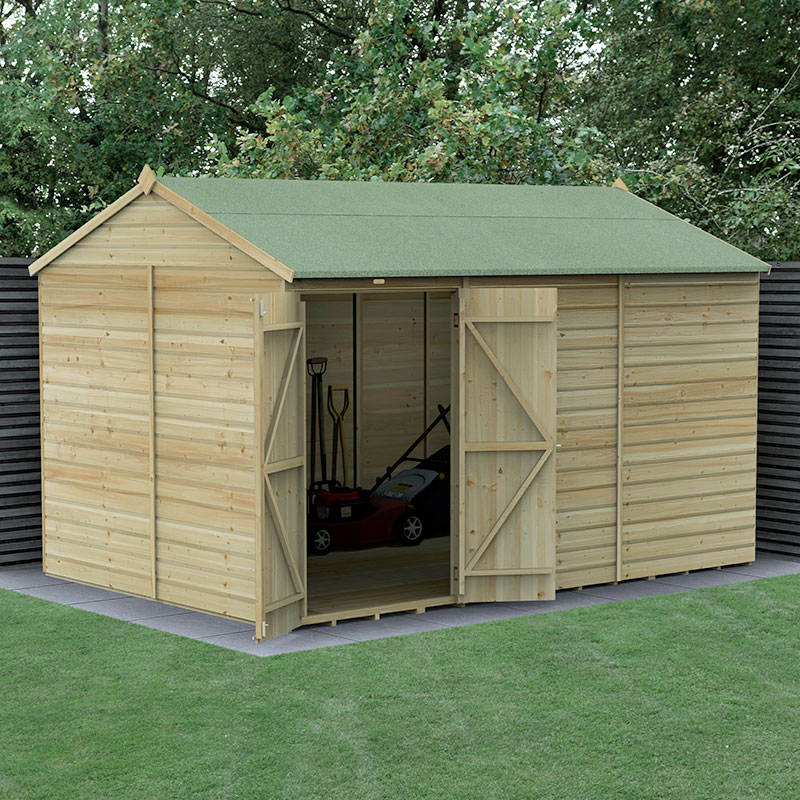
Wood also brings a sense of adaptability. Buyers often choose timber because it feels easier to work with when planning shelves, hooks, benches, or divisions inside. If the shed is being used for mixed storage, that flexibility is a real plus. A 12×9 timber shed can support a more personalised layout than many ready-made alternatives, and that difference is easy to feel once the space starts filling up.
Shapes that change how the shed works
Not every 12×9 wooden shed feels the same, even when the footprint is identical. The roof shape and wall profile change how the shed looks and how the inside is used. A buyer looking closely will usually compare the following forms:
- Aped roof sheds – the classic pitched style, with a central ridge and sloping sides.
- Reverse apex sheds – similar pitch, but the ridge runs across the front, which can suit access points and internal layout.
- Pent sheds – a single slope roof that gives a cleaner, more modern outline and often sits neatly against a fence or wall.
- Corner sheds – useful where garden space is shaped awkwardly, though the 12×9 size is usually better as a standard rectangular build.
- Loglap or shiplap sheds – not a shape as such, but a timber profile that affects how the walls look and perform.
In a 12×9 format, a pitched roof often feels generous because it helps the building look balanced rather than boxy. A pent roof can feel tidier if the shed is meant to sit lower against boundary lines. Choosing the shape is not only about style; it changes headroom, door placement, and how natural the shed feels when you step inside.
Why buyers pick 12×9 for more than basic storage
This size is often chosen by people who have moved beyond the “just put the lawnmower in it” stage. A 12×9 shed can hold garden furniture cushions, tools, composting accessories, hand tools, planters, sports kit, and still leave space to walk in properly. That is the difference between a shed that stores things and a shed that actually helps the garden run smoother.
For hobby use, the footprint is even more interesting. A 12×9 wooden shed can support a narrow bench along one wall, with storage below and wall-mounted space above. Some buyers use this type of shed for potting, small repairs, bike storage, or seasonal sorting. The timber construction gives it a slightly more room-like feel, which can make the building easier to use for regular tasks, not just occasional visits.
Door styles that make a real difference
The doors on a wooden shed 12×9 affect what can actually get inside. This sounds obvious, but it is often the detail people regret not checking closely enough. Wider double doors make moving bulky items easier, especially if you are storing a ride-on mower, larger shelving units, garden furniture, or more than one bike. A single-door layout can still work well, but it may feel tighter when you are carrying larger items in and out.
Door position matters too. On a 12×9 shed, side doors can change the way the internal layout works, especially if the building is being used as a storage-and-work area. End doors tend to suit straightforward access, while side openings can be helpful when the shed is against a boundary or when the interior is arranged in sections. It is a small detail, but it can shape the whole daily experience of the shed.
Wall construction and timber profiles worth noticing
When people compare wooden sheds, they often look at the size first and the timber profile second, but the wall style matters a lot. Shiplap cladding gives a neat, interlocking finish that tends to look orderly and well put together. Overlap cladding has a simpler appearance and can feel more traditional, while tongue and groove often suggests a more substantial build with a cleaner finish.
For a 12×9 shed, the cladding can affect how the building feels internally as well. A more solid-looking wall profile often suits buyers who want the shed to act as a proper garden room for storage or light tasks, not just a place to throw things. There is also a visual difference: shiplap looks a bit crisper, overlap can look more rustic, and tongue and groove usually sits somewhere in between, depending on the overall design.
Storage layouts that make the size work harder
A 12×9 shed gives enough room for different storage patterns, and that is where the appeal really starts. One common layout is long-wall storage, where shelves, hooks, and tall items sit along the longer 12-foot sides, leaving the centre clear. Another is zoned storage, which divides the shed into a tool side and a bulk-storage side. Both approaches work, but they suit different habits.
If the shed is mainly for gardening, a vertical layout can be very effective. Spades, rakes, brushes, and foldable items can hang on the wall, while sacks, pots, and cases sit below. If the shed is being used for mixed leisure and storage, buyers often prefer a more open feel with fewer fixed obstructions. The 12×9 size gives enough room to choose, which is one reason this category appeals to people who do not want to feel boxed in.
Key advantages buyers usually look for
The strength of a wooden sheds 12×9 category is that it covers several needs at once. It is big enough for substantial storage, but still manageable in a typical garden setting. Timber gives a natural appearance, and the size offers better layout options than smaller sheds. That combination makes the shed feel more useful over the long term, because the space can shift as your needs change.
- Room for bulky items without losing all floor space.
- Flexible internal layout for shelving, hanging storage, or a small bench.
- Better visual fit in gardens where appearance matters as much as function.
- Useful middle size for buyers who have outgrown compact sheds.
- Timber character that sits naturally with planting, fencing and lawn areas.
Another subtle advantage is that a 12×9 shed can reduce clutter elsewhere in the garden. Items that would normally be left under tarpaulins, stacked by the fence, or tucked into a garage corner can be stored more neatly. The garden starts to feel more organised, even if the building itself is not the main feature of the plot.
Differences between compact, mid-size and larger timber sheds
Compared with smaller sheds, a 12×9 timber shed gives you breathing room. You can step inside, turn around, and still have some sense of order. Smaller models often become wall-to-wall storage very quickly, which is fine for a few tools but less ideal when items start accumulating over time. This size helps avoid that all-at-once clutter effect.
Compared with much larger sheds, though, 12×9 stays more grounded. It is less likely to overpower the garden visually, and it often suits domestic use better than a building that feels half workshop, half outbuilding. That middle position is important. A buyer who wants practical storage with a bit of extra scope often finds 12×9 easier to justify than jumping straight to a larger footprint.
Placement tips that are worth thinking about before buying
Although this category is about the shed itself, placement still changes how the size feels. A 12×9 wooden shed can look balanced when it sits against a fence line or in a rear corner, especially if the roof shape echoes the lines of nearby structures. A pent roof often works neatly in tighter or lower boundary spaces, while a pitched roof can feel more central and self-contained.
It is also worth thinking about how the doors will open in relation to paths, borders, and other garden items. A shed that technically fits can still be awkward if access is blocked by a wheelbarrow route or if the opening faces a planting bed. Buyers usually notice this only after the shed is in place, so it helps to picture how the building will be used on an actual busy day, not just on paper.
What makes a 12×9 shed feel worth choosing
People tend to choose a wooden shed 12×9 when they want more than storage, but not a building that feels overdone. It is a size that can handle real garden life: tools, bikes, seasonal pieces, spare pots, outdoor cushions, and the odds and ends that build up through the year. The timber finish adds warmth, while the footprint gives enough freedom to set up the inside in a sensible way.
If you are comparing options, the most useful question is usually not “How big is it?” but “How will I use the space?” A 12×9 shed answers that question in a fairly versatile way. It can be simple or more structured, traditional or more contemporary, storage-led or hobby-led. That range is what makes the category so appealing to buyers who want a shed that feels like part of the garden, not just an afterthought.
Small details that help the right choice stand out
When you browse wooden sheds 12×9, the finer details often matter more than people first expect. Door width, roof slope, wall profile, and internal headroom all affect how the shed behaves in daily use. Even the way the shape sits in the garden can change whether it feels neat or bulky. In a category like this, the best choice is usually the one that matches your storage habits without forcing you to rearrange everything later.
It is also worth noticing how the building presents itself from the outside. A timber shed with a clear roofline and practical proportions tends to look settled in the garden, not awkwardly added on. For many buyers, that is part of the appeal: a structure that does its job, looks sensible, and gives the garden a more ordered feel without making a fuss about it.
[Sassy_Social_Share]