
wooden sheds 100 sq ft / 9 m² - Best Deals in UK!
Showing 1–12 of 14 results
-
19% OFF: 13’2 x 6’6 Shire Jersey Double Door Wooden Garden Shed (4.33m x 2.2m) £1,074.9919%

-
17% OFF: 12′ x 8′ Traditional Standard Shiplap Pent Wooden Garden Shed (3.66m x 2.44m) £1,659.0017%

-
17% OFF: 12′ x 8′ Traditional Shiplap Pent Security Wooden Garden Shed (3.66m x 2.44m) £1,949.0017%

-
15% OFF: 12′ x 8′ Shire Bison Heavy Duty Double Door Wooden Workshop (3.71m x 2.56m) £1,739.0015%

-
13% OFF: 12′ x 8′ Traditional Shiplap Apex Security Wooden Garden Shed (3.66m x 2.44m) £1,909.0013%

-
12% OFF: 10′ x 10′ Shire Premium Security Apex Wooden Garden Shed (2.99m x 2.99m) £1,599.0012%

-
8% OFF: 11′ x 9′ Palram Canopia Yukon Premium Dark Grey Skylight Plastic Shed (3.32m x 2.71m) £1,343.998%

-
8% OFF: 11′ x 9′ Palram Canopia Yukon Premium Dark Grey Skylight Plastic Shed with WPC Floor (3.3m x 2.7m) £1,856.998%

-
6% OFF: 13’2 x 6’6 Shire Jersey Double Door Wooden Garden Shed (4.33m x 2.2m) £1,249.006%

-
6% OFF: 13’2 x 6’6 Shire Jersey Double Door Wooden Garden Shed (4.33m x 2.2m) £1,248.996%
-
11′ x 9′ Palram Canopia Yukon Premium Dark Grey Skylight Plastic Shed (3.32m x 2.71m) £1,389.005%
-
12′ x 8′ Traditional Shiplap Dutch Barn Heavy Duty Wooden Garden Shed (3.66m x 2.44m) £2,379.004%

Wooden sheds 100 sq ft / 9 m² give you compact storage, workshop space and tidy garden organisation, with timber styles, roof shapes and layouts to suit narrow plots, corners and everyday use.
A smart size for real garden jobs
A 100 sq ft / 9 m² wooden shed sits in that useful middle ground where a garden building feels practical without taking over the plot. It is large enough for a mower, long-handled tools, bikes, folding furniture, logs or a small hobby bench, yet still compact enough for many urban and suburban gardens. That balance is part of the appeal: you get proper usable space, not just a box at the end of the lawn.
For buyers comparing sizes, the key difference is not only footprint but how the interior can be divided. At this size, shelves, hooks and a clear centre aisle start to make sense. You can have one side for storage and the other for working, or keep one wall free for taller items such as spades, rakes and ladders. It feels more organised than a tiny store, but less demanding than a full garden room.
Timber character that suits the garden
Wooden sheds bring a softer look than metal or plastic alternatives. Timber sits naturally with planting, fencing and stonework, and the surface can be painted, stained or left in a more traditional finish depending on the garden style. The material also gives the shed a warmer interior feel, which matters if you plan to spend time inside sorting gear or using a bench.
Bestseller der Kategorie wooden sheds 100 sq ft / 9 m²
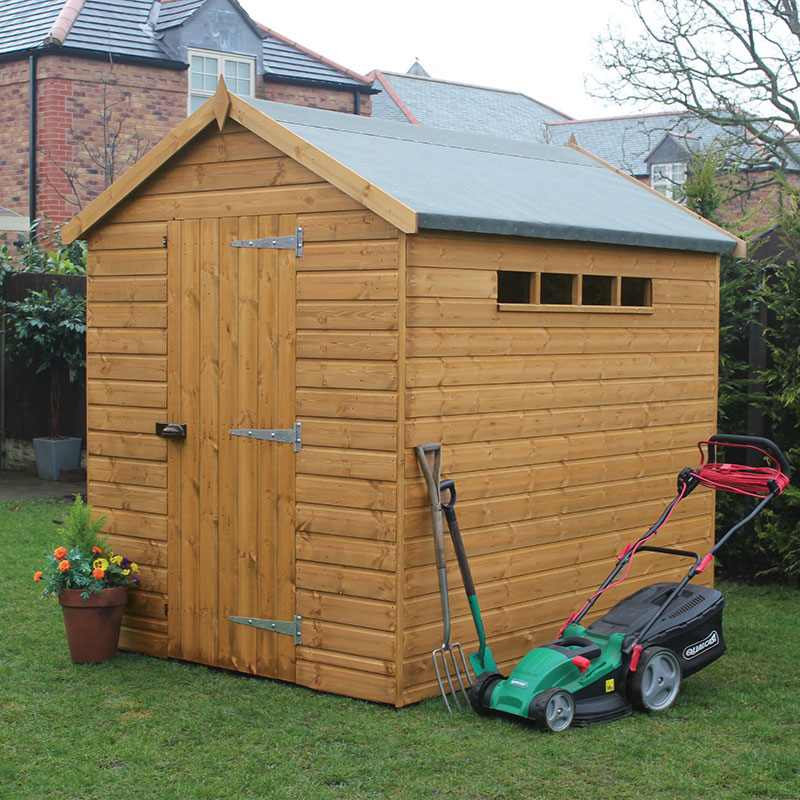
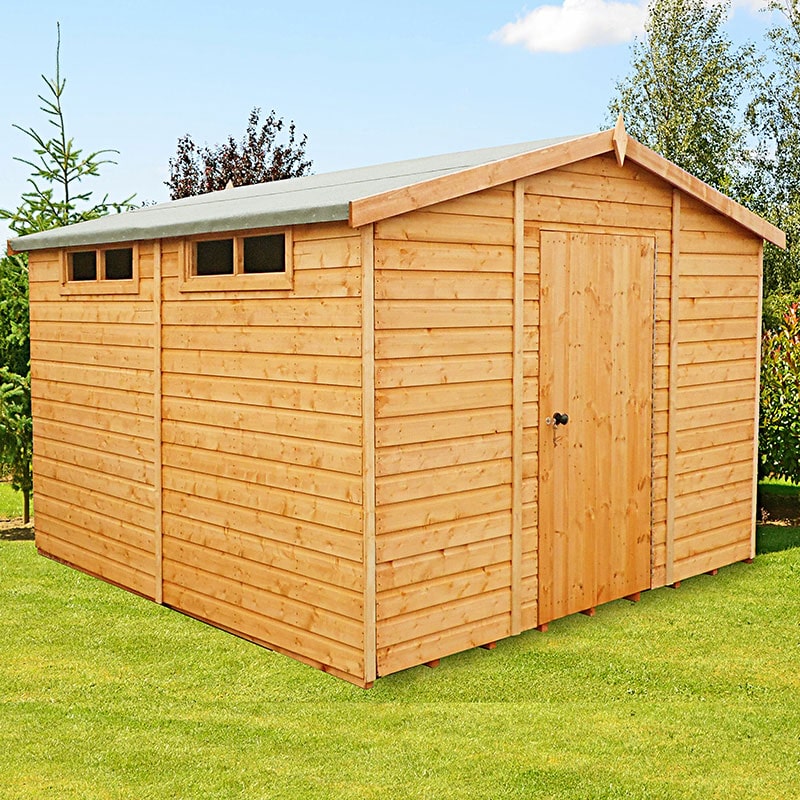
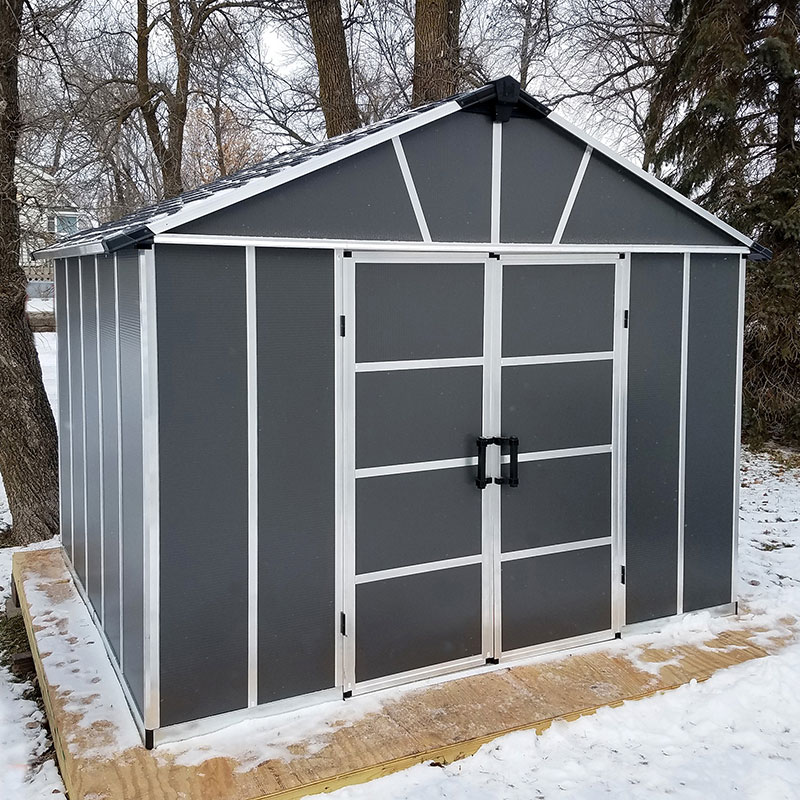
There are also visual differences that matter when choosing. A vertical-board shed often looks neat and country-style, while shiplap cladding gives a smoother, more refined appearance. Feather edge boards create a more rustic feel and can suit older properties or wilder garden designs. So the choice is not just about storage; it also affects how the building sits in the overall landscape.
Understated space, properly useful inside
A 100 sq ft layout usually gives enough room for more than one purpose, which is why many buyers like it. You might use the front section for daily-access items and the back for seasonal storage. Or you may want a clear open area for potting, DIY or hobby work, with wall-mounted storage keeping the floor open. The space feels manageable, not sprawling, and that can actually make it easier to keep organised.
With a timber shed at this size, the internal shape matters a lot. A square layout gives flexible wall space on all sides. A rectangular footprint often suits long tools, shelves and a worktop better. If the garden is tight, a side-door version can make access easier without needing a large swing space in front. Those details sound small, but they can change how usable the shed feels day to day.
Different forms, different ways of using the same footprint
There is no single style of wooden shed 100 sq ft / 9 m². Buyers often choose between several forms depending on where it will sit and how it will be used:
- Rectangular sheds – handy for linear storage, workbenches and long-handled tools.
- Square sheds – useful when you want a balanced interior with more flexible placement.
- Corner-style designs – a good fit where garden space is awkward or you want to use a boundary angle.
- Potting-shed style layouts – often chosen when a brighter working area is needed, with a more workshop-like feel.
- Lean-to or attached forms – suited to running a shed along a fence or wall to make use of narrow spaces.
These forms do not change the footprint dramatically, but they do change how the shed behaves in the garden. A corner design can free up lawn space. A longer rectangle can make item sorting much easier. A more square plan can feel better if you want access from the middle and storage all round the walls.
Roof shapes that change the whole feel
Roof style is one of the clearest differences between wooden sheds in this size range. A pent roof gives a clean sloping line and often works well when placed against a fence or boundary. It can also suit modern gardens where a simple profile looks right. A apex roof gives that familiar pitched shape, with a higher central point and a more traditional appearance. It often feels more spacious inside, especially if you want to stand and move around without the ceiling feeling too low.
There are also subtler differences. A higher roof pitch can make the building feel less compressed. A lower roof can be more discreet if the shed needs to sit beneath boundary restrictions or beside taller planting. The choice is partly practical and partly visual, and at 100 sq ft those decisions are worth taking seriously because the shed is large enough to become a noticeable part of the garden.
Cladding styles that alter the look and the build
Timber cladding is not just a detail; it changes the character of the shed. Shiplap cladding gives a tighter, more finished appearance with boards that overlap cleanly. It tends to look tidy and is often chosen for a smarter garden setting. Overlap cladding has a more straightforward, rustic appearance and can be a common choice where budget and simplicity matter. Tongue and groove panels are often picked for a more solid, joinery-like feel.
The difference is also about how the shed looks once it is in place. A clean-boarded shed can sit well next to contemporary paving or a neat lawn. A more textured board style can blend into a planting-heavy space. For some buyers, the cladding is the deciding factor because it changes whether the shed feels like storage, a workshop or a small garden building with presence.
Why this size often feels easier to buy
One reason people look at 100 sq ft / 9 m² sheds is that the size gives enough room to solve real storage problems without moving into oversized building territory. You can clear clutter from the garage, keep tools out of the weather, and create a more deliberate place for garden kit. That can make the whole outdoor space feel calmer, not because the shed is decorative, but because it gives everything a proper home.
It also helps with flexibility. If your needs change, the same shed can move from pure storage to a mix of storage and activity space. For example, a family may start with bikes and gardening tools, then later use part of it for a bench, seed trays or outdoor projects. That adaptability is part of the value, especially when you do not want to commit to something much larger.
Storage setups that make the most of every wall
At this footprint, the best storage ideas are usually the ones that keep the floor clear. Wall-hung tools, high shelves and shallow racks are often more useful than bulky units that eat into the centre of the shed. A 100 sq ft timber shed can also take mixed storage zones quite well: one wall for long tools, one side for boxes, one section for seasonal items and a central area left open.
Because the space is limited in a good way, it encourages proper sorting. Instead of piling everything in one corner, you can organise by height and use. Everyday tools stay near the door, awkward items go to the back, and lighter goods can sit above eye level. That approach makes the shed feel bigger than it is, though of course it still needs a bit of planning.
Door positions and access that matter more than you think
Door style can change the day-to-day experience quite a lot. A single door may suit a simpler storage shed and use less frontage space. A double door is often better if you need to move bikes, mowers or larger items in and out without turning them sideways every time. Side doors can help when the shed sits in a narrow run between boundaries, and they can make the internal layout more efficient by freeing up the front wall.
For buyers with a fixed route around the garden, door placement is worth checking against the path, gate and patio. It sounds obvious, but a shed that opens into the wrong direction can become awkward very quickly. A good access point is one of those details that quietly makes a shed feel right from the start.
Wooden versus other materials, in practical terms
People often compare timber with plastic or metal, and the differences are fairly clear at this size. Wooden sheds usually offer more character and a warmer, more natural presence. They often feel less severe in a garden and can be easier to match with fences, pergolas or outdoor seating areas. Metal sheds can be neat and functional, but they usually have a harder visual line. Plastic sheds can be low fuss, but they may not feel as integrated in a planted space.
Another point is how the building is used visually. A timber shed can look like part of the garden design rather than something added only for storage. That may matter if the shed will be visible from the house, patio or neighbour’s window. In a 100 sq ft size, the building is substantial enough to shape the garden, so material choice carries real weight.
Practical tips before you choose
Before buying, think about the items you actually want to store, not just the rough size. A shed can be 100 sq ft on paper and still feel awkward if the internal shape does not suit your gear. Measuring the tallest, longest and widest items first saves a lot of second-guessing later. It also helps to consider whether you want a clear walkway or whether everything can be arranged around the edges.
It is also sensible to look at the relationship between footprint and headroom. A shed that is technically the right size can still feel cramped if the roof shape is too low for standing tasks. If you plan to use it for anything more than storage, that extra sense of space really matters. For many buyers, that is the point where a wooden shed starts feeling more like a useful garden building and less like a locked box.
What makes buyers come back to timber
There is a reason wooden sheds 100 sq ft / 9 m² keep being chosen. The size works. The material feels at home in the garden. The design can lean traditional or modern. And the interior can be set up in a way that suits storage, hobbies or mixed use without wasting space. It is a straightforward category, but not a boring one.
For anyone wanting a shed that does more than hide clutter, this size gives a good middle path. It has enough presence to be useful, enough flexibility to be arranged sensibly, and enough timber character to feel like part of the outdoor space rather than an afterthought. That combination is what makes these sheds such a strong option for many gardens.
[Sassy_Social_Share]