
wooden gazebos 13x12 - Best Deals in UK!
Showing all 2 results
-
27% OFF: 13’x12′ (4×3.5m) Luxury Wooden Furnished Garden Gazebo with Traditional Timber Roof – Seats up to 15 people £8,069.9927%

-
22% OFF: 13’x12′ (4×3.5m) Luxury Wooden Furnished Garden Gazebo with New England Cedar Roof – Seats up to 15 people £9,779.9922%

Wooden gazebos 13×12 bring a proper sense of structure to a garden, with enough room for seating, dining, and shelter. Explore shapes, styles, timber details, and practical buying points.
Why the 13×12 size feels just right
A 13×12 wooden gazebo sits in that useful middle ground where a garden feature feels established without taking over the plot. The footprint gives you a clear outdoor room, not just a small corner shelter, so it works well for people who want a place to eat, sit with guests, or set up a shaded spot that feels more permanent than a parasol. The difference between 13×12 and smaller gazebos is easy to notice: there is more freedom with furniture placement, better circulation around the edges, and a less cramped feel when several people are inside at once.
That extra bit of space also makes the category flexible. Some buyers want a garden dining area, others want a relaxed seating zone, and some are looking for a timber structure that can act as a focal point in a larger lawn or patio layout. In a 13×12 format, the gazebo does not just fill space; it helps define it. That can be useful when the rest of the garden is open and you want one part to feel anchored.
Timber character that changes the whole look
The appeal of wooden gazebos is not only the size, but the material itself. Timber brings warmth, texture, and a more natural finish than metal or plastic frames. A wooden structure can feel softer in a planted setting, and it usually sits more comfortably against fencing, decking, gravel, or lawn. If your garden already has raised beds, trees, or mixed planting, the grain and colour of wood tend to sit in the scene without looking too sharp or out of place.
Bestseller der Kategorie wooden gazebos 13x12
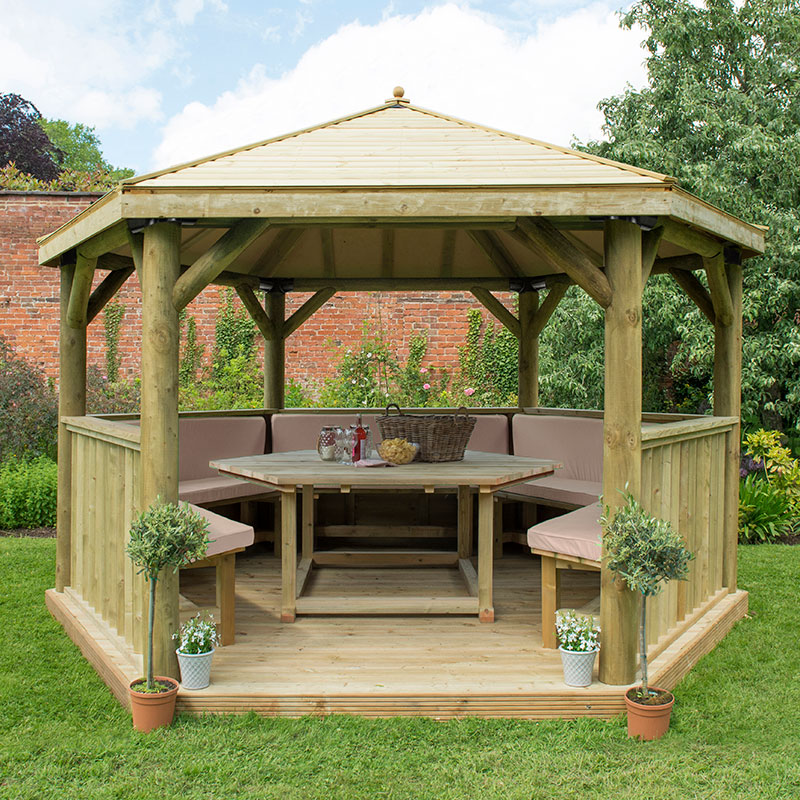
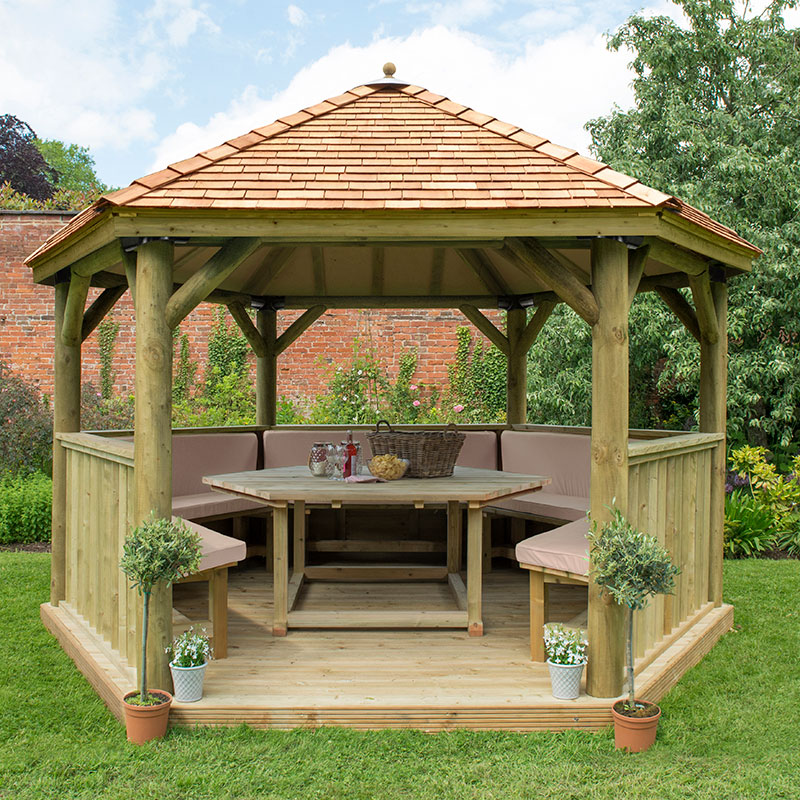
There are also visible differences in the way wooden gazebos are built and presented. Some have a more rustic feel with chunkier posts and exposed joinery, while others lean towards a cleaner, flatter profile with straighter lines and a neater roof shape. These details matter because they change how the gazebo reads from a distance. A robust frame gives a more solid, traditional look; a lighter one feels a bit more open and architectural.
Flat roof, pitched roof, or open side: shape changes the use
Within the 13×12 wooden gazebo category, shape is one of the biggest differences to think about. A pitched roof gazebo usually gives a more classic garden-build look, with a defined top line and a sense of height in the centre. That can help the structure feel airy, especially if you want room for tall chairs, a dining set, or hanging lighting. A pitched form also tends to look more formal, which suits gardens with a neat layout or a clear central feature.
A flat roof gazebo has a more modern feel and often appears slightly more compact from the outside, even when the usable area is the same. This style can suit contemporary terraces or gardens with straight-edged paving and minimal planting. Then there are gazebo designs that are more open-sided and pavilion-like, where the emphasis is on shelter and frame rather than enclosure. Those can be a good fit if you want to keep views through the garden and avoid blocking sightlines.
The shape also changes how the space is used. A higher roof can make a dining setup feel less enclosed, while a lower or straighter roof may create a more intimate seating spot. Neither is better in every case; it depends on whether you want the gazebo to feel like a statement feature or a quieter shelter.
Open sides, partial sides, and more enclosed layouts
Another point buyers often compare is how enclosed the gazebo feels. A fully open-sided wooden gazebo gives the most flexible layout. It is easy to move around, simpler to arrange furniture in, and can make a larger garden feel connected rather than split up. This is a strong choice if you want a sociable space that still feels outdoors.
A gazebo with partial side panels or framed sections offers a different kind of benefit. It can feel more defined and may create a little more visual shelter, without fully closing in the area. That matters if you want the structure to feel like a destination in the garden, not just a roofed platform. Partial sides also change the look of the gazebo, making it seem more architectural and less like a simple cover.
More enclosed wooden gazebos sit at the other end of the scale. These can be appealing when you want a stronger sense of privacy or a more room-like presence. In a 13×12 size, an enclosed layout can still feel usable without becoming boxy, but it is worth thinking carefully about how much openness you want. The key difference is whether you want light and views to remain part of the experience, or whether you are after a more protected setting.
Traditional timber style or cleaner modern lines
Wooden gazebos 13×12 can lean in different style directions, and that makes a real difference to how they fit into the rest of the garden. A traditional gazebo often has more visible framing, a recognisable roof shape, and a slightly more classic garden structure feel. This works well if your outdoor space already includes features such as stone paving, mature planting, brick edging, or more formal borders.
A contemporary gazebo in timber often uses straighter lines, simpler detailing, and a less decorative frame. The wood still gives warmth, but the overall impression is more restrained. That can suit newer houses, modern patios, and gardens where the goal is a tidy, well-proportioned outdoor living area. The difference is not just visual; it affects the mood of the space. Traditional timber can feel more relaxed and decorative, while a cleaner design can look sharper and more planned.
For buyers comparing options, this can be the deciding factor. If the gazebo should blend with a cottage-style garden, a more classic wooden form may sit better. If it needs to match angular furniture or a paved entertaining area, a pared-back timber frame may make more sense.
Square, rectangular, and slightly more unusual footprints
The 13×12 footprint itself matters because it is not a perfect square. That small difference in proportion often gives the gazebo a better feel for arranging furniture. A rectangular gazebo can make it easier to place a dining table lengthways, or to divide the space into one side for seating and another for movement. If your garden layout is also rectangular, the shape can look neat and intentional rather than forced.
A near-square structure, by contrast, tends to feel more balanced from every side. That can be useful if the gazebo will be viewed from multiple angles, or if you want a centred layout with chairs and a table in the middle. The 13×12 size gives you enough room to notice these differences in use. It is not just about floor area, but how that area behaves when furniture, people, and access points are all considered together.
Some buyers are drawn to shapes that are slightly less ordinary, such as corner placement or a layout that follows the garden edge. Even when the footprint is fixed, a gazebo can still feel different depending on how it is sited. That is part of the appeal of a 13×12 structure: it can read as a feature, but it can also sit into the garden without dominating it.
What the size can do for dining and seating
A major reason people choose wooden gazebos 13×12 is the usable room inside. The space often suits a garden dining set without making the whole structure feel full. It also gives enough width for lounge-style seating if the aim is more relaxed. This matters because some smaller gazebos look attractive in photos but become awkward once furniture is added. The 13×12 format reduces that problem by giving the layout more breathing room.
For dining, the benefit is straightforward: chairs can be pulled out more easily, and people can move around the table without feeling boxed in. For seating, the extra depth allows a more natural arrangement, with room for a sofa-style set-up or a mixture of benches and chairs. A wooden gazebo in this size can also support a more layered look, where the furniture, floor surface, and frame all work together rather than feeling squeezed.
If your aim is to create a space that feels ready for use rather than just decorative, this size is often a practical choice. It offers the sort of room where a garden feature starts to feel like a proper part of the home.
Timber details that change the whole buying decision
When comparing wooden gazebos, it is worth looking closely at the timber details, because they affect both appearance and how the structure feels in the garden. Post thickness changes the visual weight of the gazebo. Thicker posts can make the structure feel more grounded and substantial, while slimmer posts create a lighter impression. The right choice depends on whether you want the gazebo to stand out or sit more quietly in the background.
Cross-bracing, roof edging, and the way corners are finished also matter. Some designs have a more visible frame, which gives a crafted look and helps the gazebo feel like a distinct timber feature. Others are simpler, with less visual interruption. That can be useful if the garden is already busy and you want the shelter to read as calm and uncluttered.
The finish of the wood is another practical point. Even without going into maintenance, the surface tone and texture affect the mood. A pale timber can brighten a shaded area, while a deeper finish can make the structure feel more rooted in the landscape. Buyers often overlook this and focus only on size, but the timber character can change the final result a lot.
Where a 13×12 gazebo tends to fit best
This size is especially useful for medium to larger gardens where a small shelter would disappear and a larger building would be too much. It can sit well on a patio, on a decked area, or on a level lawn section where a clear outdoor room is wanted. The footprint gives it enough presence to anchor a seating area, yet it is still manageable as part of a wider layout.
It also works well where a garden has more than one zone. For example, the gazebo can act as the social area, with planting elsewhere doing the softer visual work. Or it can sit as a focal point at the end of a path, giving the eye somewhere to settle. Because the structure is timber, it often feels less harsh than a built brick or stone feature, which helps if the garden should stay relaxed rather than formal.
In a more compact space, the 13×12 format needs careful placement, but it can still work if the rest of the garden is simple and open. The main difference is whether you want the gazebo to dominate the view or share attention with planting and hard landscaping.
Buying tips that help you choose with less guesswork
Before choosing a wooden gazebo 13×12, it helps to think in terms of use, shape, and visual balance. If you plan to dine inside it, check how the layout will work with chairs pulled back. If it is mainly for sitting, think about whether you prefer an open feel or a more sheltered frame. If the gazebo should act as a feature, consider the roof profile and how it will look from the house as well as from the garden path.
- Measure the siting area carefully, including space around the gazebo, not just the footprint itself.
- Compare roof shapes if you want a more classic or more modern look.
- Check the side openness so the structure matches how private or airy you want the space to feel.
- Think about furniture layout before choosing, especially for dining tables or corner seating.
- Match the timber style to the rest of the garden so the gazebo feels part of the scene.
What sets one wooden gazebo apart from another
Two gazebos can share the same 13×12 size and still feel quite different. One may have a more open, pavilion-style profile, while another has stronger framing and a more enclosed character. One might suit a neat patio, while another feels better in a planted setting or beside a lawn. The real distinction often lies in the combination of shape, openness, and timber detail rather than the size alone.
This is why buyers tend to compare more than just dimensions. A gazebo is a visual structure as much as a practical one. The best choice is usually the one that supports the way you actually use the garden, not just the one that looks good in isolation. A wooden gazebo 13×12 can do a lot: shade, define space, create a gathering point, and add a timber feature that feels connected to the rest of the outdoor area. When those elements line up, the gazebo becomes more than a cover. It becomes a proper part of the garden layout.
[Sassy_Social_Share]