
wooden garden storage 5 sq ft / 1 m² - Best Deals in UK!
Showing all 9 results
-
33% OFF: 3’6 x 2′ Forest Shiplap Pent Midi Wooden Garden Storage – Outdoor Patio Storage (1m x 0.55m) £179.9933%

-
28% OFF: 3’6 x 2′ Forest Shiplap Pent Midi Wooden Garden Storage – Outdoor Patio Storage (1m x 0.55m) £194.9928%
-
25% OFF: 3’6 x 2′ Forest Overlap Pent Midi Wooden Garden Storage – Outdoor Patio Storage (1m x 0.55m) £164.9925%

-
25% OFF: 3’6 x 2′ Forest Overlap Tall Pent Wooden Garden Storage Tool Store – Outdoor Patio Storage (1m x 0.55m) £170.9925%

-
24% OFF: 3’6 x 1’10 Forest Shiplap Tall Pent Wooden Garden Storage Tool Store – Outdoor Patio Storage (1m x 0.56m) £249.9924%

-
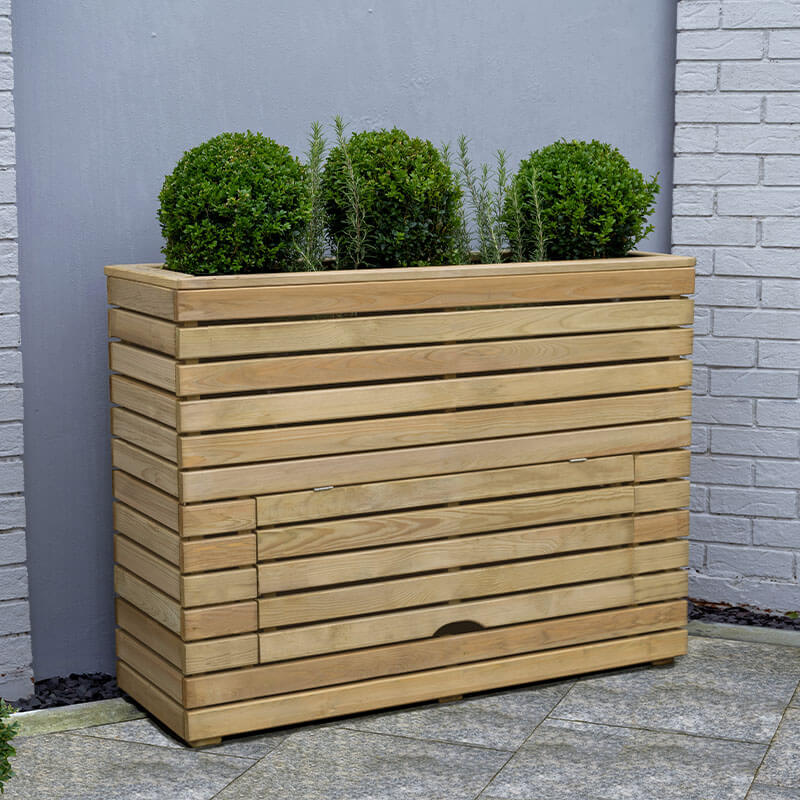
22% OFF: 3’11 x 1’4 Forest Linear Tall Wooden Garden Planter with Storage (1.2m x 0.4m) £232.9922%

-
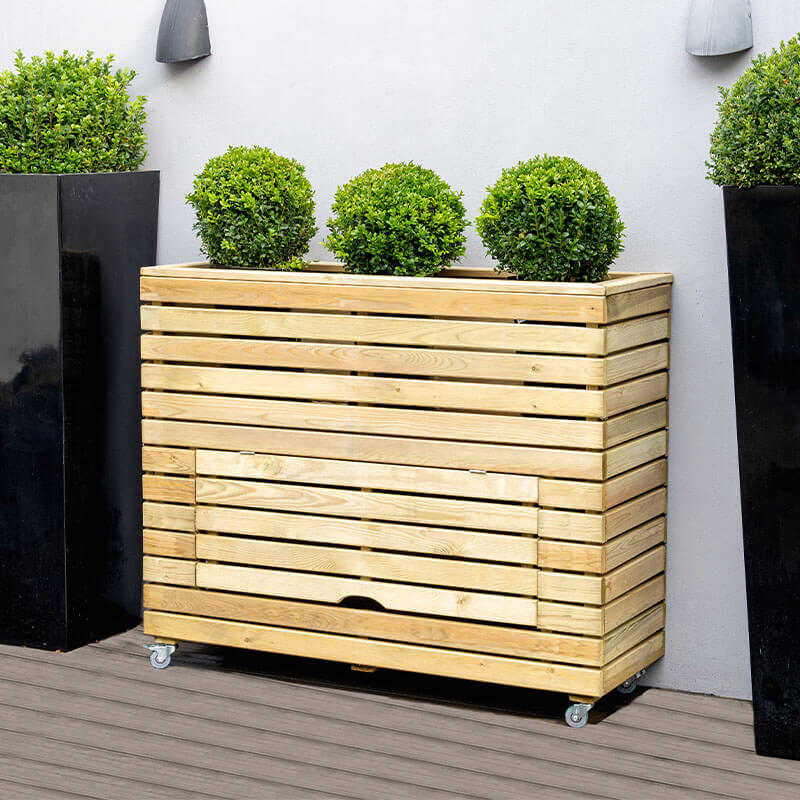
21% OFF: 3’11 x 1’4 Forest Linear Tall Wooden Garden Planter with Storage and Wheels (1.2m x 0.4m) £227.9921%
-
16% OFF: 2′ x 2′ Wooden Garden Storage Unit – Shire Garden Store 22 £174.9916%

-
5% OFF: 2′ x 2′ Wooden Garden Storage Unit – Shire Garden Store 22 £197.995%
Wooden garden storage 5 sq ft / 1 m² gives you a neat way to tuck away tools, plant food, hand trowels and small outdoor bits in a compact footprint that suits tight patios and smaller plots.
Small footprint, proper purpose
A 5 sq ft / 1 m² wooden garden storage unit is all about making a little space work harder. It is the sort of storage that fits where a larger shed simply would not: beside a fence, in a narrow side return, on a town garden patio, or tucked into a corner near the back door. The appeal is not only size. It is the balance between a natural timber look and practical everyday use. Wood feels more at home in a planting area than metal or plastic, and for many buyers that matters just as much as capacity.
This category is especially useful when you need a place for the things that are always getting in the way: secateurs, gloves, compost scoops, small pots, seed trays, twine, watering cans, bird food, and maybe a folding stool or two. A unit in this size range will not replace a full shed, but it can take the pressure off a garage, utility room, or kitchen cupboard. That is the point really: compact storage without losing the garden feel.
What 5 sq ft actually means in the garden
The measurement can look tiny on paper, yet it is often enough for the jobs that come up most often. In real terms, 1 m² is the kind of space that can hold a slim upright cabinet, a short horizontal chest, or a small bin-store style box, depending on the layout. The shape matters as much as the square footage. A deeper cabinet gives more standing storage, while a wider chest can be easier to open and better for flat items.
Bestseller der Kategorie wooden garden storage 5 sq ft / 1 m²

It helps to think about usable internal space rather than just the outside footprint. Door opening, shelf placement, roof shape, and wall thickness all affect how much can actually fit inside. Buyers sometimes compare only the footprint, but two units with the same base size can feel very different. One may suit tall sprayers and cane toppers, another may be better for hand tools and trays that stack neatly. That difference is worth paying attention to before choosing.
Cabinet, chest or bin-store? The main wooden forms
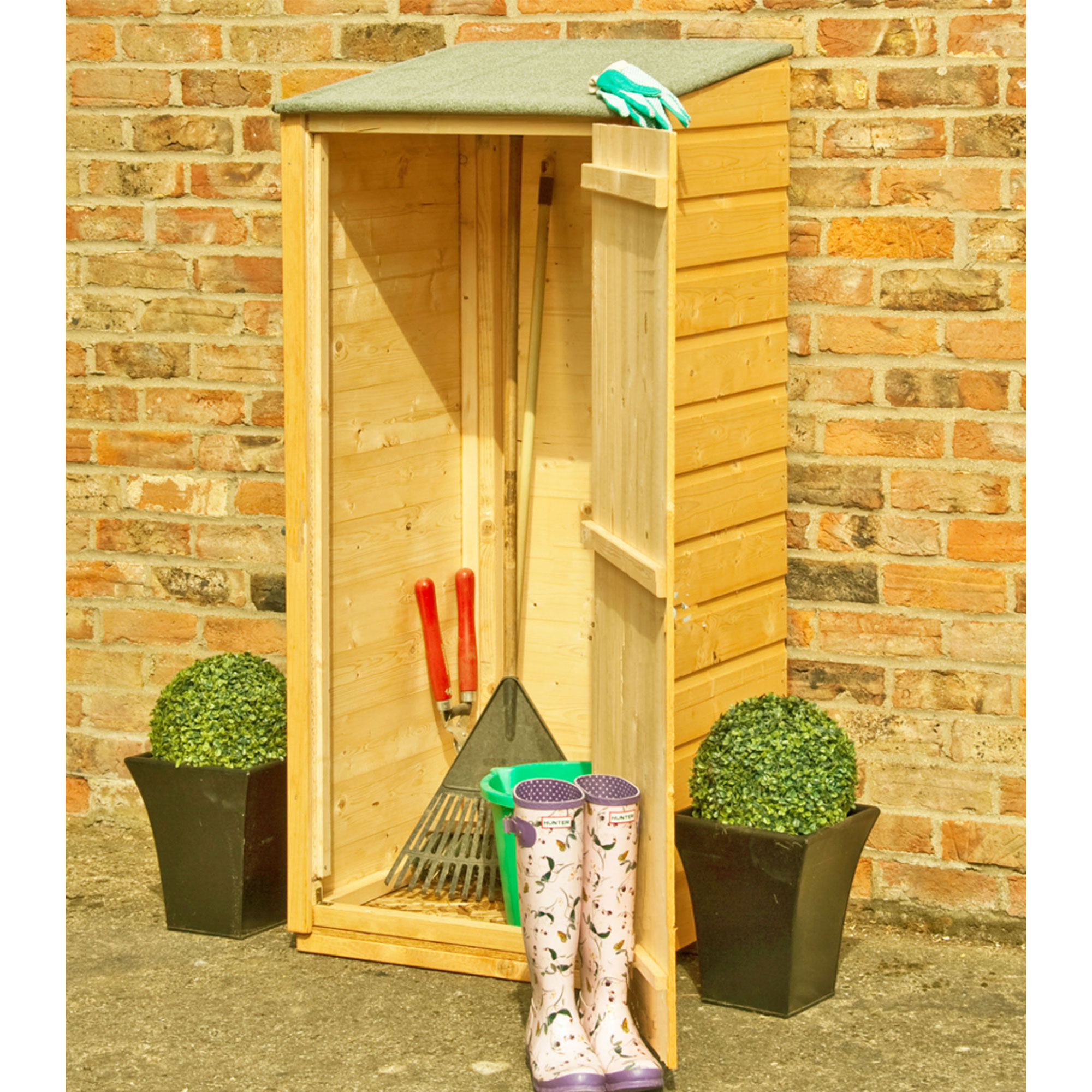
Within this compact category, a few shapes come up again and again, each with its own feel and use case. The upright cabinet is good when floor space is tight but height is available. It often suits long-handled tools better than a low box, and shelves can keep smaller items from disappearing into a pile. A horizontal storage chest is more like a low bench-sized box and is handy for bulkier things that do not need standing room. It can also double as a neat surface for pots or a tray of seedlings, depending on the design.
Then there is the bin-store style enclosure, which is really for keeping outdoor clutter out of sight in a tidy wooden wrapper. Some buyers use this style for a slim rubbish bin, others for bags of bark, soil, or pet supplies. The difference lies in access: bin-store designs usually open from the front or top in a way that is suited to one purpose, while cabinets and chests are broader in use. A buyer who wants more flexibility usually leans toward a cabinet or chest, while someone wanting a cleaner visual line may prefer the bin-store shape.
Another sub-type is the corner-fitting storage unit, which makes the most of awkward spaces. It may have a tapered shape or a footprint designed to sit snugly where two walls meet. This is not a flashy option, but it is useful if your garden has an odd leftover gap that you have never quite known what to do with. In compact gardens, those odd gaps are often the key.
Why timber changes the whole feel
Wood is often chosen for this category because it looks calm and settled among planting, paving and fencing. A wooden garden storage unit does not shout for attention in the same way as bright plastic or industrial metal. Instead, it tends to blend into the garden scene. For buyers who care about the overall view from the house, that can be a big part of the decision. It feels more like furniture for outside than just a box for stuff.
There is also a difference in how timber units tend to be described and bought. People often look for board style, slatted panels, or a more solid enclosed finish. Slatted designs allow a lighter visual effect and can suit a breezier garden style, while fully boarded versions feel more contained and may hide contents better. Some units have a more rustic finish, while others lean towards a cleaner, painted look. None of that changes the footprint, but it does change how the storage sits in the garden.
Different storage needs, same compact size
Buyers shopping for 5 sq ft storage are often trying to solve very different problems, even though the footprint is the same. One person wants somewhere for hand tools and plant labels. Another needs a safe spot for bags of feed, canes, and the hose nozzle. Someone else just wants to clear the patio of the random things that drift outside and never seem to return indoors. That is why it helps to look beyond the headline size and ask what the unit will actually hold.
- Tool-focused storage suits taller doors, internal hooks, and a narrow cabinet profile.
- Pot and tray storage works better in chest-style units with a lower, wider opening.
- General tidy-away storage is useful when the aim is to hide mixed items without a strict category.
- Utility storage is ideal for bags, accessories, watering kit, and seasonal bits that need quick access.
These sub-groups may overlap, of course. That is part of the charm, really. A small wooden unit can be quite a flexible thing if the interior is arranged well. The point is to match the form to the routine, not just the item list.
Sliding doors, top lifts and front access
Access style is one of the differences that matters most in practice. A front-opening cabinet gives a clear view of what is inside and works well when you want to reach items without lifting anything off the top. A top-lift chest can be simpler and suits larger awkward items, but it may not be as tidy for small pieces unless you add internal boxes or trays. Some units are designed around a pair of doors, which can make loading and unloading feel more straightforward in a narrow garden path.
For buyers with limited room in front of the storage area, the opening method can be decisive. A door that swings out may need more clearance than expected, while a lifting lid may be easier beside a wall but less convenient if the unit sits under overhanging branches or near a line of pots. It is a small detail, but it can change whether the unit feels easy to live with or a bit of a squeeze. That sort of thing is often missed in a quick online browse.
Compact but not cramped: what the size can still do
There is sometimes an assumption that a unit this small will be too limited to matter. In reality, 1 m² garden storage can remove a surprising amount of visual clutter. It can gather together the items that would otherwise sit by the back door, under a bench, or in the greenhouse corner. For people with a small courtyard or an urban plot, that tidy-up effect is often reason enough to buy.
The key advantage is not just storage volume, but organisation in a limited area. One compact wooden unit can create a dedicated home for items that might otherwise drift around the garden. And once a place is assigned, it is easier to keep things together. That sounds ordinary, but in a busy garden it makes day-to-day jobs less fiddly.
It also helps that this size is often easier to position than larger buildings. There may be less concern about dominating the garden, blocking light, or making access awkward. In smaller outdoor spaces, visual balance matters. A low, well-proportioned timber box can feel far less intrusive than a larger shed, especially when placed next to planting or a fence line.
Timber looks that suit different gardens
Not every wooden storage unit gives the same impression. Some have a neat, almost contemporary feel with straight lines and minimal detailing. Others lean into a more natural, garden-furniture look. If your outdoor space has slate paving, clipped hedging, or a crisp terrace layout, a cleaner-lined cabinet may sit better. If the garden is looser, with mixed planting and softer edges, a more rustic timber style can feel right at home.
There can also be differences in the way the wood is finished visually, even when the product category remains the same. Some buyers prefer a lighter tone that keeps the unit visually small. Others want something darker or more sheltered-looking, because it disappears better against fencing or boundary planting. Neither is better in all cases; it depends on where the unit will live and what you want it to do to the view.
Buying tips that are actually worth checking
For this category, it pays to look closely at the practical details rather than only the label. A unit can be called wooden garden storage 5 sq ft, but the internal layout may still vary a lot. Before choosing, think about what needs to fit inside, how often you will open it, and whether the space in front of it is clear enough for the doors or lid.
- Measure the site with enough room for opening, not just for the footprint itself.
- Check internal depth if you need to store long-handled tools or tall bottles.
- Look at the access style so the unit matches how you want to reach items.
- Consider the shape if the space is narrow, cornered, or set between existing features.
- Think about visibility if the storage will be in a prominent part of the garden.
One useful tip is to list the actual items you want to store, not just the broad category. “Tools” can mean a tiny hand fork collection or a much messier bundle of bits and pieces. “Outdoor essentials” can mean anything from gloves and twine to plant supports and hose fittings. A short list makes it much easier to judge whether a cabinet, chest, or bin-store shape is the better fit.
Where this size really earns its keep
This category shines in gardens where every square foot counts. Town gardens, narrow side returns, terraces, and smaller lawns all benefit from storage that solves a practical problem without taking over the scene. The wooden finish can also help when the unit sits near planting, because it does not feel too hard-edged. That matters in a space where pots, borders and paths are already doing a lot visually.
It is also useful for people who want a separate place for garden items without stepping up to a larger shed. Sometimes a big outbuilding is more than the garden needs, or more than the budget and layout justify. In that case, a small timber storage unit is a good middle ground. It offers a proper home for small outdoor essentials, but keeps the footprint modest and the look more relaxed.
The decision usually comes down to shape
When the size is fixed at 5 sq ft / 1 m², the real decision often becomes shape and access. A tall narrow cabinet, a squat chest, a bin-store enclosure, or a corner-friendly unit all serve different habits. A person who wants to grab gloves and a trowel quickly may want a different design from someone storing bags and trays. There is no single right answer, which is why this category works well for buyers with specific needs.
In a way, that is the charm of it. The space is compact, but the options are not one-note. A good wooden storage unit in this size band can clear clutter, support routine gardening tasks, and make a small outdoor space feel more ordered without looking harsh. That combination is what tends to persuade buyers: practical storage, a natural timber finish, and a size that fits real gardens rather than ideal ones.
Made for the bits you keep reaching for
If you find yourself repeatedly carrying the same few items back and forth, a compact wooden store can change that daily shuffle. It is especially handy for frequently used garden essentials that you do not want buried inside the house or left exposed around the patio. The best purchase in this category is usually the one that fits your routine quietly and does its job without asking for attention every time you walk past it.
So the question is not simply whether you need storage. It is whether you need a small, well-proportioned, timber storage solution that suits the space you actually have. For many gardeners, 5 sq ft / 1 m² is enough to make a noticeable difference, especially when the shape, access and layout are chosen with a bit of care. And that is often the difference between a unit that merely sits there and one that really earns its place.
[Sassy_Social_Share]