
wooden garden storage 10 sq ft / 1 m² - Best Deals in UK!
Showing all 6 results
-
32% OFF: 3’7 x 1’8 Forest Shiplap Tall Apex Wooden Garden Storage Tool Store – Outdoor Patio Storage (1.2m x 0.51m) £224.9932%

-
24% OFF: 3’7 x 1’8 Forest Overlap Tall Apex Wooden Garden Storage Tool Store – Outdoor Patio Storage (1.1m x 0.5m) £189.9924%

-
21% OFF: 4′ x 2′ Shire Wooden Garden Storage Unit (1.19×0.59m) £219.9921%

-
12% OFF: 5′ x 2′ Keter Denali Duotech 757L Garden Storage Box (1.52m x 0.73m) £279.9912%

-
12% OFF: 4′ x 2′ Shire Wooden Garden Storage Unit (1.19×0.59m) £245.9912%
-
10% OFF: 5’1 x 2’4 Keter Rockwood Plastic Garden Storage Box – Brown (1.55m x 0.72m) £179.9910%

Wooden garden storage sheds around 10 sq ft / 1 m² offer a tidy way to keep small tools, cushions, pots and outdoor bits in one place, with compact footprint, natural timber looks, and shapes to suit tight gardens.
A small footprint that still earns its keep
A wooden garden storage unit in the 10 sq ft / 1 m² range is made for spaces where a full shed would simply take over. Think narrow side returns, a paved corner, a courtyard, or the patch beside a fence where every centimetre matters. The appeal is not just size. It is the way a compact timber store can clear clutter without making the garden feel boxed in.
For many buyers, this category sits in a sweet spot. It is bigger than a decorative chest, but far less dominating than a standard shed. That means it can hold the things you reach for often, while staying close to the house or patio. If you are trying to keep everyday garden items dry and easy to grab, 10 sq ft / 1 m² wooden storage is a practical middle ground.
What usually fits inside this size
It helps to picture what a unit of this size is actually for. It is not meant for large machines or bulky seasonal furniture. Instead, it suits compact outdoor essentials that tend to drift about if they do not have a proper home.
Bestseller der Kategorie wooden garden storage 10 sq ft / 1 m²

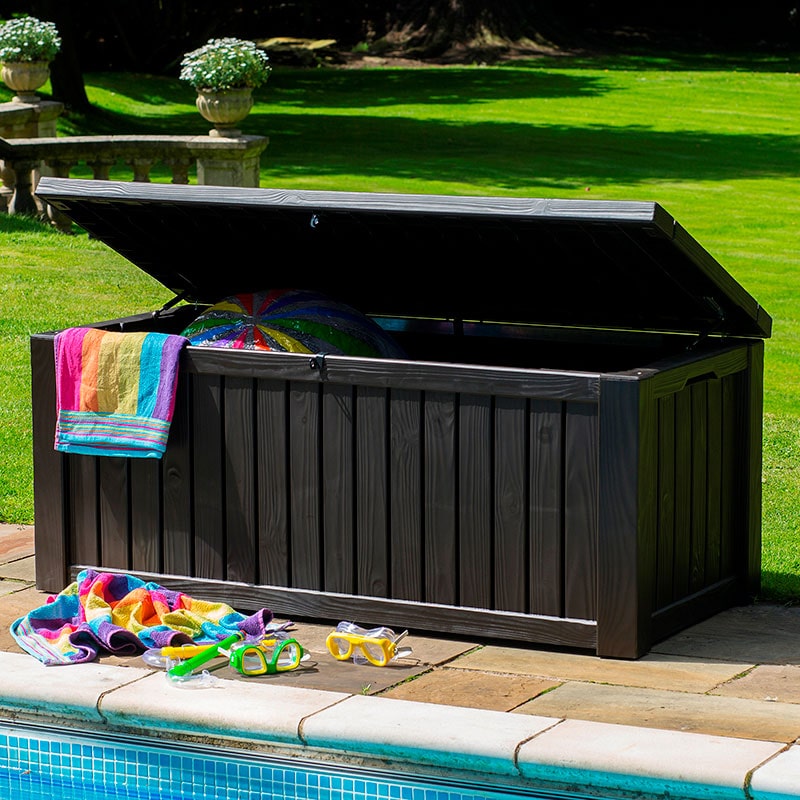
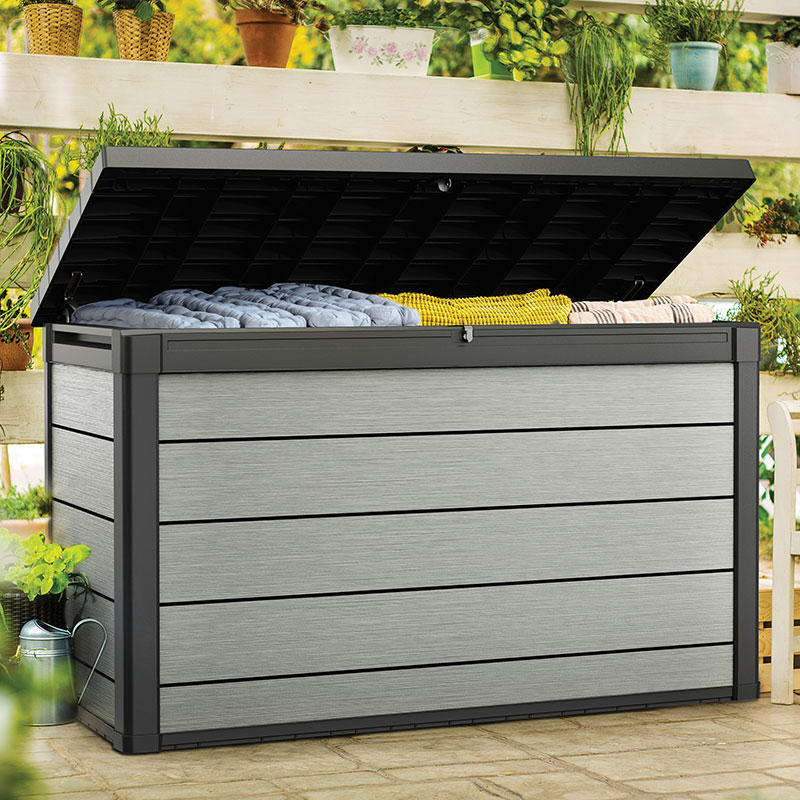
- Hand tools such as trowels, secateurs and cultivators
- Small watering equipment, hoses on a reel, spray nozzles and cans
- Cushions for a bistro set or small bench
- Plant pots and trays waiting to be reused
- Compost bags or bags of bark, if the internal layout allows it
- Children’s outdoor toys that need a dry home
- BBQ accessories and cleaning bits, if the storage depth suits
The exact usable space depends on the shape, roof design and door opening, so two units with the same floor area can feel quite different inside. A storage box with a wide lift-up lid behaves differently from a narrow upright cabinet, even if both sit near the same footprint.
Cabinet, box or mini shed? The main forms
Wooden garden storage in this category comes in a few familiar forms, and each one has a different character. The best choice is often less about looks alone and more about how you use your garden day to day.
Horizontal storage boxes are low, neat and easy to tuck against a wall or under a window. They suit cushions, hand tools and awkward little things that would otherwise get shoved into a corner. Because they sit low, they can also work as a surface for a tray, a plant pot, or even just a place to set down a mug while pottering.
Vertical cabinets make better use of height. They are useful when the ground space is tight but you still want a proper door rather than a lid. This type often feels more like a tall locker, and it can be a better fit for long handled tools, watering cans and stacked smaller items. If you do not have much width, a vertical shape can be a smart choice.
Mini sheds in wooden form bring a more traditional shed feel in a smaller package. They may have a pitched roof, side panels and a front-opening door. This style is often chosen when you want the storage to look like part of the garden rather than a box placed in it. It also tends to make access easier, especially if the things inside are not always neat and tidy.
Lean-to units are designed to sit against a wall or fence. They are useful where the rear boundary is already doing some of the visual work, and they can make a compact area feel organised without standing alone like a separate structure. The roof line and shallow depth often make them feel a bit less intrusive, which is handy in smaller gardens.
Why wood suits this size so well
There is a reason people keep coming back to wooden garden storage even when other materials are available. In a small footprint, wood has a softer look and a more natural presence. A compact timber unit tends to blend with planting, fencing and decking better than a shiny plastic box or a hard-edged metal cabinet.
That visual difference matters more than people expect. On a tiny patio, a storage unit is not hidden away. It is part of the scene. Wood gives you a quieter look, and that can help the garden feel like one space rather than a jumble of bits and pieces.
There is also a practical side. Timber can be easier to work with when the layout needs to fit a tight corner or awkward edge. The material lends itself to doors, lids, shelves and slatted details that do not feel heavy. For some buyers, that is the key difference: wood looks like a garden feature, not just a container.
Little size, different strengths
Not all 10 sq ft / 1 m² storage is built the same way. The differences often come down to how the space is divided and how the opening works. A unit with a single deep chamber is handy for larger items that need simple stacking. A design with shelves or a split interior helps sort smaller objects so they are not all sliding into one pile.
Door style changes the experience too. A lift-up lid gives quick top access but is less friendly if you need to reach the back. Front doors let you see more of the contents at once, which can be better for taller items. Double doors, when used on a compact unit, can make loading easier, though they usually need a little more clear space in front.
Roof shape also matters. A flat roof can be easier to place under low eaves or along a boundary. A pent roof gives water a route off to one side and can make the profile look slimmer. A pitched roof gives a more classic shed feel and can offer a bit more headroom in the middle. None of these choices is just about style; they change how the unit sits in the garden and how easy it is to use.
Where a compact wooden store makes the most sense
This category is especially useful where outdoor space is limited, but you still want proper storage rather than a pile of covers and containers. A small timber store can sit beside a path, next to a rear wall, or in the corner of a balcony-sized garden without taking over the whole layout.
It also works well in gardens with more than one “zone”. For example, one side of the garden might be for seating and the other for planting. A neat wooden storage unit can help separate the practical side from the relaxing side, which is often what makes a small garden feel more ordered. The same idea applies near a kitchen door, where quick access matters and carrying things through the house is a faff.
Choosing between low, tall and sheltered
When comparing options in this size, it helps to think in three dimensions, not just floor area. A low box is easier to hide and often quicker to use for everyday grab-and-go items. A taller cabinet usually gives better vertical capacity and suits items that you do not want laid flat. A mini shed gives the most familiar shed-type access, but it may need a bit more visual room to feel balanced.
Depth is another point people overlook. A unit that is not very deep can be excellent in a slim passage, but it may not hold the wider garden bits you had in mind. A deeper unit can take more awkward shapes, though it may protrude further into the garden than expected. For that reason, it is worth checking how the door opens and how much space is needed for standing in front of it.
Access height matters too. If you are storing things you use often, you probably do not want to crouch, kneel or move half the contents every time. In this size category, good access is often the thing that decides whether the storage feels useful or just snug.
Timber details that make the difference
Small wooden storage units can look similar at first glance, but the details shape how they perform in daily use. Slatted panels may help the unit feel lighter visually, while solid side panels offer a more enclosed look. Tongue-and-groove construction is often chosen for a tighter, more finished feel, whereas simpler panel builds can keep the design pared back.
Pressure-treated timber is often discussed because it is common in outdoor wooden storage, and for good reason. In this category, many buyers want something that feels ready for weather rather than fussy. Even so, the finish, fixings and joinery should all be looked at together. A neat compact cabinet with careful detailing can feel more robust than a larger unit that looks a bit thrown together.
The little bits count. Metal hinges, a proper latch, tidy door alignment and well-fitted roof boards all contribute to a unit that feels right to use. A small store is touched often, so the quality of those moving parts matters more than people sometimes assume.
Useful tips before you choose
For a compact wooden garden storage unit, the best buying decision usually comes from matching the shape to the job. If the contents are mostly flat items like cushions, a low box may be the neatest fit. If you are storing bits and pieces of different heights, a cabinet or mini shed may save you from awkward stacking. If access matters more than looks, choose the style that lets you reach the back without a struggle.
- Measure the actual gap where the unit will sit, not just the open garden area
- Check the door swing or lid clearance, because tight spaces can make a good design awkward
- Think about what goes in first so the internal shape matches the items, not the other way round
- Look at the roof line if the unit will sit near a fence, wall or under an overhang
- Keep the style in step with decking, fencing or planting so it feels part of the garden
It is also worth deciding whether you want the unit to blend in or stand out a little. Some people prefer a storage piece that disappears visually beside the fence. Others like the warmth of timber as a visible feature. Either way, the material gives you a softer result than many rigid alternatives.
Why buyers keep choosing this compact category
There is a straightforward reason this size stays popular: it solves a common problem without asking for much space in return. A 10 sq ft / 1 m² wooden storage unit can stop clutter spreading across a patio, keep useful items close at hand, and make a small garden feel more composed. It is not about hiding everything away. It is about having one place for the bits that usually end up in the wrong place.
That is especially useful in gardens where space has to do several jobs. Seating, planting, children’s play, recycling and tools can all end up competing for the same corner. A compact timber store gives those everyday items their own spot. The garden looks less crowded, and you spend less time moving things around just to get to the chair, hose or planter you wanted in the first place.
A category built for practical order with a natural look
If you want storage that feels made for a garden rather than borrowed from the house, this category makes a lot of sense. The wooden finish keeps the appearance warm, while the compact floor area keeps it realistic for smaller outdoor spaces. With forms ranging from low boxes to upright cabinets and mini sheds, there is enough variety to suit different contents and layouts, without the unit becoming the main event.
In short, this is the sort of storage that earns its space by being useful, tidy and easy to live with. For buyers comparing options, the real question is not simply how much it can hold, but how well it fits the way the garden is used. And in a space this small, that difference is often what makes the purchase feel right.
[Sassy_Social_Share]