
wooden carports 21x17 - Best Deals in UK!
Showing the single result

Wooden carports 21×17 offer a practical covered parking area with a natural timber look, giving you space for one or two vehicles, trailer access, and room for everyday use without the feel of a closed garage.
A footprint that works harder than it looks
A 21×17 wooden carport gives you a generous covered area in a format that feels usable rather than oversized. The shape suits driveways where width matters more than depth, and it can work well when you want protection from rain, frost, leaves, and sun, but still prefer open sides for easy access. In simple terms, it is a neat balance between shelter and space.
That size can suit a single large vehicle with extra side room, or a double-use layout where one bay is used for a car and the other section for bikes, garden gear, or a second smaller vehicle. The exact feel depends on the layout, but the 21×17 format gives buyers a clear starting point when comparing carport options.
Why timber changes the whole look
Wooden carports stand apart because timber softens the appearance of a parking structure. Instead of a metal frame that can look purely functional, wood brings a warmer, more natural finish that sits well beside brick homes, country-style properties, and gardens with planting around the edges. It is not just about appearance either. Timber framing can make the structure feel more integrated with the rest of the plot.
Bestseller der Kategorie wooden carports 21x17
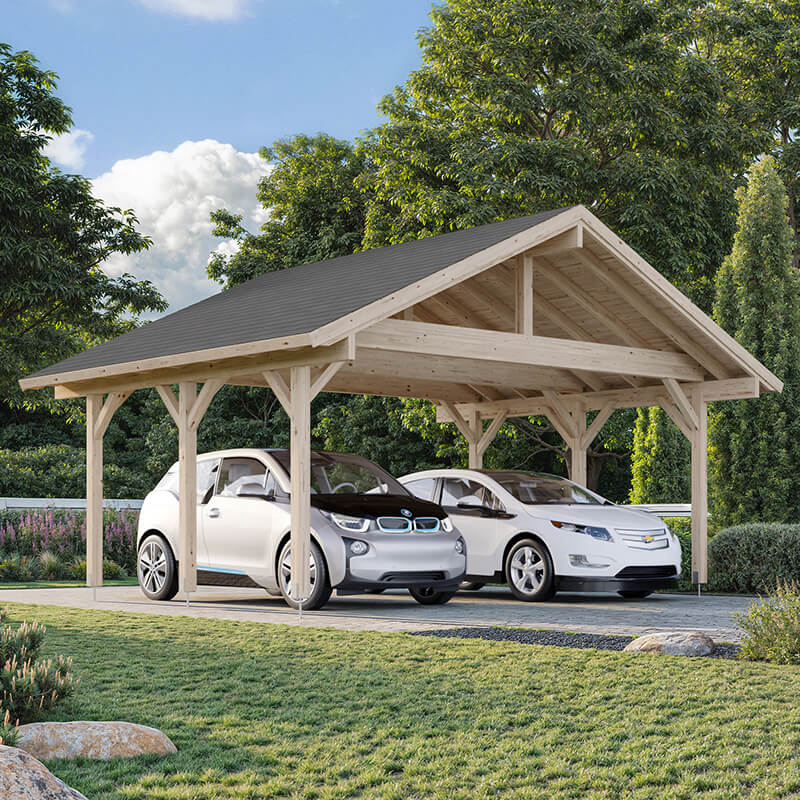
Buyers often choose wood when they want the carport to look like part of the property, not an afterthought. That matters with a 21×17 build, because the structure is large enough to be noticed. With timber, that size can feel purposeful, not bulky. If the home already has fences, sheds, gates, or pergolas in wood, the visual link can be very convincing.
Open sides, half walls, and the in-between options
When people compare wooden carports 21×17, the first big difference is usually how open the structure is. There are a few common forms, each with its own use:
- Fully open carports – the simplest format, with maximum airflow and the easiest parking access.
- Partially enclosed carports – useful when you want a bit more side cover against wind or splashes.
- Single-bay carports – suited to one vehicle with extra surrounding space for movement.
- Double-width layouts – handy if the 21×17 size is being used to create two parking zones or a wider sheltered area.
- Carports with integrated storage zones – not a garage, but sometimes the footprint can be arranged so one section feels more tucked away.
The open style is often chosen for convenience. You can pull in, open doors wide, and step out without feeling boxed in. Partially enclosed versions, by contrast, are better when the site is exposed and you want the timber frame to do more than just mark out a roofed space. The choice is not only about looks; it affects how the carport behaves in day-to-day use.
Shape matters more than people think
A 21×17 carport can be built in different roof shapes, and that changes both the appearance and the way it handles the site. A flat roof gives a clean, simple line and can suit modern properties. A sloping roof often looks more traditional and can help the structure sit comfortably next to pitched-roof homes. A gable-style roof creates a more defined profile, which many buyers like when they want the carport to feel more architectural.
There is also a practical angle. A lower, flatter profile can feel more understated, while a higher roofline may give a roomier impression above larger vehicles, roof boxes, or taller vans. For a 21×17 footprint, roof shape changes the whole balance of the structure, especially when the carport is placed at the front of the property and seen every day.
Timber frame styles with different characters
Not all wooden carports feel the same, even when the size is identical. The frame style plays a big part in that. A heavier timber frame can make the carport feel solid and substantial, while a lighter-looking frame can keep the structure visually open. Some buyers prefer chunkier posts because they give the impression of a more grounded build. Others want slimmer lines so the carport does not dominate the driveway.
The differences are not only visual. Thicker posts and braces can suit larger spans and a more present, statement-like look, while a more refined frame can help the 21×17 size feel less imposing. If you are comparing options, it helps to think about how much of the structure you want to see from the street. The timber tone, the post thickness, and the roof edge all change the final result.
What the 21×17 size is good at
A 21×17 carport is often attractive because it gives buyers flexibility. It can support straightforward parking, but it can also be used in a more mixed way. That is part of the appeal. If you only need to protect a vehicle, the extra space gives a more comfortable margin around the car. If you need a covered area for a larger vehicle, the footprint can be easier to work with than a tighter parking bay.
This size is also helpful where access is important. Parking under cover is one thing, but being able to open doors, move around the vehicle, and still have a bit of space left over makes the structure easier to live with. Many buyers realise this only when they compare measurements on paper. A carport can look similar in photos, but the usable space is often what decides whether it feels right at home.
Single car, double use, or a bit of both
One of the main differences in wooden carports 21×17 is how the area is assigned. Some owners use the whole footprint for one vehicle and enjoy the extra breathing room. Others split it mentally, even if not physically enclosed: one side for the car, the other for bikes, bins, a work bench, or seasonal outdoor items. That makes the carport feel more useful across the year.
It can also be a good fit for households that do not want to commit to a full garage. A carport keeps things open and easy, but the timber frame still gives a clearer boundary than a bare parking space. In a 21×17 layout, that boundary can be wide enough to feel generous without turning the driveway into a fixed closed structure.
Benefits that buyers tend to notice quickly
The advantages of a timber carport are often practical first, then visual. The most obvious benefit is covered parking. Rain, light snow, falling leaves, and strong sun are easier to deal with when the vehicle has shelter above it. That means less hassle when loading the car, less exposure to weather while stepping in and out, and a neater parking area overall.
There is also the benefit of quick access. Compared with a garage, a carport is less enclosed, so parking feels straightforward. This is useful for family homes, busy driveways, and properties where people are in and out several times a day. A wooden structure also tends to blend better into garden-heavy settings, so it can serve a function without looking hard-edged.
Other things buyers often like include:
- Easy manoeuvring – open sides make parking and reversing less awkward.
- Better visual match – timber can suit homes with natural materials already in the plot.
- Flexible use – the space can feel useful beyond parking alone.
- Less enclosed feel – no need to drive into a fully closed garage.
- Clear size reference – 21×17 gives a helpful basis for comparing layouts.
Open air versus partial shelter
When shoppers compare styles, they often come down to a simple question: how much exposure is acceptable? A fully open wooden carport is easy to use and feels light, but it does not create much side defence. A partially enclosed version can reduce some wind and splashing from the sides, which can matter on exposed plots or on drives that sit near open fields.
The difference can also affect how tidy the space feels. A more open design is often chosen when the aim is to keep the driveway visually relaxed. A structure with more framing or side screening can make the carport feel more defined and sheltered. In a 21×17 format, the decision affects not just function but how the whole frontage reads from the road.
How the size influences the property layout
A 21×17 footprint needs the right setting, and that is part of the appeal for buyers who already know their site. It can work well on a broad driveway, beside a garden edge, or where parking space is being made more deliberate. Because it is timber, the carport does not have to look harsh against planting or fencing, which can help if the structure sits near the house or front boundary.
It is worth thinking about access before choosing a shape. If the drive is narrow, the width may matter more than roof style. If the plot is more open, a taller or more defined roof may suit the space better. The point is not to make the carport disappear, but to let it fit the property in a way that feels planned.
Details buyers compare before choosing
When people shop for wooden carports 21×17, they tend to compare the same set of practical details. These are not flashy extras, just the points that affect whether the carport feels right in everyday use:
- Roof form – flat, sloped, or gable, depending on the look you want.
- Degree of openness – fully open or partially screened.
- Frame thickness – lighter lines or a more substantial timber presence.
- Intended use – one vehicle, two smaller uses, or a parking-plus-storage setup.
- Visual match – whether the timber tone fits the home and garden.
These differences may seem small on paper, but they change how the carport feels every time you drive in. A buyer who wants a neat, low-key parking cover may choose one style, while someone who wants the structure to sit more prominently within the plot may choose another. The 21×17 size leaves room for both ideas.
Small tips that help the purchase feel right
If you are choosing a wooden carport 21×17, it helps to measure the actual parking area rather than just the car. Allow for opening doors, turning the steering wheel, and the space you need to step out comfortably. A carport that looks fine on a plan can feel tight if the driveway margins are not considered properly.
It is also worth thinking about how the carport will look from inside the house and from the street. Timber can soften the structure, but roof shape and post placement still matter. A design that looks neat from one angle may feel heavy from another, so a quick visual check is smart before you decide. And yes, the difference between “fits” and “feels good” is often more than people expect.
A timber choice that feels deliberate, not improvised
The best thing about wooden carports 21×17 is how naturally they can sit in a property when the size and shape are chosen with care. The footprint is large enough to be useful, but not so specialised that it only suits one type of home. The timber finish adds character, the open design keeps everyday use simple, and the different roof and frame styles let buyers match the carport to the rest of the plot.
For anyone comparing parking covers, this category makes sense when the brief is clear: a shelter that is practical, visually steady, and not too rigid in appearance. Whether you are after a single-bay setup, a wider open format, or a more sheltered timber structure, the 21×17 size gives you room to choose without making the decision feel cramped.
[Sassy_Social_Share]