
wooden carports 17x12 - Best Deals in UK!
Showing the single result

Wooden carports 17×12 offer a practical, space-conscious shelter for cars, vans and everyday vehicles, with the natural look of timber and the useful footprint of a 17 x 12 carport.
A compact size that still feels generous
A wooden carport 17×12 sits in that useful middle ground: not too small to feel cramped, yet not so large that it takes over the plot. The 17×12 footprint works well when you want covered parking without the visual bulk of a full garage. It gives a clear sheltered bay for a car, and depending on the exact layout, there may also be room for a bit of side access, opening doors with less fuss, or tucking away a bike on the edge.
This size is often chosen by buyers who want a structure that looks planned rather than improvised. The timber frame softens the outline, which matters if the carport is going close to the house, a drive edge, or a garden boundary. A wooden version tends to blend more easily with fencing, pergolas and other outdoor features, so the space feels joined up instead of split into seperate zones.
Why timber changes the look and feel
Wooden carports bring a warmer, more natural character than metal-framed alternatives. That difference is not only visual. Timber frames often feel more at home in residential settings where the carport is part of a wider outdoor scheme. If your driveway, garden path or patio already uses wood elements, a wooden carport 17×12 can tie things together nicely.
Bestseller der Kategorie wooden carports 17x12
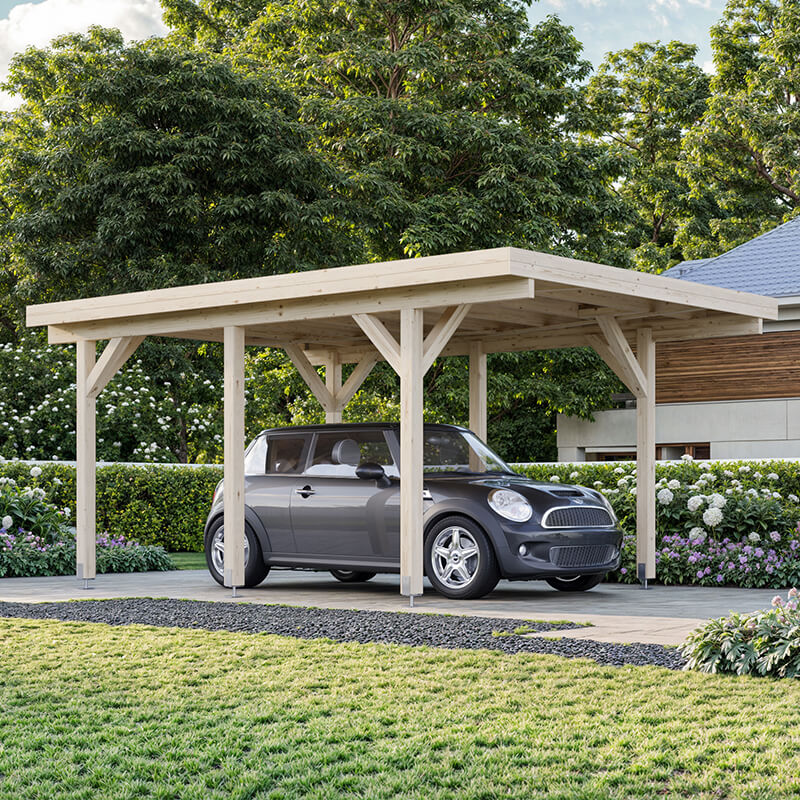
There is also a sense of scale. Timber can appear less harsh than steel or aluminium, which helps a medium-sized structure avoid looking overbearing. For buyers who care about the appearance of the front of the house, this matters. A carport is practical, yes, but it is also one of the first things people see. With wood, the structure often reads as an addition rather than an interruption.
Frame styles you are likely to compare
Within the wooden carports 17×12 category, the frame shape changes the whole experience. Some styles suit a simple driveway bay, while others give a more architectural finish. The main differences usually come down to roofline, support layout and how open the sides remain.
- Flat roof carports – a clean, low-profile option that suits modern houses and tighter sightlines.
- Mono-pitch carports – one sloping roof plane, often chosen for straightforward drainage direction and a neat side profile.
- Dual-pitch or apex carports – the familiar peaked shape, giving a more traditional look and a stronger sense of presence.
- Open-sided carports – ideal where easy drive-in access matters most and you want a light, airy feel.
- Partially enclosed carports – useful when one or more sides need extra screening, for example near a boundary or exposed drive.
Each form has its own personality. A flat-roof wooden carport 17×12 can look restrained and contemporary, while an apex design usually feels more classic and solid. A mono-pitch version often strikes a balance between the two. If you are matching an existing building, the roof shape is worth thinking about early, because it does more than change appearance – it affects how the structure sits in the space.
Open, semi-open or enclosed edges
The level of openness is another major difference. A fully open carport gives the easiest access and the least visual weight. It is the kind of setup that suits a daily driver, because you can pull in and out without worrying about narrow gaps. A semi-open carport, with a back panel or side screening, can feel more sheltered without turning into a fully closed garage replacement.
In a wooden carport 17×12, this matters because the size is often just right for a single vehicle with a bit of breathing room. Open sides keep the structure flexible, but if the site is windy or overlooked, some buyers prefer a design with selective enclosure. The important thing is that the carport still feels easy to use. If it becomes awkward to manoeuvre into, the space stops earning its keep.
Timber choices that alter the character
Not all wooden carports feel the same. The timber section, the thickness of the posts and the visible grain all influence the result. Heavier posts create a sturdier impression, while slimmer sections keep the profile lighter. In a 17×12 wooden carport, that balance is especially noticeable because the structure is large enough to make a statement, but still small enough for details to matter.
Some buyers prefer a more rustic look, where the timber is clearly part of the design story. Others want a cleaner, more engineered appearance, with straight lines and crisp joins. Both can work well, but they suit different houses. If your property is rendered, brick or more traditional in style, the timber finish can either echo those materials or provide a gentle contrast. That choice shapes the whole impression of the front drive.
Roof options and what they mean in use
The roof is not just a top cover. It changes how the carport feels from the road, how light sits underneath, and how the structure relates to the house. In a wooden carport 17×12, roof style can be the detail that tips the decision one way or another.
- Flat roofs suit a neat, understated appearance and often work well where height needs to stay controlled.
- Mono-pitch roofs direct the visual line in one direction, which can help a carport sit alongside a wall or boundary.
- Apex roofs add a more familiar house-like profile and can look well proportioned on wider drives.
- Open canopy forms emphasise access and simplicity, with less visual mass overhead.
The right roof shape depends partly on the style of the home and partly on how much presence you want the carport to have. Some people like the roofline to echo the main house roof. Others want the carport to stay quieter in the background. Both approaches can look right, as long as the proportions make sense.
What the 17×12 size really suits
A 17×12 carport is often chosen for one main vehicle, but its value goes beyond a simple parking bay. The size can work for an average family car, many SUVs, and other everyday vehicles where a bit of extra width or length is useful. That extra space is often what makes a carport feel comfortable rather than just barely adequate.
It can also be a good fit where the driveway has constraints. Maybe the plot is not wide enough for a garage. Maybe a full building would block too much garden view. In those cases, a wooden carport 17×12 gives shelter while keeping the site open. It feels like a sensible compromise, though in a good way, not a second-best choice. For many households, it is actually the more balanced answer.
Practical benefits buyers notice straight away
The obvious benefit is covered parking, but there are several others that matter in day-to-day use. A timber carport can make arrival and departure feel more relaxed, especially in bad weather. You step out under cover, open doors without rain landing straight inside, and avoid that wet scramble with bags and keys. It sounds small, but these little things add up.
Wooden carports 17×12 also help define parking space clearly. That is useful on wider drives where vehicles can otherwise end up parked a bit wherever there is room. A fixed structure creates order. It gives the driveway a purpose. And because the timber frame looks more residential than industrial, it can make the whole frontage feel more considered.
There is also the way it changes the property’s outdoor layout. Instead of a plain slab of hardstanding, the drive gains a feature with height, shadow and form. That can be particularly appealing if you want the front of the house to feel designed rather than purely functional.
Differences between single and multi-bay thinking
Although this category is focused on 17×12 wooden carports, buyers still compare them with larger multi-bay solutions. The main difference is scale and intention. A single-bay 17×12 carport is about efficient use of space. It is enough for one car with practical clearance, while staying compact enough for smaller plots. Multi-bay structures tend to suit larger homes, shared parking areas or households with more than one vehicle to cover.
That distinction matters because a single 17×12 layout can avoid the feeling of overcommitting your driveway to one structure. It leaves more room for turning, walking, bins or planting. For some buyers, that is the whole point. They want protection and organisation, but not a bulky build that dominates the entrance.
Useful details to check before choosing
When comparing wooden carports 17×12, it helps to focus on the practical details rather than just the image. Measurements are the obvious starting point, but the exact arrangement of posts, the pitch of the roof and the opening sides all affect how easy it is to use.
- Vehicle clearance – check the full length and width of the vehicle, including mirrors and any roof accessories.
- Post placement – make sure the support posts do not interrupt the turning line or the door opening space.
- Drive approach – a straight run-in is easier than a tight angled entry, especially on a narrower plot.
- Roof projection – the overhang can change the sheltered area more than you might expect.
- Side access – a little extra room beside the vehicle can be the difference between a tidy bay and a fiddly one.
These are the details that often decide whether the carport feels easy from day one or slightly awkward every time you park. A structure can look right in a picture and still be a poor fit if the layout does not work with the drive.
How the style affects the first impression
A wooden carport is not only about utility. It shapes the entrance to the home. A 17×12 wooden carport can make the front of a property feel more organised, more settled and less like an open parking area has been left to chance. The timber brings texture, and the roofline creates a clear architectural shape.
For houses where the driveway sits front and centre, that visual order can be a real selling point. Some buyers are drawn to the sense of completeness. The carport gives a defined place for the vehicle, which can make the rest of the drive feel tidier, even before you have added any landscaping or edging. It is a subtle effect, but a useful one.
Choosing between lighter and more substantial builds
One of the main distinctions in this category is between lighter open-frame designs and more substantial timber builds. Lighter structures tend to feel airy and flexible, with an emphasis on coverage rather than enclosure. They suit properties where you want the carport to stay discreet.
Heavier-looking designs, by contrast, can feel more anchored. They may suit larger houses or settings where the carport needs to look like part of a broader timber scheme. In a wooden carport 17×12, that difference can be quite noticeable. The same footprint can look either simple and modest or strong and deliberate, depending on post size, roof depth and the amount of visible timber.
A few buying tips that actually help
If you are narrowing down options, it helps to think like the car will be using the space. Not every 17×12 layout feels the same once you are behind the wheel. A good purchase is one that leaves enough room to open doors, move around the vehicle and park without repeated adjustments.
- Measure the vehicle plus real-world space – mirrors, door swing and load unloading all matter.
- Think about future use – if you may change vehicle size later, a little extra clearance can be useful.
- Match the roofline to the property – the carport should look intentional, not copied from somewhere else.
- Consider the driveway angle – the best-looking carport still needs an easy approach.
- Look at the sides as well as the front – the view from the street and from the house both count.
These small checks reduce the risk of choosing something that feels fine on paper but less comfortable in daily use. A wooden carport 17×12 is a good size, though only if the design matches the way you park and live.
Why buyers keep coming back to wood
There is a reason timber keeps showing up in carport searches. It offers a balance of appearance, familiarity and usefulness that suits many homes. With a wooden carport 17×12, you get shelter with character. You also get a structure that can feel more at ease beside gardens, hedges and domestic brickwork than a more industrial frame might.
The category appeals to buyers who want practical cover but do not want the driveway to feel hard or overly technical. The wood helps the structure sit naturally in the setting. And because the 17×12 size is compact enough for a single bay yet generous enough to be comfortable, it avoids a lot of the compromises that come with smaller builds. It is a sensible shape, but not a dull one.
Final thought for the shortlist
If you are comparing wooden carports 17×12, focus on three things: the roof style, the openness of the sides and the way the footprint fits your drive. That combination decides how well the carport works in daily life and how it looks from the street. A good 17×12 timber carport feels easy to use, visually calm and properly in place. That is often what buyers are really after, even if they start out just wanting somewhere to park.
[Sassy_Social_Share]