
Toomax Garden Storage - Best Deals in UK!
Showing the single result

Toomax Garden Storage offers practical resin storage for cushions, tools and outdoor bits, with compact boxes, tall cabinets and larger units for tidy, weather-conscious gardens.
Storage that fits the way outdoor space is used
What makes Toomax Garden Storage worth a closer look is not just the idea of storing things outside, but the way the range is designed around real garden habits. Some people need a place for seat pads and barbecue accessories. Others want somewhere for hand tools, watering kit, plant food, or that awkward pile of bits that never quite has a home. This is where the category works well: it gives you garden storage in different shapes and sizes, so you can match the unit to the job rather than trying to force one product to do everyting.
In practical terms, this kind of storage is about making the garden feel easier to use. When items have a set place, patios look less crowded, shed floors get a bit of breathing room, and you can reach what you need without shifting three other things first. That matters especially in smaller outdoor spaces, where a bulky wooden shed may feel too much, but a slimline cabinet or a low storage box can slot in neatly.
Low boxes, tall cabinets and the in-between options
The category usually breaks down into a few useful sub-types, and each one serves a slightly different purpose. A garden storage box is the most familiar form: low, broad and simple to place on a terrace, balcony, or lawn edge. It suits cushions, soft furnishings, toys, and bulkier garden extras that are easier to stack than to hang.
Bestseller der Kategorie Toomax Garden Storage
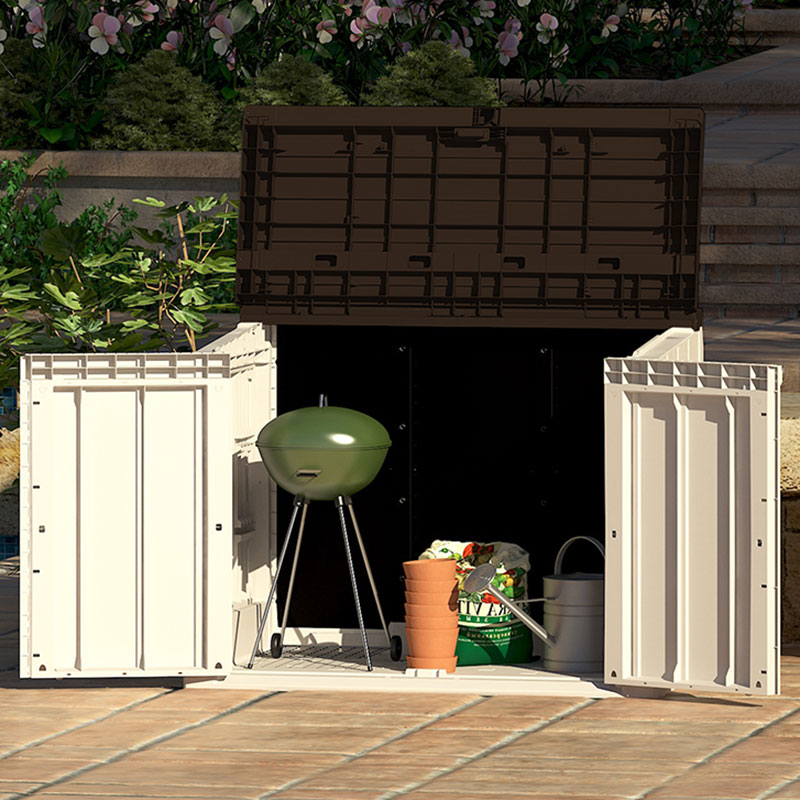
Storage cabinets sit in a different bracket. They use more vertical space, so they can hold items like hand tools, small pots, cans, brooms, or tidy stacks of outdoor bits that would otherwise spread across the patio. For people who prefer order and quick access, this shape often feels more efficient than a box, because shelves or divided internal space can be easier to use.
There are also mid-height storage units that sit between a box and a cabinet. These are useful when you want storage that doesn’t dominate the space but still gives better access than a low chest. The difference comes down to how you use the garden: if you store long items or reach for things often, height helps; if you want to keep cushions or larger loose items out of sight, width and depth may matter more.
Why resin garden storage makes sense outdoors
Toomax garden storage is usually chosen for its resin construction, and that brings a few clear advantages in outdoor settings. Resin doesn’t have the same feel as timber, of course, but that is partly the point. It gives a more uniform finish, a lighter structure in many cases, and a look that fits tidy, modern garden layouts without needing a painted or treated surface in the same way wood does.
A resin unit can be a strong choice when you want weather-conscious storage without overcomplicating things. It helps create a contained place for garden equipment, and the material is often paired with designs that are simple to wipe down and easy to live with. For buyers comparing options, this can be a genuine difference: wood may appeal if you want a traditional appearance, metal can feel more industrial, while resin storage tends to sit in the middle with a cleaner, less fussy look.
There is also a practical side to the material choice. When storage is positioned near a patio, by a garage wall, or against a fence, you often want something that looks neat from every angle. Resin units usually give that consistent finish, and it can make the whole area seem less cluttered even before you put anything inside. It’s a small thing, but these details do affect how the garden feels day to day.
Shapes that work in real corners, not just in catalogue photos
One useful thing about the Toomax category is the variety of forms. Not every garden has room for a deep, boxy unit, and not every buyer wants storage that stands out. A rectangular box is usually the easiest to place along a wall or fence line. A tall cabinet can use narrow spaces better, especially where floor area is limited but height is available. A more compact footprint is often a better fit for balconies, narrow side returns, and smaller paved courtyards.
That kind of variety matters because outdoor storage is rarely a one-size situation. If you have seat cushions to store, depth may matter more than shelf structure. If you need to keep gardening bits sorted, access and organisation matter more than sheer volume. If the unit is going next to a seating area, appearance and proportion become part of the decision too. The right shape can make the storage feel like part of the garden rather than an object that has been squeezed in.
What buyers usually look for inside the space
Even when the outside shape is what catches your eye first, the real question is what the storage can do inside. Buyers often want enough room for cushions, tools, outdoor accessories, toys, plant care items, or seasonal bits that don’t need to live indoors. In this category, the appeal lies in creating a defined home for items that otherwise end up scattered across the patio or stacked in a corner.
It helps to think about the contents before choosing the form. Soft furnishings need volume more than rigid compartments. Hand tools benefit from being upright and easy to grab. Smaller accessories often work better when there is some internal organisation rather than one open cavity. That’s why cabinets and boxes can feel very different in use, even if they seem similar at first glance.
If you tend to store mixed items together, consider how often you access them. A unit that opens easily and gives you a clear view of what’s inside can save time, while a deeper box is better for things you want to tuck away and forget for a while. It sounds simple, but it is usually the bit people wish they had thought through a little earlier.
Small-space wins and bigger-garden uses
The range is especially relevant for small gardens, terraces and patios, where every square metre counts. A slim cabinet can stand beside a shed door or along a side passage without taking over the area. A low box can double as a storage point and a visual divider, helping the space feel a bit more composed. In compact settings, the difference between a neat storage unit and a random pile of gear is quite noticeable.
In larger gardens, the same category plays a different role. Rather than replacing a shed, it can support the main storage area by keeping frequently used items nearer to where they are needed. That means less running back and forth for things like cushions, gloves, barbecue items, or watering kit. In a bigger space, this can make outdoor living feel more convenient, especially when the main storage is tucked away at the far end of the garden.
So the category works in two ways: it can be a primary storage solution for tighter spaces, or a useful secondary unit in a more expansive layout. That flexibility is part of what makes it appealing to a wide range of buyers.
Differences between a box and a cabinet
At first glance, a storage box and a storage cabinet may seem like two takes on the same idea, but they serve different habits. A box tends to suit larger, softer, or more loosely packed items. It is often easier to use when you want to lift things in and out without too much sorting. A cabinet, on the other hand, is usually better for people who like things at a more reachable height and prefer a more orderly layout.
The difference is also visible in how the space is used. Boxes spread storage across a wider base, while cabinets make use of height. That can change the feel of the garden area around them. A low box can sit quietly against a wall and almost blend in. A cabinet becomes more of a vertical feature and can feel more purposeful where floor space is tight.
Neither type is better for everyone. It depends on what you are storing and how you want the garden to work. If you are comparing items, the smartest approach is to measure the space, think about the items first, and then choose the form that supports your routine rather than fighting it.
Finishes and looks that don’t shout for attention
Many buyers choose Toomax garden storage because it tends to look neat without trying too hard. The finish is usually clean and practical, which suits a lot of modern outdoor spaces. Instead of a heavy, over-designed feel, the category often leans towards simple lines and a calm appearance. That can be a real advantage if you want the storage to work quietly in the background.
This matters more than people sometimes expect. Outdoor storage sits in view for a long time, and if it looks awkward or overly bulky, you notice it every day. A more restrained design can make the whole area feel more settled. It also means the unit is easier to pair with different garden styles, whether the setting is paved, planted, decked, or a mix of all three.
For many buyers, the visual difference between categories is part of the buying decision. Resin storage often feels less formal than heavy timber and less stark than bare metal. It gives a middle ground that can suit family gardens, balconies, utility corners and patio areas without demanding that the rest of the space match it exactly.
Useful tips before choosing your unit
Measure the footprint first. It sounds obvious, but storage looks smaller in a product photo than it does beside a fence or doorway. Check width, depth and height, then think about how much room you need to open the lid or doors comfortably. A good fit is not just about the space the unit occupies, but the space around it when in use.
Think about the item shape. Cushions, for example, behave very differently from tools or containers. If you are storing soft items, a low box may work well. If your main items are long-handled or upright pieces, a cabinet may make life easier. This small decision can change how practical the unit feels every week, not just on day one.
Consider how often you access it. Frequently used items are easier to live with when they are reachable quickly. Less-used items can sit deeper in storage without being a problem. That means the right category depends as much on routine as on capacity.
What makes the category useful for buyers comparing options
When customers look at Toomax garden storage, they are often comparing it with other outdoor storage types and trying to work out where it fits. The answer is usually in the balance of practical design, tidy appearance and flexible sizing. It is not about turning the garden into a showroom; it’s about making the outside space work more smoothly.
Compared with a full shed, these units are easier to place and often less visually heavy. Compared with loose covers or open shelves, they give a more contained solution. Compared with very traditional timber pieces, they can feel more straightforward and less demanding in appearance. That leaves them in a good position for buyers who want something useful, not overly dramatic, and suitable for everyday use.
If your garden feels cluttered but you do not need a full outbuilding, this category can hit a useful middle point. It gives you real storage without taking over the whole plot, and that is often exactly what people are after.
A practical fit for different outdoor routines
There is a reason garden storage keeps showing up on shopping lists: outdoor spaces collect things. Cushions move in and out, tools get used in bursts, toys drift across the lawn, and seasonal items need somewhere to go when they are not in use. Toomax Garden Storage answers that need in a format that feels easy to place and easy to understand.
For some buyers, the appeal is a compact deck box that clears patio clutter. For others, it is a slim cabinet that makes a narrow side space earn its keep. For others still, it is a larger storage unit that can handle mixed outdoor items without looking too heavy in the garden. The category works because it gives you options with different proportions, which is often the main thing people need.
If you are trying to choose, the most helpful questions are simple: what needs storing, how often will you open it, and where will it sit? Once those three things are clear, the right type tends to become obvious. And when the fit is right, the whole garden feels more settled, a bit easier to use, and less like it is constantly carrying around spare bits and pieces.
Why this category keeps getting attention
Toomax garden storage keeps appealing to buyers because it addresses a real everyday problem in a direct way. It helps separate the useful from the unused, the seasonal from the permanent, and the tidy from the not-so-tidy. That is a small change with a noticeable effect on how the garden behaves.
People also like the fact that the category can serve different roles. It may be a home for cushions near the back door, a place for garden hand tools beside the shed, or a slim unit for awkward spaces where nothing else seems to fit. Those are practical use cases, and they are the reason storage like this gets chosen again and again.
In the end, the appeal is straightforward: better use of space, clearer organisation and a storage style that suits the outdoors. If that sounds like what your garden needs, this category gives you a sensible place to start looking.
[Sassy_Social_Share]