
Summerhouses with Barrel Roof - Best Deals in UK!
Showing the single result

Summerhouses with barrel roof bring a distinctive curved profile, extra headroom and a softer look to the garden, with choices in sizes, layouts and glazing for relaxed outdoor use.
Why the barrel roof shape stands out
A barrel roof summerhouse is easy to spot: the roof arches gently across the top instead of forming a flat ridge or a sharp apex. That curve changes the whole feel of the building. It gives the summerhouse a more flowing outline, which can sit neatly in a planted border, beside a lawn, or at the end of a path where a standard square roof might look a bit rigid.
The shape is not just about looks. The barrel form can create a roomy interior profile, with a sense of height that feels open without the building needing to look tall and heavy. For buyers comparing styles, this is often the key difference: a barrel roof keeps the outside lines low and elegant, while still offering a generous internal atmosphere.
For many gardens, that curved roof becomes the detail that makes the structure feel less like a shed with windows and more like a proper garden room. It has presence, but not in a loud way.
Bestseller der Kategorie Summerhouses with Barrel Roof
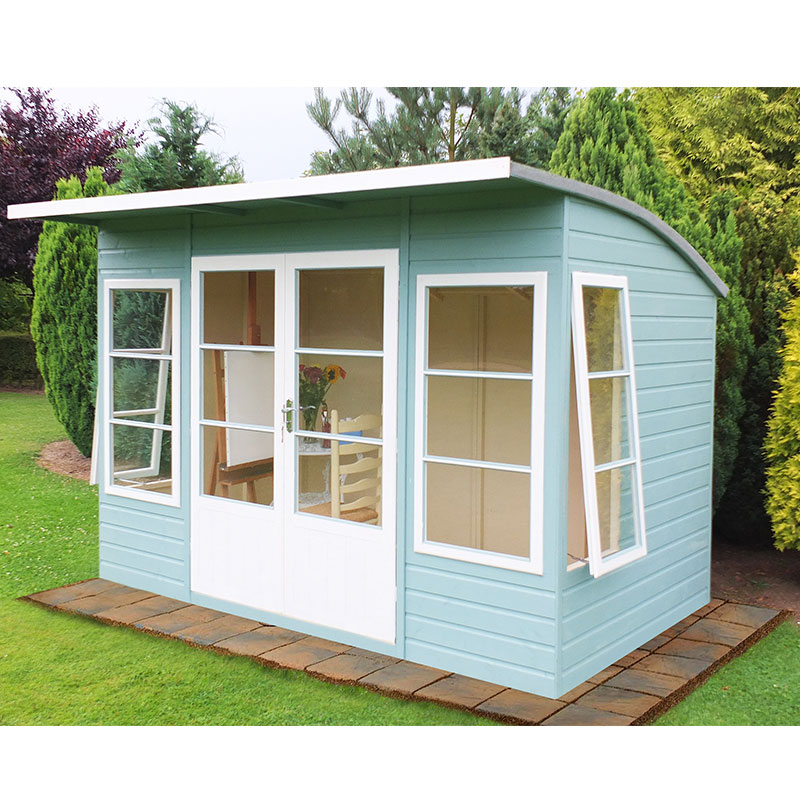
Curved lines, different moods
Within this category, the barrel roof can take a few different forms, and the details make a real difference to the finish. Some versions have a more pronounced curve, giving a stronger visual sweep. Others are gentler and sit lower, which can suit smaller plots or gardens where the building needs to blend in rather than dominate.
The choice of roof shape affects both the look and the practical feel:
- Full barrel roof — a clear arch across the top, suited to buyers who want the curve to be a main feature.
- Shallow barrel roof — a softer, less dramatic profile that works well where height is limited or where a subtler appearance is preferred.
- Wide-span barrel roof — useful on larger summerhouses, where the curved roof helps stop the building looking too boxy.
- Compact barrel roof — a smaller format that keeps the same character in a more modest footprint.
These differences might seem small on paper, but in the garden they change how the building sits against fencing, planting and other outdoor features. A deeper arch tends to feel more architectural, while a shallow curve feels calm and restrained.
Styles for different garden uses
Although the roof style is the headline feature, barrel roof summerhouses often come in several layout types too. That matters if the building is meant for sitting out, storage-adjacent use, a hobby space or a garden dining corner. The shell may be similar, but the arrangement of doors and windows can make each option feel quite different.
Common variations include:
- Front-facing double doors for easy access and a more open feel towards the garden.
- Offset door designs that leave a wider wall section free for furniture placement.
- Corner-style layouts that make better use of awkward spaces and help the barrel roof read as a feature, not just a cover.
- Fully glazed front sections for a brighter interior and a stronger connection to the outside.
- Mixed glazing layouts that balance daylight with more usable wall space.
If you are comparing models, it helps to think about how the roof curve works with the openings. A broad glazed front can make the whole structure feel lighter, while a more closed layout can give the barrel roof a cosier, lodge-like character. Not every garden needs the same mood, which is part of the appeal here.
The practical edge behind the curve
One of the main reasons people choose a barrel roof summerhouse is that the roof shape offers a practical feel without looking too engineered. The curved profile often gives a comfortable internal volume, so the room feels less compressed than a low roofline might suggest. That can make a difference if you want space for a small table, loungers, chairs or a neat corner set-up.
The roof also helps the building look balanced from more angles. Some summerhouses can seem front-heavy or plain from the side; a barrel roof tends to carry the eye across the top in one smooth line. That can be especially useful in gardens where the building will be seen from the side path, not just head-on.
For buyers wanting a structure with character but not a fussy appearance, this is a strong middle ground. It has more identity than a plain rectangular roof and less formality than a highly angular design.
Comparing barrel roof, apex and pent roof summerhouses
When choosing a summerhouse, roof shape is usually the first big difference people notice. The barrel roof has its own personality, but it helps to compare it with the other common forms so the choice feels clearer.
- Barrel roof — curved, soft-edged, visually smooth, often chosen for a relaxed and design-led look.
- Apex roof — a pitched peak with a classic outline, often more traditional in feel and familiar in many gardens.
- Pent roof — a single slope, usually cleaner and more linear, often useful where a lower profile is wanted.
The barrel roof sits between formal and casual. An apex roof can look more cottage-like or traditional, while a pent roof often reads as simple and modern. The barrel shape adds something a bit different: it softens the overall mass of the building. If the garden already has fences, paving and squared-off edges, that curve can bring a nicer visual break.
There is also a difference in presence. Apex roofs usually draw the eye upwards in a pointed way. Pent roofs move the eye along one direction. Barrel roofs create a continuous sweep, and that can make the summerhouse feel more settled in its setting.
Small footprint or larger retreat?
Barrel roof summerhouses work across a broad range of sizes, and the proportions really affect how the style reads. In a smaller footprint, the rounded roof can make the building feel less cramped and more considered. It stops the structure looking like a box with a lid on top, which is a common issue in compact gardens.
In larger sizes, the curve becomes more dramatic and can give the summerhouse a real presence without making the outer form harsh. A wider version can work well as a sitting room at the bottom of the garden, while a more compact one is suitable for a tucked-away seating area or a simple escape from the main house.
When browsing the category, it is worth noting the relationship between width, depth and roof curve. A wide, shallow barrel roof can create a calm, broad feel. A deeper or more compact body with the same roof style may feel cosier and more enclosed. Neither is better in general; they just suit different kinds of space.
Glazing choices that change the atmosphere
The roof shape may be the first thing you notice, but the glazing pattern changes the whole mood of the summerhouse. Barrel roof designs can be paired with a range of window arrangements, and the difference is more than cosmetic.
Large glazed fronts make the room feel open to the garden and bring in a lot of light, which can suit a social seating area. Smaller windows can make the interior feel calmer and slightly more enclosed, which some buyers prefer for a reading corner or a quieter garden room feel.
Side windows also matter. If the barrel roof is used on a corner or a side-facing plot, the window placement can decide whether the building feels panoramic or private. A more open arrangement is useful if the view is the selling point. A more measured one is better if neighbouring boundaries are close and the summerhouse needs to feel sheltered.
So, while the roof gives the form its character, the windows decide how that character works in daily use. That is one of the reasons this category has such a broad appeal.
Materials and finish: where the style gets its tone
The same barrel roof shape can feel quite different depending on the materials and finish. Natural timber creates a warm, garden-friendly expression that suits planting and softer landscaping. A lighter finish can make the curve stand out more clearly, while a darker tone can make the building feel grounded and more discreet among trees or shrubs.
There can also be differences in board profile and edge detailing. Some summerhouses present a more crisp, defined silhouette, while others have a slightly softer external read. With a barrel roof, those details matter because the curve already brings movement to the shape. A clean finish can emphasise the roof line; a more textured one can make the whole building feel relaxed and less formal.
Buyers often look at finish after deciding on size, but in this category the finish is part of the visual identity. The roof and wall treatment should work together, not compete.
Where the barrel roof makes the most sense
This style is especially useful where a garden needs a building that feels thoughtful rather than rigid. It can suit modern plots, softer cottage-style spaces and mixed planting schemes alike. The curve helps bridge the gap between outdoor architecture and the natural shapes already in the garden.
It is also a strong option where the summerhouse will be seen from several angles. A barrel roof is rarely a one-view design; it tends to look composed from the front, side and even at a slight distance. That matters in open gardens, where the building can’t rely on one decorative elevation only.
If the aim is to add a structure that becomes part of the landscape instead of sitting awkwardly in it, this roof type is worth shortlisting. It does not need much extra fuss to look considered.
What to compare before choosing one
To pick the right barrel roof summerhouse, it helps to look beyond the shape and compare the details that affect fit and feel. These are the things buyers usually notice later if they have not checked them properly:
- Roof depth — a deeper curve changes the silhouette and may suit a more distinctive look.
- Front glazing — more glass gives a brighter interior and a more open connection to the garden.
- Side window placement — useful for balancing privacy and light.
- Footprint — compact or broad proportions create very different room feelings.
- Door position — central, offset or side access can change how the room is arranged inside.
- Visual weight — some versions feel airy, others more solid and anchored.
These points help separate a summerhouse that simply looks nice from one that actually fits the garden and the way it will be used. That is especially important with a barrel roof, because the shape can be the thing that draws someone in before they have looked closely at the layout.
Why buyers keep coming back to this shape
There is a reason barrel roof summerhouses keep their appeal. They offer a design that feels a bit softer than the usual garden room options, without losing practicality. The roof line is memorable, but not noisy. The shape can look tailored to the garden, yet still easy to live with.
For some buyers, the attraction is visual: they want something that feels more individual than a plain boxed structure. For others, the draw is the inside atmosphere, where the curved roof adds a sense of openness and comfort. And for many, it is simply the balance of the two.
If you are comparing garden buildings and want one that feels both useful and a little more distinctive, a summerhouse with barrel roof is a strong category to explore. It offers variety in size, glazing and proportions, while keeping that recognisable curved outline that can sit neatly in all sorts of gardens.
A final look at the details that matter
In this category, the best choice often comes down to how the roof shape works with everything else: the windows, the doors, the footprint and the way the building sits in the plot. The barrel roof brings the character; the rest of the layout decides how that character is used.
That is what makes these summerhouses interesting. They are not just about a roof style. They are about shape, balance, light and presence in one compact garden building. If your garden needs something with a smoother outline and a calmer feel than a traditional peaked design, this is a category worth spending time on.
And once you have seen how a barrel roof changes the look of a summerhouse, it can be hard to go back to anything more ordinary.
[Sassy_Social_Share]