
Summerhouses under £600 - Best Deals in UK!
Showing all 4 results
-
24% OFF: 7′ x 5′ Forest 4Life 25yr Guarantee Double Door Pent Summer House (2.26m x 1.7m) £589.9924%

-
21% OFF: 7×5 Double Door Apex Summer House (2.28m x 1.53m) – Forest 4Life 25yr Guarantee £589.9921%

-
20% OFF: 6′ x 4′ Forest Beckwood 25yr Guarantee Double Door Apex Summer House (1.99m x 1.23m) £569.9920%

-
20% OFF: 6′ x 4′ Forest Beckwood 25yr Guarantee Double Door Pent Summer House (1.98m x 1.4m) £569.9920%

Summerhouses under £600 offer compact garden retreats, practical storage-and-seating combos, and space-saving wooden designs in pent, apex, and corner styles for smaller budgets.
Small Budget, Proper Garden Room Feel
Choosing a summerhouse under £600 is often about getting the look and feel of a dedicated garden space without moving into a bigger spend. At this price point, the range usually leans towards compact footprints, simpler timber construction, and designs that make the most of limited garden space. That does not mean plain or flimsy-looking. Many of these buildings still bring a neat, lived-in style that works well as a reading spot, a plant-staging corner, a quiet cup-of-tea shelter, or a place to sit when the weather turns a bit grey.
What makes this category especially useful is the balance between appearance, size, and value. Buyers can look for straightforward garden rooms with clean lines, or pick shapes that tuck into a corner and free up lawn space. For smaller gardens, that can be the difference between a structure that feels squeezed in and one that sits naturally in place.
What You Usually Find at This Price
In the under £600 bracket, summerhouses are generally designed with economy in mind, but there is still a good amount of choice. The most common features include timber cladding, modest wall thickness, single doors or double doors depending on size, and windows that bring in light without adding too much cost. Glass style can vary too, with plain glazing or tougher acrylic-type panels sometimes used in more budget-friendly builds.
Bestseller der Kategorie Summerhouses under £600

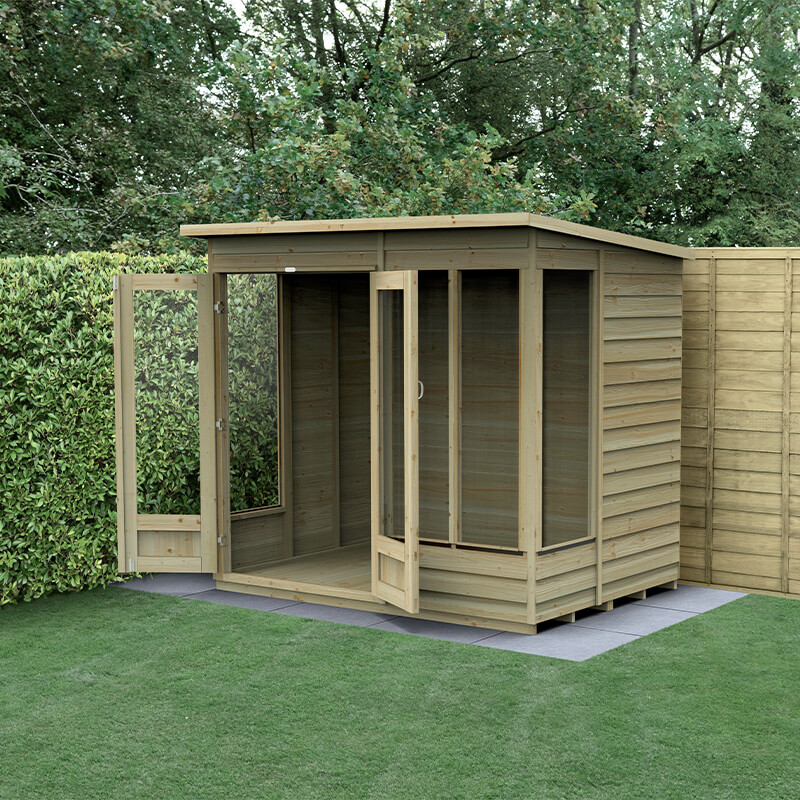
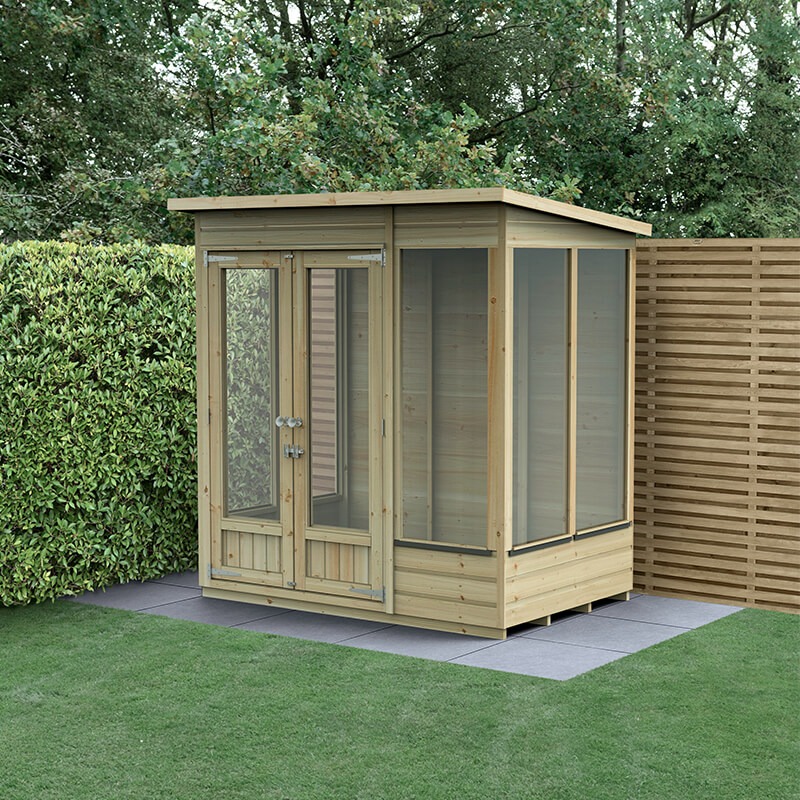
You will often see a trade-off between space and detail. A more detailed design may have decorative windows, a veranda feel, or extra frontage, while a simpler one focuses on usable internal space. If you are comparing options, it helps to think about what matters most: more floor area, more light, or a shape that fits a tricky corner.
- Compact rectangular summerhouses for straightforward placement
- Corner summerhouses that use awkward spaces well
- Pent roof designs for a cleaner, modern outline
- Apex roof styles for a more traditional garden-room look
- Simple glazed fronts to brighten the interior
Shapes That Change the Whole Feel
The shape of a summerhouse changes more than just the look. It affects how the building sits in the garden, how much room it gives inside, and even how easy it is to place furniture. A rectangular summerhouse is usually the easiest to understand: sit it against a fence, line up a bench or table inside, and you have a clear layout. This is a good option if you want something that feels like a small outdoor room.
Corner summerhouses are different. They are made to slot into unused space and can give a surprisingly roomy interior for the footprint. Because they open out at an angle, they can feel quite sociable, especially with seating arranged in a curve or along two walls. They are handy if you do not want the structure to dominate the middle of the garden.
Pent roof summerhouses have a lower front-to-back profile and often suit more modern gardens, sheds, or boundary lines. The sloped roof can make them feel a bit sleeker and less bulky. By contrast, apex roof summerhouses bring a more classic profile and sometimes a slightly more open sense inside at the ridge. If you like a more familiar garden-building shape, apex often feels right at home.
Why Buyers Keep Looking at the Under £600 Range
There are a few practical reasons people keep coming back to this price point. First, it is often a manageable step into garden buildings without going straight into higher-end categories. Second, the sizes available can suit small and medium gardens where a bigger building would simply be too much. Third, the category tends to include designs that are easy to picture in a real domestic garden rather than in some oversized display setting.
For many buyers, the appeal is also about making an outdoor area feel more used. A summerhouse can change a patch of lawn or a side garden from something you walk past into somewhere you actually spend time. Even a modest build can create a proper destination in the garden, which is part of the attraction. It gives shape to the space, basically.
Different Uses Without Overcomplicating It
Although summerhouses are often thought of as leisure buildings, the under £600 category still offers a few distinct ways to use them. A simple seating room is the obvious one, but many people choose a compact summerhouse because it feels more sheltered than open decking while still being lighter in feel than a full insulated room. That makes it useful for morning coffee, a quiet place to read, or somewhere to sit during a shower without retreating indoors.
Some buyers also look for a design that can act as a garden focal point. In that case, the appearance matters as much as the function. Decorative glazing, shaped windows, and a more house-like frontage can give the garden a finished look. Others prefer something plainer and more discreet, especially where the structure needs to blend in with planting or sit behind a fence line.
- Relaxation spot for chairs, a bistro set, or a small sofa
- Garden reading nook with plenty of daylight
- Entertaining corner for tea, snacks, and informal seating
- Plant display area where pots and trays feel organised
- Quiet retreat away from the main house without a big build cost
Timber Look, Light Feel, Smart Spending
Most summerhouses in this budget are timber-based, and that is part of why they feel right in a garden setting. Timber has a natural, familiar look that sits easily alongside lawns, borders, fencing, and shed paintwork. It is also one of the reasons the category stays accessible. You are not usually paying for more elaborate materials or complex construction, but for a clear, garden-friendly shape that does the job.
Within the range, the difference often comes down to the finish and the way the frontage is handled. Some designs look more pared back, with plain boarding and a simple doorway. Others include front windows or a wider opening that makes the interior feel less closed in. If you like a building that feels brighter from the inside, a model with more glazing can be worth a closer look. If privacy matters more, a simpler layout may suit better.
Glazing, Doors, and the Small Details That Matter
Small details can shift a summerhouse from okay to genuinely useful. Door style is one of those. A single door can work well when access is tight or the building is compact, while double doors make the front feel more open and can make moving chairs or tables easier. If the goal is a casual seating area, wider doors often help the building feel more connected to the garden.
Window placement matters too. Front windows make the building feel welcoming and are handy if you want a view into the garden. Side windows can bring light across the room and help avoid that tunnel feeling. Some buyers prefer fewer openings for a more enclosed, private atmosphere. There is no single right answer, only what suits the garden and how you plan to use the space.
Another thing worth checking is the roof style, because it affects both the look and the practical feel. Apex roofs often give a more traditional profile and may suit gardens with mixed planting or period features. Pent roofs are a bit neater and can work well against a boundary or in a more contemporary layout. It sounds small, but the roof line really does change the mood.
How to Match the Build to Your Garden
Space planning matters a lot in this category, because under £600 summerhouses are often chosen for gardens where every metre counts. If the garden is narrow, a pent style can sit more naturally along a fence. If the space has an awkward angle, a corner design may save you from wasting ground that would otherwise be hard to use. If you have a more open lawn area, a rectangular build can give a neat, balanced look without overthinking it.
The surrounding garden also changes the best choice. A summerhouse near beds and shrubs can feel tucked away and private. One placed at the end of a path can become a destination. Even with a modest budget, the position can make the building feel more intentional and less like a bit of leftover structure. That sort of thing matters more than people sometimes expect.
Useful Buying Checks Before You Click
When shopping for summerhouses under £600, it helps to compare more than just the picture and the price. Pay attention to the external dimensions, but also the internal useable space. Some buildings look roomy from the front but lose a bit of practical room to wall structure or door opening. If you want a table and two chairs, or a bench plus storage basket, you need to picture the inside, not just the footprint.
It is also smart to compare window layouts, because a summerhouse with more glazing can feel larger and brighter without increasing the footprint. On the other hand, if the building is close to neighbours or a boundary, a quieter, less open design might feel better. Buyers often get caught up in looks first, but the layout is what decides whether the space feels pleasant to sit in.
- Check the footprint against the space you actually have
- Look at door width if you plan to bring furniture inside
- Compare window positions for light and privacy
- Choose the roof line that suits your garden shape
- Think about the interior layout, not only the outside appearance
What Makes One Option Different From Another
In this category, the differences are often subtle but important. A more open-fronted summerhouse can feel airy and sociable, while a more enclosed version feels calmer and more private. A corner unit may save space, but a rectangular one may be easier to furnish. A pent roof can look smart against a modern fence line, while apex can give a more established garden-building feel. These are not huge technical differences, but they change how the summerhouse works in day-to-day use.
Another difference is how much the design leans toward decoration versus function. Some budget summerhouses are made to look quite charming from the outside, with more emphasis on the frontage. Others are stripped back and practical, putting usable floor space first. If your main aim is to sit inside and enjoy the garden, favour the one with the layout that supports that. If you want it to add character to the plot, the exterior detail may matter more.
A Good Fit for Smaller Gardens and Cautious Budgets
For people wanting a garden building without moving into a larger spend, this category can be a very sensible middle ground. Summerhouses under £600 are not trying to do everything, and that is partly the point. They give you a defined space, a pleasing shape, and a reason to use the garden a bit more often, while staying in a price zone many buyers can work with.
They also suit buyers who want to keep the layout clear and uncluttered. A smaller building can leave more lawn, more planting, and more breathing room around it. That matters if you want the summerhouse to be part of the garden rather than the whole story. With the right shape and frontage, even a modest build can look like it belongs there from day one, which is often what people are after anyway.
Picking the One That Feels Right
If you are comparing options, start with the shape, then the size, then the glazing. That order usually helps. A corner summerhouse works where space is awkward. A pent roof suits tighter boundaries or a cleaner look. An apex design feels more classic and can suit a garden where softer lines and mixed planting are already in place. After that, check the doors and windows to make sure the building will feel right in use, not just in a photo.
In the end, the best choice is the one that matches how you want to use the garden. If you want a calm sitting room, go for light and a sensible footprint. If you want a more tucked-away retreat, look for privacy and a compact shape. If you want a structure that adds character without taking over, look at the simpler designs with neat proportions. That way, the summerhouse does more than sit there — it earns its spot.
[Sassy_Social_Share]