
Summerhouses 8x7 - Best Deals in UK!
Showing all 10 results
-
29% OFF: 8′ x 6′ Forest 4Life 25yr Guarantee Double Door Pent Summer House (2.52m x 2.05m) £669.9929%

-
29% OFF: 8′ x 6′ Forest Beckwood 25yr Guarantee Double Door Reverse Apex Summer House (2.42m x 1.99m) £759.9929%

-
28% OFF: 8′ x 6′ Forest Beckwood 25yr Guarantee Double Door Pent Summer House (2.52m x 2.05m) £769.9928%

-
25% OFF: 8′ x 6′ Forest 4Life 25yr Guarantee Double Door Reverse Apex Summer House (2.42m x 1.99m) £669.9925%

-
24% OFF: 7’3×7’11 Shire Parham Traditional Wooden Summer House £814.9924%

-
23% OFF: 8′ x 6′ Forest Beckwood 25yr Guarantee Double Door Apex Summer House – 5 Windows (2.42m x 1.99m) £774.9923%

-
22% OFF: 8′ x 6′ Forest 4Life 25yr Guarantee Double Door Apex Summer House – 5 Windows (2.42m x 1.99m) £684.9922%

-
18% OFF: 7’1×7’11 Shire Chatsworth Traditional Wooden Summer House £869.9918%

-
12% OFF: 7’3×7’11 Shire Parham Traditional Wooden Summer House £945.9912%

-
12% OFF: 7’1×7’11 Shire Chatsworth Traditional Wooden Summer House £935.9912%
Summerhouses 8×7 offer a balanced garden room size for seating, storage, hobbies and quieter outdoor time, with enough floor space for layouts in timber, pent or apex roof styles, glazed fronts and side windows.
Why 8×7 feels different in the garden
An 8×7 summerhouse sits in a useful middle ground: it is compact enough for many gardens, yet roomy enough to avoid that cramped shed feeling. The footprint works well where space is limited, but you still want a proper room rather than a tiny corner shelter. That size often suits a table and chairs, a reading spot, a small desk, or a mixed-use setup with one side kept open and the other used for storage boxes or a narrow bench.
Compared with smaller garden buildings, an 8×7 layout gives you more freedom with furniture placement. You can usually place seating without blocking the door, and there is often enough wall length for shelving, a fold-down table, or planters inside. Compared with larger summerhouses, it is easier to position in a typical suburban plot without dominating the whole garden. For buyers who want something practical rather than oversized, that balance is a major reason this size gets noticed.
Shapes that change the feel
The main difference between 8×7 summerhouses often comes from the roof and frontage shape. An apex roof gives a more traditional garden-building look, with a pitched centre line that can add a sense of height inside. That can make the room feel more open, especially when the front is glazed. An apex style also tends to suit classic garden settings and works well where you want the building to feel like a small cottage or retreat rather than a plain box.
Bestseller der Kategorie Summerhouses 8x7
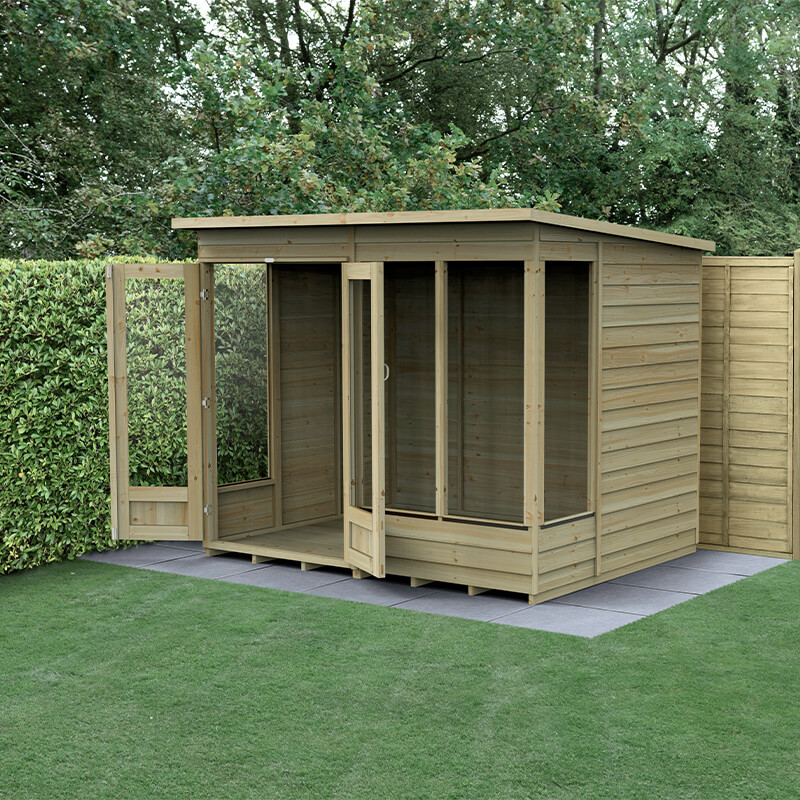
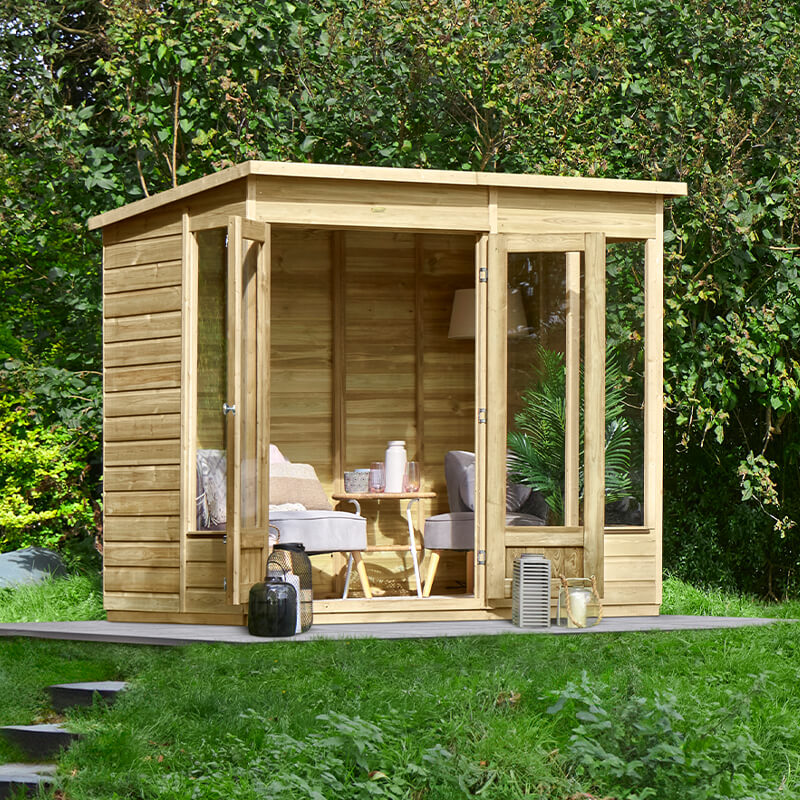
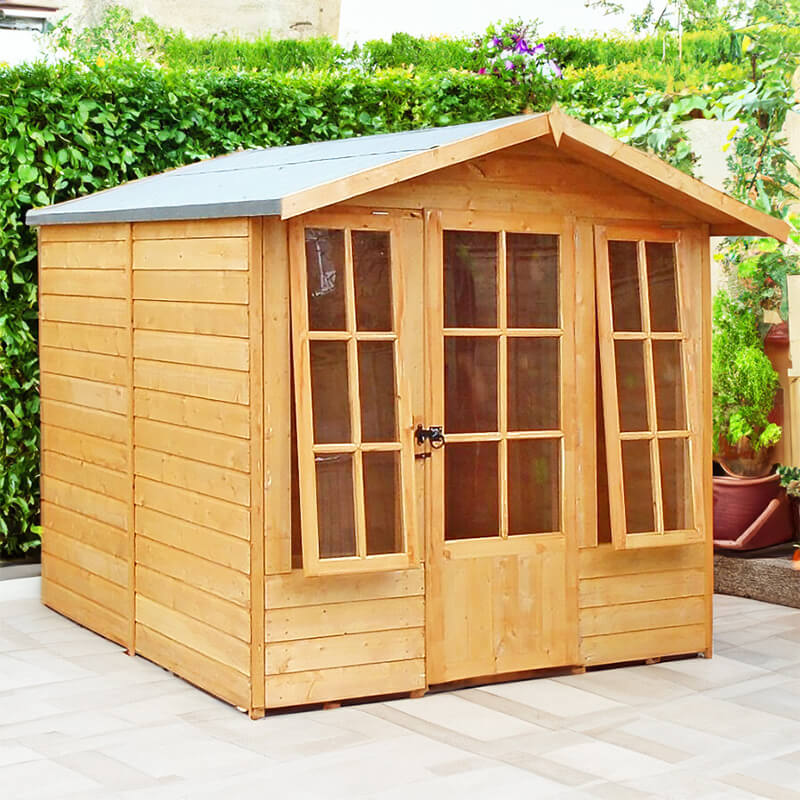
A pent roof has a lower, sloping profile and usually looks more contemporary. Because the roof line falls to one side, it can sit neatly against a fence line or in a more modest corner. The lower profile may feel less imposing in smaller gardens, though the interior ceiling line can be more angled. Buyers often choose this shape when the garden design already leans modern, or when they want the summerhouse to blend in with surrounding structures.
There are also corner summerhouse layouts in this size family, although the exact footprint can vary. A corner arrangement can make use of awkward spaces, while placing the doors on a diagonal or angled front can open up a wider view into the garden. That kind of shape is handy if you want to face the building towards a lawn or planting area, rather than towards a boundary.
Glazing, panels and the amount of light
One of the biggest differences between summerhouses in this category is the level of glazing. A model with full front windows creates a brighter interior and gives a more open, garden-room feel. This suits anyone who wants a space for lounging, sketching, reading or simply sitting with a view outside. If the front is mostly glass, the building feels more connected to the garden, though it also makes the interior more visible from outside.
By contrast, an half-glazed summerhouse can give a bit more balance between light and privacy. It still lets daylight in, but solid lower panels can make the room feel more enclosed and comfortable if you want a gentler, more sheltered atmosphere. This can be useful when the summerhouse faces a neighbour’s boundary or a public side of the garden.
Some 8×7 designs use shiplap tongue and groove cladding, with matching boards that create a neat exterior finish and a more structured look. Others may use a simpler panel appearance, which can feel a touch lighter visually. The practical difference is often about style and the level of visual detail you prefer. A more detailed timber finish can suit traditional gardens, while cleaner lines can work well in modern spaces.
What you can fit inside an 8×7 space
The appeal of 8×7 summerhouses is not only the footprint, but the way that footprint can be arranged. A compact sofa or a pair of armchairs can fit comfortably in many layouts, leaving room for a side table or storage stool. If the goal is a hobby room, a small workbench or a narrow desk may fit along one wall, with enough clearance for a chair and movement around it. The size does ask you to think a bit more carefully about what matters most, rather than trying to squeeze in everything.
For buyers who want a mixed-use building, an 8×7 summerhouse can give you zones without needing partitions. For example, one side can hold a chair and lamp, while the other side keeps storage baskets, plant pots or a compact bookcase. That split-use approach is useful if the building is being bought for both relaxation and practical use. It also helps prevent the room from becoming cluttered, which can happen when a smaller building is treated like a spare room and a shed at the same time.
If you mainly want a place for two people, this size is often comfortable. If you plan to host several guests regularly, you will need to be more selective with furniture. That is not really a drawback; it simply means the room works better as a personal retreat or a small social spot than as a large entertaining space.
Timber style and the look buyers notice first
Most garden summerhouses in this size use timber construction, and the look of the wood matters a lot. Natural timber tones tend to soften the building’s outline and help it settle into planting, lawns and fencing. Painted or prefinished exteriors can create a cleaner visual contrast, though the exact finish depends on the product range you are browsing. What matters at buying stage is how the exterior colour and board profile match the rest of your garden.
A traditional timber summerhouse often feels warmer and more relaxed. A straighter, more minimalist profile feels sharper and less ornamental. Neither is a better choice in general; they simply create a different mood. If your garden already contains lots of curves, arches and flowering borders, a classic finish may sit more naturally. If you already have paving, straight edging and contemporary planters, a neater profile can look more settled.
Practical differences between similar 8×7 summerhouses
When people compare 8×7 summerhouses, they often focus on small details that change the experience quite a bit. Door position, for example, can affect how easy it is to place furniture. A central front door gives a balanced look, but a side-oriented entry can free up wall space. Window placement changes how daylight falls through the room during the day, and that can affect where you want to place chairs or a table.
Another difference is the height profile. Some 8×7 buildings feel taller inside because of the roof pitch and wall construction. Others have a lower, more compact feel that may suit a garden where you want the structure to stay visually quiet. If you like a brighter interior, a taller front and more glazing often help. If you prefer a snugger room, a lower roof and more timber panels may be better.
The amount of front opening can also matter. A broad glazed front makes the summerhouse feel like a proper room with a view. A more enclosed front can feel calmer and slightly more private. Buyers often decide between those based on how exposed the building will be in the garden, and whether they want daylight or shelter to take priority. It’s a small thing, but it changes the whole use of the space.
When this size suits a garden better than a shed
An 8×7 summerhouse is a good step up from a regular shed when the aim is comfort as much as storage. A shed is useful, but it usually prioritises tools and equipment. A summerhouse, even a modest one, is more about sitting, spending time and making the garden feel lived in. If you have ever looked at your outdoor space and thought it needs a room rather than another storage box, this size tends to fit that idea.
It can also be a more natural choice than a large outbuilding when the garden is not especially deep or wide. The footprint leaves enough breathing space around the building for borders, a path or simply a bit of lawn, so the garden does not end up feeling taken over. That matters if you still want the structure to look like part of the garden, not the whole story.
Details worth checking before you decide
Before choosing between the different 8×7 summerhouse styles, it helps to think in simple, practical terms: where will the door open, how much of the front do you want glazed, and do you prefer a higher apex look or a lower pent shape? These decisions affect both appearance and how the room feels once furniture goes in. It’s easy to get drawn to the look from the outside, but the inside use is what really decides whether the building suits you.
Also think about the exact role of the building. If it is mainly for quiet sitting, a lighter glazed design often makes sense. If you want more privacy and a more enclosed atmosphere, a model with stronger timber panels may suit better. If the building is likely to double as a hobby room, you may want one wall that can take storage without blocking natural light. These small choices can make the difference between a room that feels arranged and one that feels awkward.
A category that gives room without wasting ground
What makes Summerhouses 8×7 worth a close look is the blend of usable interior space and manageable external size. It is a category for buyers who want a proper garden room, but not a huge structure with a large footprint. The different forms — apex, pent, occasional corner layouts, full glazing or half glazing — let you tune the building to the way your garden already works.
That flexibility is often the real selling point. You are not only buying a timber building; you are choosing how the garden will be used. For some, it becomes a quiet corner for tea and a book. For others, it turns into a hobby room, a place for friends, or a better-looking alternative to a standard storage unit. And because the 8×7 size sits in such a practical range, it can do that without feeling overdone.
- Apex roof for a more classic profile and a little extra height feeling
- Pent roof for a lower, cleaner look that suits tighter plots
- Full glazing for more daylight and a stronger garden-room feel
- Half glazing for a bit more privacy and a calmer interior
- Timber cladding for a natural look that sits well in planted gardens
- Corner-friendly layouts for making use of harder garden spaces
- Mixed-use interiors for seating, hobby time, or a small desk setup
If you are comparing 8×7 summerhouses, focus on shape, glazing and internal use first. Those three things usually decide whether the building feels like a nice addition or a space you keep wanting to rearrange.
[Sassy_Social_Share]