
Summerhouses 60 sq ft / 5 m² - Best Deals in UK!
Showing all 10 results
-
29% OFF: 8′ x 6′ Forest 4Life 25yr Guarantee Double Door Pent Summer House (2.52m x 2.05m) £669.9929%

-
29% OFF: 8′ x 6′ Forest Beckwood 25yr Guarantee Double Door Reverse Apex Summer House (2.42m x 1.99m) £759.9929%

-
28% OFF: 8′ x 6′ Forest Beckwood 25yr Guarantee Double Door Pent Summer House (2.52m x 2.05m) £769.9928%

-
25% OFF: 8′ x 6′ Forest 4Life 25yr Guarantee Double Door Reverse Apex Summer House (2.42m x 1.99m) £669.9925%

-
24% OFF: 7’3×7’11 Shire Parham Traditional Wooden Summer House £814.9924%

-
23% OFF: 8′ x 6′ Forest Beckwood 25yr Guarantee Double Door Apex Summer House – 5 Windows (2.42m x 1.99m) £774.9923%

-
22% OFF: 8′ x 6′ Forest 4Life 25yr Guarantee Double Door Apex Summer House – 5 Windows (2.42m x 1.99m) £684.9922%

-
18% OFF: 7’1×7’11 Shire Chatsworth Traditional Wooden Summer House £869.9918%

-
12% OFF: 7’3×7’11 Shire Parham Traditional Wooden Summer House £945.9912%

-
12% OFF: 7’1×7’11 Shire Chatsworth Traditional Wooden Summer House £935.9912%
Summerhouses 60 sq ft / 5 m² give you a compact garden room for seating, storage, reading, working or a small hobby space, with timber, corner and pent styles to fit tighter plots.
A Small Footprint That Still Feels Like a Proper Room
60 sq ft / 5 m² summerhouses are made for gardens where space matters, but you still want a place that feels separate from the house. At this size, the building is compact enough to sit neatly in a corner, along a fence line, or at the back of a narrow plot, yet it can still hold a chair, a small table, shelving, or a slim bench. That balance is the reason many buyers look at this category first when they want something more defined than a storage shed, but not as dominant as a larger garden room.
The main appeal is the way small summerhouses create a clear function without taking over the garden. You can use them as a quiet reading space, a tea spot, a place for plants that need shelter, or a simple hideaway away from the noise of the main house. Because the footprint is limited, the structure often feels easier to place, easier to position against existing landscaping, and easier to work into gardens that already have paths, beds, or a patio layout in place.
Which Shape Works Best in 5 m²?
Within the 60 sq ft summerhouse category, shape makes a bigger difference than many people expect. A rectangular design gives the clearest use of wall space and is often the easiest for placing furniture. A square version can feel more balanced inside and may suit a central table layout. A corner summerhouse uses the garden angle more efficiently and can free up a straight fence line for planting or storage. A pent roof design usually leans towards a sharper, modern outline, while an apex roof gives that more classic summerhouse look and can help the building feel a bit less boxy.
Bestseller der Kategorie Summerhouses 60 sq ft / 5 m²
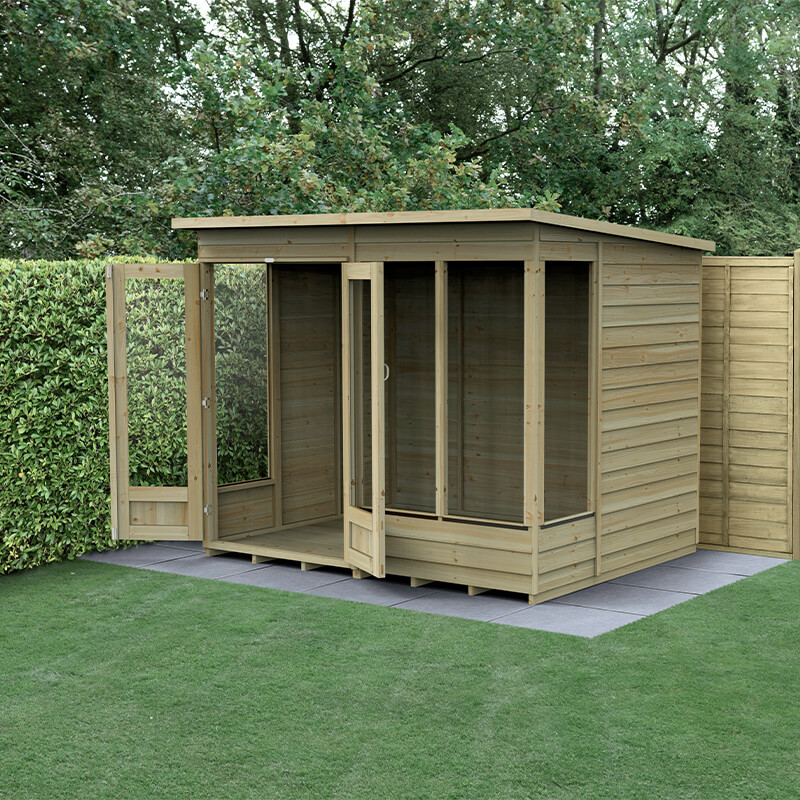
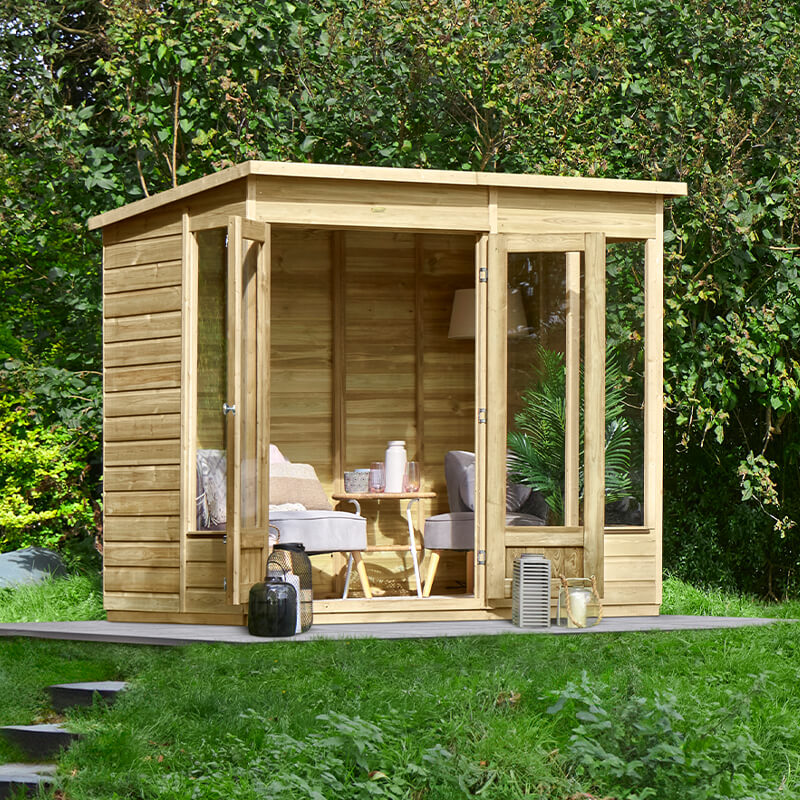
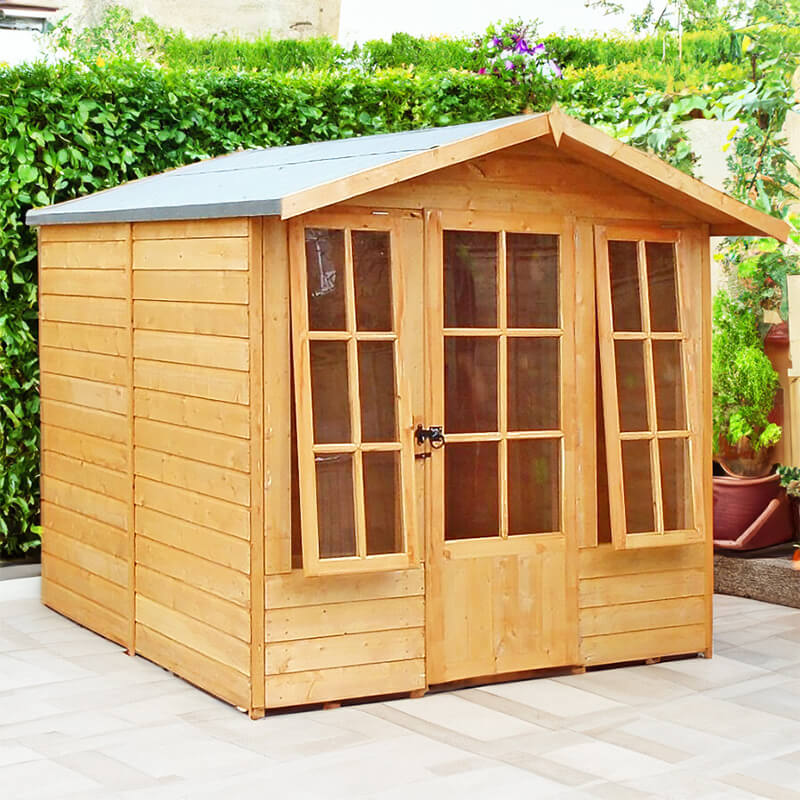
Each shape changes the feeling of the room. Corner summerhouses often make sense when the garden has awkward edges, because they use two boundary lines at once. Rectangular summerhouses are useful when you want a straightforward interior with an obvious front wall for opening doors and a rear wall for seating. Square summerhouses can feel more compact but easier to arrange if you want the interior to work like a little cabin rather than a narrow box. In a 5 m² building, these small differences really matter.
Timber Cladding, Panels and the Look of the Walls
Most buyers in this size range are looking at timber summerhouses, and the cladding style changes both the look and the way the building sits in the garden. Overlap cladding has a traditional, layered appearance and is commonly chosen for a softer, cottage-style look. Shiplap cladding gives a neater profile with tighter joins and often a more finished feel. Tongue and groove options are usually valued for their cleaner lines and more solid appearance, especially if the summerhouse is meant to feel more like a small room than a garden hut.
There is also a visual difference between fully enclosed summerhouses and those with larger glazed areas. Some 5 m² designs are built to look light and airy, with wide windows or glazed doors that help the space feel less enclosed. Others lean into a more cabin-like style, with fewer openings and a steadier, more private feel. The right choice depends on whether you want a bright garden retreat or a more enclosed spot for sitting out of sight. Neither is better in general; they just suit different uses.
Window Styles That Change the Whole Mood
In a small summerhouse, the windows are not just a detail. They shape how the room feels the moment you step inside. Fixed windows can keep the look clean and simple, while opening windows add a sense of flexibility and can make the room feel more usable across the day. Full-length glazed fronts are common where people want a more open outlook into the garden, and smaller side windows can work well if privacy matters more than the view.
You may also find differences in glazing style. Single glazing keeps the build simple and is often used on more modest designs, while double glazing can be chosen when the summerhouse is expected to be used more often or for longer stretches. That does not automatically make one the right pick for everyone, but it does show how the same 60 sq ft footprint can serve different needs. A fully glazed front tends to suit a social or decorative use, while a more enclosed window arrangement is often better for a hobby room, quiet office corner, or private sitting space.
Uses That Fit the Size Without Feeling Cramped
A 5 m² summerhouse is not built for everything, and that is part of its charm. It works well when you choose one main use and let the layout support that. A pair of armchairs and a small side table can turn it into a tea room. A compact desk with a stool can create a work nook. A bench with storage baskets can make it feel like a sheltered retreat for reading, writing, or just taking a pause from the house. If the layout is kept simple, the room can feel surprisingly calm.
Some people also choose this size for mixed use, but it pays to keep expectations realistic. A small summerhouse can combine seating and storage, for example, but it usually benefits from a clear focus. Trying to fit too many functions into 60 sq ft can make it feel crowded fast. That is why the best layouts often use one main piece of furniture and then leave a strip of open floor so the room still feels usable. A compact room should not be stuffed full, even if it is tempting.
Why Buyers Choose This Category for Smaller Gardens
The strongest argument for this category is the way small summerhouses can add a separate feeling to the garden without requiring a large plot. In a smaller outdoor space, every square metre has a job to do. A 5 m² building can act like a destination point, drawing the eye and giving the garden a proper focal area. It can also help divide the space into zones, which is useful if you already have a patio, lawn, borders, or a vegetable bed and want the garden to feel more ordered.
There is also a practical difference between a summerhouse and an open seating area. A covered structure gives a sheltered place to sit, which makes the garden feel more usable in changeable weather. Even if it is not used every day, having a defined indoor-outdoor room can make the garden feel more complete. Buyers often like that the building is not too large, since a smaller footprint can feel less intrusive and may leave more room for planting around it. That can matter a lot if you want the structure to blend in rather than dominate.
Simple Layout Ideas That Suit 60 sq ft
- Single seating area with one bench or two chairs and a narrow table.
- Reading corner layout with an armchair, lamp and shelf for books.
- Small work setup with a compact desk facing the garden.
- Plant shelter layout with stands or shelves for potted plants.
- Dual-purpose space with seating on one wall and storage under or beside it.
What matters most in a room this size is keeping the centre as open as possible. A clear centre line makes the summerhouse feel easier to move around in, even if the space is modest. Wall-mounted items can help too, because they keep the floor freer. The point is not to make it look empty, but to stop it feeling overfilled. In a 60 sq ft summerhouse, a little restraint often gives a better result than trying to fit in every possible use at once.
Round, Pent or Apex: The Roof Changes the Feel
The roof style is another area where small differences have a noticeable impact. A pent roof summerhouse usually gives a modern profile and can be a neat choice where the building sits close to fencing or other boundary lines. An apex roof gives the familiar pitched silhouette many buyers associate with a classic summerhouse, and it can make the structure feel more established in the garden. A shallow roofline may look tidy and compact, while a steeper pitch brings a more traditional outline.
There are also practical visual differences. A pent roof tends to feel lower and more discreet, which can be useful in a smaller garden where height is a concern. An apex style often draws the eye upwards a bit more, which can help the building feel less tight inside. Even though the floor area stays the same, the roof shape can change your impression of the room quite a lot. It is one of those details people sometimes overlook until they see the difference in person.
What Makes These Summerhouses Different from Larger Ones
The difference between a 5 m² summerhouse and a larger one is not just the obvious size change. Smaller versions tend to ask for sharper decisions about layout, furniture and use. That can be a benefit if you want a building that stays simple and manageable. Larger summerhouses can offer more flexibility, yes, but they also require more garden space and may feel like they need more contents to look balanced. A compact unit often feels easier to “finish” because the design is focused from the start.
In a smaller building, the relationship between window placement, door position and interior furniture is more obvious. A door in the wrong place can affect the whole room. A well placed window can make the space feel bigger than it is. That is why buyers often compare subtypes carefully. The same footprint may look very different depending on whether it is built as a corner model, a front-facing retreat, or a narrow rectangular room. When you are choosing between them, think less about what sounds nice in general and more about what fits the garden shape you actually have.
Useful Buying Checks Before You Choose
- Measure the siting area and leave room for access around the building.
- Check the door swing so it does not clash with furniture or paths.
- Think about window position if privacy or light matters more in one direction.
- Match the shape to the garden, especially in corners or narrower plots.
- Decide the main use first, then pick the layout that supports it.
These checks may seem simple, but they help avoid the common mistake of choosing a summerhouse by appearance alone. A small building can look lovely in a product image and still feel awkward if it does not suit the actual space. The category works best when the buyer is clear about whether the room is for sitting, working, displaying plants, or just having somewhere sheltered to go. That clarity makes the choice easier and the result more satisfying, even if the garden is on the modest side.
A Compact Room That Still Leaves Room for the Garden
One reason people keep coming back to summerhouses 60 sq ft / 5 m² is the balance they offer. You gain a defined garden building without losing the garden itself. That matters if you want planting, lawn or open space to stay visible and usable. A smaller structure can sit quietly in the background or act as a focal point depending on how it is styled. Either way, it brings a sense of purpose to the plot.
For many buyers, the attraction is not just what the summerhouse does, but what it changes around it. It can create a calmer corner, give shape to an otherwise plain border, or make a garden feel more thought through. A well chosen 5 m² summerhouse does not have to shout to be effective. It just needs to fit the space, the shape and the way you want to use the garden. And once those things line up, the result tends to feel nicely sorted, even if the garden itself is small.
[Sassy_Social_Share]