
Summerhouses 10x9 - Best Deals in UK!
Showing all 2 results
-
24% OFF: 10′ x 8′ Forest Beckwood 25yr Guarantee Double Door Apex Summer House (3.01m x 2.61m) £1,019.9924%

-
22% OFF: 10′ x 8′ Forest 4Life 25yr Guarantee Double Door Apex Summer House (3.01m x 2.61m) £914.9922%

10×9 summerhouses offer a compact yet generous footprint for gardens that need a proper outdoor room, with options in timber, corner and pent styles, plus layouts that suit seating, storage or a quiet hobby space.
Why the 10×9 size feels just right
A 10×9 summerhouse gives you a useful middle-ground between a small garden shelter and a full-blown outbuilding. The shape leaves enough room for a pair of chairs, a small table, and still space to move about without feeling boxed in. Because the proportions are fairly balanced, this size can work in a range of garden layouts, from narrow side returns to more open lawns, and it does not usually overpower the plot. That makes it a popular choice for buyers who want a defined garden room without losing the rest of the garden to it.
Compared with smaller formats, a 10×9 summerhouse can feel more flexible day to day. You may use it as a reading room, a spot for tea and conversation, a garden studio, or simply a place to sit out of the wind. The extra depth, depending on the exact orientation of the model, can also make a noticeable difference when placing furniture. It is easier to create a proper seating zone rather than just squeezing in a bench and hoping for the best, which is often what happens with smaller buildings.
Which shapes work in a 10×9 footprint
The phrase 10×9 summerhouses covers more than one style, and the shape matters as much as the size. A standard rectangular summerhouse usually gives the clearest interior layout, while an octagonal or hexagonal design softens the look and can make the room feel more like a garden pavilion. Corner versions are also common in this size range, especially where the building needs to sit neatly into an unused edge of the garden.
Bestseller der Kategorie Summerhouses 10x9
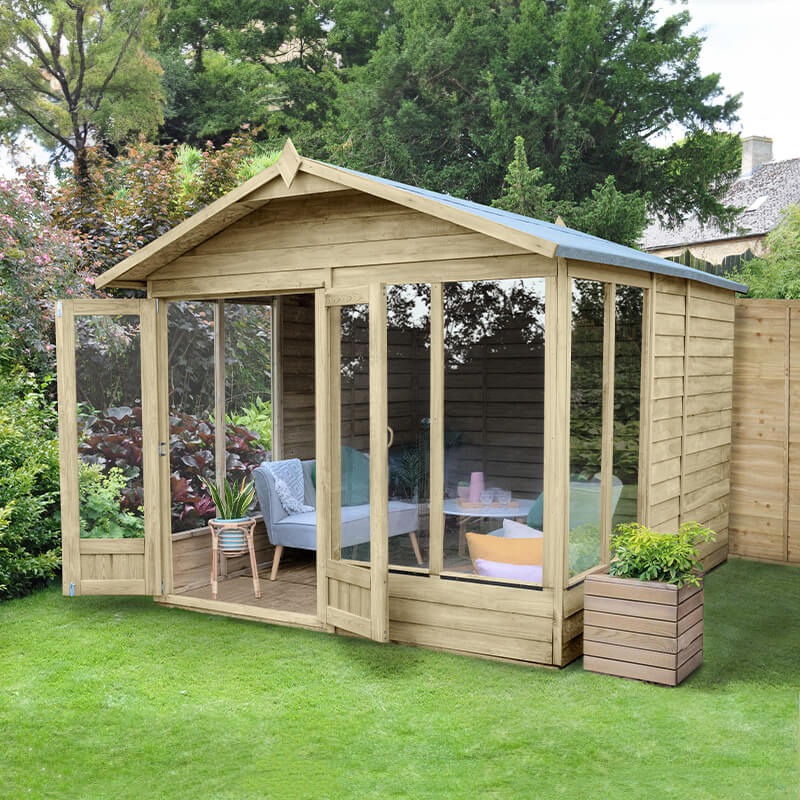
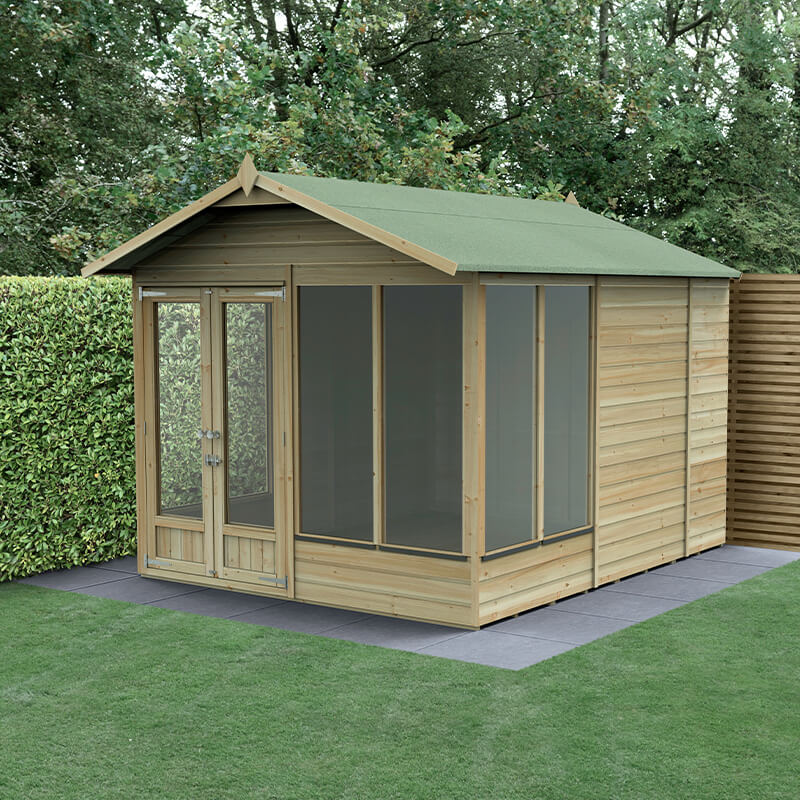
- Rectangular summerhouses – practical for straight walls, sofas, desks and storage units.
- Corner summerhouses – useful when the garden has awkward space or when you want the building to sit back into a boundary line.
- Pent summerhouses – often chosen for their clean roof line and a tidy, low-profile appearance.
- Octagonal or hexagonal styles – more decorative, with a softer outside shape and a sociable central feel.
In a 10×9 size, the choice of shape affects how the internal floor area is used. A rectangular plan tends to support longer furniture and a more obvious front-to-back layout. By contrast, multi-sided designs often focus attention toward the centre, which can suit a small dining set or a couple of lounge chairs. The difference may seem minor on paper, but once a building is in the garden, that geometry becomes one of the main things you notice.
Glazing styles that change the mood
Glazing is one of the key features buyers look at when comparing 10×9 summerhouses. Full-height windows bring in more light and make the building feel open, which is useful if the summerhouse is going to be used often during the day. Half-glazed options can give a more traditional garden room look, with a bit more wall space for placing furniture or a small shelf. Some people prefer a mixture of windowed and solid panels because it balances light with a little privacy.
If the summerhouse is intended for sitting with a view of the garden, wider glazing can frame the outdoors very nicely. If you want a more sheltered feel, fewer panes or smaller side windows may suit better. There is no single right answer here, because the best glazing arrangement depends on where the building will sit, which direction it faces, and how close it will be to neighbouring fences or planting. A lot of buyers notice, after they have narrowed it down, that the glazing is what makes one model feel open and another feel more enclosed.
Roof forms and what they bring to the build
The roof style changes both the appearance and the feel of a 10×9 summerhouse. A pent roof gives a neat, modern profile and can work well against a boundary or in a more compact garden. Apex roofs create a more classic outline and often give a better sense of height inside, which can help if you want the room to feel less flat. Curved or chalet-inspired roof lines, where available, tend to soften the overall look and can make the building sit more comfortably in a planted garden.
Roof shape also influences the impression of space inside. A little extra headroom can make the room easier to furnish and more comfortable to use for longer periods. Even in a modest footprint, a higher centre line may stop the room feeling like a box. That is one reason people who compare several 10×9 summerhouse designs often end up focusing on the roof before anything else, even though the external measurements are the same.
Different uses that fit the footprint
A 10×9 summerhouse can be used in quite a few ways, and the right version depends on the job you want it to do. For social use, a pair of armchairs and a small table can create a simple garden sitting room. For a more functional layout, a compact desk with a chair and a few storage pieces can turn it into a hobby space or home office-style setup. Some buyers also use the building as a calm corner for puzzles, crafts, sketching, or just getting a bit of peace away from the house.
This size is especially helpful when you want a clear division between activities. There may be enough room for a sofa on one side and a narrow cabinet or shelving unit on the other, depending on the model’s internal proportions. That separation makes the summerhouse feel more intentional, rather than just a shed with windows. It can also be useful if more than one person will use it, because there is usually a bit more elbow room than in smaller formats.
Timber choices and the feel of the exterior
Most 10×9 summerhouses are timber buildings, and the look of the wood can shape the whole character of the garden. A clean painted finish suggests a neat, cottage-like style, while natural timber grain gives a warmer, more rustic feel. The board profile matters too: straight tongue-and-groove cladding tends to look tidy and structured, while wider boards can create a more traditional appearance. It is easy to think only about size and layout, but the outer finish is one of the things that buyers see first, and it can make the summerhouse feel either formal or relaxed.
There are also differences in how solid the walls appear. Thicker-feeling timber sections and more substantial cladding can give a sturdier look, while lighter visual profiles make the building seem less heavy in the garden. Neither is automatically better; it depends on whether you want the summerhouse to stand out as a feature or settle quietly into the planting. A well-chosen timber finish can tie in with fencing, decking, or existing sheds, which makes the whole garden feel more joined up.
How the 10×9 size compares with other summerhouses
When comparing 10×9 summerhouses with other common sizes, the difference often comes down to how usable the interior feels. Smaller models can be fine for a single chair and a bit of storage, but they may not suit a more social arrangement. Larger buildings give more freedom, yet they can start to dominate a smaller garden and may need more careful placement. The 10×9 format tends to sit in a useful middle zone where the room feels proper, without requiring the sort of space that a much larger garden room would need.
The shape of the footprint also matters. A 10×9 rectangle can feel more open than a 10×9 square in practical use, depending on where the doors and windows sit. If the opening is placed well, the room can seem wider than the measurements suggest. That is why buyers should look beyond the headline size and consider the actual internal arrangement. The same dimensions can produce a very different result if the layout is suited to seating versus storage, or if the windows are grouped in a way that suits where the chairs will go.
Details that make buying easier to get right
When choosing a 10×9 summerhouse, small details can have a big effect on how satisfied you feel once it is in place. The position of the door is one of them. A central front door creates a balanced, formal look, while offset doors can make furnishing easier by leaving one uninterrupted wall section. Window placement matters too, especially if you want to avoid a chair back blocking the light or if a particular view is worth framing.
It is also worth thinking about how the building will feel from outside. Some models look best as a focal point at the end of a path, while others work better tucked into a corner where they seem almost hidden until you reach them. If the aim is to make the garden feel more usable, then the path to the summerhouse should feel natural rather than awkward. Even small planning choices can make the building feel more integrated and less like an afterthought.
Features buyers often compare before deciding
People looking at 10×9 summerhouses tend to compare a few clear features again and again, because these are the things that affect the everyday experience inside the building.
- Door width – wider access can make furnishing easier and feels less cramped when carrying items in.
- Window arrangement – useful for deciding where seating or a desk could sit.
- Wall height – helps shape the sense of space and comfort inside.
- Roof pitch – affects both the outside look and the feeling of height.
- Internal layout – important if you want the room to work for more than one use.
These details may sound obvious, but they are the bits that separate a summerhouse that merely fits the garden from one that actually suits it. A buyer can be drawn to the look first, then later realise the door opening is not where they need it or the windows do not match the planned furniture. Checking those points early saves that frustrating second guess.
Why this category suits buyers who want more than a shed
A 10×9 summerhouse is often chosen by people who want the garden to feel like a real part of the home. It is not just about having somewhere to put things; it is about creating a place that looks finished and feels inviting. That could mean a sheltered reading room, a small entertaining space, or simply a place to sit with the garden around you without dragging everything out of the house. The category works well for buyers who want something more polished than a standard store, but who still need to keep the footprint manageable.
There is also a visual benefit. A summerhouse of this size can add structure to a garden, especially if the rest of the space is open or loosely planted. It gives the eye a point to land on. In a way, it helps the garden feel composed. That can be particularly useful in medium-sized plots, where you want features that add purpose rather than clutter. It is a bit like finding the right chair for a corner room: not too much, not too little, just enough to make the space make sense.
Practical tips for choosing the right one
If you are narrowing down 10×9 summerhouses, it helps to picture how the building will actually be used on an ordinary day, not just on a sunny afternoon. Think about whether the main activity will be sitting, working, or a mix of both. Then look at the layout and ask whether the windows, doors and wall sections support that use. A lovely exterior is useful, but a good interior arrangement tends to matter more once the furniture arrives.
It also helps to think about the garden context. A building with a more traditional look may sit naturally beside shrubs and mixed planting, while a sharper, simpler profile may suit paved areas or more structured gardens. If you have trees, a corner plot, or a sloping edge, the model shape may matter more than you first expect. That is why many buyers end up comparing the style and proportions together instead of treating them as separate questions.
In short, the best 10×9 summerhouse is the one that feels easy to use, fits the garden without forcing it, and gives you a space you will genuinely go out to. When those things line up, the building stops being just another outdoor structure and starts becoming one of the most useful parts of the garden, even if the weather is a bit iffy.
[Sassy_Social_Share]