
Sheds 14x8 - Best Deals in UK!
Showing the single result

14×8 sheds give you a practical balance of storage, workspace and garden order, with room for tools, bikes and larger items. Compare timber, overlap, shiplap and pent roof styles.
Why a 14×8 shed feels properly usable
A 14×8 shed gives you a generous footprint without tipping into overlarge, awkward territory. The 14ft length creates real run-space for shelves, racking, benches or long-handled kit, while the 8ft width still leaves enough room to move about without feeling boxed in. For many gardens, that shape works better than a square shed because it uses a boundary line neatly and keeps the centre of the garden more open.
This size suits buyers who need more than basic tool storage. It can handle a mix of garden machinery, bike storage, folded furniture, compost bins, seasonal decor and everyday clutter that tends to take over the garage. It is also a sensible choice if you want a shed that can be split into zones, for example one side for storage and the other for a workbench or potting area.
The shapes you are likely to compare
In the 14×8 shed category, the shape is just as important as the materials. The footprint is rectangular, but the roof style and door layout change how the space feels and how easy it is to use.
Bestseller der Kategorie Sheds 14x8
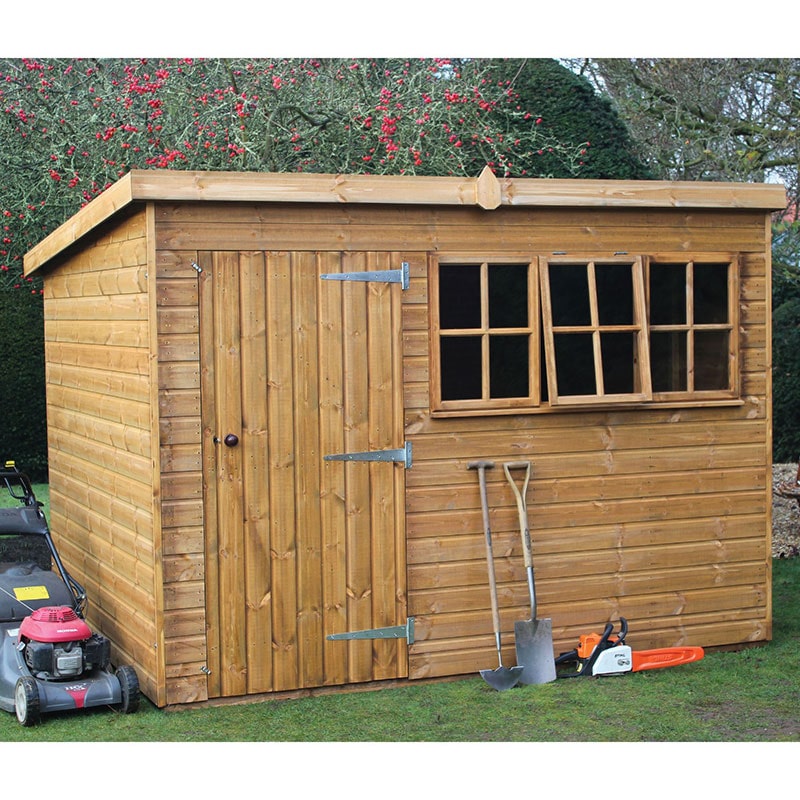
- Appex roof sheds give a classic profile and often provide more headroom in the middle. They suit buyers who like a traditional garden look and want a bit more vertical space for hanging tools or storing taller items near the centre.
- Pent roof sheds create a lower front edge and a clean, modern line. They are often chosen where the shed sits close to a boundary, as the sloping roof sheds water away in one direction and can feel less bulky from the garden side.
- Lean-to styles are useful where space is tight along a wall or fence. A 14×8 lean-to shed can feel more integrated into the plot, though the usable height may be more limited depending on the design.
- Corner or offset-door layouts are less about the roof and more about access. These can make a long shed easier to organise if you prefer one entrance for storage and another section for working.
When comparing shapes, it helps to think about how you will move inside the shed. A 14ft length sounds roomy, but if the door position blocks the flow, the extra space can be harder to use than expected. That is why a good layout matters nearly as much as the external size.
Timber styles and what changes between them
Most people looking at a 14×8 shed are choosing between timber panel types, and the differences are worth paying attention to. They affect not only appearance but also how the shed sits together and how solid it feels once built.
Overlap boarding is the more traditional option. The boards overlap each other, which gives a familiar look and a straightforward structure. It is often chosen for general storage where appearance, budget and everyday usefulness need to stay balanced. The finish is more rustic, which suits informal gardens and practical buyers.
Shiplap boarding has a tighter interlocking profile, which gives a neater face and a more refined feel. In a 14×8 shed, shiplap can make the whole building look a touch more settled and deliberate. It is often preferred when the shed sits in a prominent spot and you want it to look like part of the garden design rather than a simple utility box.
Tongue and groove construction is often associated with stronger interlocking boards and a more solid overall impression. For a larger footprint like 14×8, this can make a noticeable difference to the way the shed feels under use, especially if you are storing heavier items or planning a more organised interior.
The main differences are not just visual. They also come down to panel stiffness, fit and the way the shed handles regular use. A bigger shed tends to reveal its structure more quickly, so the boarding style is worth checking carefully rather than treating it as a minor detail.
Door positions that change everyday use
Door style can make a 14×8 shed feel either easy or awkward to live with. This is one of those things people often notice after the shed is in place, so it is worth looking at before buying.
Double doors are useful if you plan to store larger items such as wheelbarrows, ride-on mowers, push mowers, bikes or assembled furniture. They give a wider opening, which makes loading and unloading less of a faff. On a shed this size, double doors also help the interior feel accessible rather than tunnel-like.
Single doors take up less front space and can work well if you want a cleaner appearance or if the shed is mainly for everyday tools. They are not as convenient for bulky items, but they may suit a layout where the interior is organised around shelving and narrower access paths.
Some 14×8 sheds use central doors, while others place doors to one side. A central opening can make sense if you want the interior split evenly. A side position can be better if one end is being used for long storage or a work area. The difference is small on paper, but in use it changes how naturally the shed works with your routine.
What you can realistically fit inside
The appeal of a 14×8 garden shed is that it offers proper capacity without needing a huge plot. It is large enough for mixed-use storage, which is often the real buying point.
- Long garden tools such as rakes, spades, forks and hoes can be stood or hung in a way that keeps the floor clearer.
- Bicycles fit more comfortably than in smaller sheds, especially if the layout allows for a clear access route.
- Outdoor furniture like folding chairs, tables and cushions can be stored seasonally without packing everything in too tightly.
- Larger equipment such as mowers, hedge trimmers, pressure washers or log storage can be grouped together instead of scattered around the garden.
- Workbench space becomes possible in a way it usually is not with smaller sheds, particularly if you keep one long wall free.
The key difference with this size is that it lets you create zones. That means one area can hold bulky kit, another can take hand tools and shelving, and there is still space to walk through. You do not need to treat it like a single-purpose box, which is part of the reason buyers return to 14×8 so often.
How 14×8 compares with smaller and larger sheds
Compared with a 10×8 shed, a 14×8 shed gives you a much longer working line. That extra length can be the difference between “just storage” and “storage with order”. If you have a family garden, you will often feel the difference as soon as bikes, tools and seasonal items are all inside at once.
Compared with a 12×8 shed, the 14×8 version gives more breathing room for access. The width stays manageable, but the extra length lets you keep items apart instead of stacking them too closely. That matters if you like to find things quickly rather than shifting half the shed to reach one box at the back.
Compared with larger sheds, a 14×8 often hits a sweet spot for gardens that need serious storage but still have boundaries to respect. It feels substantial, yet it is not so wide that it dominates the plot. That balance makes it a good fit for buyers who want a shed that earns its place without taking over the whole garden.
Features that are worth checking before you decide
When browsing 14×8 sheds, the useful details are often the ones that are easiest to skim past. They can change how the shed performs in daily use.
- Wall thickness affects how robust the shed feels and how well it suits heavier storage.
- Framing layout matters if you plan to fix shelving, hooks or internal fittings later on.
- Window placement can make a big difference if you want daylight for sorting tools or using the shed as a light workspace.
- Roof overhang affects the look of the shed and can make the structure feel more finished.
- Door width should match what you actually need to move through it, not just what looks neat in the photo.
It is also worth thinking about interior height. A 14×8 shed can be generous in floor area, but if the roof line is low at the edges, tall shelving or wall-mounted storage may need to go in the right place. This is one of those practical points that saves frustration later.
Why this size suits different garden uses
A 14×8 shed works for more than one buyer type, which is why it shows up across a wide range of gardens.
For a family garden, it can take the pressure off the garage and keep sports gear, scooters and outdoor toys in one place. For a keen gardener, it gives room for compost bags, pots, trays, hand tools and a section of bench space. For someone with hobby equipment, the longer layout can feel more like a simple outbuilding than a cramped shed, though it still stays within a sensible domestic scale.
If you want the shed to double as a light workshop, this size gives you a bit of comfort around a bench and materials. That does not mean turning it into a full studio, but it does mean you are less likely to bump into everything every five minutes. That difference alone can make the shed more useful day to day.
Little buying tips that make a big difference
Before choosing a 14×8 garden shed, think about the route to the shed and the way the doors will open. A long shed needs sensible access, not just enough space on the listing. If the opening is tight against a fence or planting bed, the real usability can be less than expected.
Also consider whether you want a shed that looks more traditional or more contemporary. The same footprint can give two very different results depending on roof shape, boarding and window placement. A pent roof with clean lines can sit quietly in a modern garden, while an apex shed can feel more familiar and settled in a classic setting.
If storage is the main aim, choose a layout with fewer obstacles inside. If you want a workspace, look for a model that gives you one long wall to use properly. And if you are torn between styles, remember that the best shed is usually the one that matches the items you own, not the one that simply looks nice in the photo. That sounds obvious, but it gets overlooked a lot.
The appeal is in the balance
What makes the 14×8 shed category stand out is the balance between space and practicality. It is big enough to solve everyday storage problems, but still compact enough to feel like part of the garden rather than a building that overwhelms it. That mix is useful if you want a shed that does more than hide clutter.
Whether you lean towards overlap, shiplap or tongue and groove, whether you prefer a pent roof or an apex roof, the best choice is the one that matches your space, your access needs and the way you actually use your garden. A well-chosen 14×8 shed does not just store things. It gives them a proper place, and that tends to make the rest of the garden feel calmer, tidier and easier to use.
[Sassy_Social_Share]