
Sheds 14x7 - Best Deals in UK!
Showing all 3 results
-
19% OFF: 13’2 x 6’6 Shire Jersey Double Door Wooden Garden Shed (4.33m x 2.2m) £1,074.9919%

-
6% OFF: 13’2 x 6’6 Shire Jersey Double Door Wooden Garden Shed (4.33m x 2.2m) £1,249.006%

-
6% OFF: 13’2 x 6’6 Shire Jersey Double Door Wooden Garden Shed (4.33m x 2.2m) £1,248.996%
14×7 sheds give you a practical side store, a tidy workshop base and a smart way to use a narrow plot, with choices in shape, timber style and door layout for easier access.
Why the 14×7 footprint works so well
A 14×7 shed sits in a useful middle ground: long enough to create proper zones, yet not so deep that it swallows a garden. The format suits plots where width is limited but length is available, so it often feels easier to fit beside a fence, along a boundary or at the end of a lawn. That extra length can make a big difference when you want to keep larger tools separate from everyday bits and bobs. You can have room for a mower near the doors, a shelf run down one side and still keep the back free for bulkier storage.
Compared with a squarer shed, the 14×7 shape lends itself to clearer organisation. The layout often feels more natural for long-handled tools, timber offcuts, folded garden furniture and seasonal items. It is also a sensible size if you want the building to work as more than a box for storage. Many buyers look at this footprint when they want something that can act as a compact potting space, a hobby corner or a place for a workbench without taking over the plot.
Shape matters: how the layout changes the feel
One of the key things about sheds 14×7 is that the same footprint can be presented in different roof and door styles, and each one changes how the shed feels in daily use. A pent roof version gives a clean, sloping profile that can sit neatly against a fence or wall. It tends to feel modern and practical, with the slope helping the building appear lower at the back and taller at the front. That can make access easier if you plan to store taller items near the entrance.
Bestseller der Kategorie Sheds 14x7
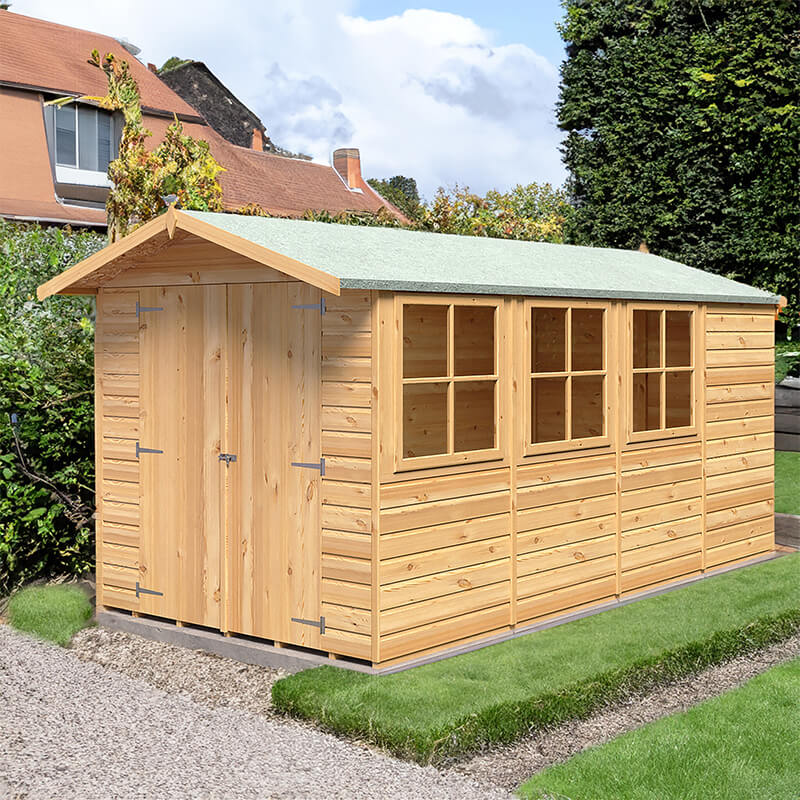


A apex roof version gives a more traditional shed outline, with the ridge running down the middle. This often suits gardens where the shed is meant to read as a classic outbuilding rather than a tucked-away store. The apex form can also create a more open internal sense of height, especially in the centre line, which is helpful if you are storing long tools upright or just want the space to feel less boxed-in.
There are also differences in door position and opening width. A broad double-door entry gives easier access for wheelbarrows, bikes and larger garden equipment. A single-door layout can suit tighter spots and may feel more secure or enclosed, though it gives a different loading experience. On a 14×7 shed, door placement really matters because the long shape can otherwise become awkward to navigate if access is too narrow or positioned badly.
Timber styles that change the look without changing the footprint
Most buyers compare shed styles not only by size, but also by the way the timber is finished. The 14×7 size is often available in different cladding profiles, and these create subtle but noticeable differences. Overlap cladding has a layered board finish that gives a more traditional appearance and can suit a rustic garden setting. Shiplap cladding usually presents a neater, more refined look, with boards fitting together in a way that gives stronger visual lines. Tongue and groove is often chosen where a more solid, structured feel is wanted, especially if the shed is expected to hold heavier contents or be used more regularly.
The choice of cladding changes the character of the shed, and that can matter more than people expect. A 14×7 shed with shiplap can feel visually slimmer and more tailored, while overlap can look softer and more informal. If the shed sits in a visible part of the garden, the finish can help it blend in or stand out in a controlled way. Some customers prefer a style that matches fencing or a summerhouse nearby, while others want the shed to look quietly functional. Both approaches make sense.
Storage zones inside a long, usable shell
The long rectangular shape of 14×7 storage sheds is one of the main reasons people choose them. Rather than throwing everything into one open room, the proportions make it easier to create zones. One end can hold large seasonal items, the central strip can take everyday tools and the opposite end can be used for shelves, boxes or even a small bench. This sort of arrangement is much easier to keep mentally sorted, and it often saves time when you are looking for something specific.
The footprint also suits people who need space for mixed-height storage. You might have low, stackable boxes along one wall, tall items such as rakes and spades at the side, and longer objects like pipes, edging boards or folding chairs running lengthways. In a shorter shed, these items tend to crowd one another. In a 14×7 shed, they can be separated more cleanly.
For buyers comparing sizes, the difference is often not just the total floor area but the way that area behaves. A smaller shed may be enough for a few tools, but a 14×7 layout gives room to breathe. That can be useful if you are storing gardening gear for the whole household, not just one person. It also gives a bit more flexibility if your needs change over time.
Different uses that suit the 14×7 size
This category is often chosen for reasons that are more specific than simple storage. A 14×7 garden shed can work as a base for potting, seed sowing, hand tool storage, bike parking or seasonal garden furniture. The longer shape is especially helpful if you want to separate “clean” storage from muddier items. For example, you can keep boots and garden bags closer to the doors while holding plant pots, trays and accessories farther back.
Some buyers want a workshop feel without moving into a full outdoor building. In that case, the extra length can support a bench on one side with storage above it, leaving a clear run along the opposite wall. That is different from a square shed, where the middle often becomes crowded quite quickly. If you need room to sort timber, assemble planters or keep a few larger hand tools in one place, the 14×7 layout gives you a better chance of doing that without everything colliding.
It is also a good format for people who like a more organised garden edge. A shed this size can act as a clear endpoint in the landscape, especially if it is placed along a boundary. It gives a place for things that would otherwise sit out in the open, and that can make the rest of the garden feel calmer, even before you think about style.
How 14×7 compares with other common shed sizes
When compared with smaller sheds, the most obvious difference is simply room to move. A 14×7 shed is far less cramped, so it suits buyers who dislike having to shuffle items every time they want to reach the back. It also gives more freedom with door opening, shelving and aisle space. A compact shed can be fine for basic storage, but if you want distinct areas for different types of equipment, the longer format is usually easier to work with.
Compared with wider sheds, a 14×7 model may feel better suited to narrow gardens or boundary lines. That narrower width can be a real advantage where space across the plot is tight. You still get useful floor area, but the building does not dominate the garden visually in the same way a broader shed might. Buyers often choose this size when they want storage that feels substantial without looking bulky.
The main difference is not only capacity, but how the space is used. Wider sheds can sometimes offer more central open floor, which is helpful if you want a general-purpose room. The 14×7 format, on the other hand, tends to encourage linear organisation. That makes it appealing for people who like things in rows, along walls, or grouped by function. It is less about casual dumping and more about neat, reachable storage. That may sound small, but in day-to-day use it matters a lot.
Door, window and access choices worth noticing
On a shed of this size, the access details matter as much as the footprint. Double doors can make a huge difference if you plan to store anything wide, awkward or heavy. They allow better entry for wheelbarrows, lawn equipment and larger storage boxes. They also make the shed feel less restrictive, because you are not always trying to angle things through a single opening.
Single doors can still work well if the contents are more compact or if the shed is set in a narrower part of the garden. They can make the front elevation look tidier and may suit buyers who want a more enclosed storage feel. The key difference is convenience versus footprint. With a 14×7 shed, a wider door often feels especially useful because the internal length can otherwise make loading from one end more awkward.
Windows also change the experience. A shed with glazing can feel brighter and less closed in, which is useful if the building is meant to double as a hobby space or occasional work area. Fewer windows can suit a purer storage function, where privacy and a simpler wall layout are more important. It comes down to how you intend to use the space, and whether you want to prioritise light, wall space or security.
Practical advantages that buyers often notice first
One advantage of sheds 14×7 is that they often fit real-life storage rather than theoretical storage. That means the size works for the things people actually own: a mower, bags of compost, folding chairs, children’s outdoor items, plant pots, hoses, hand tools, table accessories and the random bits that usually end up underfoot. The length gives you a way to group these without a constant pile-up.
Another advantage is that the shape can make the garden feel more intentional. Instead of having storage scattered around the plot, you can concentrate it in one smart line. This helps the rest of the garden feel more open and useable. A shed this size can also be a useful visual anchor. Not in a dramatic way, but in the sense that it gives the garden a clear structure.
There is also the matter of access in everyday use. A 14×7 shed often feels easier to work with because you can reach items without unpacking the whole building. That is one of those things you only really value once you have lived with a smaller shed. Being able to keep categories separate — tools here, seasonal gear there, larger items at the back — is a quiet but real benefit.
Small details that influence the right choice
When comparing options in this category, it helps to look closely at the roof profile, door arrangement, cladding style and internal height. These details can completely change how the 14×7 footprint feels. For example, a pent roof may work better if the shed needs to sit under trees or beside a boundary where a lower rear line feels visually calmer. An apex roof may suit buyers who want the shed to look more traditional and balanced from the front.
Likewise, the internal layout matters as much as the outside. A long shed with a poor door position can be less useful than a slightly simpler design with better access. If you know you will be moving larger items in and out, think about the turning space near the entrance. If the shed is mostly for boxes and tools, a more compact access point may be enough. These are small differences, but they shape the way the shed behaves once it is in the garden.
It is also worth considering whether you want the building to feel like a storage shed or a multi-use outbuilding. The same 14×7 footprint can serve either role, but the best choice of style changes accordingly. Storage-led buyers often lean toward simpler lines and straightforward access. Those planning to spend time inside may prefer more light, a clearer roof shape and a layout that feels less narrow. There is no single correct answer, just a better match for the way you live.
Tips that help you choose without overthinking it
If your garden is long and fairly narrow, a 14×7 shed can be one of the easier sizes to place neatly. Measure the run where it will sit, but also think about how you will use the doors. A shed can technically fit, yet still feel awkward if you cannot open it comfortably or get a wheelbarrow lined up properly. Allow a bit of breathing room at the front if you can.
Think about the objects you own by shape, not just by count. A dozen small boxes need a different layout from three bulky items and a set of long-handled tools. The 14×7 format is especially good when your storage mix is varied, because it gives you a way to separate items that do not stack nicely together. If you know you will keep bikes, outdoor furniture or longer tools inside, this size usually makes more sense than a compact square shed.
Also consider the way the shed will sit in the garden visually. Some buyers want it to almost disappear, while others want it to look like a proper feature. A pent roof and shiplap finish can give a neat, streamlined impression; an apex roof and overlap cladding can feel more classic and relaxed. Neither is better in every case. The better choice is the one that matches the rest of the space and the kind of storage you actually need.
A size with room for proper decisions
Sheds 14×7 are appealing because they are not one-note. They can be simple stores, tidy hobby spaces or organised garden rooms with clear storage zones. The footprint gives you enough length to plan, but not so much width that the shed starts to dominate the plot. That balance is useful for buyers who want something practical, ordered and adaptable.
If you are comparing shed categories, this one is worth a close look whenever you need more than basic storage but do not want to overfill the garden. The differences in roof style, cladding, doors and internal layout are enough to change the feel quite a lot, which means you can choose a version that suits how you work, store and move around. It is a size that tends to reward a bit of thought, and that is usually a good sign when you are buying something you will use for years.
[Sassy_Social_Share]