
polycarbonate greenhouses 60 sq ft / 6 m² - Best Deals in UK!
Showing 1–12 of 26 results
-
12% OFF: 6’x10′ Halls Aluminium Frame Polycarbonate Greenhouse (1.92×3.19m) £760.9912%

-
12% OFF: 6′ x 10′ Palram Canopia Hybrid Walk In Green Polycarbonate Greenhouse (1.85m x 3.06m) £464.9912%

-
12% OFF: 6′ x 10′ Palram Canopia Hybrid Walk In Grey Polycarbonate Greenhouse (1.85m x 3.06m) £464.9912%

-
11% OFF: 6’x10′ Halls Green Frame Polycarbonate Greenhouse (1.92×3.19m) £809.9911%

-
9% OFF: 6′ x 10′ Palram Canopia Hybrid Walk In Silver Polycarbonate Greenhouse (1.85m x 3.06m) £436.999%

-
8% OFF: 6’x10′ Palram Canopia Mythos Large Walk In Silver Polycarbonate Greenhouse (1.8x3m) £404.998%

-
8% OFF: 8’x8′ Palram Canopia Bella Walk In Silver Aluminium Framed Greenhouse (2.4×2.4m) £812.998%

-
8% OFF: 8’x8′ Palram Canopia Glory Grey Walk In Polycarbonate Greenhouse (2.4×2.4m) £1,508.998%

-
8% OFF: 6′ x 10′ Palram Canopia Mythos Grey Greenhouse (1.85m x 3.06m) £496.998%

-
8% OFF: 6â x 10â Palram Canopia Harmony Walk In Green Polycarbonate Greenhouse (1.85m x 3.06m) £530.998%

-
7% OFF: 6â x 10â Palram Canopia Harmony Walk In Silver Polycarbonate Greenhouse (1.85m x 3.06m) £471.997%

-
6% OFF: 6′ x 10′ Palram Canopia Hybrid Walk In Silver Polycarbonate Greenhouse (1.85m x 3.06m) £447.996%
Polycarbonate greenhouses 60 sq ft / 6 m² bring a useful amount of growing space into a compact footprint, with sturdy panels, light diffusion and shapes to suit small gardens, patios and allotments.
A neat footprint with proper growing room
A 60 sq ft / 6 m² polycarbonate greenhouse sits in that handy middle ground: not so small that you are constantly juggling pots, yet not so large that it takes over the plot. For many buyers, this size works because it gives enough space for a row of benches, seed trays, climbing crops and a little working room, without feeling like a full garden building. It is a size that can fit beside a fence, at the back of a terrace garden, or on a paved area where every metre matters.
What makes this category especially attractive is the balance between practical capacity and manageable scale. You can start seedlings, harden off young plants, keep salad leaves going for longer, and still have space left for a few larger containers. It is often the size people move to when a smaller cold frame or mini greenhouse starts feeling cramped.
Why polycarbonate changes the feel of a greenhouse
Polycarbonate glazing is a big part of the appeal here. Compared with traditional glass, it is lighter, which matters a lot on a greenhouse frame of this size. Lighter panels usually mean easier handling during assembly and less weight overall on the base. It also gives a different light quality: more diffused, less harsh, and often better at reducing bright hotspots inside the structure. That can be helpful when tender seedlings are sat on the upper shelf and you do not want the light beating down in one intense patch.
Bestseller der Kategorie polycarbonate greenhouses 60 sq ft / 6 m²
Another advantage is the sense of security many buyers feel with polycarbonate. It is commonly chosen for its impact resistance, so in a garden with lively weather, footballs, or the odd branch blowing about, it can be a calmer choice than more brittle glazing. It is not about making the greenhouse indestructible, of course, but it does change the conversation when comparing options.
Forms that fit different gardens
This category is not just one look. Within polycarbonate greenhouses 60 sq ft / 6 m², you will usually see a few main forms, and each one suits a different kind of space.
- Lean-to greenhouses attach to a wall or sturdy structure and are a strong fit for narrow gardens, courtyards and side returns.
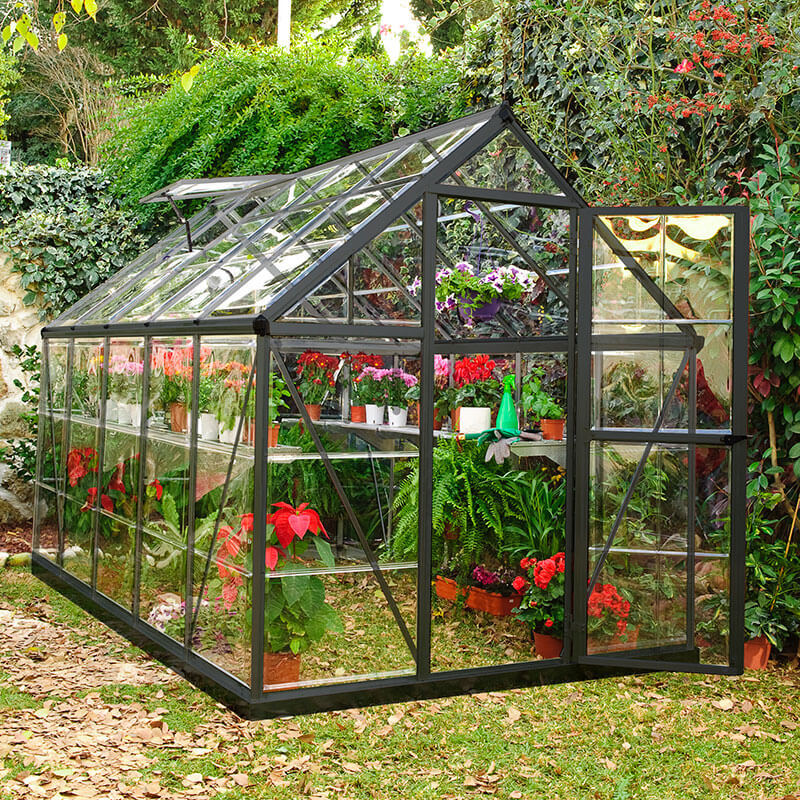
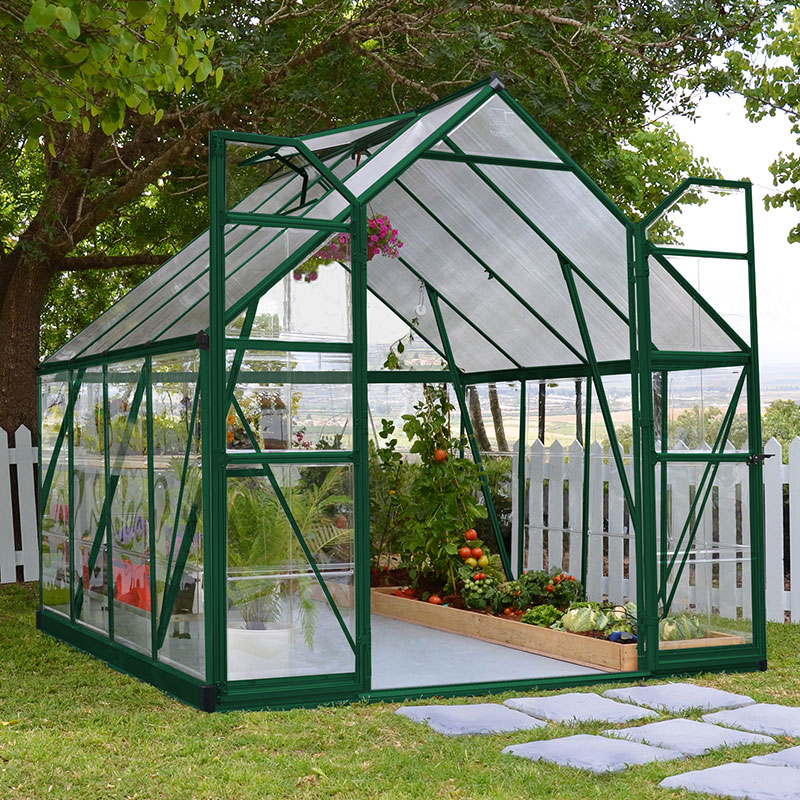
- Freestanding gable greenhouses offer a classic pitched-roof shape and feel familiar, with space on both sides for benches and staging.
- Apex roof designs make the most of vertical room in the centre, which can help with taller crops and hanging items.
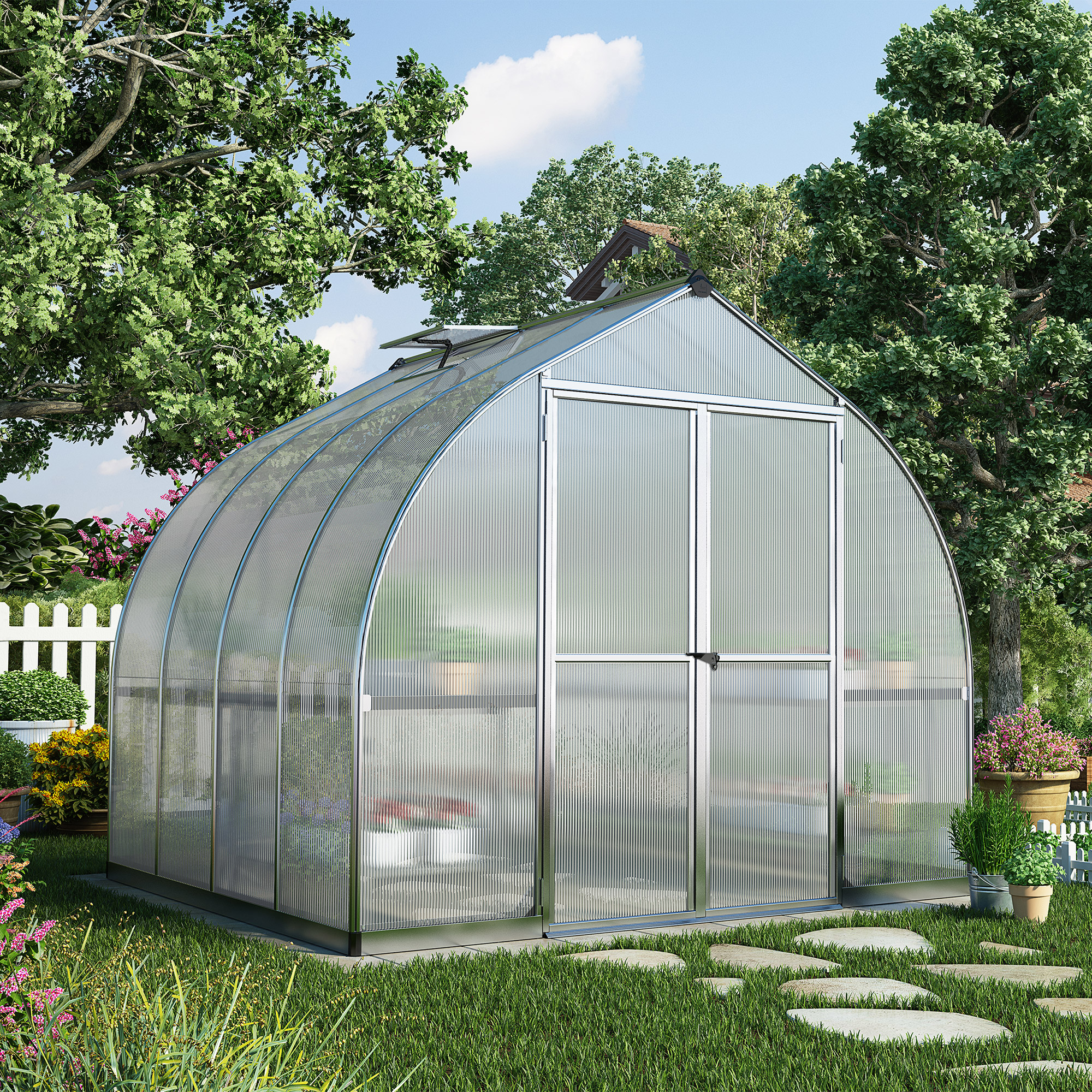
- Curved or rounded roof styles can create a softer profile in the garden and sometimes suit windier sites by reducing the boxy look.
- Compact walk-in houses focus on practical access and usable floor area, often making the most of the 6 m² with simple internal layout.
The shape matters more than people sometimes expect. A lean-to can feel almost like an extension of the house, while a freestanding design gives you more flexibility with positioning. A pitched roof can help with internal height, but a lower, more streamlined shape may suit tighter spots or gardens where sightlines matter. It is a real difference, not just a style choice.
Single skin, twinwall and the middle ground
When people compare polycarbonate, one of the main distinctions is the sheet type. In this category you will often come across single wall polycarbonate and twinwall polycarbonate. They are not the same thing, and the difference affects how the greenhouse performs.
Single wall sheets are generally slimmer and let in a very direct kind of light. They can feel a bit more open and bright, but usually offer less insulation than thicker alternatives. Twinwall sheets, on the other hand, have a layered structure with a trapped air space. That gives them a more insulating feel and can help soften temperature swings. For many people shopping in the 60 sq ft / 6 m² range, twinwall is the option that feels more balanced for use across spring, summer and the shoulder months.
There is also a practical difference in how the greenhouse looks. Twinwall panels can have a more matt, slightly opaque character, which diffuses sunlight nicely. Single-wall sheets may appear clearer or lighter in profile, depending on the product, but they do not always create the same gentle internal light. If you are choosing for seedlings, salad crops or mixed planting, this detail is worth paying attention to. It is one of those things that sounds minor until you stand inside and notice how the light behaves.
Roof lines, walls and the space you actually use
With a greenhouse this size, the outline can decide how roomy it feels. A high apex roof gives more central headroom, which helps if you like tall tomato supports, hanging baskets, or simply standing upright without feeling bent over. A lower roofline may suit a garden where visual impact needs to stay modest, but it can reduce the sense of volume inside.
Wall height also matters. A greenhouse with a slightly taller side wall can make benches more usable because plants are not pushed into a sloping edge straight away. In contrast, a more compact wall height may save material and create a neat, small-footprint profile, but you may lose a bit of shelving flexibility. These are the differences buyers usually notice once they start planning where trays, pots and canes will actually go.
If you are comparing shapes, it helps to think in terms of usable volume, not only floor area. Two greenhouses can both claim 60 sq ft / 6 m², yet one feels far better for standing and staging because of the roof form. That is why the shape is as important as the size label.
What this size suits best
In practical terms, 6 m² is a very workable space for mixed growing. It can suit:
- Seed sowing and propagation, with trays lined up on shelves or benches.
- Tomatoes, peppers and chillies, where a long season and steady shelter matter.
- Salad crops and herbs, especially if you want a protected corner for staggered sowing.
- Hardening off, where young plants can be moved gradually into more open conditions.
- Container growing, including small pots, grow bags and deeper planters.
It is also a very decent size if you want separate zones. One end can be kept for propagation, while the other holds larger crops. That split is useful when you do not want young seedlings sitting right beside more established plants. It sounds simple, but once you start working inside the greenhouse, those little divisions make the space feel much more organised.
Polycarbonate versus glass: not the same choice
Many shoppers compare polycarbonate greenhouses with glass ones, and the difference is not just about looks. Glass often gives a sharper, more traditional finish and can feel very crisp in the garden. Polycarbonate usually brings a more forgiving, softer light and less fragility. For a greenhouse around 60 sq ft / 6 m², that can be a real selling point because the structure is still compact enough that the building materials influence how easy it is to handle and position.
Another difference is the way each material behaves in use. Polycarbonate can feel more suitable if you want a greenhouse that is a bit more relaxed about knocks and changing weather. Glass may appeal if you prefer a clearer view through the panels and a classic appearance, but it can also ask more in terms of handling. Neither is automatically right or wrong; the best fit depends on how you plan to use the space and what sort of garden it is going into.
For many buyers, the decision comes down to this: do you want a traditional visual finish, or do you want lightweight, diffused, practical glazing? In this category, polycarbonate is often chosen because it tips the scale towards usefulness.
Small garden, clear benefit
A greenhouse of this size can make a garden feel more complete without crowding it. That is a real advantage for people with town gardens, long narrow spaces or allotment plots where every structure has to earn its place. A 60 sq ft / 6 m² greenhouse can hold enough to justify itself, yet it does not need a huge prepared area. It is a good fit when you want proper growing space without stepping into a large outbuilding scale.
It can also be easier to place than larger houses. Depending on the layout, it may tuck against a boundary, sit at the end of a path or settle into a corner that was previously awkward to use. The result is often a garden that feels more intentional. Not flashy, just more sorted. And that is a thing buyers do notice.
Details worth checking before you choose
When browsing this category, a few small details can change the experience quite a lot. The first is the door opening. Some designs offer a single door, while others feel easier to enter because of a wider access point. If you plan to move trays, watering cans or larger containers in and out, access is not something to brush past.
Next, look at vent positioning and roof shape in relation to airflow. Without turning this into maintenance talk, the way a greenhouse is built affects how comfortable the internal space feels through the day. A design with sensible opening points can help create a less cramped atmosphere. In a smaller structure, that matters more than people think.
Also worth noticing is the frame profile. Some frames look slimmer and lighter, others appear more substantial. A slimmer frame can leave more glazing area and a cleaner appearance. A more substantial frame may suit people who want a sturdier visual feel. It is not just about strength on paper; it changes the way the greenhouse sits in the garden.
Layout ideas that make the most of 6 m²
Because the floor area is compact, the internal layout needs a bit of thought. A good 60 sq ft / 6 m² greenhouse often uses one side for staging or shelving and keeps the other side more open for taller plants or movement. In some cases, a narrower bench along the back wall works better than trying to fill every edge. That leaves you space to get in and out without knocking everything over, which is surprisingly useful when hands are full.
Some buyers prefer a split layout with raised shelves for seedlings and ground-level space for pots that need more root room. Others want one long bench plus a clear strip down the middle. Both can work; the real difference is whether your growing style leans towards lots of small items or fewer larger plants. If you tend to start many varieties, you will probably appreciate vertical use. If you grow fewer but bulkier crops, open floor area becomes more important.
Who this category suits, and why it keeps being chosen
Polycarbonate greenhouses 60 sq ft / 6 m² are often picked by gardeners who want a proper structure without going too big, too fast. They suit people moving up from a small cloche or mini tunnel, and they also suit experienced growers who know exactly how much room they really use. That second group matters more than people admit. Bigger is not always better if half the greenhouse ends up empty.
This size is also handy for buyers who want a greenhouse that feels substantial but not overbearing. It offers enough room to get serious about growing, while still leaving the rest of the garden usable. The polycarbonate glazing adds a practical edge, and the range of shapes means you can match the structure to the space rather than forcing the space to fit the structure. That is a fairly good reason to choose it, even if you have to measure twice and think a bit before ordering.
A final look at the buying decision
If you are comparing options in this category, the main questions are simple ones, but they matter: How much light diffusion do you want? Do you need more headroom or a slimmer profile? Will the greenhouse sit freestanding or against a wall? Do you want a clearer glazed look or a more practical, forgiving finish?
That is really where the decision lives. Not in vague promises, but in the specific shape, panel type and footprint that suit the garden you actually have. A well-chosen polycarbonate greenhouse 60 sq ft / 6 m² can make growing feel more organised, more flexible and a bit less cramped. For many buyers, that is exactly the point.
[Sassy_Social_Share]