
polycarbonate greenhouses 50 sq ft / 4 m² - Best Deals in UK!
Showing 13–19 of 19 results
-
6% OFF: 6’x8′ Palram Canopia Mythos Walk In Silver Polycarbonate Greenhouse (1.8×2.4m) £361.996%

-
6% OFF: 6′ x 8′ Palram Canopia Hybrid Walk In Grey Polycarbonate Greenhouse (1.85m x 2.47m) £451.996%

-
6â x 8â Palram Canopia Harmony Walk In Grey Polycarbonate Greenhouse (1.85m x 2.47m) £509.99

-
6â x 8â Palram Canopia Harmony Walk In Green Polycarbonate Greenhouse (1.85m x 2.47m) £509.99

-
6’x8′ Palram Canopia Mythos Walk In Silver Polycarbonate Greenhouse (1.8×2.4m) £379.99
-
6â x 8â Palram Canopia Harmony Walk In Silver Polycarbonate Greenhouse (1.85m x 2.47m) £444.99

-
6′ x 8′ Palram Canopia Mythos Grey Greenhouse (1.85m x 2.47m) £449.99

Polycarbonate greenhouses 50 sq ft / 4 m² give you a compact growing space for tomatoes, salads, seedlings and tender plants, with lightweight panels, better insulation and a neat footprint for smaller gardens.
A tidy footprint with room to grow
A 50 sq ft / 4 m² polycarbonate greenhouse is one of those sizes that makes sense when space is limited but you still want proper growing room. It sits neatly in a smaller garden, on a patio edge, or tucked against a fence, yet still gives enough space for a useful mix of trays, pots and a few crop rows. For many buyers, this size is the point where a greenhouse stops feeling like a storage box and starts feeling like a proper growing space.
Compared with very small cold frames or mini grow houses, this category gives you a more workable layout. You can usually fit a narrow staging shelf, a central path, or benching on one side depending on the shape. It is compact, yes, but not cramped if the internal arrangement is thought through. That is why these models are often chosen by gardeners who want more than a few tomato plants, but do not have space for a full-size structure.
Why polycarbonate changes the feel of the greenhouse
Polycarbonate panels are the main reason people choose this type over glass in a 4 m² footprint. The material is lighter, which helps with handling and installation, and it also brings a different balance of insulation and light diffusion. In a small greenhouse, that can matter quite a bit. The panels help soften harsh sunlight, so seedlings and young plants are less likely to get scorched by a sudden bright spell. That gentle diffused light is one of the real practical advantages here.
Bestseller der Kategorie polycarbonate greenhouses 50 sq ft / 4 m²
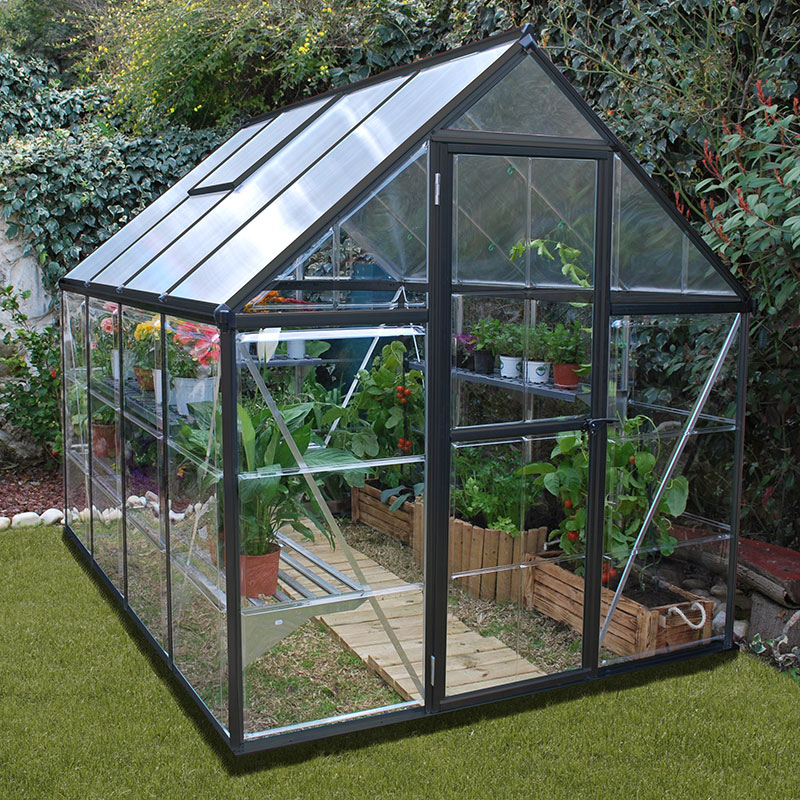
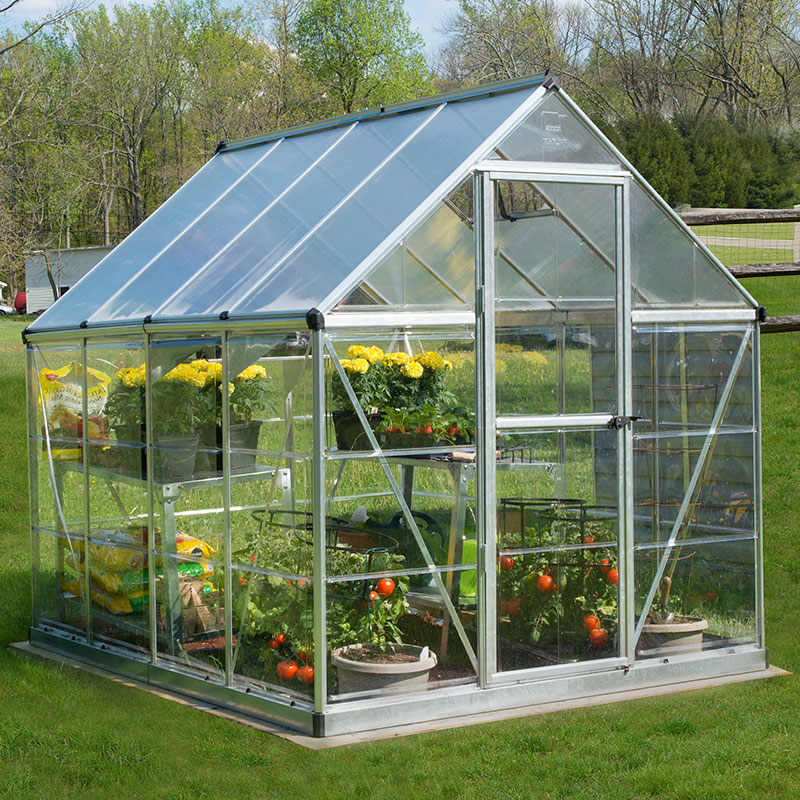
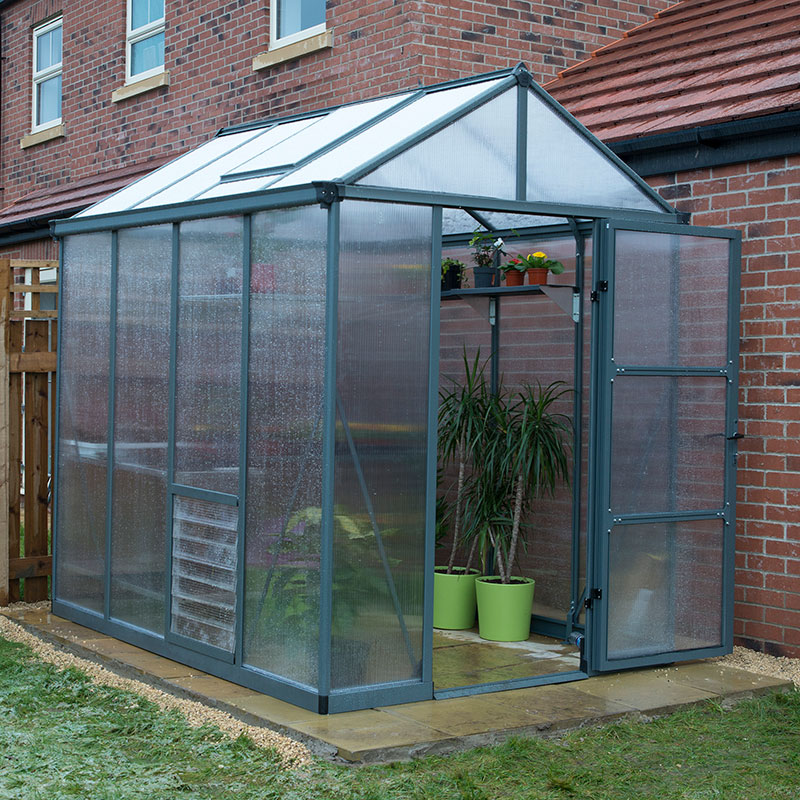
Another point is the way polycarbonate compares with traditional glazing. Glass gives a clearer, more classic look, but polycarbonate tends to feel more forgiving in day-to-day use. It is often chosen where the greenhouse will see a bit of weather exposure, or where there is a concern about heavier sheets. For a 50 sq ft frame, the lighter cladding can make the whole structure feel easier to manage.
Single wall, twin wall and the difference you can feel
In this category, the panel type makes a noticeable difference. Single-wall polycarbonate is usually slimmer and lets in plenty of light, which can suit growers who want a brighter, more open feel. Twin-wall polycarbonate, by contrast, has an air gap between layers, which improves insulation and gives a more substantial feel. For a small greenhouse, twin-wall is often the option that suits gardeners who want to extend the season a bit more or keep temperatures steadier overnight.
The choice is not just about heat retention. Twin-wall panels can also give a slightly more muted look from the outside and a softer light inside. Single-wall can appear clearer and more direct. If you are weighing up the two, the question is often whether you want a lighter, simpler panel or a more insulating build. Both belong in this size range, but they do not behave the same way.
Shapes that work in a small plot
Not every 4 m² greenhouse is laid out in the same way. The shape changes how it fits your garden and how easy it is to use. A lean-to greenhouse can be ideal where wall space is available, making use of a sunny masonry wall and keeping the footprint tight. A freestanding ridge greenhouse gives more flexibility in placement and is the more familiar greenhouse form. There are also compact tunnel-style structures with polycarbonate panels, which can create a simpler, more modern growing space.
Each shape has its own character. A lean-to tends to feel very efficient, especially where access is along one side only. A freestanding unit often gives better all-round access and more even planting options. Tunnel-style designs may offer a softer profile and can sometimes be easier to place where height planning matters. For a buyer, the difference usually comes down to where the greenhouse will sit and how you want to move inside it.
Ridge, pent and arch: the visible forms
The roof line is worth paying attention to because it affects both the look and the usable height. A ridge roof is the classic greenhouse profile, with a peaked top that gives a traditional feel and useful headroom in the centre. A pent roof slopes in one direction and can suit a wall-mounted or space-saving layout. An arched roof creates a smoother line, often reducing wind resistance and giving a slightly different interior feel.
In a smaller greenhouse, those shape differences are not just cosmetic. A ridge design can help with taller crops and hanging space, while a pent roof may tuck better under eaves or against an existing structure. An arch can feel less angular, which some people prefer in a compact garden setting. None of these is automatically better; the right choice depends on site and use.
What fits inside 50 sq ft without feeling overcrowded
With 50 square feet to play with, the internal layout matters more than people sometimes expect. This size can hold a combination of seed trays, pots, propagation shelves and a narrow growing aisle, but the arrangement needs a bit of thought. The best setups usually separate young plants from more mature crops so things do not end up all mixed together. That makes the space feel calmer and more usable.
- Seed starting zones for trays and modules in early spring
- Tomato and pepper space for taller, heat-loving crops
- Herb and salad benching for quick-turnaround planting
- Overwintering room for tender pots and compact specimens
- Vertical use with shelves or staging to make the most of the footprint
Because the greenhouse is small, the choice between shelves and floor space is important. Some gardeners prefer one long bench and the rest open for taller plants. Others use the structure mainly for propagation and seedlings. Both approaches work, but mixing too many different uses can make the space feel cluttered quite quickly.
The practical advantages that matter day to day
Polycarbonate greenhouses in this size are often chosen for a few very practical reasons. The panels are generally lighter than glass, which can simplify handling, and the structure can feel less demanding in a smaller garden. The diffused light can be a real plus for young plants, especially when spring sun is strong but the weather is still variable. And the insulating quality of twin-wall panels can help the greenhouse hold warmth a bit better than a single-layer cover.
There is also the matter of general resilience. While no greenhouse is indestructible, polycarbonate is commonly seen as a more forgiving cladding than brittle glazing in situations where knocks or rough weather are concerns. For some buyers, that is enough on its own. For others, it is the combination of light weight, insulation and tidy size that makes the decision easier.
How this size compares with larger and smaller options
It helps to see 4 m² greenhouses in context. A smaller mini greenhouse may be fine for seedlings, but it often fills up fast and leaves little room for crops to grow on. A larger greenhouse gives more freedom, yet it needs more garden space, more visual presence and usually a bigger budget. The 50 sq ft size sits in the middle, which is why it feels practical for many households.
That middle ground also affects how the greenhouse is used through the year. Smaller structures can become temporary and seasonal. Larger ones may encourage more ambitious planting plans, but they also ask for more commitment from the gardener. A 50 sq ft polycarbonate greenhouse tends to be the sort of size people can actually fill and use properly, rather than leaving half empty or too crowded.
Useful details that influence the buying choice
When comparing models in this category, the detail list can tell you a lot. Door width matters if you plan to bring in trays, compost or taller plants. Side height affects usable interior room, especially along the edges where space can otherwise be wasted. Roof height is important if you want to grow cordon tomatoes, climbers or other taller crops. And panel thickness can shape both insulation and the sense of solidity.
Frame material is another point. Some buyers look for a lighter frame for easier handling, while others prefer a stronger, more rigid feel. In a compact greenhouse, the frame can affect how open the interior looks, because bulky framing can take away a bit of usable light and width. It is one of those things people notice more once they are inside the structure, not just looking at it on paper.
When a compact greenhouse feels like the right fit
This category suits gardeners who want a dedicated growing space but do not have room for something oversized. It can work well for first-time greenhouse buyers, allotment users with limited plot space, and home gardeners who want to protect young plants from stop-start weather. It also appeals to anyone who prefers a structure that is easier to place without redesigning the whole garden around it.
If your main aim is to raise seedlings, carry tomatoes through the season, or keep a rotation of herbs and salad leaves going, a polycarbonate greenhouse 50 sq ft / 4 m² can be a very sensible fit. It is not about pretending to be huge. It is about having enough space to do useful growing properly, without overcommitting to a larger frame than you need.
Picking the version that suits your growing style
Different gardeners will lean towards different subtypes. Someone who wants a neat structure beside the house may prefer a lean-to with twin-wall panels. A gardener with a free-standing spot in the middle of the plot may choose a ridge greenhouse for the classic layout and better central height. Someone with a tighter side passage or an awkward corner might like a pent roof design that uses the site more efficiently. These are not cosmetic differences only; they shape how the greenhouse behaves and feels.
There is also a difference between a greenhouse that is mainly for starting plants and one that is used for longer-season cropping. The first may need more shelving and easier access for trays. The second may need better standing height and space for larger containers. A good 4 m² greenhouse is one that does not force you into one rigid use, but still feels organised when you switch from one crop to another.
A small structure with proper growing character
What makes this category appealing is that it offers a lot of the greenhouse experience without swallowing the garden. The polycarbonate finish, the compact footprint, and the choice of forms all work together to create a space that feels considered rather than excessive. It is the kind of purchase people make when they want to grow more, but still keep the rest of the garden usable.
If you are comparing options, focus on the details that match your growing habits: panel type, roof shape, door access, interior height and how the structure fits the site. Those are the things that decide whether a greenhouse feels awkward or quietly useful. And in this size, quietly useful is often exactly what the buyer wants.
[Sassy_Social_Share]